Table of Contents
winter glamping with 4 non-campers - what worked and what didn't work
Introduction
- 4 of my non-camper middle-aged adult friends offered to join me on my winter glamping in tents
- for some, this would be their first camp and given they had minimal camp gear I provided most of the gear and wanted to ensure they did not have a miserable time of it
- I decided on a mountain forest location within 1.5hrs drive as they would be coming after work and setting up two of the tents in the dark - I set up the communal tent, kitchen, wood stove before they arrived so we would be ready to start cooking on their arrival
- expected temperatures 8-9degC maximums and down to 0degC overnight with one day of showers and possible hail and even snow - although no hail or snow eventuated
Camping gear for them
- each would have their own polycotton inner tent inside a larger floor-less tent (two of them as a couple would share an inner tent)
- for the couple and another female, for each I chose:
- a 2 person polycotton inner tent inside NatureHike Dune 7.6 hot tent with a tarp floor added
- the wider 3FUL Gear Kangaro 2 person polycotton inner tent allowed the 150cm wide double Exped Megamat air mattress to fit comfortably
- the narrower Vidalido Land Yu 2Persons TC Cotton S-T139 Tent was used for the solo female
- 10cm thick self inflating air mattress (BYO double for the couple) with 12V electric blanket plus 12V 100Ah LiFePO4 battery as a back up
- BYO sleeping bag and blanket
- gas heater if things turned really cold - this was not needed and not used
- for the male camper:
- a 1 person polycotton inner tent inside the “communal tent” - a Mobi Garden Guan Tu V (On The Road V) hot tent / gazebo with a tarp floor on top of a PVC mesh floor, which also acted as the communal tent and cooking tent and was just large enough for the stove, two tables, 5 chairs
- 10cm thick self inflating air mattress
- layers of blankets
- -10deg heavy, large sleeping bag - was not used
- communal cooking and warmth:
-
- fire mat to protect the PVC floor
- 2-3 bags of 10kg kindling for the 2 nights
- 10L collapsible bucket filled with non-potable water in case of fire
- CO alarm
- my own USB fan duct system to redirect hot air around chimney to rear of tent or into inner tent
- budget standing height folding table with room for the plastic containers under it
- utensil hanging stand clamped to the folding table with USB chargeable light screwed on top - did not clamp well to this table and was a liability with its tilt
- additional USB chargeable lights - one hanging at top of tent door
- 78.5x 51.5x40cm high aluminium slat table at small camp chair height
- this was great for:
- placing hot pots
- food preparation - dicing veges, etc
- serving table for food
- card playing table
- 4 small camp chairs and one large camp chair
- plastic container with utensils, etc
- cutlery, kitchen scissors, food prep knives, tongs, two wooden spoons, ladle, hot pot gripper for removing trays from oven
- collapsible S2S silicone camping 1.3L kettle and pots - 1.4L, 2.8L and 4L (4L pot was transported separately as too big for container but sat nicely in a large fry pan)
- 2 x camping cutting boards and one stainless steel larger board for dicing veges
- medium size Moka pot for expresso coffees
- plates, bowls, wine glasses x 2, mug
- oven mits
- butane lighter
- hiking gas stove and cartridge (as backup but not needed) plus hiking pots
- smaller plastic container for condiments, etc:
- salt, pepper, honey, maple syrup, mini marshmallows, aluminium foil, vanilla essence, dark choc cooking chips
- tea bags, sugar sticks, bags of expresso coffee and drinking chocolate
- small fry pan
- bag containing kitchen wash up gear:
- 10L camping kitchen bag/bucket, biodegradable detergent, sponge, wipes, tea towels
- large bag for general accessories
- blower to help get the stove lit via the external air duct
- Scotch paper towelling
- fire lighters
- umbrella
- 10L drinking water per person for cooking, cleanup and drinking
- trays to eat from so hot bowls do not burn you
- food purchased during camp for making minestrone, etc
-
- extras left in the car:
- first aid gear
- additional guy ropes, tent pegs, carabiners, tarps, tent poles for awnings (only 1 used - for the communal tent entrance door)
- extra blankets and towels
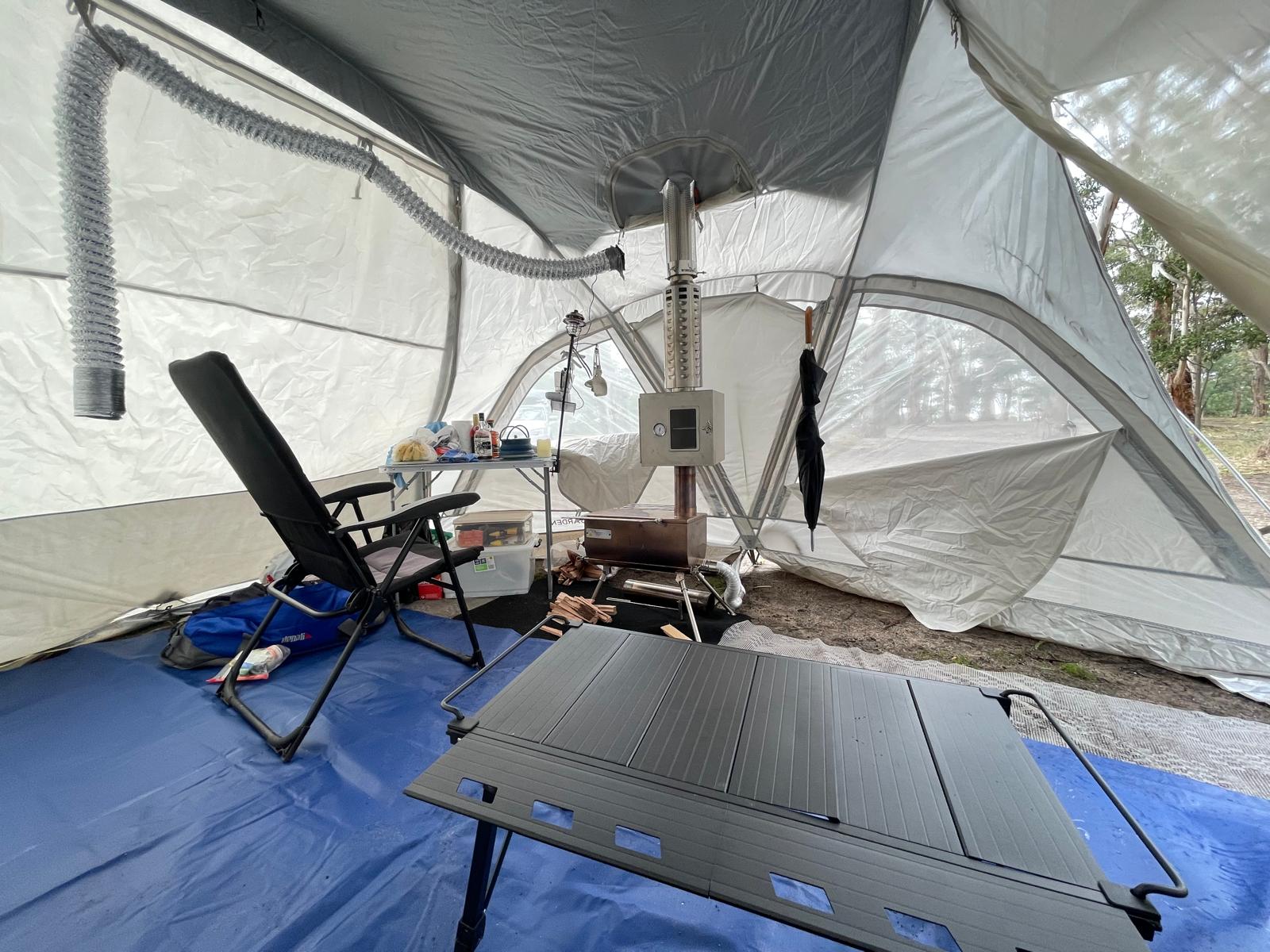
The “communal tent” with Winnerwell large stove and pipe oven two tables, my ducted heating device which is going to the rear of tent where the one person tent will be set up
Snug and warm for 5 people cooking, eating, chatting and playing board games.
meals and snacks
- 1st night:
- one camper brought cheeses and red wines for entree
- one camper brought a fantastic large pot of freshly home-made beef bourgignon which was reheated on the stove and eaten with warmed loaf of garlic bread in the oven
- dessert was whole banana with skin on split along the middle and dressed with choc chips, vanilla essence, maple syrup, dessicated coconut and mini-marshmallows and heated by placing on the stove wrapped in aluminium foil, then eaten with a spoon
- hot chocolate with aged and dark rum with vanilla essence and choc chips with mini-marshmallows garnish
- Day 2:
- breakfast: expresso coffee (via a Moka pot on the stove) with warmed milk, one camper also had porridge
- morning hike before the rain started
- lunch: went to a local cafe
- dinner:
- baked Camembert cheese in the oven
- an amazing minestrone soup we prepared as a group, cooked on the stove in the 4L pot with frequent stirring using the two wooden spoons garnished with dollop of left over baked Camembert cheese and eaten with warmed bread (the pancetta was fried first in the small fry pan on the stove in olive oil)
- re-heated lasagne purchased that day from a smallgoods store - this was heated in the oven but was not needed as the soup was so filling
- supper:
- shots of muscat
- Day 3:
- breakfast: expresso coffee with warmed milk, left over soup with bread, one camper also had porridge
- packed up and had a late lunch and coffee at a local cafe before heading home
What worked well
- great team effort, no-one got drunk which would have severely compromised fire safety, and all joined in with food prep and setting tents up and packing up
- orientation to fire safety and general camping arrangements provided
- nothing heavier than 15kg even when wet so my back did not complain
- all the tents and sleep arrangements worked perfectly, although:
- the electric blankets were not really needed but were a luxury and were a major component to reassure the campers they would not get cold
- the couple used 16.7Ah each over the 2 nights - a fairly minimal amount
- the solo female used 9.4Ah over the 2 nights - a minimal amount
- the gas heater was not needed - this was only ever an emergency last resort as the gas cartridge would only last 2-3hrs and would need to be used with a tent door open - if there were no wood stove then this would have been used each night for dinner
- the double air mattress got wet in the corner of the foot end presumably due to condensation from the outer tent as the inner tent frame was in contact with the outer tent - may need to place a towel between the inner frame and the outer tent wall to discourage flow of water into the inner tent
- some rain did find its way under the communal tent while we were out and did wet a few items sitting on the floor and did get under the inner tent but the inner tent was not compromised
- sleeping warmth was adequate without the electric blankets and stove down to 1degC outside and ~3degC inside the inner tents:
- plenty of evening carbs for digestive warmth overnight
- I slept well and was never cold (except when quilt/blankets fell off):
- polycotton 1P inner tent with both doors open above stretcher height but shielded from wind chill by 0.1mm clear PVC sheet (TPU would be safer but not readily available) clamped over top of each door allowing easy exits without having to find zips and also visibility outside without having to lose any retained heat inside the inner tent (outer tent had clear TPU doors which did develop internal condensation obscuring the view in early morning somewhat but this gave welcome privacy after sunrise as well)
- basic stretcher bed with two S2S hiking self-inflating mats each with R values of around 2-3, covered with a flannelette sheet
- balaclava, merino wool thermal skivvy, dressing gown (allows going outside for toilet overnight without having to find clothes - just put on some waterproof warm booties), no socks needed
- S2S ThermoReactor sleeping bag liner provided draught protection and some warmth to low half of body in particular
- Denali -10degC sleeping bag opened as a quilt and supplemented with a woolen fire blanket provided adequate warmth
- solo male slept well with 10cm thick R8 self inflating mat and a number of blankets plus a beanie and PJs
- solo female slept well with 10cm thick R8 self inflating mat, minus 1degC sleeping bag, S2S ThermoReactor sleeping bag liner, balaclava and outdoor clothes
- the stove and oven in the large tent were critical success factors in such cold weather
- kept the group warm whilst sitting around
- provided boiling water and cooked the food
- HOWEVER, this would not be able to be safely set up, used and packed up by a newbie without physical supervision of an experienced camper - too many things that could go wrong if attention to details not addressed:
- selecting camp site so that where the stove will sit is relatively flat
- assembling stove so that the mesh protector is the part contacting the tent stove jack area and fly and that the chimney is guyed out given the expected winds
- clamp any mesh at the stove jack so it cannot come loose and contact hot chimney areas
- ensuring stove is level
- care with the air intake duct - avoid over-stretching, crushing and ensure the end is outside the tent facing down so rain does not fill it up
- ensuring fire mat in place and that embers are not left on the mat
- use of fire starters and additional blower to get fire started
- care around stove and oven to avoid immediate 3rd degree burns on accidental touching the hot areas
- extra care when opening stove door to add wood - it is very easy to touch the very hot part of the door instead of the door handle when closing - especially in low light
- ensure stove door is closed as soon as possible to reduce smoke and CO into the tent - and if this occurs excessively, to open tent doors to vent it
- ensuring oven door remains open when not in use
- ensure hot pots / fry pans are placed on suitable surfaces which won't melt or catch fire
- ensure the silicone or the plastic lids of silicone type pots don't touch stove, chimney or oven otherwise they will melt
- avoid excessively hot fires - only use seasoned wood - not paper, heat beads, or wet wood
- dismantling chimney - this can be difficult when creosote glaze binds sections together - wobble approach tends to work better than rotation
- the small aluminium slat table was fantastic - continually being used
- the 4L collapsible pot from Sea2Summit and the two wooden spoons were perfect for the minestrone
- the Noco GBX45 1250A 12V UltraSafe Lithium Jump Starter saved the day on the last day packing up - car doors open for long periods with interior lights on when its near 0degC easily flattens a battery
What didn't work well or was not needed
- the USB fan heating duct system was not needed as the radiant heat from the stove sufficed in heating the inner tent at the rear
- the kitchen utensil stand was a waste of time setting up and packing up - it was unstable clamped to that table and items fell off the shelf regularly
- the air intake duct of the stove is easily over-stretched or crumpled making it impossible to reduce back to its normal shape and size and I can see you may be needing to buy replacements if not treated with care
- the air intake duct combined with cold air and relatively large Tasmanian oak hardwood kindling made starting the fire even with fire lighters and air blower into intake duct difficult resulting in prolonged smouldering combustion which presumably resulted in creosote glaze forming which made removing the triple shield chimney from the pipe oven impossible to achieve when packing up - perhaps a re-fire at higher combustion temperatures may resolve this
- perhaps this could have been prevented by either chopping the kindling into small pieces or adding pine softwood kindling
- the zips on the Mobi Garden Guan Tu V (On The Road V) hot tent / gazebo have always been problematic in their design and often get caught - this happened during the night resulting in the zip breaking
- -10degC rated, 4kg, bulky Oztrail Drover sleeping bag - too heavy and bulky and not necessary - probably better for the 4WD swag camper going to the snow or as a quilt for a couple
- thermal leggings and gloves were not really needed as we were either inside a warm tent, sleeping with adequate layers, hiking, setting up or packing up - if spending time outdoors not exercising, then these would have been critical for comfort
- camp showers were not needed for just the 2 nights
- it was a lot of preparation and cognitive stress on my part - great to do for my friends but not sure I want to do it again for just a couple of nights as there was no time to just chill out and relax - I was pretty tired when I got home - and then there were the tents to dry out, etc.