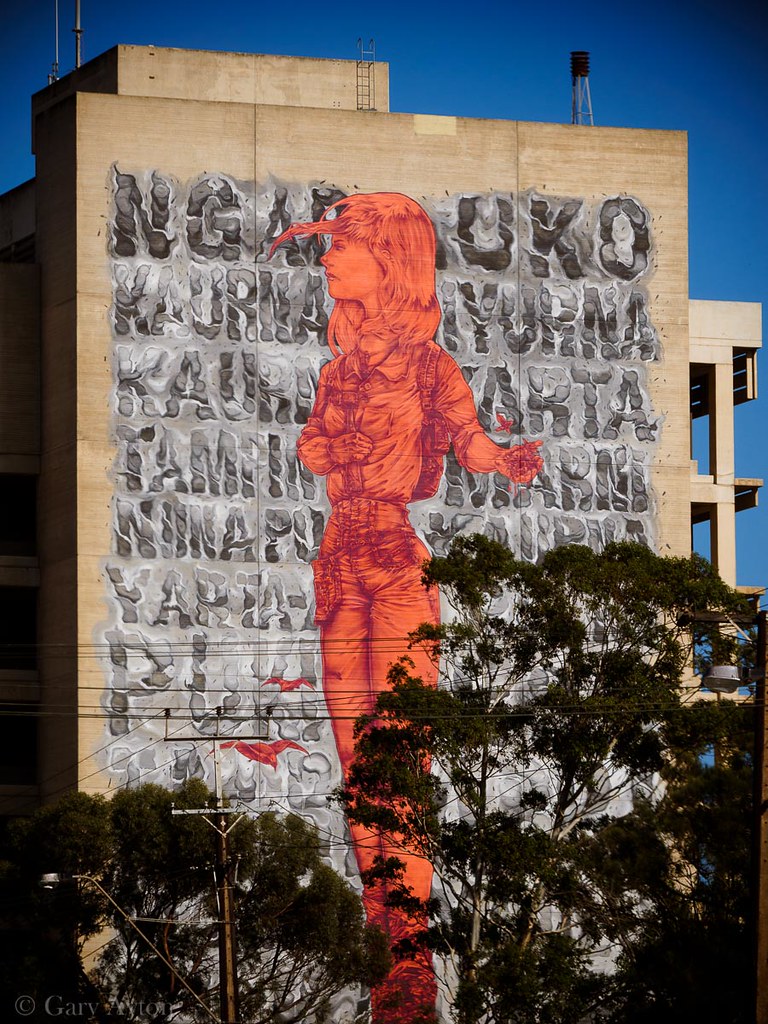
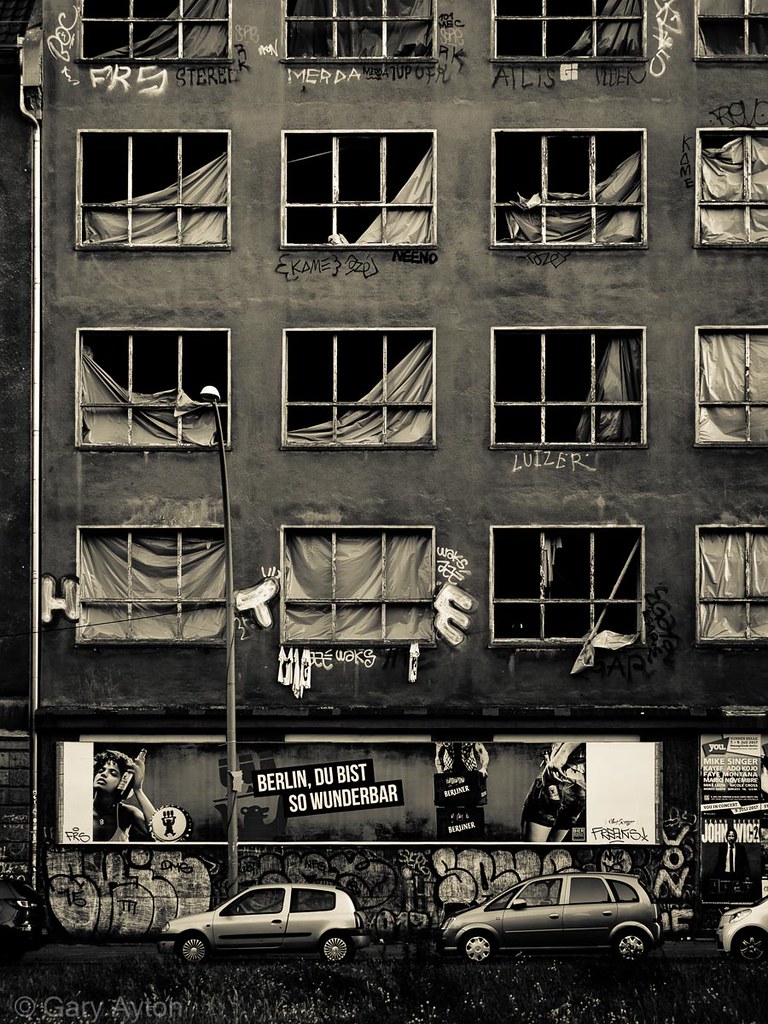
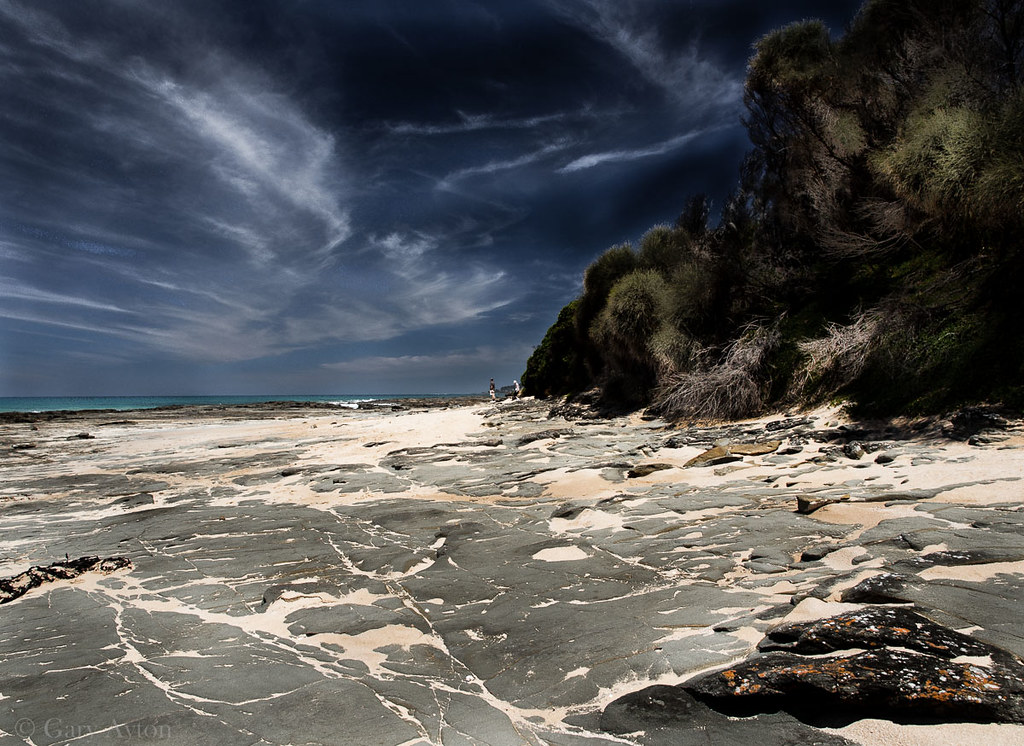
My photos on Flickr

Written by Gary on July 21st, 2011
P1120151AmsterdamAmsterdamAmsterdamAmsterdamAmsterdam
AmsterdamAmsterdamAmsterdamStockholmStockholmStockholm
Copenhagen train station toilet breakCopenhagenCopenhagenHalloweenCopenhagenDenmark
DenmarkRoskildeCopenhagenRoskildeCopenhagenCopenhagen

View some of my photos of flickr


Photographing Australia’s alpine snow regions – a few essential tips for photographers

Written by Gary on July 19th, 2011

Alpine snow regions in Australia are confined to the south-east and have a relatively short season from June-September.

Snow mainly falls down to altitudes of 1400m, but on the uncommon days of very cold Antarctic blasts, snow may fall to as low as 900m.

During the snow skiing season, photographers have limited access to these regions as snow ploughs clear the road and heap snow on the sides of the roads preventing ability to park your vehicle other than at designated areas – not very helpful for photographers!

Most of Victoria’s snow fields are within 2-4 hours drive of Melbourne, but those with 2WD vehicles will need to use snow chains once they reach the snow, while those with 4WD vehicles will need to carry snow chains.

Treacherous cold beauty of winter on Mt Buffalo. Panasonic GH-1 Micro Four Thirds camera with Olympus ZD 7-14mm lens ISO 200, f/5.6, 1/80th sec, 13mm focal length, uncropped, minimal post-processing:
Treacherous cold beauty of Mt Buffalo


Planking on a cliff face photographing a waterfall with care. Canon 1D Mark III dSLR camera with Canon 135mm f/2.0L lens, ISO 200, f/2.0, 1/500th sec, uncropped, contrast enhanced in post-processing:
Planking on Mt Buffalo

Be safe:

  • most Australians are occasional visitors to the snow and thus lack of experience can be a major issue – the snow regions do create significant risks, not only of vehicle accidents on black ice, but personal accidents due to slipping on ice which could easily result in a broken limb or serious head injury from a simple fall onto the boulders. Furthermore, it does not take much to get cold, wet, hungry and even lost.
  • tip #1 – if possible take an experienced person along with you, if you are a keen photographer, consider hiring the services of local professional photographer and alpine hiker such as John Mitchell – I can highly recommend him – not only will he pick you up and drop you back to your accommodation, but he will supply lunch, drinks and watch for your safety as he takes you to great locations which you would otherwise not consider, and help you with your photographic skills one on one.
  • tip #2 – be prepared and keep yourself warm and dry:
    • very waterproof leather boots (apply Dubbin or a bees wax product to them before going)
    • wear 2 pairs of merino wool socks
    • layers of clothes with an outer waterproof layer over your pants (you do need to get down on your knees to get good shots sometimes) and of course, a waterproof jacket
    • consider waterproof gaiters which attach to boot lace and and can be laced under the boot to ensure a snug fit to minimise snow getting up your trousers.
    • several pairs of light weight gloves designed for operating your cameras – once a pair gets wet with rain, you need to change to dry pair – if your fingers get very cold, that is the end of your photography for the day – prevention is better than cure!
    • beanie or similar for your head
    • use lip balm to prevent chaffed lips and subsequent cold sores
    • if sunny, wear wrap around UV sunglasses to prevent UV burns to your eyes from reflected sunlight from the snow
  • tip #3 – don’t slip and fall over, or get lost:
    • walk with knees bent to keep your centre of gravity low and help ensure you fall forwards instead of slipping backwards and giving yourself a signficant head injury.
    • avoid walking on ice – stick to the snow
    • cloud and snow can hide crevices and cliffs – keep to the paths and don’t wander off alone as one can get disoriented very easily, and your iPhone GPS is not going to be much help
    • consider bringing a radio beacon in case you do get lost (which you won’t be silly enough to do), or to call for help if your vehicle or yourself becomes incapacitated.
  • tip #4 – don’t carry too much gear:
    • try to anticipate what you will need
    • if it is thick cloud on the mountain, bring a wide angle lens – you almost certainly will NOT need a lens with focal length greater than 100mm in 35mm terms – you will not be able to see much more than 20m in front of you anyway and a telephoto is not likely to find much use in those conditions. Likewise, a large sensor camera to get the shallowest depth of field and lovely bokeh is not going to be so important, so consider making life easy for yourself by taking a smaller camera with a wide angle lens and perhaps a macro lens.
    • you should consider a nice light weight carbon fibre tripod if you are wanting to photograph waterfalls or streams with long exposures (consider bringing a polariser or ND filter to help here)
    • do bring that lens hood – not only will it help to reduce flare, but more importantly, it will help prevent rain hitting the front element of your lens, and we definitely do NOT want that happening, even if you do have a filter on!
    • if you have an assistant, a towel to shelter under (not wipe your glass!), or even better if it is raining but not windy, an umbrella to help protect rain from hitting the front element of your lens.
A Panda bear on Mt Buffalo? Canon 1D Mark III dSLR camera with Canon 135mm f/2.0L lens, ISO 200, f/4.5, 1/125th sec, uncropped, contrast enhanced in post-processing:
Panda bear on Mt Buffalo

How to take great photos in the snow when it is covered by cloud:

  • tip #1 – make sure your batteries are freshly charged and bring a spare
    • lithium ion batteries are not as susceptible to the cold but it is wise to optimise the battery life in the snow
    • consider keeping them warm when not in use (eg. in your pocket)
    • avoid excessive battery usage – minimise LCD use. minimise AF use, turn camera off when not in use
  • tip #2 – keep your camera gear dry
    • if it is raining, your camera is going to get wet
    • most camera bags have a rain protective cover – use it
    • if you have a pro camera and lens, this moisture is not an issue for the electronics or internal glass elements as these are usually sufficiently weatherproofed
    • if not, allowing your camera to get wet is risking it suddenly stopping working – my Panasonic GH-1 Micro Four Thirds camera did get quite wet but luckily functioned flawlessly for me apart from the usual “Lens not connected properly” error message I get when using an adapter for lenses and they are not tightly connected.
  • tip #3 – keep front element of your lens dry
    • water droplets on the front element will mean NONE of your photos will be usable!
    • use your lens hood
    • keep lens facing down as much as possible
    • have an assistant provide shelter for the lens
    • droplets on your lens as well as dust on your sensor become more obvious in your images at smaller apertures (eg. f/8-16) and these small apertures are often needed in landscape photography to give adequate depth of field, or allow for long exposures if you forgot your ND filter.
  • tip #4 – avoid condensation on your camera and lens
    • fog on your front element will seriously degrade your image quality and wiping the fog off should be avoided – let it evaporate
    • fog in your viewfinder will make it hard to use
    • if you bring your cold camera into a warm, humid environment such as under your jacket or indoors (eg. in a warm car), you will get condensation forming which not only will cause issues by fogging the front elent and your viewfinder, but can risk moisture getting inside your electronics.
    • even placing your camera with lens down into your external jacket pocket will result in lens condensation – keep it away from any warmth!
    • consider placing camera inside a sealed plastic bag until it warms up, or keep it in a cold bag to keep it cold if you plan on using it outside again (but consider removing the battery to keep it warm).
  • tip #5 – set camera to RAW mode
    • low contrast scenes in cloud with snow mandates sugnificant post-processing to adjust contrast – give your photos the best chance by using RAW files instead of only 8 bit jpegs
    • snow scenes are difficult for automatic white balance so RAW mode makes adjusting this in post-processing much easier
  • tip #6 – use custom white balance
    • AWB on your camera is not likely to give the best results
    • do a custom white balance preferably off a gray card, but you might be able to use gray clothing
  • tip #7 – use manual exposure
    • camera light meters are not good enough to get reliable exposures of snow scenes as they will be trying to make all your nice white snow look 18% gray
    • so set your exposure mode to manual and determine the settings yourself
    • the best option is to use a hand held incident light meter
    • alternatively, one can use the histogram to ensure highlights are not being blown out
    • if you must meter with the camera, then try to find something which is 18% gray such as a boulder or a jacket
    • if in doubt, bracket your exposures by +/- 0.5 – 1.0 stops
  • tip #8 – avoid deleting images in the field
    • you never know what can be retrieved by adjusting contrast, etc in Lightroom or Photoshop
    • avoid judging an image based on the appearance on the camera’s LCD screen
  • tip #9 – look for color contrast to add punch
    • snow scenes tend to be largely gray scale affairs with low contrast
    • look for brightly colored subjects to add color contrast – consider using an ultra wide angle lens to get in close
  • tip #10 – images still look crap when you get home?
    • as long as you have got your exposure reasonably close and your composition is good, don’t despair as most snow scenes in cloud need some post-processing to add contrast and alter tone curves to give you the ambience you want
    • consider converting to monotone given they are largely monotone anyway
Anyone for a nippy dip? The swimming pool at the deserted chalet. Panasonic GH-1 Micro Four Thirds camera with Olympus ZD 7-14mm lens ISO 200, f/5.6, 1/80th sec, 14mm focal length, uncropped:
swimming pool
When you get too cold and wet, time to move down the mountain out of the cloud for relative warmth and different scenery. Canon 1D Mark III dSLR camera with Canon 24-105mm f/4L lens, ISO 100, f/8, 0.8 sec, polarising filter, uncropped, minor enhancement in post-processing:
Eurobin falls
Time to get the macro lens and tripod out at the top of a waterfall. Panasonic GH-1 Micro Four Thirds camera with Olympus ZD 50mm f/2.0 macro lens ISO 400, f/16, 0.62 sec,uncropped, no post-processing:
macro
Who can resist the ambience of a mountain stream. Canon 1D Mark III dSLR camera with Canon 24-105mm f/4L lens, ISO 100, f/16, 2.0 sec, polarising filter, uncropped, minor enhancement in post-processing:
stream
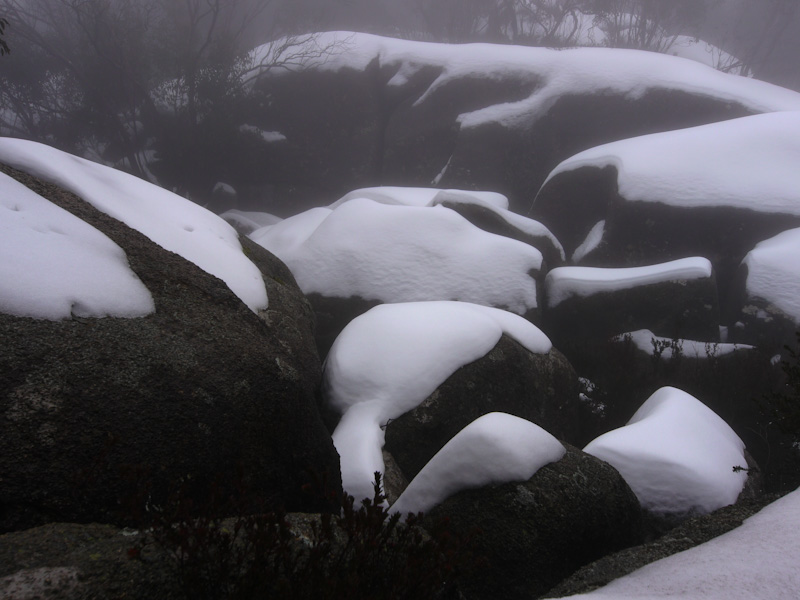
Ice on the rocks with the Canon. Canon 1D Mark III dSLR camera with Canon 135mm f/2.0L lens, ISO 200, f/4, 1/125th sec, uncropped, major contrast enhancement in post-processing:
snow on the rocks
Fallen tree. Panasonic GH-1 Micro Four Thirds camera with Olympus ZD 7-14mm lens ISO 200, f/5.6, 1/60th sec, 8mm focal length, uncropped:
fallen tree
Patterns in nature. Panasonic GH-1 Micro Four Thirds camera with Olympus ZD 7-14mm lens ISO 200, f/5.6, 1/60th sec, 14mm focal length, uncropped:
patterns

What have you learned from the above images?

1. you don’t need ISO above ISO 400 so any modern cropped sensor camera will handle this scenery well – don’t get yourself worried about all those camera tests comparing ISO at 12,800 – high ISO shooting is really only needed for certain niche photographers. The landscape photographer, like most photographers, generally shoot at low ISO and preferably with a tripod.

2. the limiting factor is not the camera or lens, but YOUR ability to adjust the camera’s settings effectively and to ensure the lens glass remains clear.

3. don’t forget your tripod and polarising filter for those waterfall shots.

4. in the cloud, an ultra wide angle lens comes into its own while a telephoto has limited utility, but try to avoid getting too much brighter cloud in your image, as viewer’s eyes tend to go to bright areas, and this cloud will have little detail to warrant the viewer’s attention, and thus generally will detract from the image.

5. with more endeavour and time, a number of different imagery styles could be derived from the initial base images, and these could be further “enhanced” because the initial exposures generally included the full dynamic range that was important with minimal if any blown highlights. Note I have intentionally under-exposed a couple of the above for effect.

As an aside, I am really looking forward to a weather-proof Olympus Pen Pro with built-in EVF and image stabiliser to use with the very nice new Olympus 12mm f/2.0 lens, so please Mr Olympus, bring it on!


An Aussie’s 1st time in New York – part IX

Written by Gary on July 11th, 2011

My last photo blog on my trip to New York.

All photos taken with Panasonic GH-1 Micro Four Thirds camera.

One of the few photos I took with the Olympus 7-14mm lens – New York’s Flatiron building:

Flatiron building

Empire State:
Empire building

Only the tourists look up:

looking up

Custom built burgers:
burgers

Reflections:
Reflections

Greenwich Village:
Greenwich

Farewell New York, I had a great time, thank you.
Liberty


An Aussie’s 1st time in New York – part VIII – day trip to Philadelphia Museum of Art

Written by Gary on July 11th, 2011

I could not resist catching a 1 hour train to Philadelphia and taking a 20min walk in the rain to Philadelphia’s Museum of Art – made famous by the Rocky movie when Rocky trained by running up its steps.

Now the train to Philadelphia from New York’s Penn Station is ridiculously expensive – it cost my $49 one way and $89 on the way back, and that wasn’t even the express train! Furthermore, you will need photo ID such as passport or driver’s licence to purchase your tickets as your photo ID may be checked on the train – not the time to leave it in the hotel safe!

The day I visited the gallery, it was fortunately very quiet allowing me plenty of time to relax and take in all the wonderful art works, especially the Renoir’s which are my favorite. They also have a very nice restaurant in which to indulge yourself half way through your browsing.

Here are a few of the paintings taken with my Panasonic GH-1 Micro Four Thirds camera and Leica-D 25mm f/1.4 lens.

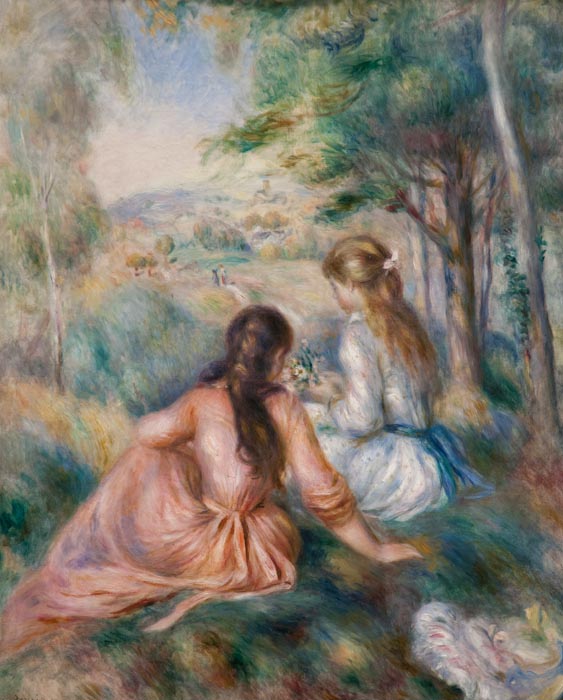
Two girls by Renoir c1892:
Renoir

Large bather by Renoir 1905:
Renoir bather

This one is probably the best large painting in the gallery and takes pride of place – Renoir’s Large Bathers (1884-7):

large bathers

renoirs

And one of the many Monet’s:

Monet

Salvador Dali’s 1936 comment of the Spanish Civil War’s destruction of his country:

Dali

Georgio de Chirico’s The Poet and his Muse from c1925:

de Chirico

Statue of Diana in the main hall by Augustus Saint-Gaudens 1892-4:

Diana

And the steps outside the gallery:

gallery

and Philadelphia CBD:

CBD

next post – New York farewell.


An Aussie’s 1st time in New York – part VII – MOMA

Written by Gary on July 11th, 2011

New York’s MOMA art gallery placed not far from Times Square contains mainly 20th century art, and is well worth a visit.

Here are a few taken with my Panasonic GH-1 Micro Four Thirds camera with Leica-D 25mm f/1.4 lens:

Picasso’s Three Women At The Spring from 1921:

Picasso

The Starry Night by Van Gogh in 1889:

Van gogh

The Storm by Edvard Munch (1893):

Munch

Girl in a mirror by Hirschfield in 1940:

Hirschfield

Sculpture in the outdoor garden:

Sculpture

Metropolitain sign outside the museum:

Metropolitain

See more of my pics from MOMA here.

Next post – Philadelphia.


An Aussie’s 1st time in New York – part VI – Brooklyn, Brighton Beach and Coney Island

Written by Gary on July 11th, 2011

It would be very easy to miss catching a subway train to Brighton Beach and seeing little Russia by the Sea, on a beautiful warm June day when it is just delightful to walk along the Brighton Beach boardwalk down to the Coney Island amusement park and the pier.

The following were taken with Panasonic GH-1 Micro Four Thirds camera:

Brighton beach boardwalk:

Brighton Beach

Coney Island amusement park from the jetty:

Coney Island

Taking in the sun outside the aquarium:

aquarium

Russia on the beach – on your walk back, have lunch at Tatiana’s restaurant on the boardwalk – very reasonably priced and nice food too!

Little Moscow

A perfect way to spend the afternoon is catch a couple of trains to get you to Brooklyn Museum station and you can spend a relaxing afternoon at Brooklyn’s art gallery which has a very nice collection of ancient Egyptian artefacts as well as American paintings.

Here are a few:

Out of doors study by John Sargent, 1889:
Sargent

Nude with apple by William Glacken, 1910:
Glacken

Posing/passing by Kehinde Whey, 2003:
Whey

more from Brooklyn Museum of Art here.

next post – MOMA art gallery.


An Aussie’s 1st time in New York – part V – the Met II – blue and green should never be seen but no-one told Renoir

Written by Gary on July 11th, 2011

More from New York’s awesome Met art gallery taken with my Panasonic GH-1 Micro Four Thirds camera with Leica-D 25mm f/1.4 lens:

Perhaps my favorite painter of all is Renoir – it seems someone forgot to tell him blue and green should never be seen together!

Let’s look at a few beautiful paintings of his found at the Met:

Piano

bathing

beach

meadow

daisies

seashore

trio

reclining nude

Eugene

Nini

There is much, much more to see at the Met, here are some of my favorites

Next, on to part VI of my New York photo blog.


An Aussie’s 1st time in New York – part IV – the awesome Met I

Written by Gary on July 11th, 2011

One of THE MUST SEE things in New York is the absolutely amazing Metropolitan Museum of Art (the Met) on Central Park.

This art gallery is New York’s answer to the Louvre and you need to allocate at least 6 hours to wandering around the massive amount of quality art works.

When visiting New York’s Met or MOMA art galleries you must check your back-pack into the cloak room BUT you must take all valuables including cameras and lenses with you – hint – only take 1 camera and one lens – a wide aperture f/1.4 or f/2.0 lens – leave the rest in your hotel safe.

Let’s take a little tour of a few taken with my trusty, quiet, Panasonic GH-1 Micro Four Thirds camera with Four Thirds Leica-D 25mm f/1.4 lens and NO FLASH:

Nydia, the blind flower girl of Pompeii by Randolph Rogers in 1859 (marble, sepia toned in Lightroom):

Nydia

Magnolias and Irises a lead light window by Louis Comfort Tiffany in 1908:

Tiffany

Winter by Houdon, 1787:
Winter

Self-portrait by Rembrandt in 1660:

Rembrandt

The absolutely delightful self-portrait in pastel by Elisabeth Le Brun in 1789 (apologies for the glass reflections):
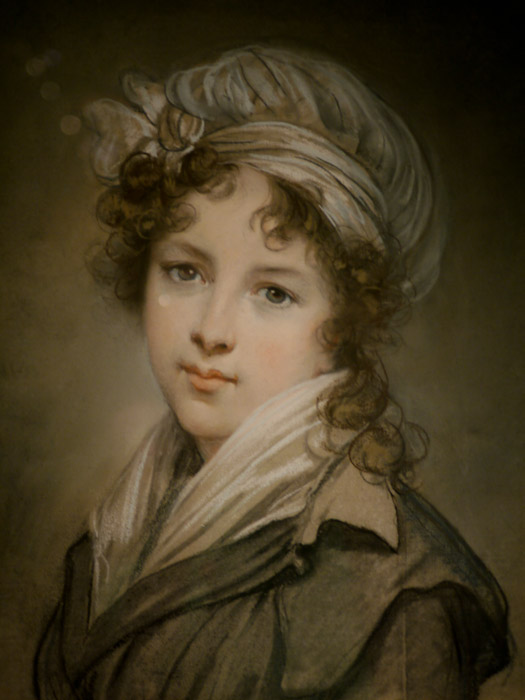
Le

And in stark contrast, this brilliant portrait of his uncle by Cezanne in 1866:

Cezanne

Cezanne showing off his versatility with this painting of a house with cracked walls in 1892-4:

Cracked walls

Corot’s 1871-4 painting of a woman gathering faggots:

Corot

And from a time when women were appreciated even if they didn’t have a 6 pack or look malnourished and poor – Degas and one of the bathing women series from 1885-6 – women as nature meant them to be:

Degas

Likewise, Ingres painted a new version of his famous Odalisque in 1824 showing a woman and her beautiful form even though her body may not sell many bikini’s in Time Square advertisements today:

Ingres

Even Pissarro in 1895, was comfortable showing a woman is beautiful even if she does have a pot – we have much to learn in our society of accepting people for who they are instead of placing ridiculous pressures upon them to conform to some unobtainable ideal, to the extent they spend all their life in a gym, or all their money at the plastic surgeons – art has much to teach us:

Pissarro

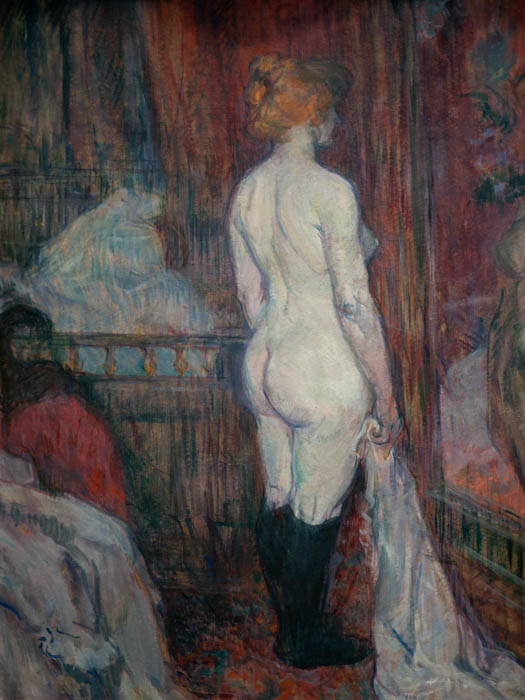
This is further reinforced by Henri de Toulouse-Lautrec’s, 1897 curvaceous Woman at the Mirror:
Touluse-Lautrec

and now for some modern art:

El Greco

don’t be fooled, the above painting is by the legendery El Greco, painted in 1608-14!

next post – more from the Met.


An Aussie’s 1st time in New York – part III

Written by Gary on July 11th, 2011

As with all my New York photos from this trip, these were taken with the lovely, compact Panasonic GH-1 Micro Four Thirds camera – a great travel camera (although the 3rd generation cameras are even better – the GH-2, G3 and Olympus E-PL3), and I didn’t miss not having my big Canon 1D Mark III dSLR once!

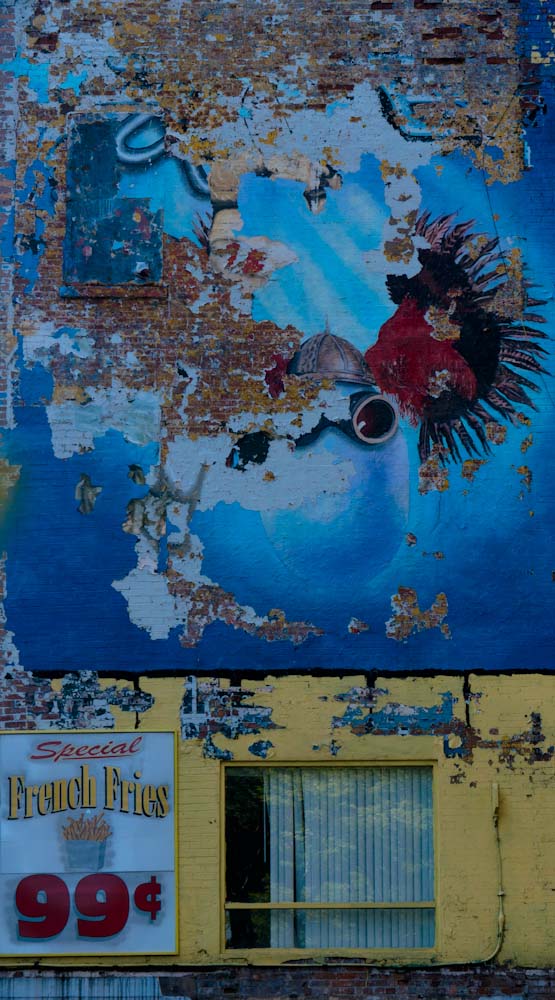
Peeling paint:
Peeling paint

Prince at Madame Tussaud’s using the 25mm f/1.4 lens and available light:

Prince

Chicago at night with 25mm f/1.4 lens hand held:

Chicago

Brooklyn Bridge:

Brooklyn Bridge

Central Park:

Central Park

Chrysler building:

Chrysler

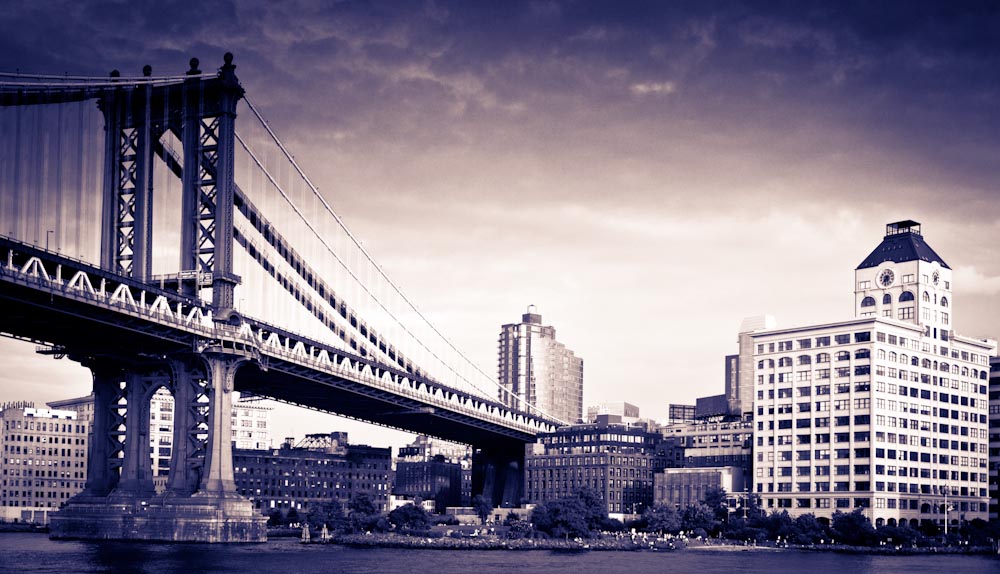
Manhattan Bridge:

Manhattan Bridge

Pier 17:

Pier 17

Greenwich Village:

Greenwich Village

Empire State and Chrysler Buildings at dusk hand held with Rokinon 85mm f/1.4 lens:

Empire State


An Aussie’s 1st time in New York – Part II

Written by Gary on July 8th, 2011

New York, like most great cities, just demands to be walked and walked to explore it, but beware of New York, even walking 8 hours a day, keeping up your fluid intake in the warm humidity of June, there is the not so hidden danger – food, specifically, very high calorie count food which will never be walked off no matter how hard you try – so choose your food wisely!

If you really must go pizza, choose a thin crust pizza – if you are near Times Square and don’t mind an often noisy ambience, the very efficient service at John’s Pizzeria between 7th and 8th Avenue in 44th street (I think), is not a bad spot when in doubt – just don’t eat a whole pizza by yourself!

If you are near Times Square and can afford to indulge yourself, then Shula’s Steak Restaurant at Westin Hotel on the corner of 8th Avenue and 43rd Street produce a high quality petite steak in a 3 course pre-theatre dinner special between 5-7pm for about $50 plus wine and gratuity. The ambience is very quiet and subdued, just what you need to escape from the crowds.

If you want a better quality restaurant experience than is generally offered in the busy tourist zones of the theatre district near Times Square or Little Italy, head down to Greenwich Village or Tribeca.

Let’s get back to walking the city.

Geometry

The multitude of billboards juxtaposed with abstract buildings make for interesting imagery.

Billboard

And not so abstract.

Billboards

The vehicles also often carry interesting signs, and invariably, the trucks such as this one, and the old styled school buses appear built like tanks. Seems fuel economy has not entered the American psyche given their pump prices are about a quarter that of the rest of the developed world.

Truck

And don’t forget the people, after all, apart from the massive buildings, Broadway and the Met, what else would really make NY interesting to visit?

Now, I’m not sure if these ladies saw me taking this image and realising I would be publishing it on the web but it was good of them to try to straighten their hair for the shot.

As for the guy on the bike, did I mention NY in June was very warm and humid, even hotter in the sun? I don’t blame him for cycling without his shirt in the middle of the city. What I couldn’t cope with his having to wear a suit in that climate!

traffic lights

Yes, I’m afraid ladies, not all have a 6 pack like this one:

6 pack

But you can find real ones, even if they are still a boy at heart and insists on showing off his body by skating:

Skater

All of the above photos were taken with the Panasonic GH-1 Micro Four Thirds camera with Lumix 14-140mm kit lens.

Go to next post on New York for more pics.