Micro Four Thirds gets a cheap 50mm f/0.95 hyperprime lens for dreamy, very shallow depth of field or low light work

Written by Gary on March 2nd, 2010

The Micro Four Thirds camera system is blessed with being able to use almost any lens ever made albeit in manual focus only, but at least image stabilised as well if you use an Olympus body, and being mirror-less, having fast, accurate access to manual focus anywhere on the image.

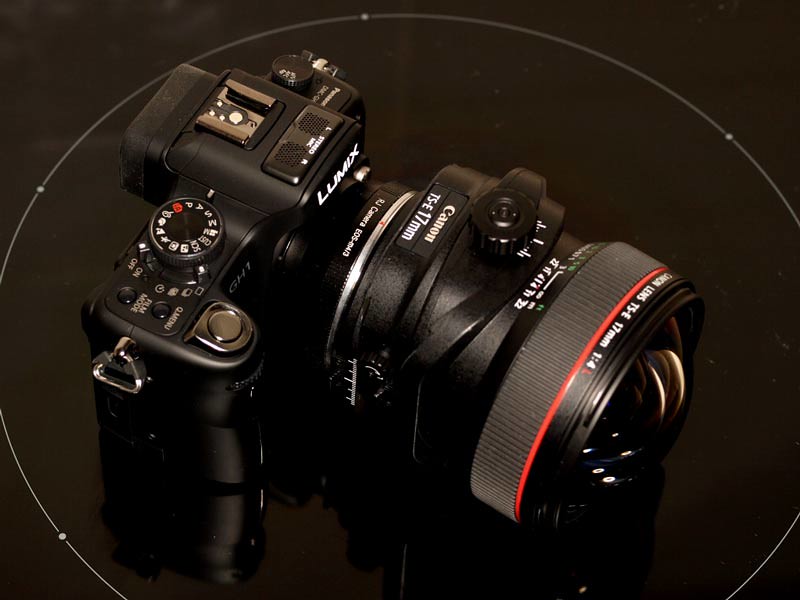
New US-based company, Noktor, has just released its first lens product – a hyperprime 50mm f/0.95 lens in Micro Four Thirds mount for $US750 (yes that is cheap compared to the Leica version which is some 15 times more expensive!), weighing 480g and with close focus of 0.6m and a filter thread of 62mm. The lens appears to be based on the $US900 Senko/Navitron/Yakumo C-mount TV camera lens. It will be interesting to see how it compares with the similarly priced Voigtlander Nokton 50mm f/1.1 in Leica mount. I suspect the Voigtlander will beat it for sharpness wide open given the images Noktor have posted thus far.

Noktor 50mm f/0.95

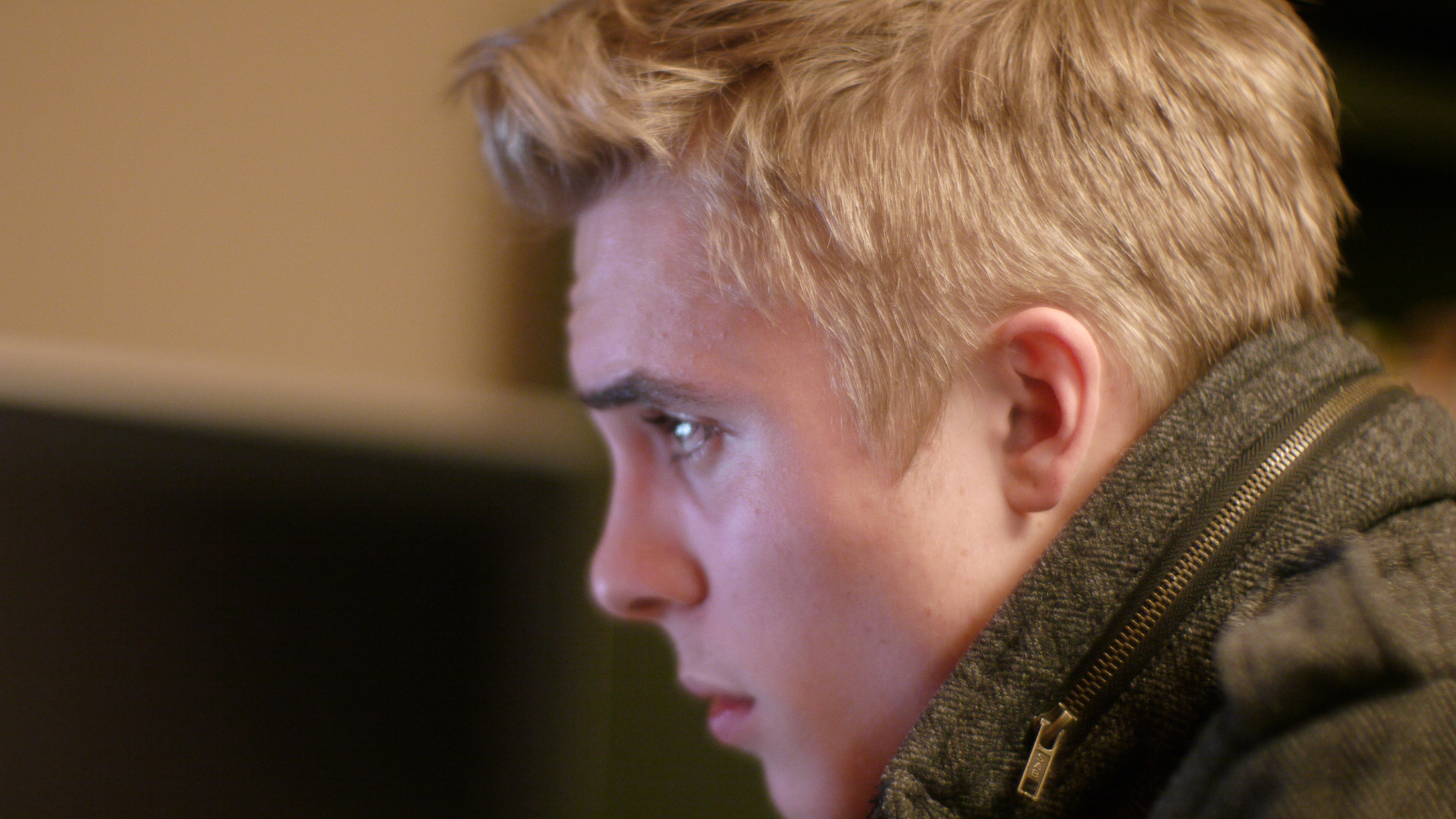
They provide the following image sample (click image for large size):

portrait

As you can see, it has a dreamy aesthetic, and it has extremely shallow DOF. More images in their gallery, and a quick preview of it by Steve Huff, and also check out Philip Bloom’s review of this lens for videos – he shows a very nice shallow DOF video taken with a GF-1.

Having a 50mm focal length, this gives a field of view of a 100mm lens on a 35mm camera, and I presume a depth of field of a 100mm f/1.9 lens on a 35mm camera, but exposure of an f/0.95 lens, and image stabilised on Olympus!

Now let’s see what other wide aperture options at that focal length we have for Micro Four Thirds:

Autofocus capable:

  • Panasonic Leica M43 45mm f/2.8 OIS macro
  • Olympus M43 50mm f/2.0 macro (coming in 2011?)
  • Olympus ZD 50mm f/2.0 macro – slow AF on Olympus, no AF on Panasonic
  • Olympus ZD 35-100mm f/2.0 – slow AF on Olympus, no AF on Panasonic – bit too big for a small body though
  • Olympus ZD 50-200mm f/2.8-3.5 – slow AF on Olympus, no AF on Panasonic – bit too big for a small body though
  • Sigma 50mm f/1.4 Four Thirds – slow AF on Olympus, no AF on Panasonic

50mm lenses which will only manual focus on M43 but with aperture at least as fast as f/1.2:

  • Leica Noctilux-M 50mm f/0.95 ASPH – 700g, close focus 1m, £6290 or $US11,000 new.
  • Leica Noctilux-M 50mm f/1 ASPH – 630g 1975 model (~$US4000 on Ebay?) now replaced by the f/0.95 model which has less vignetting and distortion
  • Carl Zeiss 50mm f/0.7 limited production 35mm movie camera lens
  • Tarcus I.T.V 50mm f/0.95
  • Voigtlander Nokton 50mm f/1.1 Leica VM mount – 428g, close focus 1m, 58mm filter, 10 aperture blades, $A1295 Sharper than the Leica f/1.0 but not as sharp as the Leica f/0.95, but bokeh not quite as nice, and micro-contrast a bit flat.
  • Voigtlander Nokton 50mm f/1.5 Leica Vm mount is also available – see photos here
  • Voigtlander 35mm f/1.2 and f/1.4 are also available
  • Hexanon 50mm f/1.2 – $US2000 on Ebay
  • Canon EF 50mm f/1.0 L – 985g, close focus 0.6m, USM AF, discontinued 2002; $US3500? Very soft, no where near as good as a Canon 85mm f/1.2L, even at f/2.8
  • Canon EF 50mm f/1.2 L – USM AF, introduced in 2006, sharper than the f/1.0 Canon
  • Canon FD 50mm f/1.2
  • Canon 7 rangefinder 50mm f/0.95 “dream lens”
  • Olympus OM 50mm f/1.2
  • Olympus OM 55mm f/1.2 – very soft wide open on Four Thirds
  • Nikon 50mm f/1.2 AI-S – 354g, 9 blades, close focus 0.5m,  $US670 new
  • Nikon 58mm f/1.2 Ai-s Noct ASPH – 465g, 9 blades, discontinued in 1997  much more expensive than the 50mm Nikon – ~$US3000 Ebay
  • Minolta Rokker 50mm and 58mm f/1.2 lenses
 

The very exciting future of Micro Four Thirds cameras – native field of view and SWD AF for Olympus OM lenses as well??

Written by Gary on February 28th, 2010

Despite all the other cameras that I own, including dSLRs such as Canon 1D Mark III, Olympus E-510, Olympus E-330, it is the unique characteristics of design of the Micro Four Thirds which has me, and much of the photographic world truly excited.

It has sufficient image quality to address the needs of most photographers, indeed, the DxO tests of the Panasonic GH-1 showed it to have less image noise and more dynamic range at ALL ISO levels than the new Canon APS-C dSLRs – the Canon 550D and Canon 7D.

The system now has enough lenses and bodies and versatility that there should be a reasonable selection of a compact, light, relativley quiet and non-intrusive high image quality camera kit which you can take anywhere and also do HD video, and in the case of the GH-1 and its excellent HD kit lens, you get the only continuous AF HD video capability out there.

One of the beauties of its design is it very short lens mount flange to sensor distance which not only allows use of almost any legacy lens ever made to be used on it such as Leica M rangefinder, Olympus Pen half-frame, and ANY 35mm film or digital lens – albeit in manual focus, but it’s design allows the fastest access to accurate manual focus currently available.

Furthermore, when used on Olympus bodies, all these lenses can be image stabilised and used at up to ISO 1600 with good image quality – something 35mm film photographers could only ever have dream’t about.

Not only that, but you can now get adapters which will also convert nearly ALL those 35mm lenses into tilt and shift lenses for awesome versatility unheard of before, and now Olympus has also filed a patent to create a 0.5x wide angle converter for OM lenses so that they can be used at their native field of view and aperture, thus an OM 21mm f/3.5 lens when currently used on a M43 camera has a field of view of a 42mm lens, while letting in the equivalent light of a f/3.5 lens and having a depth of field similar to a 42mm f/7 lens, this new wide angle adapter means that this lens will once again have a field of view of 21mm lens and a depth of field of a 21mm f/3.5 but an exposure capability of an f/1.7 lens, and be image stabilised.

Not only that, but if I am reading this patent correctly, it will convert ALL Olympus OM legacy lenses back to their native field of view and depth of field and with twice the brightness for shorter exposures AND adds SWD autofocus capability to all of them!

Now wouldn’t that be awesome!

And of course, you can extend this versatility to your creative needs by using the nice Art Filters, and do all this even in HD video with full manual exposure control if you wish.

BUT, this is only the beginning of this revolution!!

The next Panasonic GH-2 is likely to have high end HD video capability, but more importantly, the first global silent digital shutter which has the potential to radically change everything:

  • at last we will have a totally silent high image quality camera for wedding ceremonies, classical music concerts, etc
  • the rolling shutter jello effect in videos on panning will disappear totally
  • potential for much faster burst rates (probably in the GH-3) – perhaps up to 60fps if there is adequate buffer and focus is managed
  • sensor design will be able to be radically different, such that even in the GH-2 it is rumoured that it will have a dual exposure system such that green pixels will be exposed 4x longer to give sensitivity of a full frame dSLR
  • this could be further extended so that the sensor could automatically detect areas of highlights and dark shadows and adjust exposure accordingly in each area to improve shadow detail and prevent blown highlights.
  • they could even potentially design it to give different exposures to the foreground subject to further separate subject from the background regions.

We can expect the silent players from the Four Thirds consortium to consider re-entering the arena now that it is so profitable, and this may give us Micro Four Third camera bodies with totally different sensor designs:

  • Kodak sensors
  • Fujifilm DDR sensors
  • Sigma Foveon sensors
  • sensors optimised for infrared photography

With Panasonic now producing 3D televisions, surely, it won’t be long before they produce a Micro Four Thirds camera for 3D still and video capture to provide content for it – the small M43 size means a stereo camera lens system would still not be too onerous in size.

The amazing progress in electronic view finder technology is one area that has really allowed this type of camera to be possible, but this will only get better and more creative – inevitably we will get wireless viewfinders so that we can operate the camera remotely and see in real time exactly what the sensor is seeing.

The achille’s heel of mirror-less systems has been autofocus speed, but current models are as fast if not faster and more versatile than entry level dSLRs already – as electronics and algorithms improve, they can only get faster.

There is now little point in buying entry level dSLR’s – AF speed is the same, viewfinder on these dSLRs tends to be much worse than the EVF’s on the GH-1 and E-P2, image quality is similar, but they are bigger, heavier, noisier and more intrusive – so why bother with them?

Even Olympus officials are suggesting that all entry level Olympus dSLRs will be mirror-less by 2012 leaving only high-end semi-pro and pro models with prisms – the pentamirror will be banished, and we will see the Four Thirds system become part of the Micro Four Thirds system with full interchangeability of lenses, albeit via adapters, but with better live view AF performance than we have now.

I would also expect that Canon will replace some of their entry level dSLRs with mirror-less versions using the same EF-S mount but still only providing their largely second-rate EF-S lenses – they never really got serious about providing pro quality lenses to the EF-S mount, but will they bite the bullet and add the extra mount pins to make fast CDAF possible, and remake all their EF-S lenses optimised for CDAF?

Nikon will follow suit, but they are also likely to add a new even smaller version with a 2.5x crop sensor with new lens system – a good idea but the even smaller sensor will make it even harder to get shallow depth of field.

Just as 35mm film cameras displaced medium format film, Micro Four Thirds will displace entry level cropped sensor dSLRs and high end point and shoot cameras.

Sure there will be hoards of APS-C sized mirror-less systems – but why would you bother with these when their lenses will be inevitably bigger, will not be as versatile (unable to use Leica M lenses, unable to use tilt-shift adapters, unable to add silent AF crop-adjusted adapters), will have minimal if any image quality advantage, and in many cases, will not have pro quality AF lenses available to use as well?

See also Zone-10’s take on the M43 revolution, and a quote from them:

“In 1972 the Olympus OM-1 rewrote the rules for SLR cameras. 38 years on, Micro FourThirds could do even much more than that.”

One of the biggest barriers in getting into photography ever since AF lenses took over the world, has been the cost of these lenses.

Micro Four Thirds will soon allow more cost effective bodies (no need for AF sensors, moving shutters or prisms), plus the ability to use and accurately manual focus, cheap old legacy lenses, but not only that, it appears you just need the one AF adapter and they not only will become image stabilised and AF lenses  – this will make such a high image quality and versatile system finally accessible for the more financially challenged sectors.

The momentum is with Micro Four Thirds – let the force be with you 🙂

Sorry Canon and Nikon, you have misjudged this one from left field!


Panasonic GH-1 does Dave Hill grunge – a tribute to my mate Ian at his retirement

Written by Gary on February 27th, 2010

My mate Ian retired this week, and we are all going to miss him at work.

He is a gentle, kind giant of a man with a rare intelligence and a wonderful sense of humour who was always dependable and never shirked his responsibilities when things got tough as so many others do.

He made a tremendous impact on many lives and he will perhaps never quite understand the magnitude of his influence, not only to his clients but on those with whom he worked.

A couple of years ago, we thought we would have a bit fun with my Olympus E-510 and a couple of flashes and we came up with this image of a mad man in a padded cell:

the mad man.

This week we had a little informal lunch to celebrate his farewell at work, with his colleagues gathered around the room, I managed to get a few shots after his speech as he gave a farewell wave.

This image is approximately a 33% crop of a 16:9 aspect ratio image taken with the Panasonic GH-1 Micro Four Thirds camera with Leica-D 25mm f/1.4 lens at f/2.8 and an Olympus FL-50 flash bounced from the ceiling.

Although the original captured the occasion beautifully, I wanted a more punchy, grunge effect along the lines of a Dave Hill effect, because to me this suited another side of his personality which I love, I hope he likes it:
Dave Hill effect


Ultra-wide zoom lenses for cropped sensor cameras

Written by Gary on February 23rd, 2010

In my book, the best lens to get for ultra-wide zoom if you can afford it at $A1849 is the Panasonic 7-14mm f/4 lens for Micro Four Thirds cameras which of course will be image stabilised when used on Olympus cameras and gives field of view of 14-28mm (and a touch wider when used in 16:9 aspect ratio on a GH-1).

It is almost as good as the much larger, heavier, more expensive Olympus 7-14mm f/4 Four Thirds and the Nikon 14-24mm f/2.8G lens for full frame Nikon.

It is far smaller than anything else in that range, ideal for travel, and generally gives as good, if not better results – another great reason for buying the Micro Four Thirds system instead of a cropped sensor dSLR.

It’s built-in petal lens hood means you cannot attach polariser or ND gradient filters – even on lenses which can take filters, you are likely to get vignetting at focal lengths wider than 21mm in 35mm terms – this may be a big factor in your decision, particularly if you are buying it for landscape work rather than urban or creative work.

Another excellent option for Micro Four Thirds users, is the more affordable (?$A600-800), forth-coming Olympus M.ZD 9-18mm lens (the Four Thirds version is very popular and retails for a very reasonable $A795 and you can attach filters – the M43 version should be easier to design and much smaller).

If you have an Canon APS-C dSLR then you have a choice of generally cheap, consumer to mid grade lenses, albeit not as good optically as the lenses mentioned above, but that’s one of the prices you pay for getting a Canon APS-C dSLR – wide angle lenses has never been their forte, but at least they are relatively cheap.

Canon EF-S 10-22mm f/3.5-4.5:

  • eq. to 16-35mm range; has reasonable build quality and minimal aberrations with good resolution. Not dust proof. 77mm filter; $A1269
  • said to be better than the Nikon 12-24mm, the Tamron 11-18mm, and the Sigma 10-20mm
  • less distortion at 10mm than a Canon 16-35mm L on a full frame
  • see Photozone review and Ken Rockwell’s review

Sigma 10-20mm F4-5.6 EX DC HSM:

  • 16-32mm in 35mm equiv.; 0.24m macro; 77mm filter; non-rotating front element; 6 blades; $A769
  • significant distortion limits architectural use;
  • perhaps the worst optically of the bunch, and is no longer the widest of the zooms
  • see dpreview lens review

Sigma 10-20mm f/3.5 DC HSM:

  • 82mm filter; $A989

Sigma 12-24mm f/4.5-5.6 EX DG:

  • 19-38mm equiv.; a great lens but you need to find a good one as they are quite variable in quality.
  • $A1179

Tamron 10-24mm f/3.5-4.5 Di II LD IF:

  • 16-38mm on APS-C cameras; 77mm filter; 370g; bulky lens hood. $A789
  • sharper centrally and with less distortion than the Sigma 10-20mm, but still generally soft, especially wide open
  • see dpreview lens review

Tokina 11-16mm f/2.8:

  • 77mm filter; $A859

Tokina AT-X Pro SD 12-24mm f/4 IF DX:

  • 19-38mm range; $A739 and $A799 for version II;
  • easily beats the Sigma 10-20mm f/4-5.6 EX DC HSM and Tamron 10-24mm f/3.5-4.5 Di-II as it is much sharper, especially wide open with good distortion results and solidly built
  • best used at 12-18mm
  • not so good at 24mm end and complex CA difficult to remove; not good for close up work.
  • almost as good as the consumer level Olympus ZD 9-18mm
  • see dpreview’s lens review

Sigma 8-16mm f/4.5-5.6 DC:

  • announced Feb 2010 and will be the widest zoom available offering 12-24mm range in 35mm terms
  • 545g, HSM motor, close focus 24cm.
  • but will it’s optics be good enough as promised with its 4 FLD glass elements

In addition to the above third party APS-C lenses, Nikon DX users have the choice of the following lenses – perhaps no better off than Canon APS-C users:

Nikkor AF-S 10-24mm f/3.5-5.3G ED:

  • $A1399

Nikkor AF-S 12-24mm f/4G DX  IF ED:

  • $A1569
  • said to be not as good as the Canon EF-S 10-22mm lens, particular in distortion reduction

Nikkor AF-S 14-24mm f/2.8G ED for full frame:

  • $A2285; generally regarded as the best full frame ultra-wide zoom but on cropped sensor becomes 21-36mm range.

Finally, if you are like me and you have a Canon 1D Mark III (or  Mark IV), then forget ultra-wide zoom capability – you have to use a full frame lens at 1.3x crop factor, thus:

Canon EF 16-35mm f/2.8L II USM:

  • becomes 21-46mm on 1.3x crop – hardly ultra-wide zoom, but could still be useful, although no where as good as the Nikon 14-24mm which in addition to being sharper, would give 18-31mm range, but no AF, and you would need a special G adapter to allow aperture control.
  • $A1999
 

Why Micro Four Thirds is the ideal system to migrate from high end point and shoot cameras

Written by Gary on February 21st, 2010

This little post is inspired by a forum thread started by a photographer who mainly shoots using the excellent Panasonic LX3 but is finding the image quality, although excellent for prints to 11″x14″ is not adequate for exhibition work at, let’s say 20″ x 30″.

The Panasonic LX-3 is a brilliant little “point and shoot” digital because, not only is it super small, quiet and discrete, it has a great 24-60mm f/2.0-2.8 Leica lens which will shoot in native 16:9 aspect ratio and when you check out his photos, you will see that he has a fantastic eye for photography and that the discrete nature of this camera has enabled him to create these images which just would not be possible with a larger intrusive dSLR.

The problem with the LX-3 is the same as for all point and shoot digital cameras – it has a tiny sensor
and tiny sensors mean severe diffraction limitation of optical resolution, less dynamic range, more noise at high ISO, and very deep depth of field (the latter is actually great for landscapes, street photography and hand-held self-portraits but very limiting for other styles of photography). This means quality of images deteriorates rapidly as you enlarge them past 11″x 14″.

His need for improved image quality could be achieved without question by buying a dSLR or even a medium format digital, but the size, noise and intrusiveness of a dSLR would change the way he takes photos and this would be a pity, because as you can see, he takes great photos in this style, and of course, the larger size of these cameras may mean he doesn’t even take them with him and so he would miss opportunities for spontaneous photography which is such an important feature in his work.

A Micro Four Thirds (M43) camera has a sensor more than 5x larger than that on a LX-3 which should equate to some 2.5 stops of improved sensor noise and dynamic range, while not being anywhere near as diffraction limited in its resolution.

A M43 camera will be only a little more louder, and bigger than the LX-3 but no where near as loud or as big as a dSLR.

Autofocus speed has not been an issue with his style and thus the AF speed of a M43 will be adequate given he is not shooting action/sports with narrow depth of field.

The image quality of a M43 will be similar to if not better than a cropped sensor dSLR such as a Canon 550D or 7D – see here, so this combined with his above needs means a cropped sensor dSLR would not make any sense for his style of photography compared to a M43 kit – if he really wants to go the dSLR route – he may as well go the latest full frame or medium format route – but then he will have to change his style.

Having decided upon the M43 route, the next difficulty is which kit to get as there is not one perfect M43 camera – the Panasonic cameras have marginally better AF, AVCHD video, optical image stabilisation which works in video as well and with the GH-1, the best sensor with native 16:9 aspect ratio and, in my opinion, the best design with its hand grip and built-in EVF, while the Olympus cameras have in-built image stabilisation, better jpeg quality, better flash control and some nice art filters to assist with your creative process, while not having the exposure compensation being accidently adjusted via a front dial as on the Panasonic models – my biggest gripe with them.

Given he is on a budget, perhaps his best option for his style is an Olympus E-PL1 with Olympus M.ZD 9-18mm lens, Panasonic 20mm f/1.7 lens and perhaps an Olympus 14-42mm collapsible lens.

The E-PL1 is the cheapest avenue to M43 and adds ability to add the excellent EVF later if he feels he needs it, provides a built-in flash and allows him to extend as a photographer by allowing remote TTL flash, and the image stabilisation combined with the 20mm f/1.7 lens will allow low light work even better than on his LX-3 although of course, it will be at 40mm effective focal length instead of 24mm, but I think he will still manage, while the 9-18mm extends his preference for wide angle work by giving him 18-36mm range, perfectly complimenting the 20mm f/1.7 lens.

The main downside of the E-PL1 is that Olympus has made it harder to change aperture, ISO and shutter speed as it has given priority to a dummies mode feature – nevertheless for most of his work, he will be using a set aperture and ISO so this may not be as big an issue as it could be – if this was an issue, he could go for the Olympus E-P2 and pay for the EVF upfront.

He could then further extend his video capabilities by getting the forthcoming Panasonic GH-2 with 14-140mm HD lens as this camera, if rumours are correct, will have the features of the GH-1 but add some awesome features:

  • improved HD video modes to match the Canon 7D but with full, silent AF with the HD lens
  • global silent shutter for silent still shooting, no jello/rolling shutter effect in video shooting, and perhaps a fast burst rate for still shooting – see here
  • dual exposure sensor to give sensitivity as for the full frame Canon 5D Mark II – see here
  • built-in GPS with automatic local time updates to provide accurate location and time data to EXIF data – see here

The old mantra – the best camera is the one you take with you applies more than ever – the future for most non-professional work is Micro Four Thirds style cameras.


Sony to get in on the action with a mirror-less camera system too?

Written by Gary on February 19th, 2010

The success of the compact, quiet, Micro Four Thirds camera system has already pushed Samsung into releasing a APS-C size version, and rumours have it that Sony is about to join the fray with a new E-mount camera system.

It is suggested that Sony will produce 3  new mirror-less cameras this year:

  • NEX 3 – similar to a Panasonic GF-1
  • NEX 5 – perhaps similar to a Panasonic GH-1 but larger
  • NEX 7 – to compete with the forthcoming Panasonic GH-2 but perhaps with support for XDCAM video recording format

Unfortunately, like the Samsung NX system, it introduces yet another incompatible mount system, although at least with the Sony E-mount, I presume they will provide an adapter for their A-mount dSLR lenses which provides aperture control, EXIF data and some AF control.

And, like the Samsung, unfortunately, they have chosen a larger APS-C sensor size so you will be forced to use larger lenses, and in all likelihood, you will NOT be able to use rangefinder lenses such as Leica M – and this is what makes the Micro Four Thirds so versatile and fun to use – seems Sony and Samsung just don’t get what this genre is all about.

Image quality of the current cropped sensors such as 1.5x crop Dx from Nikon/ Sony, 1.6x crop from Canon, Samsung, and Pentax, and 2x crop from Panasonic and Olympus are very similar even at high ISO.

In fact the Panasonic GH-1 has better image noise at all ISO levels than the new Canon 7D, and it is rumoured that the forthcoming GH-2 will be as sensitive as the full frame Canon 5D Mark II).

Of course, as with all such competing technologies, there will be some minor differences as each leap frogs each other, but, the important issue is that NOW, the technology has matured sufficiently that if a cropped sensor is adequate, then ANY of these sensors will be adequate for at least 90% of our photographic needs – minor differences in these sensor sizes is largely irrelevant in terms of sensor image quality!

Why bother restricting yourself to a unnecessarily larger sensor – when the world is wanting more compact solutions?

If they were smart, they would have joined the Micro Four Thirds revolution and used the Micro Four Thirds lens format so all systems were interchangeable and we all could have a win-win scenario with the ability to use a Sony body with an Olympus M43 lens, etc.

As it is, Sony and Samsung will be forced to rush out new lenses to make something of their new system and if they are not compatible with other systems and forced to have larger lenses, why bother buying them unless you already have Sony mount lenses?

All the same, competition of any form is good, roll on 2010!

PS: see here for dpreview’s coverage of their announcement


Micro Four Thirds cameras to get sensor as sensitive as a Canon 5D MII this year?

Written by Gary on February 19th, 2010

A Panasonic engineer released details of a new dual exposure camera sensor design which will make the sensor as sensitive as a Canon 5D Mark II sensor with similar high ISO performance in terms of dynamic range and noise, and it seems it may be the one used on the forthcoming Panasonic GH-2 and presumably will also have the global shutter for silent shutter, no jello rolling shutter effect, and perhaps faster burst rates.

see details here.

It achieves this 4x improvement in sensitivity by reading the green pixels separately to the red and blue ones, and exposing the green ones to 4x longer exposure and then using a smart signal processing algorithm to use data from the red and blue pixels to remove any motion artefact in the green pixel data – we will have to wait and see how effective this is, but they seem to have done a good job on in-camera correction of optical distortions so perhaps they can achieve this.

As an aside, the article also suggests than manufacture of the excellent Panasonic GH-1 sensor was moved to a new plant at Tonami which resulted in temporary shortage of sensors, but apparently the newer sensors have less codec break up (presumably in AVCHD video mode) and less banding issues.

Whether this eventuates in a GH-2 this year or not, it does suggest that the Micro Four Thirds format will be the perfect compromise on size and performance as the sensor technology will radically improve each year or so making image quality not an issue as the sensor is large enough – of course, it could be argued than an even smaller sensor system such as the rumoured Nikon system will produce adequate image quality from the sensor, but then depth of field would be even larger.

Very exciting times indeed – although I am not sure I will need ISO > 6400 on a camera if I have my nice wide aperture lenses and 2x crop factor for telephoto reach.


A netbook to take into the field with your camera.

Written by Gary on February 18th, 2010

Having a laptop with you on your travel, photo field trips or photo shoots is very handy, allowing you to dump your full memory card onto the laptop hard disk drive, and viewing/editing images, and even uploading them to the net if you have 3G wireless broadband connection or other broadband internet connection.

The main issues with laptops until recently was weight and battery life.

Over the past 2 years, a new genre of laptops – the netbook – has flooded the market, in a similar way that Micro Four Thirds cameras have surged in popularity as high image quality, versatile, light and compact camera systems.

Small, and light is the future for most technologies, but they must be big enough to be functional – Micro Four Thirds is the perfect size for camera systems for most people, 11.6″ netbooks may be the perfect size portable laptops for most people.

So let’s have a look at what I feel are the important features of a netbook:

It must be small and light:

  • I would aim for around the 1 – 1.4kg mark as a reasonable compromise

It must run most of the software you currently use:

  • at present, I would go for Windows 7 Home Premium as the operating system, given that Microsoft seem intent on forcing us to upgrade from XP Pro.
  • sorry Apple, your iPad will make a great photo browser and web browser (except for the unfortunate lack of Macromedia Flash support), but it is not going to run Photoshop, Lightroom or most of the other programs I need.

It must have enough memory storage to enable storage of a reasonable trip’s photos:

  • I often shoot about 50Gb over a 3 week travel period, so I would prefer at least 160Gb of hard disk drive, but the more the merrier.

It’s display must be adequate for photos:

  • 1366 x 768 pixels would be an ideal resolution for this format rather than the more restrictive 1024 x 600 resolution found on most 10″ netbooks to date.
  • most of my images I post on the web have a maximum height of 700 pixels and thus the 1366×768 display will be fine, furthermore if you watch 720p videos, you will be better off with this display size.

It’s performance (speed) and battery life must be adequate:

  • unfortunately, there is a trade off between how fast it will run vs battery life
  • I would aim for a netbook with at least 5 hours of stated battery life – in reality it will be less than stated usually.
  • do NOT get one with Microsoft Vista – get Win 7 Home Premium or Win XP Home
  • to get the best performance AND get 5+ hours of battery life with a 6-cell battery, you need:
    • an optimised low power-usage CPU chip:
      • currently the standard is the 64bit single core 1.66Ghz Intel Atom N450, but by 3rd quarter 2010, Intel should be marketing their improved CPU chip, the N455 which provides faster RAM memory support through allowing use of DDR3 RAM
      • other options include:
        • slower 32bit Atom chips such as the Z series and 1.66Ghz N270
        • higher performing Intel chips such as:
          • Atom D410/510
          • the ultra-low-voltage (ULV) chips such as:
            • the dual core SU4100, and SU7100
            • the Core2Duo SU9300/9400/9600 with Intel Virtualisation for virtual OS performance needs, but no hyper-threading and no Turbo Boost.
            • the soon to be released 32nm dual hyper-threaded double-threaded core ULV Intel i5-520UM or i7-620/640 UM/LM chips with Turbo Boost and HD graphics built-in.
    • an optimised graphics chip system:
      • most early netbooks ran a low power usage graphics chip which unfortunately meant that video or games ran very slowly
      • Nvidia Ion graphic cards allow 1080HD video playback and gaming in netbooks but means battery life will always be short
      • new Nvidia Ion2 Optimus graphic cards provide BOTH graphic cards and automatically switch to the low power consuming card when fast graphics is not needed, giving you the best of both worlds, but unfortunately few models are currently available – but expect this to change rapidly by mid-2010!
    • sufficient RAM memory to minimise access of power consuming hard disk drive:
      • generally you need at least 2Gb for Windows 7 (3 or 4Gb would be even better), and at least 1Gb for WinXP (2Gb is better).

Adequate connectivity:

  • USB ports, and a built-in SD card reader is highly preferred (why didn’t they do this for the Apple iPad rather than require flimsy adapters?)
  • ethernet port (usually standard on all)
  • WiFi wireless networking (usually standard on all)
  • perhaps HDMI output – usually available on the Nvidia Ion netbooks
  • perhaps 3G broadband – usually available as USB modems which may be more flexible as each 3G provider has different systems, and to confuse the issue, Intel is embarking on its WiMax technology for 4G broadband connectivity – which in Australia is only available in local regions through providers such as Unwired which currently only covers parts of Sydney, and thus for most of us, will be irrelevant for a few years yet!
  • some may want built-in webcam and mic for travel

Adequate keyboard and mouse:

  • the smaller 10″ netbooks tend to compromise on the keyboard and mouse, hence another reason the 11.6″ format may be the best compromise.
  • newer models may have a mouse with gesturing support to allow easy zoom in/out, etc.

If video playback or gaming is important along with a good battery life then an ION 2-based netbook should be considered:

  • Acer Aspire One 532G is the 1st ION2 netbook to be announced but unfortunately is a 10″ model, but it is only 1kg.
  • Zotac ION2 coming March 2010
  • Dell/Alienware M11x – regarded by some as the best performing laptop available in 11.6″ format giving 2hr gaming, 4hr HD video viewing on battery and 5-6hrs general use battery life otherwise but it does weigh 2kg! Not ION2 but similar graphic switching technology.

Can’t wait for ION 2, but need video playback rather than battery life? Get an ION-based netbook or an ultra-portable notebook:

  • ASUS Eee PC 1201N – 12″ dual core Atom 330 with 1366×768, 250-320Gb HDD, 2-3Gb DDR2 RAM, 3.5hr 6-cell battery, card reader
  • Acer Timeline 1810T – 11.6″  Core2 SU4100 Centrino, 1366×768,2-4Gb DDR2 RAM, 250-320Gb HDD, gesture, card reader,  HDMI, 5600mAh 8hr battery, 1.35kg – for $300 and 370g more, you could get the revolutionary multi-touch gesturing touch screen tablet version – the 1820PT.

Can’t wait for ION2, but need good battery life but happy with slow video playback?

  • Asus Eee PC 1101HA – 11.6″, 1.2Hz Atom Z520, 1-2Gb RAM, 160Gb HDD?, gesture support mouse pad, SD card reader,  need to overclock it to run 720p video (via BIOS), runs WinXP Home fast, large, heavy 6-cell 63Wh 2800mAh battery lasts 10+ hours (7.5hrs using WiFi), 1.38kg. User can upgrade RAM to 2Gb but not able to access HDD!
 

Seems Canon still can’t get sports AF fixed – their new 1D Mark IV is giving unreliable results

Written by Gary on February 12th, 2010

My first Canon dSLR was the much hyped Canon 1D Mark III when it came out in mid 2007.

I bought this to compliment my much lighter, more compact Olympus Four Thirds system as it would add improved sports AF, 10fps burst rate, shallower depth of field and less noise at high ISO, plus the ability to use lovely fast prime lenses such as the 135mm f/2.0L lens and also tilt shift lenses.

Unfortunately, the Canon 1D Mark III, despite being Canon’s flagship sports camera from a company priding itself on sports photography (that’s why you used to see all those white lenses at sports events), was plagued with unreliable autofocus necessitating return to Canon for modification as well as firmware upgrades but still, my Panasonic GH-1 will AF in C-AF tracking mode MUCH more reliably on a stationary subject as you walk towards it at 3.4 fps than my Canon 1D MIII will do at 3fps in AIServo mode.

Many Canon pro-shooters in frustration turned to the Nikon D3s which had a much more reliable sports AF.

Late last year, Canon proudly announced a new sports pro body, the Canon 1D Mark IV, with a totally revamped AF system and added in movie mode.

Sadly, this report by Rob Galbraith seems to suggest the new model’s AF is still extremely unreliable for sports, and the Nikon D3S is still a more reliable camera in AF for action, is less noisy at high ISO, and being full frame, allows wider angle shots, while the 1D MIV gives more telephoto reach – see here.

Canon is due to release a Mark IV of its full frame, 20+mp pro dSLR, the 1Ds Mark III, but if they just use the current AF system as in the 1D Mark IV, they may find the pros will be moving to the Nikon D3X or a Leica S3.

Perhaps Canon has lost its way – it’s once dominant position in the sports autofocus world has been lost, and even its low noise at high ISO dominance of its Canon sensors appears to be falling behind even lowly Panasonic if DxO’s comparisons of the Panasonic GH-1 and Canon 7D are to be believed.

Without these two reasons to buy Canon, Canon may soon be losing its dominant market share in the dSLR world to Nikon for proshooters and to the much lighter, smaller Micro Four Thirds for most of the rest of photographic needs.

This is very sad, not only for me as I have a LOT of money invested in pro level prime Canon lenses (luckily I can put them on my Micro Four Thirds cameras too), but it may have a big impact on Canon’s pro status as unfortunately, the market tends not to forgive 2 dodgy products in a row.

However, shooting sports with shallow depth of field is a difficult task and each sport requires a different approach and often different AF settings – this is why a pro camera is so complicated for the casual user to use well.

The Canon AIServo AF algorithm tries to predict the AF for the next shot after analysing the subject’s velocity in the previous AF attempts. It is thus not surprising that the AF will fail at the end of a race when the subject suddenly slows down, but it seems with this camera, it takes a LONG time for the AF system to adjust to this and by this time, you have lost the “decisive moment” of capturing the instantaneous expression of a winning or losing competitor which is critical for photojournalists.

I for one will not be upgrading my Canon 1D Mark III just yet – 10 megapixels is just fine for me, and luckily, I don’t shoot much sports.

It may well be the last Canon I will have as the Micro Four Thirds system is far more functional for my needs and will only get much better as technology evolves while Canon is stuck on the constraints of old optical viewfinder technology and being big and heavy, I already find myself increasingly leaving it at home.

Perhaps when Panasonic produce the silent digital shutter camera (eg. the rumoured GH-2 later this year), it will evolve to take 10-60fps (if they get the buffer large enough), and its contrast detect AF tracking mode which currently is able to identify a subject so you don’t have to worry about where your AF point on your subject will shoot sports more reliably than a phase detection AF system as used in dSLRs.

The current Panasonic GH-1 will easily track someone walking, or a car passing at 20-30kph, even if you zoom in or out – this will only get better as electronics improve. Unfortunately, currently it will not lock onto a subject that is only a small component of the frame.

Of course you will get EVF blackout, but this can be easily resolved by adding a cheap optical viewfinder to the hotshoe which is a little wider view than your lens and you will be able to track your subject very nicely indeed.

The future, whether you like it or not, will be an electronic solution where the camera can identify a subject and preferentially lock onto it, no matter where it is in the frame.


Panasonic GH-1 HD video of an Australian bullant – 14-140mm kit lens at 2x digital zoom

Written by Gary on February 12th, 2010

I went on a modified storm chase today hoping to get to a vantage point and take some storm and lightning shots.

Unfortunately the rain clouds kept coming after the main storm producing low cloud and preventing vision of the cumulonimbus structures or the lightning, so I headed to my favorite forest to smell the Eucalypt leaves in the air after the rain and watch the hurried activity of the ants coping with the flash flooding.

For those who have not been to Australia, one of the conspicuous features of Australian fauna is the ubiquitous bullant – short for bulldog ant as it aggressively defends its nest and has a nasty little sting in its tail which may be lethal to those who are allergic to it.

The bullant species belongs to the ant genus Myrmecia which only exist in Australia, apart from a rare species in New Caledonia, and its nearest relative is a fossilised ant which lived some 135 million years ago.

The most common species of the bullant in my area is a medium sized black ant approximately 1cm long and which creates a nest often 1-2 metres in diameter at the surface, and often on gravel paths in forests.

We also have much larger bullant species and I had the pleasure of watching them busy at the entrance of their nest while I was waiting for the rain to stop.

I decided I would try out continuous AF of the Panasonic GH-1 Micro Four Thirds camera with its unique 14-140mm 10x zoom lens which is the only dSLR-like camera – lens combination which allows continuous autofocus during HD video.

The light was very poor necessitating ISO 1600 and 1/80th sec at f/5.8 at 140mm focal length and white balance was set to cloudy, video set to 720p motion jpeg, while digital zoom was set to 2x which in effect gave me focal length reach of ~ 560mm in 35mm terms, and this was hand held.

The continuous autofocus was surprisingly good given such magnification and a relatively fast moving ant which measures only 2-3cm in length.

I had to make sure they didn’t crawl onto my feet as I was only 2 feet from their nest and they have good eyesight and aggressively chase away and sting intruders.


The short unedited video complete with rain drops in the audio can be seen on Youtube here.

One could have used intermittent autofocus but this would have been difficult with the ant running around so much and would add noises of the half-press of shutter button to the audio track.

For those wanting to know more about this amazing little ant, check out the Australian CSIRO web page on Myrmecia nigriceps.

In addition, biologist and photographer Alex Wild has many awesome photos of ants from around the world on his website, and a couple of them I have selected to post here, the first is this species, Myrmecia nigriceps:

Myrmecia nigriceps

and the second demonstrates a Myrmecia piliventris stinging him:

sting

Next time I might bring my Olympus Ring Flash and try some macro still shots.