Seems we will soon get cameras for Micro Four Thirds from Kodak, Sigma, Fuji and Sanyo

Written by Gary on April 5th, 2010

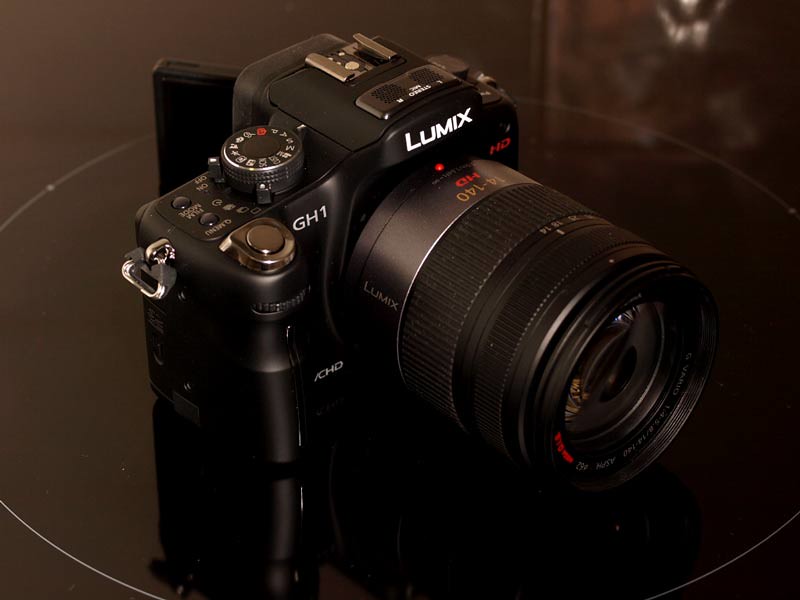
It was reported here that Kodak, Sigma, Fuji and Sanyo have signed up to join the Micro Four Thirds consortium which is fantastic news for all photographers as it will not only cement the Micro Four Thirds standard as the leading mirror-less interchangeable lens camera system but it means we not only will get new lenses, but more variety of camera bodies, features, and perhaps more importantly – camera sensors.

Hopefully we will now be able to choose from:

  • the inbuilt image stabilised Olympus cameras with their great jpeg engine producing arguably the best colours in jpegs from any camera
  • the optical image stabilised, HD video optimised Panasonic cameras and lenses with touch screens, etc
  • a GH-1-like Fuji camera but perhaps with their unique high dynamic range sensor
  • a GF-1-like Kodak camera with a Kodak sensor
  • perhaps a Foveon sensor in a Sigma camera
  • lower end cameras and camcorder styles from Sanyo
 

If you like Rock n Roll, don’t forget the Sunbury BackRoad Music Festival Sat April 10th 2010

Written by Gary on April 5th, 2010

see here for more information – should be a great day – 12 hrs of live bands and hopefully beautiful Autumn weather.

I will be heading up there to enjoy the day and get a few pics in, hope to see you there.


Comparisons of dpreview’s lens tests – the 70-200mm f/2.8 lenses

Written by Gary on March 30th, 2010

The 70-200mm f/2.8 lens is perhaps THE must have lens for many professional photographers.

Although not quite as sharp and aberration free, and MUCH bigger and heavier than a high quality prime lens such as a 135mm f/2.0 or 200mm f/2.8, its wide aperture and zoom combined with image stabilisation allow the pro photographer much more versatility and freedom to capture the shot they want.

Personally, for my type of usage, I am not keen on carrying around a 1.5-1.8kg lens plus another 1-1.4kg body all day, and I would rather use a 135mm f/2.0 L lens perhaps mated with a 1.4x teleconverter if I need the extra reach.

Another major problem with the 70-200mm f/2.8 lens size is that it forces you to limit your camera bag choice to the traditional camera bag which means you need to take it off your back, set it down and then access your gear – not my style at all.

And, of course, on my Olympus dSLR, I have the beautiful Olympus ZD 50-200mm f/2.8-3.5 lens which gives me more telephoto reach and macro performance than the available 70-200mm lenses for Canon, Nikon or Sony.

The legacy 70-200mm f/2.8 lenses from the film days, as excellent as they were then, have now been found wanting when mated with the new high resolution full frame digital SLRs, and thus the manufacturers have released new versions of these over the past couple of years.

The main reason for having a 70-200mm f/2.8 lens is to use it at its widest aperture to give you nice background blurring and bokeh while still giving a sharp subject which will hopefully pop out at the viewer.

Thus in the table below, I will only be using dpreview’s data at f/2.8:

Canon
f/2.8L IS version I
Canon f/2.8L IS II version II Nikon
AF-S VR f/2.8G ED-IF version I
Nikon
AF-S f/2.8G ED VRII – version II
Sony
f/2.8G
focal length in 35mm terms 70-200mm 70-200mm 70-200mm 70-200mm 70-200mm
weight (kg) 1.57kg 1.49kg 1.47kg 1.54kg 1.5kg
length (cm) 19.7cm 19.9cm 21.5cm 20.9cm 19.7cm
closest focus (m) 1.4m (0.18x macro) pincushion 1.2m (0.21x macro) 1.4m (0.18x macro) BUT corners are soft! 1.4m (0.12x macro) 1.2m (0.23x macro)
70mm MTF 1350 (centre) => 800 => 1200 (edge) 1650 => 850 2100 => 850 2000 centre => 800 edge
70mm CA at edge 0.07% 0.13% 0.06% 0.05%
100mm MTF 1600 => 1200 => 1300 1600 => 750 1650 => 750 1800 centre => 1125 edge
100mm CA at edge 0.05% 0.07% 0.02% 0.04%
135mm MTF 1450 => 1125 => 1150 1600 => 650 1700 => 1800 => 800 1800 centre => 1100 edge
135mm CA at edge 0.03% 0.05% 0.03% 0.04%
200mm MTF 1100 => 800 => 1130 1125 =>1300=>480 1650 => 1850 => 1300 1200 centre => 1150 edge
200mm CA at edge 0.045% 0.04% (0.05% half-way) 0.065% 0.065%
light falloff 2EV 2-2.7EV worst at 200mm 1.3EV 1.3-2EV worst at 100mm
distortion 1.2% barrel 70mm => -1.0% pincushion at 200mm 1.2% barrel 70mm => -1.8% pincushion at 200mm ~0% barrel 70mm => -1.5% pincushion at 200mm 1.4% barrel 70mm => -1.3% pincushion at 200mm
diaphragm blades 8 8 9 rounded 9 rounded 9 rounded
other features “3EV OIS”

white

1 flourite and 5 UD elements;

“4EV OIS”

white

MF ring wider and easier to us than previous

not good for full frame, but great on DX cameras for which
it presumably was designed for in 2002.

“3EV OIS”; 3 AF stop buttons.

much better for full frame, new nano coating for less flare
as well but subject to veiling flare.

double-image gives poor bokeh at close focus distances.

substantially changes angle of view which gets wider as you focus
closer! Thus at closest focus of 1.4m, the focal length is actually 160mm
not 200mm!

“4EV OIS VRII”

3 focus hold buttons, IS in body
max. telephoto reach in 35mm terms at 200mm focal nength
with 2x TC
400mm reach at f/5.6

520mm on Canon 1D

640mm on APS-C

400mm reach at f/5.6

520mm on Canon 1D

640mm on APS-C

400mm reach at f/5.6

600mm on DX

400mm reach at f/5.6

600mm on DX

400mm reach at f/5.6

600mm on DX

filter thread 77mm 77mm 77mm 77mm 77mm
price $US1700 $US1700 $US2330 $US1800

For further comparison, the Olympus ZD 50-200mm f/2.8-3.5 SWD lens, is also weather-proofed, has a tripod mount, has 3-4EV IS via in-body IS on most Olympus dSLRs, is MUCH cheaper (~$US1000), is MUCH lighter (1kg not 1.5kg), is shorter (a manageable 15.7cm instead of 20-22cm), uses a smaller, cheaper filter (67mm not 77mm), has 9 rounded diaphragm blades for nice bokeh, and has more than twice the macro performance and twice the telephoto reach (can even use it hand held at reach of 800mm f/7 with a 2x teleconverter), making it MY preferred zoom lens.

Although dpreview has not tested the ZD 50-200mm, it has been tested with a different system at lenstip and wide open it was much better than the Canon 70-200mm f/2.8 on a Canon 20D – with their MTF50 readings giving 41-44 for the ZD in the centre vs only 31-39 for the Canon in the centre, and the ZD was 32-37 at the edge, while the Canon was a much worse 26-29. Their tests for CA showed worst result was 0.11% at 120mm for the ZD and 0.055% at 200mm, while it was 0.085% at 200mm for the Canon. Both lenses showed some astigmatism. The ZD had the least light fall off across the image and had MUCH less flare and ghosting shooting into the sun. Their tests of the Sigma 70-200mm f/2.8 II gave similar resolution wide open to the Canon. I was not able to find their tests of the Nikon 70-200mm vI lens although it apparently was the best of these tested when used on a D200 DX sensor.

Some examples of my photos taken with the ZD 50-200mm lens are here and with a 2x TC are here.

Of course, Olympus users also have the option of the superb but expensive and heavy Olympus ZD 35-100mm f/2.0 lens which, in 35mm full frame terms, gives the focal length reach of a 70-200mm lens but light gathering of an f/2.0 lens and depth of field of an f/4 lens- which at maximum telephoto is perfect for most situations.

Furthermore, it should be pointed out that high quality prime lenses are even better than the zoom lenses for optical image quality – for example, the new Canon 100mm f/2.8L USM hybrid IS macro is even sharper than the previous sharpest lens tested on dpreview (the Olympus ZD 50mm f/2.0 macro), and wide open at f/2.8 it gives MTF 50 of 2000 in the centre and 1500 at the edge with a CA < 0.03%, 1.7EV light falloff and only trivial pincushion – easily beating any of the 70-200mm zooms.

Here is a delightful, quick candid portrait I snuck in while this young lady was having her face painted at a cricket match – taken with the Canon 1D Mark III with EF 135mm f/2.0 L lens and 1.4x TC for very shallow DOF – actually, too shallow for portraits, but didn’t have time to close the aperture down a notch or two (my ZD 50-200mm was attached to 2x TC and my Gh-1 on a tripod in the stadium taking shots of the cricket game):

Lily


Will new cheaper medium format dSLRs like the Pentax 645D squeeze Canon and Nikon from above?

Written by Gary on March 23rd, 2010

While the Micro Four Thirds camera system with its compact, quieter, and lighter form factor is increasingly impacting the entry level dSLR market place, Canon and Nikon surely must be becoming concerned that falling prices for medium format dSLRs such as the new Pentax 645D may squeeze them from above as well.

For sports and other action photography, the pro dSLRs by Canon and Nikon such as the Canon 1D Mark III and Mark IV, or the Nikon D300s and D3s reign supreme courtesy of their fast burst rates of 8-10fps, good performance at high ISO, fast auto-focus (albeit not always accurate or focused on your subject) and range of wide aperture telephoto lenses. It is unlikely that in this sector, they will be seriously challenged for at least another 5 years.

Until now, pro photographers wanting to create very large and detailed prints requiring wide dynamic range and lots of pixels had to part with lots of money for either a medium format dSLR such as a Hasselblad costing some $US30,000+, or settle for a $US10,000+ 35mm full frame dSLR such as a 20+ megapixel Canon 1Ds Mark III or a Nikon D3X, or go for a $US20,000+ compromise on a medium format Mamiya dSLR.

Other options include the expensive, new Leica S2 system, or buying a medium format film SLR and adding a digital back, but this latter approach is quite cumbersome and risks lower image quality with potential lack of precise alignment of the sensor.

BUT, times are changing and Pentax is going to start the push for cheaper, but high image quality medium format dSLRs which handle more like a 35mm dSLR than the more cumbersome current medium format dSLRs.

The new Pentax 645D will be available in Japan only in May 2010 at an incredibly low $US9400 for body and sensor which has got to hurt Canon and Nikon, as their 35mm sensors will not be able to match a 645 size sensor for image quality when you need to create very large prints. When you can offer that image quality at the same price as a Canon 1Ds or a Nikon D3x, you have got to have a great chance of capturing market share.

The Pentax 645D offers the following features which make it very useful for landscape photography in particular, but also fashion if you can post-process out the potential moire artifacts:

  • Kodak 40 megapixel, high dynamic range (11.5 EV range is quoted), 14bit A/D, 44x33mm sensor (giving 6 micron size photosites) with dust removal system – that is 1.7x the area of a 35mm full frame sensor and the diagonal is 1.28x. Note that the 645D sensor is smaller than 645 film which 56 x 41.5mm which is 2.6x the area of 35mm film and 1.6x the diagonal of 35mm.
  • weatherproofed body with batteries optimised for cold weather – able to take 650 photos at -10degC on a single charge – perfect for the photo hiker wanting high image quality.
  • no anti-alias filter so that as much image detail as possible is captured – but at risk of moire on certain clothing, etc.
  • ISO 200-1000 – that is all that fashion or landscape photographers need – after all, they will usually be using a tripod or studio flash anyway
  • simultaneous RAW+jpg in-camera – unusual for medium format dSLRs, and offers DNG RAW file option as well as Pentax RAW files
  • sensor and body fixed to ensure precise alignment and cheaper manufacturing
  • no tethered shooting at present but HDMI output is available
  • no live view as no current medium format sensors offer live view
  • 2 axis electronic level indicator
  • 11 point autofocus
  • 77 segment exposure metering
  • ISO priority metering mode
  • uses SD memory cards
  • 98% viewfinder with diopter correction range -3.5 to +2.0
  • ability to use Pentax medium format lenses – the new 55mm lens is a Pentax 45AF2 mount but the camera will also take the older film mount lenses including 645AF (designed for the Pentax 645N and 645NII), and the manual focus lenses – 645A mount.
  • you can also use Pentacon and Kiev 88CM manual focus lenses via an adapter (the Pentacon 6 and Kiev lenses can also be adapted to Mamiya and Contax 645 cameras as well as used with tilt-shift adapters on Canon and Nikon dSLRs).
  • the Pentax 645 lenses can also be used on dSLRs such as Canon via adapters but obviously, only in manual focus.
  • a new digitally-optimised 55mm f/2.8 wide angle lens (gives a diameter field of view equivalent to a 43mm lens on a 35mm camera) – weather-proofed, 9 element, aspherical with USM AF, internal focusing and even coatings on rear element to reduce internal reflections of light bouncing from sensor.

If I was going to carry around a big, heavy camera for static subjects and the Pentax lenses suited my needs, then for the same price point, the Pentax 645D would have to easily beat any Canon or Nikon offering on image quality – assuming that the images of the 645D do live up to expectations.

The problem for Canon and Nikon is that either they will have to lower their prices or lose some of the high end market share to medium format sensors, unless they start to enter the medium format sector themselves – and perhaps Canon were considering this given that some of their latest pro lenses appear to have larger image circles than needed for 35mm sensors.

An issue with the Pentax is the narrow range of lenses and lack of tilt-shift capabilities:

  • the widest lens is the Pentax-FA 645 35mm f/3.5 AL IF Aspheric which on the 645D gives a diagonal of of a 27mm lens on a 35mm camera.
  • there is an older manual focus version of this lens which is not as sharp and has more vignetting on 645 film –  the Pentax SMC P-A 35mm f/3.5 MF.

See also:


Olympus Four Thirds dSLRs to remain with mirrors – and why it will be hard for Canon or Nikon to use existing lenses for a mirror-less system

Written by Gary on March 18th, 2010

Recently, a US-based Olympus representative suggested that the Four Thirds dSLR system may become mirror-less within 2-3 years.

However, this interview with an Olympus representative from Japan has negated this view and states that Olympus Four Thirds dSLRs will, by necessity, remain with the mirror dSLR and phase contrast detect AF system for quite some time yet.

The reason for this is the difficulty in getting current lenses, which are optimised for phase contrast AF, to work fast enough in a contrast detect AF (CDAF) system that is the ONLY AF system available to mirror-less cameras such as the Micro Four Thirds.

Certainly, current CDAF technology is not able to AF on fast moving subjects as can some phase contrast dSLRs – yet.

It would seem that for fast CDAF, the lens must have a small and light focusing group of lenses – and this implies that even bigger lenses such as those designed for Canon, Nikon, Sony, and Pentax dSLRs will have even more difficulty achieving fast CDAF.

It is logical then, that the smaller the sensor, the smaller the lens, the faster it is possible to make the CDAF – and this is one reason why I think Micro Four Thirds will have the advantage over APS-C sized mirror-less systems, in addition to smaller lenses, greater telephoto reach for size, greater versatility with lens adapters such as Leica M, tilt-shift adapters, AF-capable wide extender adapters, etc.

I am not sure I understand why he states that a CDAF-optimised lens needs to be wider and longer than a traditional phase-contrast AF optimised lens – I would have thought computerised design would be able to get around this.

Current Four Thirds lenses which are not CDAF-certified have very slow AF on Olympus Micro Four Thirds cameras and are manual focus only on Panasonic Micro Four Thirds camera.

I am not aware of any Canon or Nikon dSLR lenses which are optimised for CDAF and their cropped sensor lenses such as the EF-S ones are generally no where as good optically as Olympus equivalents which puts Canon and Nikon a long way behind the game in the fastest growing camera sector.

What he doesn’t mention though is if the Four Thirds mount will be modified to allow for the extra contacts of the Micro Four Thirds system to ensure future CDAF Four Thirds cameras and lenses would at least have a chance of having fast CDAF.

While they are at it, perhaps they should add in an extra contact so that one day they may design a power zoom for even better video capabilities.


Electrically-coupled tilt-shift adapter for Four Thirds lenses onto Micro Four Thirds cameras – now I’m getting really excited!

Written by Gary on March 12th, 2010

Anyone who follows my blogs will know that I am in love with the Micro Four Thirds camera system and I also love using tilt shift lenses – I own some very expensive Canon professional tilt shift lenses such as 17mm, 45mm and 90mm TS-E lenses.

Unfortunately, these tilt shift lenses are cumbersome to use on Canon dSLRs as you MUST use live view manual focus assist to ensure accurate manual focus, and doing this necessitates activating the clunky dSLR live view function which requires moving the mirror up then dropping it down prior to taking the photo.

I can use these tilt shift lenses on my Micro Four Thirds cameras and get MUCH easier manual focus control but the 2x crop factor effectively converts these into 34mm, 90mm and 180mm tilt shift lenses (although I can go a touch wider using 16:9 on the GH-1) – which can be very handy to compliment my Canon 1D MIII which effectively uses these at 1.3x crop giving 22mm, 59mm and 117mm tilt shift lenses.

See some of my demo photos using the Canon TS-E 90mm on my GH-1 here – it is awesome for close up work!

You can also get tilt or shift adapters which enable this function for a wide range of legacy 35mm lenses, but the 2x crop limits how wide you can go – perhaps the widest rectilinear  lens for 35mm cameras is 14mm and this then becomes a 28mm tilt shift lens – very nice but still limiting.

Now, a Japanese company, Hino (see translated page), has come to the rescue and will be releasing this year, a tilt-shift adapter for Micro Four Thirds which will give us incredible power – it will be electrically coupled and thus allow any Four Thirds lens to be used with full aperture control, EXIF data and if AF-compatible, you even get contrast-detect AF – imagine how cool that would be with the new touch screen Panasonic cameras such as the G2 – you could put an Olympus ZD 9-18mm lens on it and zoom out to 9mm giving an 18mm tilt-shift capability, then touch the the LCD at the subject area you want in focus and voila – fast touch screen tilt shift AF not previously possible on ANY system let alone at 18mm angle of view!! The main issue with such an adapter is that the small image circle of Four Thirds lenses will limit how much one can tilt or shift, but at least you should get enough that it will be very handy! The other limitation is they appear not to recommend using lenses heavier than 500g so that will exclude the Olympus ZD 7-14mm lens unfortunately – unless used with care.

If this is not enough, it is likely that Olympus will be producing a totally different type of adapter – an adapter for Olympus OM lenses which will enable them to be used at their native field of view on a Micro Four Thirds camera via a 0.5x wide converter, which will mean the light gathering power will be improved by 2 stops, but that is not all – the adapter will give all these lenses auto focus capability!

If you want dreamy shots, then the new Nokton 50mm f/0.95 Micro Four Thirds lens at $US750 may take your fancy!

If you want to try 3D images – check out Loreo 3D lens for Micro Four Thirds.

So hopefully you will be able to see now how I visualised the potential for this Micro Four Thirds system when it was introduced, and why I was an early adopter – the system is designed for fun, creativity and to be the camera you will bring with you – the best camera that you can have is the one you are willing to take!

And this is only just the start – just wait until they really get going with some technological advances – it will leave the mirror-based dSLR systems for dead within 5-10 years – and these dinosaur dSLRs will have advantages in a few niche areas only.


Which Micro Four Thirds camera to buy – March 2010?

Written by Gary on March 10th, 2010

The good news is that we are getting a little spoiled by the rapidly increasing number of cameras available in the Micro Four Thirds camera system, perhaps the bad news, is that there is no single perfect camera for everyone, and that the technology is changing rapidly, so which ever camera you buy, you can bet there will be an even better one in 12 months.

Micro Four Thirds camera size and image quality make them the ideal camera for families, travel, work, social, macro, documentary, conference and general walk-around photography – image quality is far better than compact digital point and shoots which have limited ability for acceptable enlargements, and are far more versatile and fun to use.

Thus, my rule #1, don’t spend too much on a camera body but enough so that it will do what you need now with some room for your short term growth – better to spend more on good lenses such as the almost essential Panasonic 20mm f/1.7 pancake lens.

Firstly, I don’t want people to follow my advice and find that this system will not suit their needs, so here are a few things this system will NOT be good for:

  • fast action or sports photography where you want to use continuous autofocus – the AF system is rapidly improving and is as good as entry level dSLRs and will track a walking person, but it is still no where fast enough to track fast moving subjects. You can still do sports photography, but you will need to pre-focus on a certain spot to get good results.
  • rapid burst rates – the current cameras perform similar to entry level dSLRs at 3-3.5 fps burst rate, if you want faster then go for a semi-pro or pro dSLR
  • very high ISO – ISO is acceptable on these cameras up to 800-1600, although the new ones do allow up to 6400, but for most people using these cameras, particularly with a fast lens or with image stabilisation or a tripod, these ISO levels are adequate. The GH-1 has less image noise at all ISO levels than a Canon 7D, so if you need substantially better high ISO performance then you need to go to a full frame dSLR.
  • very shallow depth of field at wide angle field of view – an inevitable compromise with a smaller sensor is that it becomes harder to get shallow depth of field at a particular field of view, and this is largely an issue with effective focal lengths 100mm or less in 35mm terms. This can be mitigated to a certain extent by ensuring you use the widest aperture lenses you can get (eg. Panasonic 20mm f/1.7, Leica-D 25mm f/1.4, Olympus ZD 50mm f/2.0 macro, Voigtlander 50mm f/1.1, Carl Zeiss 85mm f/1.4, Canon TS-E 90mm f/2.8 tilt shift lens, etc) or by using tilt adapters to turn your legacy lens into a tilt lens and thus be creative with your depth of field. The upside is that you can use wider aperture lenses to reduce camera shake in low light and still get just enough DOF for portraits so that tip of nose to ears are in focus – something that is more difficult to do on larger sensor cameras at the same ISO.
  • power zoom and audio level control for videos – unlike dedicated video cameras, this system does not, and probably never will for some years, allow power zoom during video. The current cameras do not allow manual setting of audio level, so you may need to use an add-on audio tool, or record audio separately as I do with a Zoom H4N digital recorder.
  • radio wireless remote TTL flash – currently this is only possible via third party accessories and unfortunately, these are currently only made for Canon and Nikon dSLRs. You can do infrared wireless remote TTL flash with the Olympus E-PL1.
  • heavy, big lenses > 1kg are not very ergonomic on these small cameras but can be used although tripod use via a lens tripod mount is advisable.
  • remote control of the camera is limited, and currently, there is no intervalometer capability or GPS recording.
  • no live video output for remote viewing live – hopefully this will be addressed soon.
  • weatherproofing is not currently available as yet
  • a fast AF portrait lens – there is an expensive Panasonic 45mm f/2.8 macro lens, but I would advise the less well off to use a manual focus lens until Olympus release their 50mm f/2.0 macro lens for M43 cameras – probably in 2011.
  • it does not scream that you are a professional – if this is important then get the biggest pro camera you can get

If Micro Four Thirds doesn’t do the above why buy it?

Simple, the best camera is the one you take with you and you are much more likely to take a Micro Four Thirds than a big, heavy, noisy dSLR which is often not acceptable in social situations and is too intrusive to allow you to capture those precious candid moments.

Perhaps more importantly, its smaller size means people are less likely to hold you as a professional and create unwanted expectations or prevent you from photographing events such as concerts or sports events.

A Micro Four Thirds camera is a perfect compact kit to compliment a full frame dSLR or high end Olympus dSLR such as an E-30 or E-3 (or the forthcoming E-5).

It can do things dSLRs cannot do such as:

  • continuous AF during HD video (GH-1 wth 14-140mm HD lens)
  • fast manual focus magnified assist anywhere on the frame without having to move a mirror out of the way – great for legacy lenses and tilt-shift work
  • quieter for use at conferences, etc
  • can convert almost any legacy 35mm lens or Four Thirds lens into tilt shift lenses – and when using Four Thirds via the new Hino tilt-shift electrically coupled adapter, you still retain full control over the lens including aperture control, EXIF, and AF – so now you can have a 18-36mm tilt shift lens in 35mm terms – if you couple this with an Olympus ZD 9-18mm lens, and it will be image stabilised to boot!
  • all lenses including legacy lenses will be image stabilised if you use Olympus cameras – you can do this with Olympus Four Thirds, Pentax, and Sony dSLRs but not with Canon or Nikon.
  • you can use almost any lens ever made including Leica M, Olympus Pen, Canon FD which cannot be used on dSLRs without losing infinity focus.

Now, that is out of the way, let’s look at the main differences between the brands – Panasonic and Olympus:

Panasonic cameras:

  • tend to be more optimised for video rather than still photography, although the GH-1 has the best sensor at present
  • option of AVCHD video compression on all cameras except G1 which has no video at all
  • ability to have continuous AF during HD video – GH1 with 14-140mm HD lens
  • ability to record in 1080i HD video – GH1 only at present
  • rely on optical image stabilisation in the lens, thus you will not get image stabilisation for legacy lenses or non-MegaOIS lenses, but the image stabilisation if present, does work during video.
  • not as good as Olympus for using legacy lenses (see below)
  • marginally faster AF at present
  • flip out and swivel LCD on some cameras – the Gx and GH1 cameras
  • touch screen LCD on the newest cameras – the G2 and G10
  • faux-dSLR styling with hand grips and built-in EVF on some cameras – the Gx and GH1 cameras
  • can use the aperture ring on Panasonic Four Thirds lenses – not functional when used on Olympus cameras
  • unable to over-ride flash sync
  • corrects lens aberrations in-camera for most Micro Four Thirds and Four Thirds lenses
  • will not AF a Four Thirds lens if it is not CDAF-capable (Olympus will AF these, albeit slowly)
  • automatically activates manual focus assist on turning lens focus ring of a MFT or FT lens when in MF mode
  • cannot select a filter to use in B&W film mode (can do this on Olympus)

Olympus cameras:

  • much better for use of legacy lenses or non-CDAF Four Thirds lenses as:
    • in-built image stabilisation (IBIS) which will work on ANY lens – just set the focal length for legacy lenses – but does not work during videos
    • AF works on non-CDAF Four Thirds lenses but slowly
    • TTL flash works with legacy lenses (Panasonic cameras seem to assume lens is set at f/2.8)
    • MF assist even easier to access, although perhaps the new Panasonic touch screens may change this
    • do not get the occasional Panasonic firmware issues of “no lens attached” errors even when Panasonic camera has menu item set to “shoot w/o lens”
    • Olympus appear to be making a unique .5x wide converter for OM lenses which will have CDAF autofocus capability – will this function on the Panasonic cameras if and when it does eventuate?
  • B&W mode allows you to select a filter – this is important for skin tones or dramatic skies.
  • various art filters
  • electronic camera level guide – not on the E-PL1 though
  • able to force a high flash sync speed for sunlit portraits at wide aperture if the FP flash mode (HSS) is not adequate
  • better jpeg image colours in general
  • only the E-PL1 has a built-in flash
  • infrared remote TTL flash – E-PL1 only at present
  • no support for AVCHD video – only motion jpeg and currently limited to 30fps 720p, not 60fps 720p as with GH-1
  • no built-in EVF model as yet
  • rear LCD screen tends to be lower resolution (230,000 dots) and fixed but better in sunlight than that on the GF-1
  • optional EVF for the E-P2 and E-PL1 is very high quality, comparable to the GH-1, G2 EVF and much better than that on the GF-1 and G10
  • multiple exposure feature may be useful for some

A few notes about the Panasonic 20mm f/1.7 pancake lens:

  • I have singled out this lens as this has become the MUST HAVE lens if you have a Micro Four Thirds camera
  • it is not perfect – it doesn’t have an aperture ring on the lens as a Leica-D 25mm f/1.4 lens does – but then, most modern lenses don’t have this, and the manual focus ring is not that great to use, it does not have optical image stabilisation, and it may need some aberration correction if you don’t use Panasonic cameras.
  • BUT, what this lens does it provide you with low light capability with its f/1.7 aperture, a nice 40mm field of view in 35mm terms, for closer work at least, it has a relatively narrow depth of field with lovely background blurring (bokeh), incredibly sharp images and all this in a beautifully compact form.
  • This lens is great for street work, candid photography, indoor photography of kids and pets, travel, documentary, art galleries and museums, and can be used well for portraits although its wider field of view means it is better for portraits which tell a story rather than tight head and shoulder shots – the 16:9 image aspect ratio available in these cameras can really help with the story telling.
  • When used on Olympus cameras, the potential need for post-processing is easily offset by the additional image stabilisation the Olympus cameras add to the low light capabilities of this lens.

So which camera to buy depends upon your needs and budget:

Best quality video, or best high ISO performance plus flip out LCD, high quality EVF:

  • Panasonic GH-1 with 14-140mm HD lens is the clear winner although relatively expensive.
  • the sensor on the GH-1 is not only over-sized so that you can do 16:9 or 3:2 images uncropped, but it seems to be giving high ISO performance approximately 1 stop better than the Olympus cameras or the G1, or GF-1, and its image noise level is BETTER or as good as, the Canon 7D according to DxO, and not too far off the Canon 5D MII, BUT you do get some banding in shadow areas at ISO 3200.

Best for using legacy manual focus lenses:

  • Olympus E-PL1 -cheaper but this may be frustrating for advanced photographers when using digital lenses
  • Olympus E-P2 – best option for enthusiasts
  • if you want built-in EVF or a flip out screen then the Panasonic G2 with its touch screen MF assist may be a good option

Best for using Panasonic lenses where 720p video is adequate:

  • Panasonic G2 or, if on a budget, the G10 but the EVF is lower resolution
  • Olympus E-PL1 or E-P2 if you can manage lens aberrations or they are not a big priority,  and you don’t need built-in EVF or flip out LCD screen.

Cheap, no need for video:

  • Panasonic G1

I just want that great retro styling and don’t need built-in flash or EVF:

  • Olympus E-P1 “Pen”

The family camera for non-enthusiasts with built-in flash and 720p video capability:

  • Olympus E-PL1 – designed for dummies – but also great for those on a budget who are happy to use cheap manual focus legacy lenses, as this camera should be great for that purpose, and you can buy the electronic viewfinder later when you can afford it.
  • Panasonic G10 or G2  – if you want a flip screen with touch capability and you can get the all important, Panasonic 20mm f/1.7 lens as part of the kit at a reduced price.

Clinical / medical / dental / macro / conference / continuing education photography:

  • Panasonic G2, GH-1 or Olympus E-PL1 or E-P2 with Panasonic 20mm f/1.7 lens and a macro lens – either Olympus ZD 50mm f/2.0 macro (manual focus only on Panasonic cameras but that is best for macro work anyway), the expensive Panasonic M43 Leica-D 45mm f/2.8 OIS macro, or you can use almost any other macro lens ever made via an adapter – as you will be shooting manual focus anyway, this is not an issue. Olympus will be bringing out a new Micro Four Third macro lens perhaps in 2011.
  • consider an Olympus Ring Flash for Four Thirds system – easiest when used with the Olympus ZD 50mm f/2.0 macro with an ring flash adapter which can also double as a sturdy lens hood for this lens.
  • for conferences, consider getting an Olympus OM 135mm f/2.8 lens and adapter for low light telephoto videos and photos of Powerpoint presentations.
  • for general purpose you will also like to add in a Micro Four Thirds zoom lens – if you get the GH-1, then the Panasonic Lumix 10x zoom 14-140mm OIS lens is the best lens for video work. Olympus will also be bringing out a much more affordable 14-150mm lens.

Rumoured new Micro Four Thirds cameras in the pipeline:

  • Panasonic GH-2 (perhaps late 2010) – this would be similar to the GH-1 and I would expect this toadd touch screen, GPS, and even better HD video modes, although the much anticipated, global silent shutter may not be available until a GH-3 in 2011-12.
  • Panasonic GF-2 (perhaps late 2010) – this would be similar to the GF-1 but according to this patent that has been filed, it may at last bring a Leica rangefinder style viewfinder placement – an in-built EVF placed on the far left so that you nose does not hit the rear LCD screen, but more importantly, it allows your left eye to remain open and assessing the full view not just what the camera can see. Furthermore, it suggests that this EVF will be tiltable.

Finally, don’t forget to budget for some accessories:

  • spare battery
  • good UV and circular polariser filters for lenses – plus consider a square gradient ND filter such as Cokin for dramatic landscapes
  • Panasonic 20mm f/1.7 lens – currently RRP $A700
  • consider a lens adapter to allow use of legacy lenses such as Olympus OM lenses which you can get relatively cheaply on Ebay such as a macro lens (eg. OM 50mm f/3.5 macro), 50mm f/1.8 or 100mm f/2.8 lens or 135mm f/2.8 lens.
  • a bounce flash for nicer portraits – eg. Olympus FL-36(R) or Olympus FL50(R) – perhaps get a cheaper non-R model from Ebay – the non R models do not support remote TTL flash, and you almost certainly won’t need it anyway.
 

Panasonic formerly announce their two new touch screen Micro Four Thirds cameras – the G2 and G10 plus a new 14-42mm kit lens

Written by Gary on March 7th, 2010

New Micro Four Thirds cameras add touch screen control.

The touch screen control allows:

  • choose subject to AF on by touching it on the screen, and the camera will then track that subject automatically (if it is not moving too fast)
  • face recognition allows finer AF on the eye
  • ability to choose AF region size or spot metering location
  • multi-area AF possible
  • further improves speed of manual focus by allowing you to quickly choose the area on the screen you wish to be magnified, then choose level of magnification 1x, 5x, or 10x PLUS you can change MF via touching a slider function on the screen instead of using MF ring on the lens – of course, I presume it will also be automatically activated when in MF mode and you rotate the MF ring of a M43 or Four Thirds lens.
  • ability to trigger shutter
  • ability to move guide lines around
  • improves playback functionalities such as image selection


Panasonic G2:

  • similar styling to the G1 and GH-1
  • 12mp sensor
  • 460,000 dot flip, swivel touch screen LCD
  • 1,440,000 dot 60fps EVF – similar to that on the G1, GH-1 and thus much better than the GF-1 add-on EVF
  • imaging engine upgraded to the new Venus Engine HD II detects 3 separate regions of the image – outlines, detailed texture areas and soft gradation areas, to optimise image quality for each region.
  • adds AVCHD Lite 720p 30fps video with HDMI output, and can take a photo while recording movie by just pressing a shutter button.
  • as a cost cutting measure, does not have the 1080i AVCHD mode of the GH-1, nor the 60fps 720p mode – these will come in the GH-2
  • the front dial of the GH-1 has thankfully been moved to the rear – I was always plagued with accidentally changing exposure compensation on the GH-1 and there was no way to deactivate it.
  • movie record start/stop button has thankfully been moved to the top of the camera – I was forever accidentally pressing it with my eye up t the EVF on the GH-1
  • film mode button has been replaced by an iA button
  • focus mode dial on top left of the camera has been re-designed to add AF type mode such as face detection, tracking, multi-point, while the rear button previously used for this is now the metering mode button which was previously only available via menu. This may be problematic when using legacy MF lenses with eye up to the EVF as the touch screen will not be there to help out, and presumably, one will need to use your left hand to activate MF assist, then right hand to hit OK button, then left hand to manual focus – not sure this will be a great sequence of events – the Olympus may be the better approach for those using an EVF.
  • can divide videos in-camera
  • added My Color (art filters) including Expressive, Retro, Pure, Elegant, Monochrome, Dynamic Art, and Silhouette, but seems as though you still can’t set the color filter for B&W images as you can on the Olympus cameras – I hope I am wrong, but I really miss this functionality.
  • the 26 scene modes adds a Peripheral Defocus mode, and most of these can be applied for video capture as well.
  • stereo mic port
  • built-in flash with GN 11m (ISO 100) and flash sync 1/160th sec but still no remote TTL as is available with the Olympus E-PL1
  • ISO increased to max. 6400
  • shutter speed 60 -1/4000 sec but BULB limited to 4min
  • 2, 2.6 and 3.2fps burst rates

Panasonic G10:

  • similar to the G2 but a cut down version
  • EVF is only 202,000 dot
  • HD video at 720p 30fps  is only motion jpeg with no AVCHD Lite option
  • no stereo mic port

Panasonic 14-42mm Mega OIS 3x zoom kit lens:

  • similar optics to the 14-45mm kit lens but cheaper build quality and no IS switch on the lens.
 

Panasonic GH-1 at Melbourne’s Moomba Festival hit by a once in 10 years super-cell hailstorm

Written by Gary on March 7th, 2010

It was a nice warm, albeit humid March day in Melbourne yesterday, so I decided to pack my Panasonic GH-1 , Leica-D 25mm f/1.4 and Olympus OM 135mm f/2.8 lens and catch the train into the city to enjoy Melbourne’s annual Moomba Festival – a nice multicultural family event – Moomba is Australia’s largest free community festival and one of the longest running festivals in Australia.

There was no evidence of storms on the horizon, not on radars.

After a bite to eat  in our great little laneway cafe’s, I headed down to the festival region along the banks of the Yarra river.

I decided to try out my OM 135mm lens wide open at f/2.8 and stood some 30-40m from this African musician – I think his name is Jali Buba Kuyateh from the online programme (I did crop this image by removing about a third):

OM 135mm

and at the BMX bike stunt competition, I used the Leica-D 25mm f/1.4 lens at f/1.4 with the lens pre-focused so I could get nicely sharp shots with relatively shallow depth of field of this lad doing a jump on his bike (again about 1/3rd cropped out):

bike stunt

Then, with little warning, all hell broke loose, with sudden onset of golf-ball sized hailstones and cyclonic wind and rain which dumped 33mm in 30min causing flash flooding and cancellation of the festival for the day – this was the most dynamic super-cell thunderstorm to hit Melbourne’s CBD in 7 years – it dumped 66mm in 30min on nearby Flemington Racecourse where the Melbourne Cup is held.

Check out this short 720p HD video I posted to YouTube at the peak of the storm using the Leica D lens from the “safety” of a crowded, small gazebo – not protection at all for the lightning strikes, but we were lucky in that regard and had no other choice for better shelter.

This is freakin’ awesome man!

freakin awesome

And that Panasonic Leica-D 25mm f/1.4 lens was freakin’ awesome too!

See more of my photos from the event here.

See photos from other people hosted on The Age here.

Will I dare go back again today given that similar storms are forecast again for today?

ps.. my website was down for several hours after this event as the storm knocked out power to my internet provider’s data centre – apologies for that!

Now when will Olympus or Panasonic introduce a weather-proofed Micro Four Thirds camera and lens?


Micro Four Thirds camera sales surge – now account for 16.5% of sales of interchangeable lens cameras!

Written by Gary on March 5th, 2010

Watch out Canon and Nikon, your world of dSLR dominance is under threat.

The incredible popularity of the Micro Four Thirds camera system has resulted in it accounting for an unprecedented 16.5% of all sales of interchangeable lens cameras (ie. including the bigger, heavier, noisier dSLRs) – and all this in really less than 12 months of availability (if you exclude the original Panasonic G1).

The Panasonic GF1 is now the 4th most popular interchangeable lens camera, while the Olympus E-P2 sits in ninth place.

Just wait till the cheaper Olympus E-PL1 hits the shelves this month, and the potentially mind-blowing silent Panasonic GH-2 is released late this year, not to mention the expected fall in prices as these cameras will become cheaper to make with increased economies of scale and their relative lack of moving parts.

Furthermore, the release of some very affordable but high image quality lenses from Olympus – their 14-150mm lens is rumoured to sell at $US199 – and this surge in sales is only going to drive Olympus, Panasonic and third parties to a more rapid R&D timeline as they can justify the resources from the system sales.

A win-win for all Micro Four Thirds users – sorry Canon and Nikon – your entry level dSLR market is about to be cannibalized – fewer and fewer people will be wanting that style of camera for their travel, work, family events or just to take with them for sheer creative fun – because that is what Micro Four Thirds system brings back to the photography world – fun!

Of course, its popularity is not a surprise – the market has been demanding a high image quality digital compact system for years and the need has been unmet until now, and the Micro Four Thirds is the perfect sensor size to give the best compromise in image quality vs lens size vs versatility in range of legacy lenses able to be used – a much better compromise than the APS-C mirror-less cameras coming onto the market.

See dpreview report.

Olympus has also just announced that it is aiming to increase its current 5% market share in global high end digital cameras sales to 20% in the near future courtesy of the surge in demand for Micro Four Thirds cameras.

Olympus holds 70% market share of the medical endoscopy market, but prior to Micro Four Thirds, it has struggled to compete with Canon, Nikon and Sony in the dSLR stakes given the embedded virtual historic duopoly of Canon and Nikon.

But now with this “killer app” similar to the Apple iPod in being portable, take anywhere but have high functionality, the Micro Four Thirds popularity can be expected to grow exponentially as new technologies can be embedded which cannot be readily be used in legacy mirror-based dSLR models.