Oh yes, can it be? A silent digital shutter at last?

Written by Gary on February 11th, 2010

I have still kept my Olympus C8080 digital for one reason – its silent digital shutter.

A silent shutter is extremely handy when taking photos at weddings, conferences, art galleries, and classical music concerts of your kids so that you do not distract everyone else, and you do not add unwanted camera noises to videos being shot by other people.

High end dSLR’s market a “silent” mode – but this is no where near silent but just allows delay in dropping the mirror back down.

Micro Four Thirds cameras have reduced shutter noise by not having a mirror flopping up and down but current ones still have a mechanical shutter which is still a bit noisy and can be distracting in silent situations and can still draw everyone’s attention to you.

Current digital shutters have the problem of all current dSLRs in video mode – a rolling shutter effect which causes moving objects to appear slanted, arising from the fact that data from the sensor is read line by line.

But if this blog is correct, we should be seeing a truly silent digital shutter with zero rolling shutter effect coming in the next 1080p HD video enabled Panasonic Micro Four Thirds camera – the GH2 – which presumably will be announced this year.

Such a shutter will read the whole sensor instantaneously but at a cost of power consumption and heat – these adverse effects would make such a shutter a big problem on a large sensor such as a full frame dSLR sensor, but much less of an issue on a smaller sensor such as a Micro Four Thirds sensor as one would simplistically expect both power consumption and heat build up to be proportional to the area, and M43 sensor area is one quarter that of a full frame sensor.

If the GH-2 has such a digital shutter with zero rolling effect and silent shutter for still images, and adds the expected 24fps, 25fps, and 30fps at 1080p, and at 25mbps, then it will be an absolutely awesome camera which will blow away any dSLR camera including Canon or Nikon dSLRs in terms of video usability and video image quality, although it may still have some more noise at high ISO as would be expected.

And of course, with the GH-1, it will be the ONLY dSLR-like cameras that can do continuous AF with a silent AF lens and step-less aperture.

Now if only they would add an in-body image stabiliser and improve the flash capabilities – perhaps the digital shutter will allow a much faster flash sync as I would expect it could?

What a great time to be a videographer and a photographer!

Start saving up!!


The new Canon 550D vs Canon 7D vs Panasonic GH-1

Written by Gary on February 9th, 2010

Canon has just announced an upgrade to their entry level Rebel dSLRs – the 550D which essentially is a cut down version of their new 7D.

Given I own both a Canon 1D Mark III and a Panasonic GH-1 Micro Four Thirds camera, a comparison of each of these cameras would be useful, although they are each on different classes of cameras – the 7D, a larger, heavier semi-pro dSLR would be better compared to the successor of the Olympus E-3 or a Nikon D300S, the 550D, an high end entry level dSLR would be better compared to the successor of the Olympus E620 or Nikon D90, while we can expect a new version of the GH-1 soon (a GH-2?) with further improved video.

Canon has finally made the Rebel series a decent photographer’s camera by at last upgrading the exposure compensation to +/- 5EV instead of the very limiting +/- 2EV but still hasn’t made it easy to do a mirror lockup to ensure sharp images which is important for exposures (even on a tripod) of 0.5 – 1/125th sec with higher magnification scenarios such as telephotos or macro – but then none of the Canon cameras allow easy mirror lockup – not even the pro bodies.

Canon has also added the much improved movie modes of the 7D adding options of 1080p at 30/25/24 fps or 720p at 50/60fps and an optional external mic and whilst it’s menu has an option to enable AF during movies, this AF will be very noisy and slow – if it works at all – unlike the case with the Panasonic GH-1 which has full, silent AF during movies with its unique step-less aperture (for nicer transitions of exposure during lighting changes) HD kit lens.

For most people the image quality of the cameras will be similar enough to be inconsequential (18mp vs 12mp is largely irrelevant although 18mp means you need 50% more space on your memory cards and computers for the same number of images and you really need high quality IS lenses or use a tripod to get that 18mp detail), although there will be differences at higher ISO – the Panasonic is likely to have more noise and more banding, although we will have to wait until someone does some direct comparisons.

Surprisingly, this comparison showed that the 7D appeared to have more noise at ISO 200 than the Olympus E-P2 and we know the GH-1 has a better sensor than the E-P2, but to my eye, the 7D does seem to be marginally better than the E-P2 at ISO 1600.

In fact, this is confirmed with the tests by DxO which showed that the GH-1 has similar dynamic range to the 7D, but in noise terms and colour sensitivity, the GH-1 OUTPERFORMS the Canon 7D up to ISO 800 and is the same at ISO 3200!

Given that there are no compelling EF-S lenses (apart from the EF-S 17-55mm f/2.8 IS lens – thanks Billy for reminding me of this one) designed to optimise the Canon cropped sensors other than perhaps the required EF-S 10-22mm ultra-wide zoom which will give you 16mm wide angle, I have not recommended a 1.6x cropped Canon dSLR in the past because, unlike Olympus and Panasonic with their Four Thirds system, Canon has refused to create pro quality lenses which optimise the cropped sensors. However, the 7D and 550D may have enough bells and whistles at a good price to make them a worthwhile buy – although I would only use EF L lenses with it if I were to buy onethe EF-S lenses just don’t get me excited, and if I were to think of using them, I may as well use my GH-1 instead.

If you do decide to get a Canon 7D, consider not wasting your money on the kit lens and do yourself a favour and consider a cheap Canon 50mm f/1.8 lens for portraits and low light work and save for a pro EF lens such as a 24-70mm f/2.8 or 70-200mm f/2.8 IS L – after all, you are prepared to buy such a big camera to get shallow depth of field and sharp images and unfortunately, the Canon kit lenses are just not going to deliver on these – see the links to the reviews in the table below.

The Panasonic 10x kit lens image quality easily beats the EF-S lenses such as the 3x 18-55mm IS, 10x 18-200mm IS or the 7.5x 18-135mm IS, and in addition, gives you silent AF and step-less diaphragm for videos as well as a non-rotating front element for ease of use of polarising filters, and better build quality (see reviews linked below).

If you decide to get a Micro Four Thirds camera, strongly consider adding the superb Panasonic 20mm f/1.7 lens.

Canon 550D / Rebel T2i
Canon 7D
Panasonic GH-1
dimensions 129 x 98 x 62 mm 148 x 111 x 74 mm
124 x 90 x 45 mm
weight with battery

price

530g

$US899 with 3x kit lens

860g

$US1899 with 7.5x kit lens

385g

$US1220 with the awesome 10x kit lens

sensor size 18mp 1.6x crop 22.3 x 14.9 mm, 5.4 MP/cm² 18mp 1.6x crop 22.3 x 14.9 mm, 5.4 MP/cm² 12mp 2x crop 18 x 13.5 mm 5MP/cm²

over-sized to allow for uncropped 16:9 and 3:2 image aspect ratios

in-built flash Yes, GN 13m Yes GN 12m Yes GN 10.5m range but shadow with kit lens at 14mm
flash sync 1/200th – can manually force increase for non-TTL external flashes

HSS and remote TTL

Manual flash output settings.

TTL flash even with legacy lenses.

sync 1/250th – can manually force increase for non-TTL external flashes

HSS and remote TTL

Manual flash output settings.

TTL flash even with legacy lenses.

sync 1/160th – no ability to force higher syncno manual flash output setting

built-in flash

?? HSS FP flash with FL50R

TTL flash with legacy lenses assumes aperture of ~f/2.8!

ISO 100-12800 100-12800 100-3200
image stabilisation optical in some lenses optical in some lenses optical in some lenses works during video
movie video modes 1920×1080 .mov 30/25/24fps

1280 x 720 .mov (50/60 fps)

stereo external mic port

Can use Picture style filters.

Manual or auto exposure modes.

AF slow and noisy.

No stepless aperture lenses.

1920×1080 .mov 30/25/24fps

1280 x 720 .mov (50/60 fps)

stereo external mic port

Can use Picture style filters.

Manual or auto exposure modes.

AF slow and noisy.

No stepless aperture lenses.

1920×1080 AVCHD 25fps

1280×720 at 50/60fps AVCHD or motion jpeg

full silent AF and stepless aperture when using HD lens.

stereo mic + ext. mic port

dedicated movie start/stop button – works in any camera mode, but must set mode dial to Custom Movie for manual movie mode.

Optical image stabiliser in lens works.

Can use film modes.

Manual or auto exposure modes.

LCD 1,040,000 dots fixed 3:2 ratio; 920,000 dots fixed 4:3 ratio 460,000 dots swivel
viewfinder 95% coverage optical pentamirror, 0.87x magnification 100% coverage optical pentaprism, 1x magnification
integrated very high quality EVF but brief viewfinder blackout during burst mode
lens 3x kit lens 18-55mm IS EF-S

optically not as good as the GH-1 kit lens which even covers 10x zoom, but much better than Canon’s previous non-IS kit lens but no-one would seriously want to use that old one anyway.

front element rotates so polarisers are a pain to use.

manual focus ring poorly designed

see dpreview

7.5x kit lens 18-135mm IS EF-S

Not a great lens optically – seems it is much worse than M43 kit lenses – see here

the unique HD video optimised 14-140mm lens 10x zoom – heavy and expensive but the only lens with continuous AF in HD video.

see dpreview.com

20mm f/1.7 – THE extra MFT lens to get for portability, low light work.

AF issues 9 point AF

central cross hair only to f/5.6

predictive AF up to 10m

phase contrast AF – best for fast action, but only 9 points may be limiting in some scenarios

Lenses may need to be calibrated to adjust for back-focus

Face detection AF only in slow live view mode

AF assist by flash.

19 point AF

predictive AF up to 8m

phase contrast AF – best for fast action

Lenses may need to be calibrated to adjust for back-focus

AF assist by flash.

faster AF but no AF on most Four Thirds lenses unless they are contrast-detect AF capable

select AF-C, AF-S or MF via lever on top left. Cannot use MF to easily fine tune AF, must move lever to MF to use MF.

select AF mode via button on rear.

Must move lever to AF then half-press shutter or use AFL button to set AF.

Lenses do NOT need to be calibrated for back focus as this is not an issue with contrast detect AF.

Fast face detection or subject tracking mode – you tell camera which subject you want to track, and it will AF on that subject anywhere in the frame, even if you zoom, but only for walking speed subjects.

AF assist by dedicated lamp.

Auto modes Movie – you can use P, A, M +/- picture style

P, A, S, M exposure modes

Movie – you can use P, A, M +/- picture style

P, A, S, M exposure modes

iAuto – camera automatically detects scene mode to use.Scene modes – night, macro, sports, scenery, portrait, color.

SCN – other Scene modes – sunset, party, baby1/2, pet.

Custom Movie – allows manual exposure, even shutter speeds as slow as 0.5 sec!

CUST – option of 3 custom settings

P, A, S, M exposure modes

Sequential shooting/self timer 3.7fps 8fps 3.5fps; Select option via lever at top right
Fn button can be set to either: Aspect ratio;

Jpeg quality;

Metering mode;

i.Exposure on/off;

Guideline grid;

Rec Area;

Remaining time/shots display;

Exposure compensation +/- 5EV

Flash exp. compensation +/- 2EV.

AE bracketing 3 frames up to +/- 2EV

+/- 5EV

Flash exp. compensation +/- 3EV.

AE bracketing 3 frames up to +/- 3EV

+/- 3EV

via front control wheel (press in to toggle in and out of exposure compensation mode)

Flash exp. compensation +/- 2EV.

AE bracketing 3,5 or 7 steps by either 1/3rd or 2/3rd EV.

Picture modes Film modes – Standard, Dynamic, Nature, Smooth, Nostalgic, Vibrant, Standard B&W, Dynamic B&W, Smooth B&W, 2 My Film settings, MultiFilm.

Unfortunately, cannot select a filter for B&W modes, and cannot apply a monotone toning.

Other features shutter 30sec – 1/4000th sec

may need post-processing to correct optical distortions

intervalometer via USB + computer

IR remote or E3 connector

Live view LCD frame rate 30fps

Remote live view via EOS utility

environmental sealing

shutter 30sec – 1/8000th sec

may need post-processing to correct optical distortions

intervalometer via USB + computer

no IR remote

N3 connector

Live view LCD frame rate 30fps

Remote live view via EOS utility

shutter 60sec – 1/4000th sec

in-camera optical aberration correction for Panasonic lenses.

uncropped 16:9, and 3:2 image aspect ratios

MF magnification automatically appears on moving MF ring on MFT and FT lenses.

One button press to enter MF magnified view mode. Half-press shutter button to return.

Automatic switching between LCD and EVF when place eye on EVF.

Shutter speed and aperture live preview simulation.

Better images at high ISO (see dpreview here) than GF1, EP1, E620 but more banding although Nik Dfine does a great job fixing this banding.

ISO value is ~1/3rd less than actual (ie. at ISO 100 it should be ISO 125)

Some models have problems with loose strap lugs which then may fall out unexpectedly – if you have loose lugs – perhaps send it back for repair under warranty.

No IR remote.

Live view LCD frame rate 60fps

No remote live view.

As I said, these are 3 totally different classes of cameras.

If you really need fast action AF then the Canon 7D is clearly the winner with its added features of 8fps, 19 point phase detect AF, 100% pentaprism viewfinder and environmental sealing (although a 2nd hand Canon 1D MIII will give better image quality, better build, more AF points, 1.3x crop instead of 1.6x, smaller file sizes but no video).

If wide aperture, fill-in flash in bright sunlight for nice portraits is your priority, then the Canon 7D (or, even better, a 2nd hand Canon 1D MIII) is again the winner with its flash sync of 1/250th second, ability to over-ride the sync speed, fastest shutter of 1/8000th sec to allow wide aperture use, and of course, availability of 3rd party radio wireless flash control such as Pocket Wizards.

If video frame rates such as 30/25/24fps at 1080p is more important than ability to continuously AF during video, then either Canon is the way to go, but the GH-2 will have these capabilities too when it is announced this year.

If remote TTL flash, remote camera control, intervalometer functionality (with computer) or remote live view is a priority, then either Canon will do.

BUT, if the above are not important to you, then the many other advantages of the Panasonic GH-1 or the other Micro Four Thirds cameras may be the best option, particularly if you can compliment it with a high end dSLR (see here).

To reiterate again, the advantages of the GH-1 are:

  • much smaller and lighter, especially when you take lenses into account – the BEST camera is the one you take with you and here size DOES matter – that’s why my GH-1 gets MUCH MUCH more work than my Canon 1D Mark III.
  • continuous, silent AF during HD video
  • built-in stereo mics as well as stereo mic port
  • minimal rolling shutter issues in HD video
  • AVCHD video compression for 3x smaller file sizes and easy viewing on video devices and the way of the future but a bit of a pain on computers at presentbut at least you have the 720p motion jpeg option which I often use.
  • the best quality kit lens
  • the least image noise in RAW files at ISO up to 800 and the same thereafter
  • ability to use almost any lens ever made (including Canon EOS), and via adapters, add tilt-shift functionality to many of them which brings back the fun into photography!
  • the best live view experience:
    • fastest access to magnified view for accurate manual focus which makes legacy lens use a truly worthwhile proposition
    • excellent EVF so can hold camera to the eye to reduce camera shake and reduce effects of full sunlight
    • EVF and LCD allows display of different image aspect ratios including 16:9 and these are not just cropped images and mean that you actually get extra width from your wide angle lenses when using 16:9 ratio!
    • no clunky mirror mechanism to activate or deactivate it
    • the fastest live view AF system currently available and with fast face detection and subject tracking AF
    • automatic sensing of EVF vs LCD so it turns off the LCD when you bring your eye to the EVF
    • EVF field of view is better than cropped pentamirror viewfinders such as on 550D, and stays bright even when using stopped down apertures on legacy lenses or ND filters
  • no need for cumbersome mirror lockup procedure prior to critical, high magnification shots
  • flip out, swivelling LCD – great for self-portraits, macro use, tripod use, video use with mounting on a stabiliser, awkward positions and can be rotated to protect it’s screen.
  • timed long exposures to 60sec instead of 30sec is handy for astrophotography – consider getting a Hutech-modified GH-1
  • 2x crop factor gives the most telephoto reach for a given lens although as the pixel density of the 3 are closer, the telephoto reach advantage of the GH-1 is reduced a little.
  • 16:9mm wide uncropped images using a 7-14mm lens (ie. 14mm in 35mm film terms) which will allow wider rectilinear wide angles and video than on any Canon EF-S dSLR which can only do 16mm using the EF-S 10-22mm lens, and then only in 3:2 mode for photos.

Hopefully, Panasonic will bring out a GH-2 soon which is rumoured to match the HD video rates of the Canon cameras and give 25mbps instead of 17mbps video quality as well as further improved high ISO performance and probably give us 14mp, for what that’s worth.

If use of legacy manual focus lenses is your main priority, you should also consider the Olympus Micro Four Thirds cameras such as the newly announced E-PL1 (this has the best flash functionality of all M43 cameras to date as it adds IR wireless TTL support) or the earlier E-P1 and E-P2, as these add image stabilisation to ALL of your lenses even legacy ones, and adds some nice art filters as well as having the best in-camera processing of jpegs for the nicest colours out of the camera.

See also dpreview’s articles on the 7D, 550D and GH-1.


An afternoon at the Australian War Memorial with just one lens – 25mm f/1.4 on a GH-1

Written by Gary on February 3rd, 2010

Spent a couple of days in Canberra, Australia’s capital city, mainly to visit the Australian National Art Gallery which was hosting the Musee d’Orsay French Impressionists works.

Unfortunately, unlike the Louvre, Musee d’Orsay, the State art galleries in Australia, the National Gallery bans photography even for its permanent collection – so I can’t show what they have on offer for you – but I do have lots of photos of famous art works here, including my favorites from the Musee D’Orsay collection.

Next day, my daughter and I had an awesome time walking around the Australian War Memorial, and as usual, backpacks had to stay in the cloak room – don’t know why I walked around with my Canon 1D Mark III all day anyway as I had to walk an hour each way to and from the Memorial – my back is killing me now and I only used it for 1 shot!

If there is only one place you are going to see in Canberra, make it the War Memorial, you can spend all day there and it is not comnmercialised – just give a small donation at the door, plus there is a very nice cafe with good food at reasonable prices to rest your legs.

Anyway, I am getting ahead of myself, I had to leave my Canon 1D MIII and my other lenses in the cloak room, so I chose just one lens – the Leica D 25mm f/1.4 for Four Thirds to use on my Panasonic GH-1 Micro Four Thirds camera.

This was the perfect outfit for indoor work – if I had the Panasonic 20mm f/1.7 – that would have done a similar job and be less heavy!

I shot most of the images at ISO 800 or 1600, many in dynamic B&W filter, and none with Photoshop processing other than resize or minor cropping for web.

War Memorial

and in low light, a fighter pilot’s outfit at ISO 1600:

pilot

You have to love their sense of humour in trying to work out ways of getting soldiers to remember the features of various Japanese war planes by creating cartoon versions of nude playmates to emphasise the differences:

Emily
Kate
Nell

And the joy and romance of the returning soldier which was beautifully captured on this photo:

Home

While for other soldiers on leave, it was a day at the beach on a Sunday afternoon in Townsville, Queensland:

Beach

The other photos from the day can be seen here.

Some tips on photography of museums and art galleries (if they let you):

Light levels in most museums and art galleries tend to be quite low and you will not be allowed to bring tripods or backpacks, thus keep it simple.

With the GH-1, I would advise a fast lens such as either:

  • Panasonic 20mm f/1.7
  • Olympus ZD 50mm f/2.0 macro
  • PanaLeica 25mm f/1.4

In a museum, with the often harsh lighting, you should also consider using your flash as a fill-in flash at minus 1-2EV flash compensation and try taking the shot in B&W to address the difference in colour temperature of museum lighting and your flash.

For paintings YOU MUST TURN OFF FLASH, try to do a custom white balance prior to each shot – perhaps wise to bring a white or grey card for this purpose although you can as a last resort use the hopefully white item descriptor – but these may actually be off white or yellow.

Additionally for paintings, you lens should not have barrel distortion (the above ones won’t), and you must try to be in the centre of the painting and square on.

Unfortunately, paintings with spot lights or glass are very difficult to do well, a polariser filter may help with glass but you will have to increase ISO to deal with 2-2.5EV reduction in light.

Another option is using a prime legacy lens such as a 50mm f/1.4 (shoot at f/2.0 for better image quality) with a shift adapter or a shift lens which allows you to be more square on with paintings that are higher than yourself, and may also allow you to remove self reflections from the image.

Also, wear a dark shirt so you are less likely to get yourself in the reflections.

You can see examples of photos I have taken at French, Italian and Australian art galleries here
, including most of the famous paintings, even Mona Lisa.

Good luck


Olympus announces entry level Micro Four Thirds camera – the E-PL1 – not only for dummies!

Written by Gary on February 3rd, 2010

The Micro Four Thirds system gets yet another camera body – this time Olympus is targeting the point and shoot users who may not yet understand aperture, f stops, etc but want better image quality than their point and shoots can deliver but still have a relatively compact kit.

E-PL1 with 17mm pancake lens

The new E-PL1 takes many of the features of the E-P2 including image stabiliser, the excellent optional external viewfinder, HD video, 12mp sensor, 3fps burst rate, face detection AF, subject tracking AF, iEnhance, multi-aspect shooting, the art filters and multiple exposure functionality, and adds a few more very important features while setting it at a $US599 price point including 3x zoom kit lens (this compares with $US799 for E-P1 and $US1099 for E-P2 with EVF):

  • dedicated button to start recording video – at last Olympus has added the Panasonic feature.
  • in-built flash which can wirelessly control FL36R or FL50R flashes and provide Super FP HSS flash – this will give users the ability to expand their creativity by adding external flashes and still retain auto exposure.
  • new soft sepia art filter – could be a very useful effect
  • new Live Guide interface for dummies – allows inexperienced users to scroll through various adjustments and see the effect live, including shallow depth of field, action stopping, etc, without having to understand the confusing concepts of f stops and shutter speed – this interface will finally make a powerful dSLR level camera easy to use for non-photographers who still want the ability to be creative rather than use it as a point and shoot. Changing aperture on a small sensor point and shoot didn’t really do much as the DOF was so great, but on a large sensor M43 camera, it makes a massive difference and new users to dSLRs are going to love this capability. I have tried mentioning aperture and f stop to my friends before and their eyes just glaze over – this feature will really make it usable for them.
  • underwater housing – the PT-EP01
  • apparently faster AF – although seems it is still not quite as fast as Panasonic’s G cameras
  • weaker anti-aliasing filter for more image detail plus revised TruePix V image engine
  • dedicated manual focus live magnification button – perfect for those who want to use legacy lenses

These features at last complete the feature set that most photographers need to learn photography and take great photos and videos while they are learning.

YouTube promo video

It seems that it has lost the following features of the E-P2 to allow the price reduction:

  • controls simplified – eg. the rear control wheel is no longer present – which will mean experienced users may get frustrated with more button pressing – but for a much cheaper camera this may be acceptable
  • appears to have the older E620 / E30 sensor, so perhaps a touch more noise than on the E-P2 or GH-1
  • image stabiliser only 3EV not 4EV effectiveness as on the other models
  • mono mic – but you can fit a stereo external mic as with the E-P2
  • fastest shutter speed only 1/2000th sec not 1/4000th sec
  • no orientation sensor
  • no AF/AEL button – this is a more significant issue to me, but will not worry the target group
  • no optional wireless remote control
  • less sturdy build
  • flash sync 1/160th not 1/180th sec – not really a big deal
  • no virtual level display to show if camera is level or not

Buy this affordable E-PL1 with its M. ZUIKO DIGITAL ED 14-42mm f3.5/5.6 3x Zoom which covers 28-84mm in 35mm terms, add a Panasonic 20mm f/1.7 lens, and you have a superb little outfit which can be cheaply expanded by getting adapters for legacy lenses, or for more money, buy dedicated Micro Four Thirds lens such as the forthcoming Olympus 14-150mm f/4-5.6 and 9-18mm f/4-5.6 ultra wide angle zoom.

This is now the BEST affordable, high image quality compact digital camera for non-photographers and also for candid street photographers using legacy lenses.

This camera fits my criteria of not spending too much on the camera body because digital camera bodies depreciate so rapidly and are now essentially disposable commodities with a life span of only 3-5 years due to rapid advances in technology. For this reason I think it will be a big hit for many people who just want great image quality in a small package.

Sure, you can get budget dSLRs for not much more money (Nikon D5000, Canon 1000D or Olympus E420) but their lenses are much bigger and heavier, and their user interfaces are much more confusing for non-photographers, and if you can’t afford more autofocus lenses (these tend to be very expensive items for decent ones), this camera makes using cheap, old legacy manual focus lenses EASIER than any other camera with its built-in image stabiliser and dedicated button for instant magnified manual focus, plus they give you an aperture ring to adjust background blurriness with its effect being seen live as with all M43 cameras which makes it perfect for candid street photographers and photo journalists too –

Street photographers and photo journalists have a wide range of “street” lens options including:

  • Olympus M.Zuiko 14-42mm f/3.5-5.6 – collapsible 3x zoom kit lens with AF but no focus distance display or aperture ring
  • Olympus M.Zuiko 17mm f/2.8 – very compact pancake lens with AF but no focus distance display or aperture ring.
  • Panasonic 14mm f/2.8 M43 – as above but wider angle of view – not yet available
  • Panasonic 20mm f/1.7 M43 – as for above but wider aperture for low light and shallower DOF/background blurring
  • Olympus 9-18mm f/4.0-5.6 M43 – collapsible AF zoom lens covering 18-36mm – perfect for travel, due mid-year?
  • Panasonic 7-14mm f/4 M43 – expensive super wide angle – great for travel but a bit wide for people photography
  • Panasonic Leica-D 25mm f/1.4 FT + FT adapter – as for 20mm f/1.7 but MUCH bigger, heavier, more expensive lens but it has focus distance indicator for zone focusing and it works on Four Thirds dSLRs but unfortunately, the aperture ring is ignored on Olympus models – please Olympus activate this feature as Panasonic have done!
  • Olympus OM 21mm f/3.5 lens and an OM adapter – manual focus only but you get the focus distance and aperture ring
  • Nikon 20mm f/2.8 and a Nikon adapter – as for OM 21mm but more easily obtainable on Ebay, although it is bigger.
  • almost any other lens ever made in the 17-25mm focal length range.

For those who want something special but can’t afford AF lenses, try adding these old lenses from Ebay:

  • Olympus OM 50mm f/1.4 or f/1.8 for portraits – a bit of ghosting at wide aperture but this can be useful in portraits.
  • Olympus OM 50mm f/3.5 macro for macro work
  • Olympus OM 100mm f/2.8 or 135mm f/2.8 for awesome telephoto at wide aperture – the latter gives 270mm focal length reach at f/2.8 image stabilised for a very affordable price – can’t do that with a Canon or Nikon dSLR!
  • Olympus OM 200mm f/4 for super telephoto hand held – 400mm reach at f/4 image stabilised – again, – can’t do that with a Canon or Nikon dSLR at such an affordable price in a small package!
  • Canon FD or Nikon 85mm f/1.4 – for really shallow DOF
  • Voigtlander 35mm f/1.4 or 50mm f/1.1 Leica M rangefinder lenses – more expensive but beautiful images for fanatics.

More information at:


A 50 megapixel full frame mirror-less interchangeable lens digital camera – perhaps the future for Olympus?

Written by Gary on February 1st, 2010

With the rapid improvements in technology and the incredible success of the mirror-less Micro Four Thirds camera system, I wonder if Olympus will push the boundaries further and produce a 50 megapixel full frame version of the Micro Four Thirds that would still be backwardly compatible with Four Thirds lenses and Leica M rangefinder lenses, yet the body would be not much bigger?

Samsung have produced an APC-S sensor based mirror-less camera but in my opinion, they have missed an important point in their choice of lens mount throat diameter and lens flange distance which substantially limits its versatility, not to mention, the mount itself is incompatible for AF with all current lens systems – a big mistake!

Leica have their rangefinder-based full frame mirror less M9 but it is super expensive and does not support live view for accurate manual focus, not to mention the lack of AF or video.

Olympus has a superb range of Four Thirds lenses which provide the greatest telephoto reach of all current dSLRs but their Four Thirds cameras will be limited to 12-14mp, and they could increase their appeal by adding a hi res full frame compatible system – but there is no point doing so with antiquated optical dSLR and phase detect AF technology – that is not the way of the future!

The future of photo journalism is increasingly HD video oriented, particularly if Apple’s iPad changes the way we read newspapers, and current Nikon/Canon full frame dSLR systems are just not designed for AF video and would take a major revamp of their lens mount design and their lenses to achieve continuous, silent AF with stepless diaphragms – I just can’t see either Canon or Nikon going down that path in a the next 2 years – they are far too conservative for that – instead they will just make a 50mp full frame of similar design as their current system.

Now, here is where I wonder Olympus can create a 3rd range of lenses but this range specifically designed for full frame CD AF digital now that sensor prices are falling and full frame sensors are becoming cheap enough for the enthusiast amateur market.

So here is my proposal for a new Olympus full frame system:

  • 50 megapixel full frame sensor
    • this would also give the option of a 12mpixel image when used with the 2x crop Four Thirds lenses
    • it would be nice if it was like the Leica one which is optimised for improving image quality in the periphery
  • sensor-lens flange distance similar to that of Micro Four Thirds
    • ideally it would be great if it could be less than M43 so that M43 lenses could be used, but I very much doubt this would be possible
    • even so, if it was the same as M43, at least you could use almost any lens ever made including Leica rangefinder lenses, and use the tilt shift lens adapters, etc as with M43 cameras
    • would allow smaller wide angle lenses instead of the massive ZD 7-14mm
  • lens mount pins and full frame lenses designed for optimal contrast detect AF
    • for any manufacturer to seriously make full frame lenses with CD AF as fast as if not faster than current phase detect dSLR lenses, they will need to create a new lens mount system.
    • Given that Olympus is yet to enter the full frame digital market place, and they have already had experience with developing CD AF lenses and will hopefully learn from their partnership with Panasonic, they will be in a perfect position to create a new digitally optimised full frame lens system with little regard for backward compatibility – of course, they will need to modify their current Four Thirds lens mount to be compatible as well but I would think this is likely to occur this year anyway – and it will be backwardly compatible with older Four Thirds cameras and lenses
  • option of a silent electronic shutter which can take at least 10fps
    • it would seem current technology in electronic shutters is not quite there yet – hence the use of mechanical shutters still in M43 cameras, but I would expect this will soon change as technology evolves.
  • HD video optimised full frame lenses
    • imagine having silent, continuous AF with stepless diaphragm as with Panasonic’s unique 14-140mm HD lens, but on a full frame camera body with a 135mm f/2.0 lens – now that would be video heaven for those wanting super shallow depth of field and smooth bokeh!
    • the cameras would have at least 25mbps HD video at 1080p60, 1080p24, 720p60
  • option to bin pixels and down-resolution to 12mp and 25mp full frame images
    • binning pixels is a way astrophotographers improve sensor sensitivity and high ISO performance
    • with 50mp to play with, it should be possible for the camera to bin pixels to produce either 12mp or 25mp images with much improved high ISO performance
    • furthermore as I/O technology and data transfer rates improve, it may be possible to produce 12mp full frame or 2x crop RAW videos at 24fps – now that would give the RED cameras a run for their money!
  • it could have all the features of an Olympus E-30, E-P2 and the above, plus:
    • live video output for potential wireless remote viewing and control via an Apple iPad or iPhone
    • GPS location embedded into images and videos with the new power-efficient GPS chip


Why wouldn’t they do this?

  • who really needs more than 14 megapixels??
    • 14 megapixels is sufficient for prints up to 20″ x 30″ , very few of us really need more than that
    • loading your computer and storage disks up unnecessarily with thousands of 50mp images which you are unlikely to display at 50mp is problematic and costly
  • most of the above could be achieved NOW or in the near future with smaller Micro Four Thirds system
    • you wont get 50mp images but who needs them – you could do panoramic stitches if you had to
    • you won’t get quite as shallow a DOF as with a full frame system, but the shallow DOF of a 50mm or 100mm f/2.0 lens is sufficient for the vast majority of purposes including HD video
    • you wont get as low a noise at high ISO as with similar technology full frame cameras, but then technology is improving all the time, and not many people really need ISO > 3200 anyway
    • the current 12mp Micro Four Thirds sensor would be perfect resolution for a 12mp RAW 24fps video once new technologies allow this to be processed, and stored in-camera
  • perhaps the technical limitations of lens size means fast CD AF is just not feasible on full frame lenses
    • the larger and heavier optical elements of full frame lenses may mean the AF motors are not able to iterate fast enough for CD AF systems to work fast enough
  • edge-to-edge image quality at 50mp may be impossible to achieve at reasonable price points
    • optical aberrations get exponentially worse the further from the centre of the image – this is a physical limitation, but with short lens flange distances, this is further exacerbated by the acute angles of light rays to the peripheral photosites on a full frame sensor
    • Leica has partly addressed this with the sensor in the M9 with its special angled photosite lenses, but that is only a 17mp sensor and it struggles to maintain edge-edge image quality
    • Olympus has always been proud of its optical image quality and may not want to sacrifice its reputation – I suspect that is why we don’t see any Four Thirds Olympus lenses with apertures faster than f/2.0!
 

Photo hiking in the Australian bush – make sure you have a Personal Locator Beacon (PLB)

Written by Gary on January 30th, 2010

If you are like me and love to go walking in the Australian bush and forests with your cameras, there is something else you need to take with you – a Personal Locator Beacon (PLB) – a smaller, lightweight version of a marine EPIRB device.

If you get lost, injured or bitten by a snake in the bush, you may not be able to get to help in a timely manner and if you are like me and become spontaneously inspired to walk on some remote track, you may not have given your family exact details of where you will be walking so rescue teams may have no hope of finding you either.

After some research, I have just purchased a GME MT410G 406 MHZ PLB with GPS signalling.

MT410G
image from epirb.org

This model weighs 250g, measures 135mm x 71mm x 38mm, sends your GPS location to within 100m to ensure there is minimal search phase of your rescue, and has a strobing light to assist with the search. The signal will emit for at least 24 hours after activation which should be plenty of time given the GPS coordinates and can be deactivated within 60sec of activation without a distress being sent.

By law, these units must have their batteries changed by the manufacturer, and for this model that is after 7 years or after activation.

The main negatives are that whilst the unit does float, it does so horizontally and the antenna will not emit unless it is held out of the water, and like all GPS devices, it needs a clear view to satellites to determine your location – this may be an issue if you are inside a car, underground or at the bottom of a steep valley.

There is a good discussion forum thread here comparing the current Australian models – unfortunately, the KTI Mini-Sat-G model is still struggling to get certification from the authorities, and thus availability has again been pushed back, this time to May 2010 at the earliest.

Once you purchase your unit, this one costs ~$A549 online on Ebay, you MUST register it with your local country authority, for Australia, this is the Beacon Registration Section, AusSAR, Australian Maritime Safety Authority (AMSA) which is based in Canberra. If you activate your beacon in another country, that country’s authority will contact your local authority.

As of Feb 2009, only 406 MHz beacons are detected by the Cospas-Sarsat satellite system – you can’t use older 121.5/243 MHz beacons.

Better to be prepared – and I am guessing that your family may not appreciate you dying needlessly, let alone your life insurance not paying up because they couldn’t find your body!

And, of course, I would take a compressive bandage in case you were bitten by a snake, warm clothes, water bottle, sun protection, and if you are the allergic type, your EpiPen and asthma spray. You never know when a bee sting or ant bite might give you a life threatening reaction!

As mentioned in a previous post, hopefully all future Micro Four Thirds cameras will have a battery-efficient GPS built-in which may help you avoid getting totally lost in the first place, although it will not be a substitute for a full personal GPS map device such as a Garmin, etc.


Pentax 110 lens adapter for Micro Four Thirds

Written by Gary on January 30th, 2010

Yes, the variety of lens adapters for Micro Four Thirds cameras just keeps expanding.

One of the signs of a great product like Apple’s iPod and now Micro Four Thirds, is the magnitude of third party add-on products.

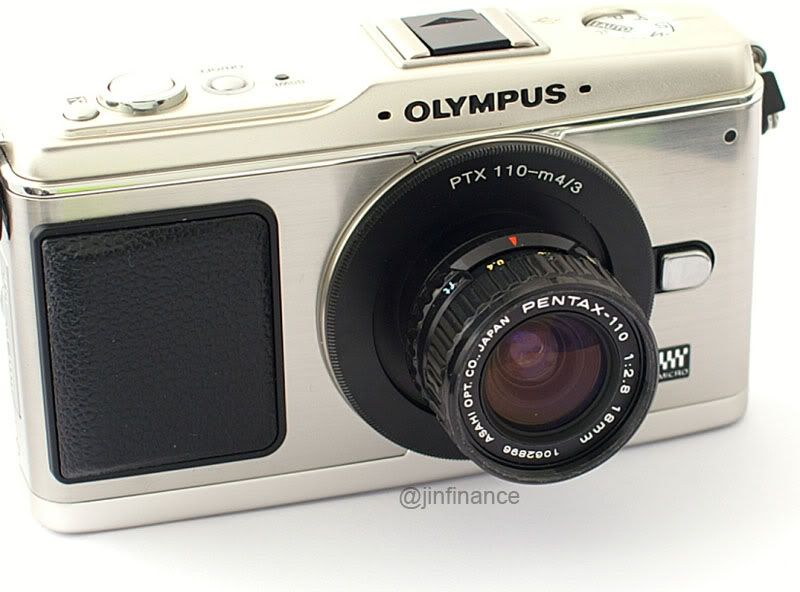
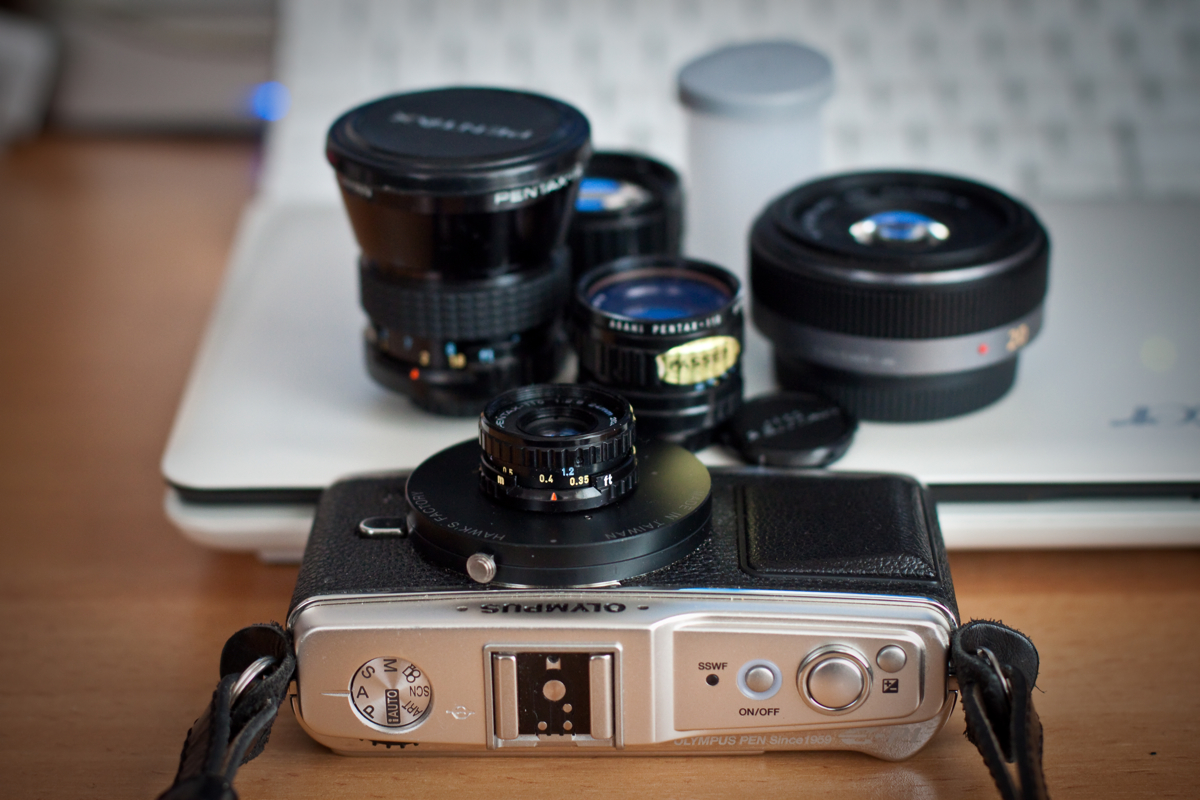
Jinfinance on Ebay has just released his first version of a Pentax 110 lens adapter – although unfortunately, this first version has a “light leak but does not seem to effect image quality” – the absence of adverse effects in images seems to be confirmed by users, so should not be an issue.

It seems there is no vignetting even with an 18mm lens and these lenses are nice and compact, but unfortunately these lenses have no aperture ring so you must shoot wide open, and minimum focal length is a bit long on all the lenses.

adapter on Pen

and, a photo from an early adopter (chronoguy on dpreview.com forums):

Pentax 110 lenses


Australia Day in Melbourne 2010

Written by Gary on January 27th, 2010

It was such a beautiful Summer day in Melbourne for Australia Day, I just had to go for a walk about and document some of the many activities as well as the great multicultural society that is Melbourne in 2010.

My Canon 1D mark III has not been getting a lot of use since I bought my Micro Four Thirds Panasonic GH-1, so I thought I had better bring it along as well today – with only one lens – my favorite Canon 135mm f/2.0L.

One of the issues that full frame dSLR users attack the Four Thirds and Micro Four Thirds smaller cropped sensor, is that of wider depth of field.

Well, sometimes narrow depth of field is NOT a good thing – you do have to adjust aperture to get the best compromise between background blurring and getting adequate depth of field for your subject.

Here is one good example of this:

portrait 135mm at f/2.0

Note that his nose is not in focus – in general, it is best to have the eyes the sharpest, and depth of field adequately covering the range from ears to tip of nose.

The 135mm at f/2.0 on the Canon 1D Mark III 1.3x crop sensor obviously fails this test for a head and shoulders portrait at some 2-3m distance – I would have been better to use f/2.8 or perhaps f/4.

I would normally have shot this with my Olympus E510 with ZD 50-200mm f/2.8-3.5 lens wide open and I would not have had to worry about not getting the tip of his nose out of focus, but I would still have had beautiful background blurring and bokeh.

Now if only I could get a couple of compact primes for Micro Four Thirds such as a 100mm f/2.0 and a 200mm f/2.8, that would be brilliant! I do find that I like working in the 200-400mm range in 35mm terms at f/3.5, as I can really isolate my subject from the distracting backgrounds and make my subject pop whilst getting enough depth of field.

An example of a 200mm f/3.5 (400mm telephoto reach in 35mm terms) portrait taken with the Olympus E510 from last year is here:

Olympus E510

Now back to Australia Day, and here is a classic street shooters shot with the Panasonic GH-1 and Leica-D 25mm f/1.4 Four Thirds lens with aperture preset to give adequate depth of field and focus range preset to 2m:

don't look now son

This shot could be titled “Don’t look now son – Aussie brazen hussy strutting her stuff“.

I rarely shoot young ladies in the street but couldn’t resist this one as I was in the right place at the right time and the whole scene just begged to be shot with the mother and son in the clean non-distracting background with the light in the perfect position to light the young ladies’ face while casting the perfect diagonal shadow on to the down-looking lad. So many picture elements to consider in the timing of the shot, not to mention ensuring the background window didn’t cut into her body – but in the end a large degree was good luck in that all the elements I wanted to happen, happened at that split second.

This was one of those decisive moment type shots – you had to have your camera ready, preferably pre-focused, or else you will miss it. I think it makes a fantastic statement of multicultural Melbourne on Australia Day, certainly will be one of my favorite shots.

This lady had prepared for Australia Day by using safety pins to turn the Australian flag into a dress – of sorts – but she had fun and really got in with the spirit of the festivities, and although many cultures feel her dress a little inappropriate, I liked the fact she was embracing living in the moment.

Many people live in the past or the future and forget it is only the present they can really change and make the most of, then they wonder why they are unhappy for not having made the most fun out of their lives they could have – happiness is a personal responsibility and we should be tolerant and not too judgmental of others, for we all have to deal with the stresses of living in our own way.

More shots from the day can be seen here.


Next Panasonic Micro Four Thirds to get built-in GPS and automatic local time update as well as location in image and video EXIF?

Written by Gary on January 26th, 2010

Panasonic has just announced their new compact point and shoot designed for travel photography – the DMC-ZS7 / TZ10 which has a 12x optical zoom, an even more effective optical image stabilisation system than MEGA OIS – this version is named POWER OIS, and built-in GPS with the capability of identifying more than 0.5 million places in its database and placing the location data in the image and video EXIF data.

Not only that, but it will automatically change the camera’s clock to local time wherever you go and has SDXC memory card support, while the improved Venus Engine HDII processor offers differential image processing based on image content – this Intelligent Resolution technology can detect 3 areas in images – outlines, detailed texture areas and soft gradation areas and give each a different image processing to optimise the image appearance.

The AF system has been improved – “the shutter release time lag is as short as approx. 0.006 seconds and the camera’s quick response makes it easier to capture sudden, spur-of-the-moment photo opportunities together with the Sonic Speed AF (Auto Focus) that lets you lock on the subject minimum in approx. 0.35(wide-end) / 0.41(tele-end) second”

Presumably, this camera takes advantage of the new GPS chip that does not drain your batteries as current mobile phone GPS chips do.

Given Panasonic’s propensity to add their point and shoot technologies to their other cameras as they come out, one should expect than Panasonic’s next Micro Four Thirds cameras will also have these very handy features.


Looking for places to photograph? Have a look at a new free global photo guide by photographers

Written by Gary on January 26th, 2010

Have just discovered this new blog which allows photographers from around the world to post information on cool spots to photograph.

Photographers can create a Knol photo guide using Google’s Knols then submit it to the local state or regional freephotoguides administrator for approval to linking into the system.

The photographer should title the Knol: “A Photographer’s Guide to XXXXXXXX” where XXXX is the name of the location you are
describing, and the subtitle should contain your State/Region and Country eg: NSW Australia.

More information about how to be an author is in this pdf.

I am not in any way affiliated with this project – yet 🙂

Have fun