Radio remote TTL flash for Micro Four Thirds?

Written by Gary on September 28th, 2013

As much as I love Micro Four Thirds, there is one area which I would really love Olympus and Panasonic to address – the lack of radio remote TTL flash capability.

Nikon and Canon users have access to this technology thanks to 3rd party products such as Pocket Wizard – unfortunately they have not come up with a Micro Four Thirds solution – although this could be potentially possible using their Canon modules given the TTL pin system is at least physically compatible.

Canon have recently added radio wireless TTL flash to their latest dSLRs and flashes in addition to infrared TTL flash.

Nikon still only have infrared TTL flash.

Olympus uses a visible light remote TTL flash system which I personally find intrusive on the subject compared to either infrared or radio, and like infrared, it requires line of sight and relatively short working distances, which are further impacted by bright sunlit conditions.

Olympus and Panasonic have added ad hoc WiFi connectivity to their latest cameras for rapid and easy connection to smartphones which allows a device such as an Apple iPad or iPhone to remotely control the camera – even displaying the live view and allowing AF selection and shutter release.

It would seem to me that if this is possible then it should also be possible to make flash units which could be connected via ad hoc WiFi network to the camera and to other such flash units, and then Olympus and Panasonic can easily add radio wireless remote TTL flash to their system.

Well here’s hoping that this is possible and soon, because this would be fantastic for strobists everywhere who would love the Micro Four Thirds system for its portability – they just need radio TTL flash, and the option of a powerful compatible off-camera flash to allow them to push their creativity.

This would open a new market for Olympus and Panasonic.

Furthermore, using WiFi means each photographer has their own unique radio network for their flashes – no more worrying about which radio channel to use and accidentally triggering or being triggered by other photographer’s setups – particularly an issue in workshops or major events.

So what about it Olympus?

Wifi based remote TTL flash please.


ps. I have been told about a hack around radio TTL system that will probably work if you don’t mind taping up your flashes – see http://www.aokatec.com/AK-TTL.html which uses a similar technique as does RadioPopper.

addendum:

Seems like I am not the only one wanting this, users have started up a Facebook petition for radio TTL flash and see also blog post on LightingRumours.com.


Micro Four Thirds for portraiture – a tribute to Sean Archer’s works

Written by Gary on September 28th, 2013

To continue a theme, you don’t need a dSLR any more for most photography, and you will enjoy using and carrying a smaller, lighter Micro Four Thirds camera and lenses at much more affordable prices and still create great images – here is a little tribute to one of my favourite online portraiture photographers who uses the older Micro Four Thirds cameras such as the Panasonic G3  with an Olympus mZD 45mm f/1.8 lens and ambient lighting – so anyone could achieve this without having to resort to big, heavy, expensive gear. Note his 500px.com portfolio is NSFW but has many more delightful portraits.

on artyfaces

on artyfaces

on artyfaces

See also an interview with him here.

Quote: “”Everything I know now came from taking thousands of images, hours of processing and fooling around with every setting on the camera.” Stanislav pointed out numerous times that everything he learned came from his own experiences and mistakes.”

His technique is simple window light in his attic, no flashes, reflectors, minimal skin Photoshopping, but does add background textures to his blank wall, and applies some tonal modifications.

Note. it seems someone convinced him to buy a Canon 6D full frame dSLR with 50mm f/1.4 and 135mm f/2.0L lenses, but looks like he has then reverted back to Micro Four Thirds and purchased an Olympus OM-D E-M1 with 75mm f/1.8 lens.


Most of us no longer need to carry big, heavy dSLR cameras and lenses

Written by Gary on September 26th, 2013

Now that the Micro Four Thirds system is maturing, there are few photographic needs not able to be managed with this much lighter and smaller gear, while the image quality is good enough for the far majority of us, even at ISO up to 3200 and even 6400. With the Olympus M-D E-M1, there is also now fairly fast tracking autofocus for either Four Thirds lenses or Micro Four Thirds lenses which is narrowing the gap with high end dSLRs even further.

These cameras are capable of great prints at least to 20″x30″ size which should be adequate for most needs and is overkill for those who just post images on the web.

The smaller and lighter size means you can get away with smaller, lighter, and cheaper tripods (if you still need them given that you can now hand hold the E-M1 with a wide angle lens to around 1 second exposures for lovely flowing water shots!).

But perhaps most important of all, the lighter weight will mean we will all do less harm to our backs carrying the gear and hopefully may reduce osteoarthritis to our spines as we get older.

Just carrying one heavy camera in one hand will cause scoliosis of the spine whilst walking and this can’t be good for you!

I thus thought it would be worth while posting some of the great images on the web taken by others (often using dSLRs, posted here under licence usage guidelines), that could easily have been taken with Micro Four Thirds.

Please click on their links to check out the other nice works by these photographers.

Enjoy!

desert

Adeeb Alan Nikon D700 230mm f/14

road to Mordor

Road to Mordor by Juan Carlos Cortin Nikon D7000 18mm f/5.6

morning fog

Morning by Filip Molcan Nikon D3 70mm f/9 1/4 sec

foggy castle

Predjama castle by Gorazd Kranjc Canon 100D EF 24-105mm f/4L lens

portrait

portrait by Paul Apal Canon 60D, 85mm f/2.8, beautifully lit with studio lights

forest fairy tale

Forest Fairy Tale by Jon Jon Photography

moonrise

Tree of Wisdom by Aaron J. Groen Canon EOS 60D, 300mm f/16, 1sec ISO 100

mountains

Yosemite Moonglow by Darvin Atkeson Nikon D800E, 36mm f/2.8, 72secs, ISO 800

owl

owl by Stefano Ronchi Canon 1D X sports dSLR 300mm f/2.8 ISO 400 1/4000th sec

This owl shot is a great example of the benefits of Micro Four Thirds, an almost identical image with similar quality, depth of field and bokeh could have been taken with the Olympus OM-D E-M1 which weighs 1/3rd the weight (497g vs 1,550g for the 1DX), about 1/4 the price, and then add in the lens, the Canon 300mm f/2.8 will weigh about  2550g and cost about $US6,800 while the Olympus ZD 150mm f/2.0 will offer the same telephoto reach, better IS and only slightly more depth of field for around $US2400 and weighs in at only 1600g (Olympus will probably make a Micro Four Thirds version in 2014-2015 which will be even lighter, be less expensive and have faster AF as it will also have CDAF compatibility plus silent AF for movies).

Difference between the 2 kits:

  • Canon 1DX + 300mm f/2.8L II = $US13,000 and weighs 4100g plus you need a big heavy tripod as it is not hand holdable
  • Olympus E-M1 with ZD 150mm f/2.0 = $US3900 and weighs 2100g – easily hand holdable even for long periods, and you could potentially hand hold it for HD video

Now if you wanted to catch birds in flight, the Canon 1D X may do a much better job given it will have faster phase detect AF with more points, and the burst rate is 12fps compared with 6.5fps with AF, but it won’t be long before Olympus comes out with a camera that will compete even with this – the technology is changing so fast for mirrorless cameras. The Canon has 2 other main advantages over the E-M1 – shallower depth of field options especially at wide angles and with zoom lenses, and the option of radio wireless TTL flash instead of light-based remote TTL flash. But if you don’t need these particular functions, the E-M1 will do the job much more cost effectively and you will have more fun as it is much lighter and less intrusive.

So if you are not aware of how good the latest Micro Four Thirds cameras are, do yourself and your back as well as your wallet a favour and check them out.

HOWEVER, no matter how good your camera is, it is just like a grand piano – you do need to learn how to play it to get the most out of it!


When wisdom matures – the Olympus E-M1 by Khen Lim

Written by Gary on September 26th, 2013

E-M1

Every now and then, something comes along that redefines the direction life is headed. In recent years, two appliances took responsibility in transforming society at large. They were smartphones and tablets. Both represented milestones that mark the change in the way we stay connected. They were, however, no less significant than the Internet or the World Wide Web itself but more relevantly, we could look at innovations like online social media networking, chat conferencing and even something as mundane today as text messaging. All of these have reshaped the way we run our lives.

With changes like these, there are winners. And where there are winners, they are also losers. Those who exploited the opportunity to ride on the crest of a life-changing wave are often remembered as the ones who were daring enough, creative enough and disruptive enough to ring in the changes that would take the world in a completely different direction. The losers are invariably those who not only resist the change but were adamant that the changes were unnecessary, untenable and/or unjustifiable. They would go down in historical annals as those who failed to understand the inevitability of a brand new vision.

When mirrorless system cameras became a reality back in 2009, it’s doubt that there were people who truly believed that there would be anything to seriously rival the pretensions of a competitive pro-grade DSLR camera. Short of any of the ‘penultimate’ full-frame variants, we’re looking more at a very capable and well-equipped APS-C DSLR instead. The introduction of the Pen range more or less convinced many that Olympus had probably and quietly given the pro category a miss. As for Panasonic, the Lumix range would likely go as close as a prosumer with an eye towards video finesse. From the other mirrorless camps, there was nothing very exciting other than Sony threatening to release a full-frame version sometime in the near future. In other words there wasn’t much to threaten the traditional DSLR stalwarts. Until now.

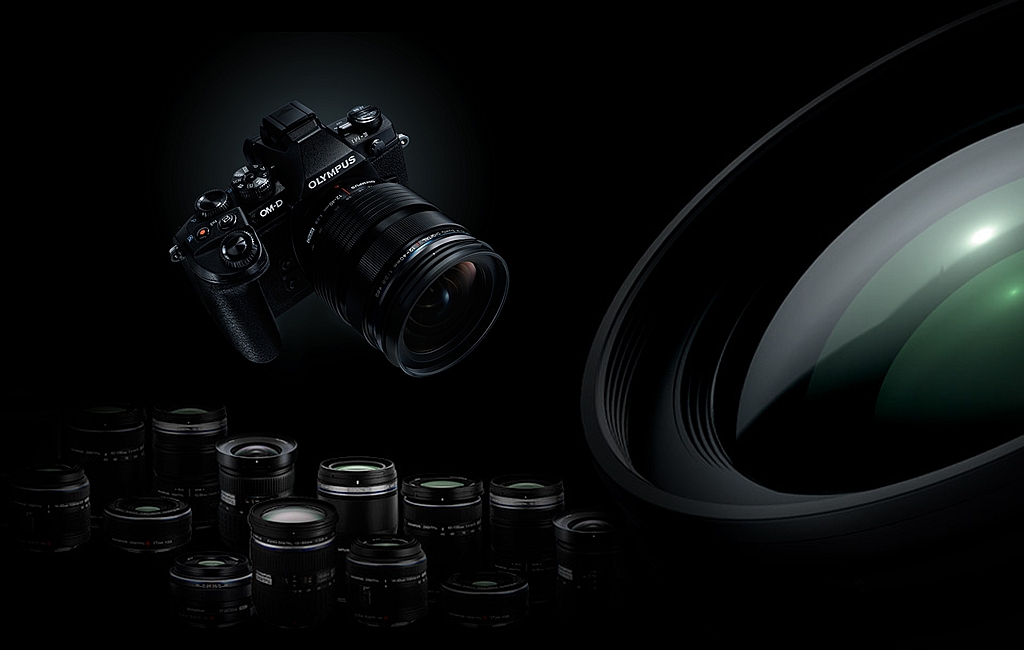
If you have suspected that the OM-D E-M5 could be the start of something very exciting, you couldn’t be more right – the E-M1 lays proof that Olympus has decided to challenge the status quo but on its own ground. Unlike anything we’ve seen before, this is one camera that could never be ignored.

Read more of this extensive article by Khen Lim


Proud to announce that Khen Lim from Olympus Malaysia has agreed to collaborate with my photo wiki and blog articles

Written by Gary on September 24th, 2013

In addition to this blog, I have created hundreds of pages in my photography wikipedia which is advertising free and free for anyone to browse as I love photography and how it changes one’s way of viewing their world.

I spend a lot of time writing these wiki articles as I want to share my enthusiasm with the world and hopefully some will find the articles helpful.

So I am very pleased to inform you all that Khen has agreed to collaborate and contribute articles in his areas of expertise.

Whilst I tend to write in point form much of the time for brevity, you will be pleased to have some much more readable content from Khen.

Khen Lim is well known amongst Olympus circles, being a long time evangelist for Olympus since he worked in the photography business in the 1970’s in Australia.

He has contributed to Zone-10.com and has been a subscriber to the MyOlympus forum on Yahoo Groups for many years.

His long history with Olympus and close ties will provide valuable insights to the past, present and future of Micro Four Thirds and Olympus gear and philosophy.

I am proud to have him on side collaborating with me and I am sure you will find his articles very interesting indeed.

To kick things off, his first article is timely indeed – his preliminary thoughts on the just announced Olympus OM-D E-M1 Micro Four Thirds camera which includes an extensive view at how it has evolved from the Olympus OM days and the many new features it brings. Of particular interest to many  is his thoughts on what may be in the pipeline with regard to new lenses. He also details why we may never see the Four Thirds dSLR – the E-7.

As the article is in wiki format, there are internal links to other wiki articles I have written such as my page on the E-M1 with links to all the reviews, and listing of all Four Thirds lenses and Micro Four Thirds lenses.

a frozen freeze-proofed E-M1

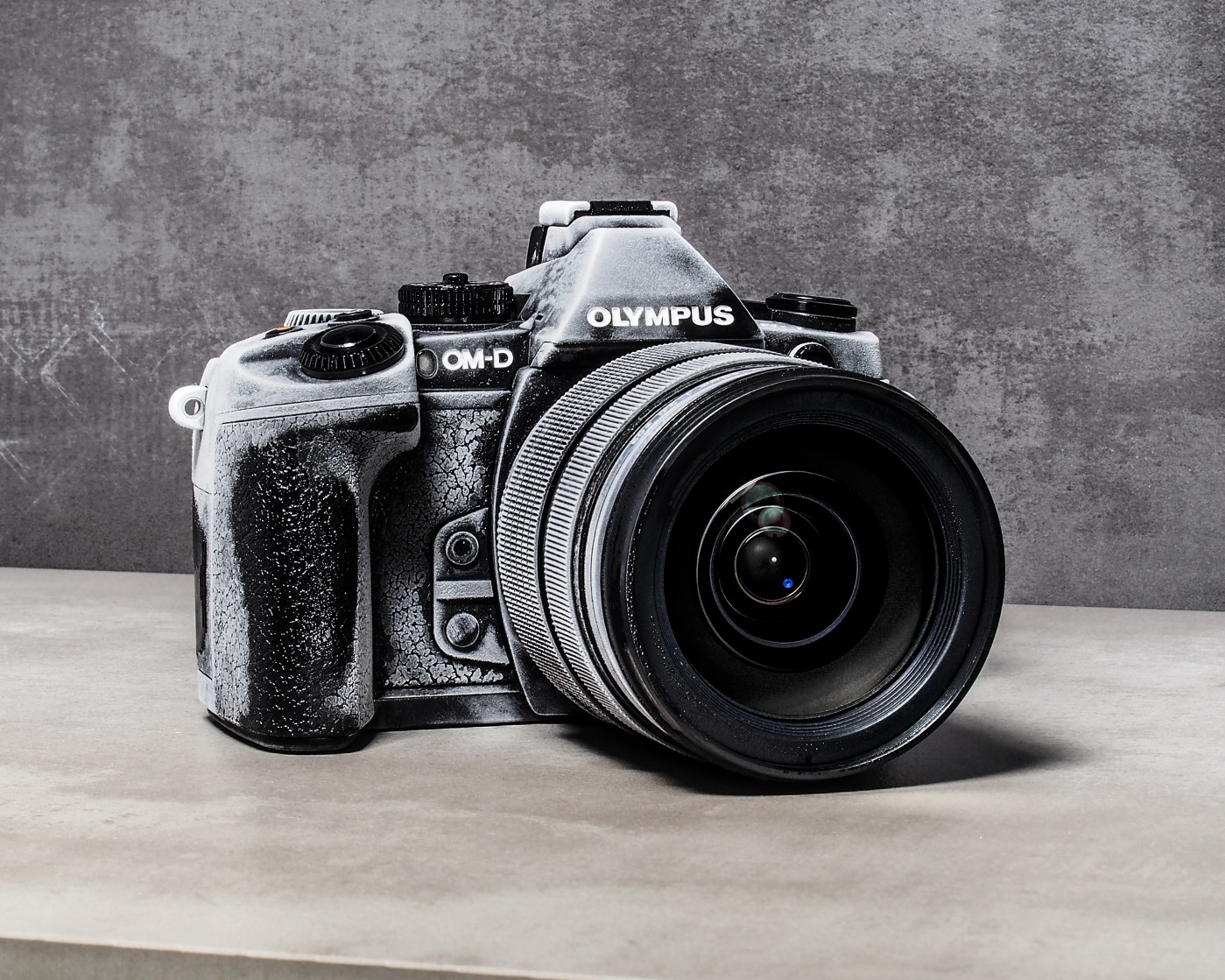
a still functioning frozen Olympus E-M1 (image courtesy of Olympus Imaging Corporation via Khen)

I hope you enjoy the reading as much as I have. I will keep you posted here with each new article Khen contributes.

In case you get lost in all those links, here is Khen’s article on the E-M1  – “When Wisdom Matures”.


My take on the new Olympus E-M1 Micro Four Thirds camera

Written by Gary on September 12th, 2013

I own the Olympus C8080, E330, E510, Olympus ZD 50mm f/2.0 macro, ZD 50-200mm SWD, ZD 7-14mm f/4, Canon 1D Mark III with various L lenses and now really only use the wonderful Olympus E-M5 with it’s lovely Micro Four Thirds prime lenses such as the 12mm, 20mm, 45mm and 75mm.

The following then is my take based on published “reviews” of the E-M1 and my experience with it at the Digital Photography Show in Melbourne this weekend.

The Olympus OM-D E-M1 is a very important evolutionary camera for Olympus, and it indeed has many impressive features, the combination of which are not available in any other camera at any price.

E-M1

It finally provides an upgrade pathway for many of us who have the superb Olympus and Panasonic Leica D Four Thirds lenses such as the Olympus ZD 50-200mm f/2.8-3.5, Olympus ZD 50mm f/2.0 macro, the PanaLeica 25mm f/1.4, the ZD 7-14mm f/4, and if you are lucky enough to have the other Super pro lenses such as the 35-100mm f/2.0, the 150mm f/2.0, the 90-250mm f/2.8 and 300mm f/2.8, then all the more reason to be thinking this is your lucky day!

It is so important because it finally addresses the C-AF performance limitations of Micro Four Thirds cameras by adding DUAL FAST AF courtesy of phase detect AF sites onto the new Sony sensor, it markedly improves C-AF tracking performance for Micro Four Thirds lenses and all AF performance for Four Thirds lenses.

Users coming from dSLR systems will be blown away by how fast and accurate the S-AF is for slow moving or stationery subjects, even in low light, and you have the unique option of accurate AF on a subject’s closest eye almost anywhere in the frame. They will not be over-whelmed by the comparatively slower C-AF tracking performance on the E-M1, but for mirrorless camera users, at least now they have a usable C-AF option, and they have usable, fairly fast AF with Four Thirds lenses.

No C-AF tracking system yet in production is perfect, nor are they simple to optimise for the end user. Even my very expensive ($4500) Canon 1D Mark III dSLR designed for sports with C-AF tracking was only good for around 40-50% of shots and it was very complex to optimise for various scenarios. The E-M1 is a big step forward for Olympus but is far from perfect as far as C-AF tracking goes. In good light it may be adequate for many situations – further real photography testing will be needed to decide how good it really is.

Furthermore, C-AF tracking is not needed for most of us – remember no-one had good C-AF tracking before Canon introduced it in the early 1990’s so pro sports photographers until then used manual focus and still achieved some amazing images.

Thus it may be a compelling buy for existing Four Thirds users, although some will complain it has no optical viewfinder, but the new electronic viewfinder is superb and the many things it can do should outweigh the loss of optical viewfinder.

The E-M1 takes what is best in both the E-M5 and the E-P5 cameras, then upgrades many of those features such that it provides significantly improved:

  • build quality and ergonomics
  • weather-proofing and now freeze proofing – one reviewer placed his E-M1 under a hot shower for 10 minutes in a pool of 1cm water while it was on with no ill effect – Canon or Nikon pro users would not be so confident with their dSLRs!
  • improved image quality such that for most real world photography, the benefits of the 5-axis IS and new sensor without an AA filter and the new image processing engine (TruePic VII) means that image quality up to ISO 6400 is good enough to be comparable to new full frame dSLRs such as the more expensive and heavier Nikon D600 – see Ming Thein’s blog post where he compares the two – the D600 gives more dynamic range, but the E-M1 gives better color and microcontrast in the out of camera jpegs.
  • lovely large viewfinder with faster refresh, greater resolution and more accurate colours, and with Adaptive Brightness Technology
  • buffer has been increased so that the E-M1 can now shoot 51 RAW shots in burst mode at 6.5fps and 41 RAW at 10fps  (compare this with only 14 at 5.5fps on the Nikon D600)
  • the burst rate has been improved – you now get C-AF at 6.5 fps and non tracked single AF at 10 fps (compared to 5.5fps max on the Nikon D600)
  • all AF is even faster (C-AF said to be similar to C-AF on the E-5 or the new Canon 70D dSLR although C-AF tracking is still faster on the latest dSLRs, single AF of stationary subjects is faster and more accurate on the E-M1 than on any dSLR)
    • note though there is no AF during video mode for lenses that are not CD-AF compatible (eg. most Four Thirds lenses)
  • the 5-axis image stabiliser has been further improved allowing hand held shots at 1.3secs on wide angle lenses, and no need for large cumbersome stabilising rigs for movie shooting while walking
  • automatic hand held HDR images for those too lazy to carry a tripod and do HDR properly (you need a tripod for dSLRs)
  • ability to microcalibrate AF for Four Thirds lenses
  • lens-specific optimisation of jpegs to correct for aberrations and moire and optimise fine detail via the Fine Detail II technology
  • jpeg sharpening is mainly applied to in-focus regions only leaving your lovely background bokeh buttery smooth 🙂
  • very useful new unique Color Creator control – fantastic for live in-camera B&W tonal visualisation – and great for in-camera “grading”  before you start taking videos
  • very useful remote control via your smartphone and WiFi connection to the camera – you can see the image live and touch your phone’s screen to select AF and rapidly AF and take the shot as well as setting most image parameters you need to select.
  • additional Art Filter “Diorama portrait” – adds asymmetrical left or right defocusing effect for nice blurred portraits whilst keeping the eye sharp

The combination of features from the E-M5 and E-P5 means that in most other areas it beats even the full frame dSLRs such as the Nikon D600 such as:

  • wider range of shutter speeds 60sec – 1/8000th sec (30 sec to 1/4000th sec on D600)
  • unique to Olympus Timed BULB and Live BULB modes
  • flash sync 1/320th sec (1/200th sec on D600)
  • the amazing face detection AF system where it will accurately AF on the nearest eye of your subject if you wish – no matter where it is in the frame – sure beats trying to lock AF then recompose, or moving AF selection points around the screen!
  • the “24-80mm f/2.8 lens” (12-40mm actual) combined with the E-M1 is half the weight and probably almost have the price of the full frame version, not to mention the forthcoming 40-150mm f/2.8 lens!
  • extremely customisable button layout – you can re-program almost any button AND you get a 2×2 switch which rapidly changes the function of various buttons depending on how you have programmed it.
  • in video mode and Live View mode (which is the only option on the E-M1 anyway), you can hold the camera to your eye for better stability, or use the tiltable touch screen
  • ability to use almost any lens and have them image stabilised, and use focus peaking or image stabilised magnified view to assist in fast, accurate, manual focus
  • ability to use Nikon, Canon and other lenses image stabilised via a Metabones Turbo 0.7x adapter which gives 1 extra stop of aperture for even better low light performance and shallower DOF
  • ability to use many full frame lenses and have them converted as tilt or shift lenses via adapters and have them image stabilised
  • much quieter and less intrusive, less intimidating
  • no need for mirror lock up to reduce camera vibrations in high magnification work
  • no need for AF calibration with each Micro Four Thirds lens as is required for dSLRs
  • generally better edge-to-edge image sharpness

Now, to be fair, full frame dSLRs such as a Nikon D600 do have some important advantages over the E-M1 (although not many!):

  • shallower depth of field options, particular for standard zoom lenses and wide angle prime lenses
  • marginally better image quality in terms of dynamic range and high ISO performance
  • optical viewfinder (can be an advantage in some situations)
  • better C-AF tracking (although over time, this could be expected to be addressed by further improved technology in Micro Four Thirds)
  • radio wireless TTL flash via PocketWizards (hopefully Pocket Wizards will add Olympus to their system soon)
  • 24p 1080 HD video mode (not sure why Olympus did not add this mode given that serious videographers love it)
  • access to specialist lenses designed for the system (eg. wide angle shift lenses – although you can use a Canon 17mm TSE tilt shift lens with a 0.7x Metabones Turbo to give a 24mm field of view tilt shift lens which is the widest available for Nikon anyway )
  • the cameras and lenses are bigger which makes you look more professional
  • for pros, there will always be better access to service, rentals, etc

There is now even less reasons to go Canon or Nikon or full frame, particularly as this camera is so small and versatile with features neither of these options can do .

Importantly for existing E-M5 users, it uses the same battery, although perhaps frustratingly, the controls are in different positions (and generally better positions)  which may make it confusing using both cameras together.

This camera does NOT replace the excellent E-M5 cameras, but adds incremental improvements to it in nearly every aspect, plus adds true AF support for Four Thirds lenses.

The E-M5 still offers great value buying as it will be sufficient for most people who don’t care about Four Thirds lenses and who don’t care about C-AF.

Price in Australia for body only seems to be around $A1595 compared to $US1399, and you can get the E-M1 bundled with the excellent 12-40mm f/2.8 lens for around $A2399 from what I understand, and this represents a decent discount on buying each item separately, plus Olympus Australia are likely to throw in 2 years warranty plus an option of a free MMF-3 adapter or HLD-7 vertical grip.

Check out this little video to see how cool the image stabiliser and Creative Colour functionalities are:




At last – Olympus formerly announces the new OM-D E-M1 pro Micro Four Thirds / Four Thirds camera

Written by Gary on September 10th, 2013

See the Olympus website announcement here.


E-M1 front

E-M1

This awesome camera represents the first Micro Four Thirds camera that is capable of fast phase detection AF using Four Thirds lenses (via an adapter) and is said to have continuous AF with subject tracking at least as fast as with dSLRs when using either Four Thirds or Micro Four Thirds lenses.

It won’t be cheap, but then it will have a multitude of very nice capabilities and features which will have many photographers drooling.

Olympus will also be offering it as a kit with their very nice 12-40mm f/2.8 weatherproofed Pro lens which will be half the price and almost a 1/3rd of the weight of similar lenses for full frame dSLRs, although of course you will lose 1-2 stops of depth of field control – but you do gain 5 axis 5 stop image stabilisation and closest eye face detection AF almost anyway in the frame courtesy of these new Olympus cameras which for many will be far more important.

See also my wikipedia page on the E-M1 here and on the 12-40mm f/2.8 lens here.


oops – the new Olympus OMD E-M1 high end Micro Four Thirds camera has been leaked

Written by Gary on August 19th, 2013

Check out the video link from 43rumors.com and you will see the E-M1 in action – link now removed after instruction to Engadget from Olympus.

For those who do own the superb Four Thirds lenses, this camera will at last allow them to capture images with a sensor that will extract the most from these awesome lenses with fast AF, plus give them the benefits of mirrorless live view shooting such as eye detect AF, 9fps burst rates, and 5 axis image stabiliser, which they have been missing in the Olympus Four Thirds dSLR system

  • of course some will gripe that there is no optical viewfinder but the quality and many benefits of the EVF should well and truly make up for this
  • will it be good enough to shoot birds in flight with continuous AF – we will have to see!

Full WiFi connectivity so you can see the Live View image on your smartphone or tablet and use it like the rear LCD screen on the camera – touch an area and it takes the shot (presumably AF on that subject first) then uploads the image almost instantly to the device in high resolution. PLUS you can change most settings including exposure mode right from your tablet.

Very cool indeed!

Nice hand grip to allow better ergonomics for larger lenses – I am going to love that – no need to buy the extra battery grip – unless you need portrait mode a lot.

Nice control layout, the 5-axis IS and for the first time in a Micro Four Thirds camera – fast AF with legacy Four Thirds lenses even those not optimised for CDAF thanks to the hybrid phase detect and contrast detect AF capable sensor – even using the current MMF-3 Four Thirds adapter.

And of course, it is weatherproof and now freeze proof to 14degF.

I will be looking forward to this new model, just hope it is not too expensive.

PS. the video link has now been taken down, so here are my predictions of the specs for this exciting new camera.


Melbourne’s Peninsula Hot Springs outdoor thermal baths on one of the coldest days of the year

Written by Gary on August 9th, 2013

I have lived in Melbourne, Australia all of my life, and until today I had never had the pleasure of making a trip down to the Peninsula Hot Springs geothermal baths on Melbourne’s Mornington Peninsula.

These baths have become extremely popular, perhaps too popular that many complain it is overcrowded, thus I decided to make a trip down there and book for the outdoor section on a Friday afternoon – hopefully to avoid the crowds, and particularly, families with their loud children.

The thermal baths insist that one must book ahead to avoid being turned away due to excess numbers attending, so this is what we did via their website, and decided to go for the outdoor “Bath House” section rather than the more expensive indoor and outdoor “Spa Dreaming Centre” which includes the usual Day Spa “treatments” such as massage, etc.

As we drove the 1.5hrs down there in driving rain, howling cold wind with outdoor temperatures at 9degC with a wind chill factor giving an actual skin temperature of around minus 1.5deg C (see here) – and that is assuming your skin is not wet as it would be walking from one bath to another, I must admit I was having second thoughts.

These were reinforced when we stopped near the beach to find a cafe for lunch and we hurried into the nearest cafe to get out of the rain and wind – to find a nice log fire burning – but we had came this far, so we decided to go ahead with our plans.

On arrival at the baths, the car park was full and the clients could be seen hurriedly walking with the rain coats and hoods to get inside – we must be crazy!

 The best decision was to hire a locker for our clothes and a bath robe to help us survive the walk between baths with wet skin – even though the robes would rapidly become wet in the rain as the areas supplied next to each bath to hang your robe was not sheltered from the rain coming in at an angle with the wind.

But still, the wet robes made the afternoon  pleasurable and made the break from the 36-42deg C baths into the icy wind tolerable, although the feet without sandals did get a bit cool – but this was easily addressed by quickly getting to the next bath.

A must do bath is the hilltop bath which is perched at the top of a hill with 360deg panoramic views – although not much worth seeing on such a day in the rain – and mercifully, there was just enough shelter from the wind that it was enjoyable.

Of the dozen or so baths in the outdoor “bath house” area, my favorite bath though was the “silent bath” just near the hilltop bath, as this was one bath where the many ladies attending had to stop talking and one could just relax and go into a zen mode.

There were plenty of taps for drinking water – an essential when one is spending 1-2 hours in such warm baths.

My tips for those planning on going:

  • go in cool or cold weather even in the rain or wind – you will still enjoy it and I am guessing it would be more tolerable than a hot summer day
  • go when it is not too busy – avoid weekends, school holidays and Friday evenings
  • book in advance and assume you will not be able to “upgrade” to another treatment area when you get there
  • avoid heavy meals or alcohol prior and drink lots of water while you are there
  • hire a bath robe if it is going to be windy in particular
  • if you don’t like cold feet, where thongs or sandals in cold weather
  • you do need to wear swimming bathers  in the open “public” bath house area but be aware prolonged exposure to these waters may stain or degrade them
  • it is a mobile phone free and camera free zone – please respect the privacy of others and their desire to relax without excessive noise
  • consider bring a plastic water bottle – you won’t need to bring food, and there is a kiosk if you do get hungry
  • ensure you can have a shower afterwards and apply a moisturiser as it does dry out your skin – not so good for those with atopic eczema I am guessing!

Sorry, no photos for this post, you will have to check out their website


Panasonic announces their GX7 Micro Four Thirds camera – my thoughts

Written by Gary on August 1st, 2013

As an owner of the wonderful Olympus OM-D E-M5, the Panasonic GF-1 and a previous owner of a Panasonic GH-1, and I am actually quite excited with this new Micro Four Thirds camera from Panasonic.

 
GX7 rear

It is the most Olympus-like of all the Panasonic Micro Four Thirds cameras to date which pleases me as I am mainly a photographer not a videographer.

For the 1st time in a Panasonic camera, the Panasonic GX7 boasts in-camera image stabilisation plus a fast flash sync speed of 1/320th sec, and to top it off, a top shutter speed of 1/8000th sec – all designed to make it more versatile for shooting wide aperture lenses either in bright sunlight or in low light conditions (the AF is even meant to work down to -4 EV).

The body is compact and is said to feel well built with its magnesium alloy body, and at last we have a compact Micro Four Thirds body with a built-in EVF although annoyingly it does protrude from the rear which makes it that much less pocketable. In addition to a hotshoe, it even finds room for a popup flash as well as a 3″ tiltable touch screen.

The built-in EVF is a tiltable 2.3M dot field sequential LCD EVF with 0.7x magnification but rather short 17.5mm eyepoint which may be an issue for those wearing glasses. It should give excellent colour rendition but being a field sequential type EVF, it will have some tearing although it should be better than previous Panasnic EVFs.

It has a raft of lovely features for the enthusiast and beginner alike.

Fast AF for stationary subjects at least, a AF/MF switch lever, good manual focus assist options with 3 level focus peaking and PIP magnified view mode – I presume image stabilisation can be activated in this mode but no mention has been made of this as yet.

A silent electronic shutter mode which means it will be great for classical music concerts, speeches, weddings, etc where camera noise can be very intrusive.

Fast burst rate comparable to the Olympus E-M5 giving 4.2fps with AF and 9fps with single AF.

The HD video capabilities are excellent allowing 1080 HD video in either MP4 or AVCHD formats at 60p/50p/24p with the latter at a very reasonable  28Mbps video quality. There is no external mic input which may annoy the odd user most will be happy with the inbuilt stereo mic or use an external sound recorder for the best sound quality.

It has NFC and WiFi capabilities for control by smartphones which will open up new possibilities and when combined with in-camera image editing and creative filters should make a lovely travel camera indeed.

Size comes in at 402g 122.6 wide x 70.7 high x 43.3mm deep.

Perhaps the main drawback for many will be the price – at £819/$A1249 body only, it is more expensive than the Olympus E-M5.

I am expecting Olympus to be announcing a similar styled camera with built-in EVF – hopefully one that does not protrude as much, and one that will have phase contrast AF capability for faster AF with moving subjects and with the Four Thirds lenses.

In the meantime, the Panasonic GX-7 looks like it will be very attractive indeed!