Suspended water droplets using the Olympus ZD 50mm macro on a Panasonic GH-1
Written by Gary on April 26th, 2011More images using the Rokinon 85mm f/1.4 lens on a Panasonic GH-1 Micro Four Thirds camera
Written by Gary on April 21st, 2011Following on from my recent posts regarding my purchase of this bargain 85mm f/1.4 manual focus lens from Rokinon/Samyang, here are some more images from today.
First to show depth of field for a head shot at f/1.4 – here I have used a store mannequin through a window and used a polarising filter to reduce window reflections:

and with another mannequin, but for this one contrast is decreased as I could not fully eradicate all reflections, bt nevertheless, one can see depth of field well and a small degree of purple fringing on out of focus strong highlights – this lens is incredible for its control over purple fringing in general, at least when compared to the Canon EF 85mm f/1.8:

Now here is a nice nature shot of a bee on some flowers – I used the lens set at closest focus (1m) and moved camera in and out until the bee looked in focus – no time for magnified view with this shot, note the delicious smooth bokeh:
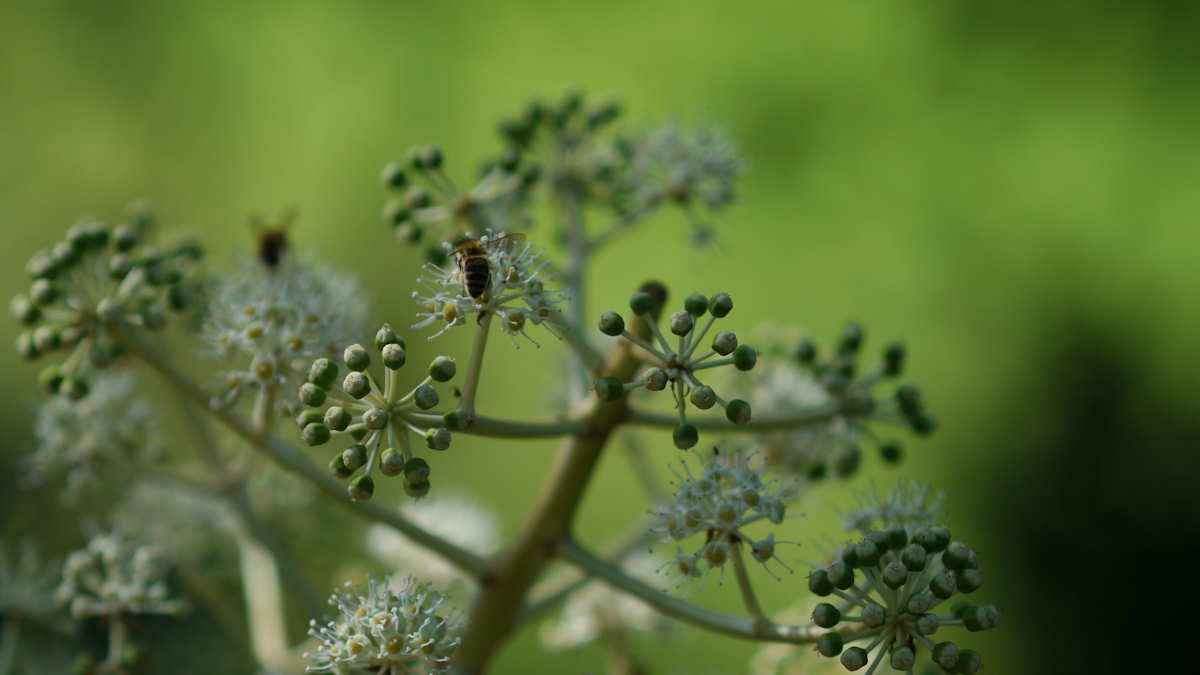
But how sharp is this lens? Well, even though I had not been sure of obtaining critical focus, and the bee could have been moving, here is a 100% crop of the bee in the above image for pixel peepers – not bad given the uncontrolled circumstances! (Click on image to see 100% view)

and, while I was in the mood for some close up nature work, and it was Autumn in Melbourne on a lovely sunny day, here is another nature shot at close focus of 1m in the shade but with some backlight on the leaf:

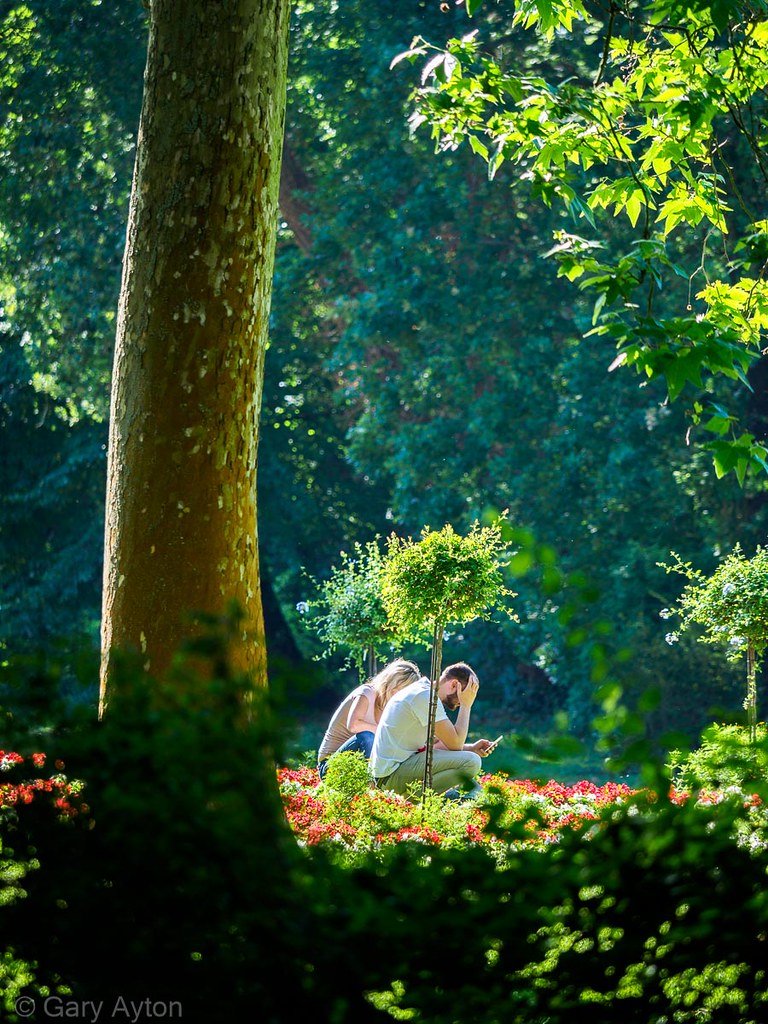
Finally, as I walked in the park, I could not resist this quick snap of this lady with her grand-daughter to demonstrate that even at a distance (perhaps 15-20m from me), the background can still be thrown out of focus when using this lens at f/1.4. No Photoshop apart from sepia toning. This image is best appreciated in larger view by clicking on it.

As you can see, I am enjoying this lens, and it really adds to the Micro Four Thirds fun factor as well as giving almost identical imagery as a Canon EF 135mm f/2.0L lens on my Canon 1D Mark III but at considerably less weight, size and cost.
A must have lens for the photographer willing to use manual focus – if only Olympus would make an autofocus version!
More images of this combination can be seen on my website here.
Wish list for the next Olympus Micro Four Thirds camera, and a few lenses
Written by Gary on April 20th, 2011It’s been a tough couple of years for Olympus and the other camera and electronic manufacturers, particularly this year in Japan.
Olympus has obviously decided that with the global financial crisis it would use this time to devote to R&D rather than frantically produce lots of new camera models.
It seems clear that it has decided that Micro Four Thirds is the future of entry level dSLR world, and while it has not totally forgotten the Four Thirds dSLR format having introduced the E-5 semi-pro body last year, things have been very quiet.
Surely, a higher end Micro Four Thirds camera must be the next to be announced given the popularity of the Panasonic GH-1 and GH-2, and thus far an absence of Olympus models in this style.
What would I like to see in the next Micro Four Thirds camera from Olympus?
Simply a camera similar to the Panasonic GH-2 but with a few Olympus niceties and a few extras thrown in.
So let’s start adding a few wish list features to the GH-2:
- in-camera image stabiliser as with nearly all Olympus cameras – this should work with legacy lenses, and be turned off to allow optical IS to be used if available, particularly for HD video modes.
- a new square sensor – with sensor prices much cheaper than the past, why don’t we take the oversized GH-2 sensor a bit further and utilise the full image circle of Four Thirds and instead of a 18mm x 13.5mm, why not make it 18mm x 18mm and then allow the user to choose aspect ratios 1:1, 4:3, 3:2, 16:9 AND allow option for landscape or portrait of either of these to avoid needing to rotate the camera? Users get more versatility and more pixels (compared to current Olympus cropping for 3:2, 16:9 and 1:1 modes for example current 12mp sensor gives a 9mp 1:1 whereas a square sensor would give 16mp 1:1) for little additional cost.
- Olympus flash technology (my GH-1 does not expose correctly in TTL flash when using legacy lenses)
- increase flash sync to 1/300th sec so I can better use fast aperture lenses in bright sunlight with fill in flash (Super FP flash is not adequate)
- perhaps an intervalometer mode for HD video to allow time lapse videos
- perhaps an auto-bracketing mode for HDR but I am not sure about in-camera HDR image creation unless user has significant control over it.
- perhaps a weatherproof version.
Features Olympus would be likely to add:
- in-body IS – that is standard on most Olympus cameras
- TTL flash with legacy lenses – that is standard on most Olympus cameras
- ART filters including the new ones in the Olympus SZ-30MR – watercolour, sparkle and punk.
- other new features from the Olympus SZ-30MR which I discussed in a previous post
- dual image processing engines to allow simultaneous recording of stills and HD movies, or two different HD movies such as one with ART filter.
- 1080p HD video
- 9fps electronic shutter – perhaps this will make it into the next Micro Four Thirds camera
- 3D still image creation by panning
- smart panorama mode with automatic stitching
- beauty mode
- Eye-Fi SD card compatibility
Now just for a real killer functionality, how about that AF adapter you patented?
- We already have a wide range of lens adapters including tilt and shift adapters, and even a full AF/IS/aperture adapter for Canon EF lenses, but this potential AF OM adapter is also a very exciting one indeed.
- Olympus placed a patent some time ago now for a Micro Four Thirds to Olympus OM adapter which not only gave a 0.5x wide view (thereby giving a 35mm camera field of view usig these legacy lenses), but added AF capability to these legacy MF lenses.
- now if they couuld get this technology working with good image results, financially challenged consumers would be rushing to this system at an even faster rate as they could buy relatively cheap Olympus OM prime lenses and have lots more fun than just with manual focus, and of course they would all be image stabilised courtesy of the camera.
- Mr Olympus should not be concerned that users would buy legacy lenses rather than brand new AF lenses because most will end up buying the AF lenses later anyway, and this would also create a new mode of marketing cheap lenses – Olympus could have a AF adapter then sell cheaper to build and longer lasting manual focus lenses to suit – imagine the Rokinon 85mm f/1.4 lens at $US265 being able to be used with an AF adapter – now that has to be a marketing winner!!
Of course we still need a few Micro Four Thirds lenses as soon as possible:
- 12mm f/2.0
- 35mm f/1.4
- 50mm f/2.0 macro
- 50mm f/1.2
- Rokinon-like 85mm f/1.4 aspherical (but this could be 60-70mm)
- 100mm f/2.8 macro
- 200mm f/2.8 (a 50-200mm f/2.8-3.5 is just too big for Micro Four Thirds)
Rokinon/Samyang 85mm f/1.4 lens on Micro Four Thirds – definitely a must have photographer’s lens
Written by Gary on April 10th, 2011I bought the Rokinon/Samyang 85mm f/1.4 manual focus lens to work with my Panasonic GH-1 Micro Four Thirds camera to create a lighter, smaller, cheaper kit but with similar image quality, bokeh, depth of field, field of view and perspective as my Canon 1D Mark III with Canon EF 135mm f/2.0L pro lens and the results are amazingly similar – see my last post.
Initial testing with a resolution target at same subject distance wide open on tripod with self timer seems to show that the Rokinon lens is significantly sharper in the centre than the Canon outfit which is so surprising to me, I am going to have to do further testing.
In the meantime, I took the Rokinon 85mm and my GH-1 on a walk through Adelaide’s botanical gardens this week to test it out a bit more, and I must say I am very happy that this $US265 lens is so good, it has to be a bargain buy for those looking for nice bokeh.
So here are a few images without any Photoshop (other than resize and jpeg compression for the web) to show how versatile it is on the GH-1:
Firstly, a casual shot of a painting in the hotel I was staying at with available light at f/1.4:

Botanicals in the shade at f/1.4:

Roses at f/1.4:

At close focus of 1m at f/1.4:

And to show that there is almost no geometric distortion even at f/1.4:

And how to blur the background with buttery smooth bokeh for head and shoulders portrait with subject at about 3m (sorry, no subject available so I used the leaves to focus upon), first image is taken at f/5.6 as would be the case had you used most kit lenses:
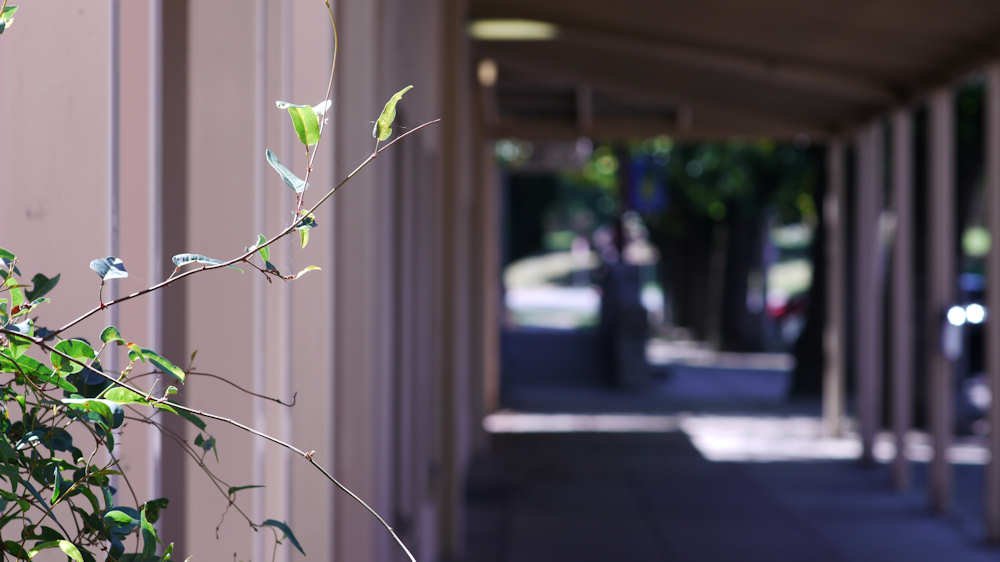
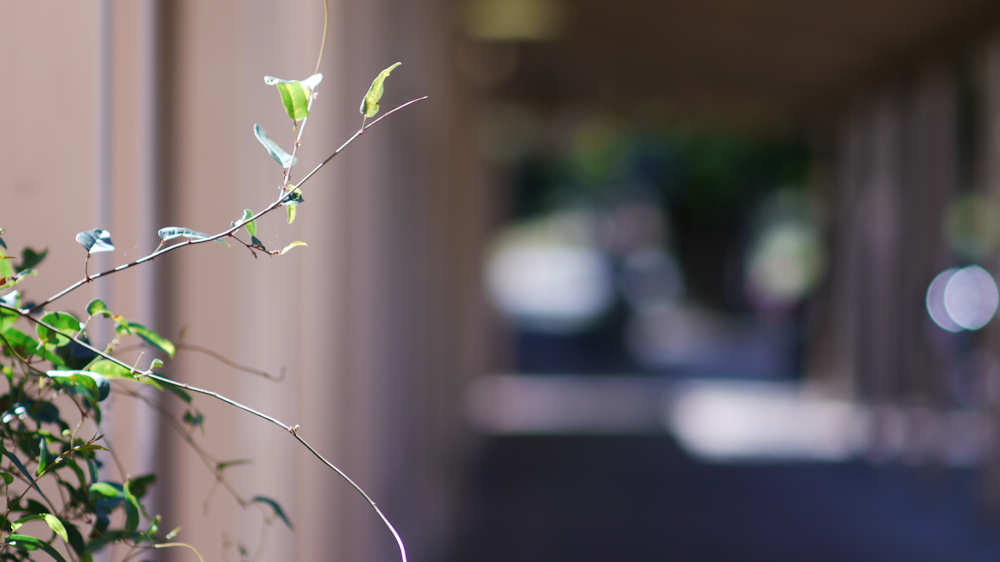
Now see what you can achieve wide open at f/1.4, superb, smooth bokeh which will make any portrait pop!
And here is one from last post at f/1.4:

A must have lens for the photographer willing to use manual focus – if only Olympus would make an autofocus version!
More images of this combination can be seen on my website here.
Brief shootout – Canon 1DMIII + EF 135mm f/2.0L lens vs Panasonic GH-1 + Rokinon 85mm f/1.4 lens
Written by Gary on April 3rd, 2011One of my favorite walk around and people photography kits is the Canon 1D Mark III pro dSLR camera matched with the lovely Canon EF 135mm f/2.0L lens.
Given the 1.3x crop factor of this camera, this combination in effect gives me telephoto reach of a 176mm lens on a full frame camera.
This focal length allows me to be more versatile in selection of backgrounds by virtue of compression of the perspective, while the f/2.0 wide aperture allows one to make the subject pop by having a shallow depth of field (in most situations, a touch too shallow hence I often use f/2.5 or f/2.8 for people photography), and it renders the background with a lovely smooth bokeh.
If you are shooting into a light source, using the lens shade is a must to minimise internal lens flare which is the main issue with this lens.
My biggest problem with this outfit is that it is so big and heavy, I usually don’t bring it with me unless I have something specific in mind.
I have been searching for a similar image drawing outfit with my Micro Four Thirds camera – the now very cheap, Panasonic GH-1 (you can buy it for about a fifth of the price of a Canon 1D Mark III).
I tried the Canon EF 85mm f/1.8 lens, which although is a very nice lens, suffers from considerable purple fringing.
Last week, I received the Rokinon (Samyang) 85mm f/1.4 manual focus lens in Canon EF mount which I bought from Amazon.com for the ridiculously cheap price of $US265.
Now this lens on the GH-1 gives a telephoto reach of 170mm and a depth of field at f/1.4 similar to what my Canon outfit above would give me, furthermore, this 85mm lens is reknown for its buttery smooth background bokeh.
So how would a GH-1 kit you can now buy for well under $US1000 compare with a $US4000 Canon pro outfit?
Of course with the GH-1 you will have to resort to magnified live view for accurate manual focus but at least this is much easier than on a dSLR with its annoying mirror, and thus you may be more limited to relatively stationery subjects, but that suits me fine, as long as I can get a similar image quality at a third of the weight and size, then I will be happy.
Here are a few shots of each camera taken from identical positions at wide open aperture, hand held as I would normally take them, and focussed on similar spots with no post processing of the in-camera jpegs other than merging and then resizing and compressing for the web. Note I did not use a lens hood for any of these shots, as forgot to bring it for the 85mm so to be fair, I left it off the 135mm lens – something I would NEVER normally do for that lens! The sun was not directly hitting the lens glass in any of these images.
Click on the images for a larger view. I will tell you which is which at the bottom of this post.
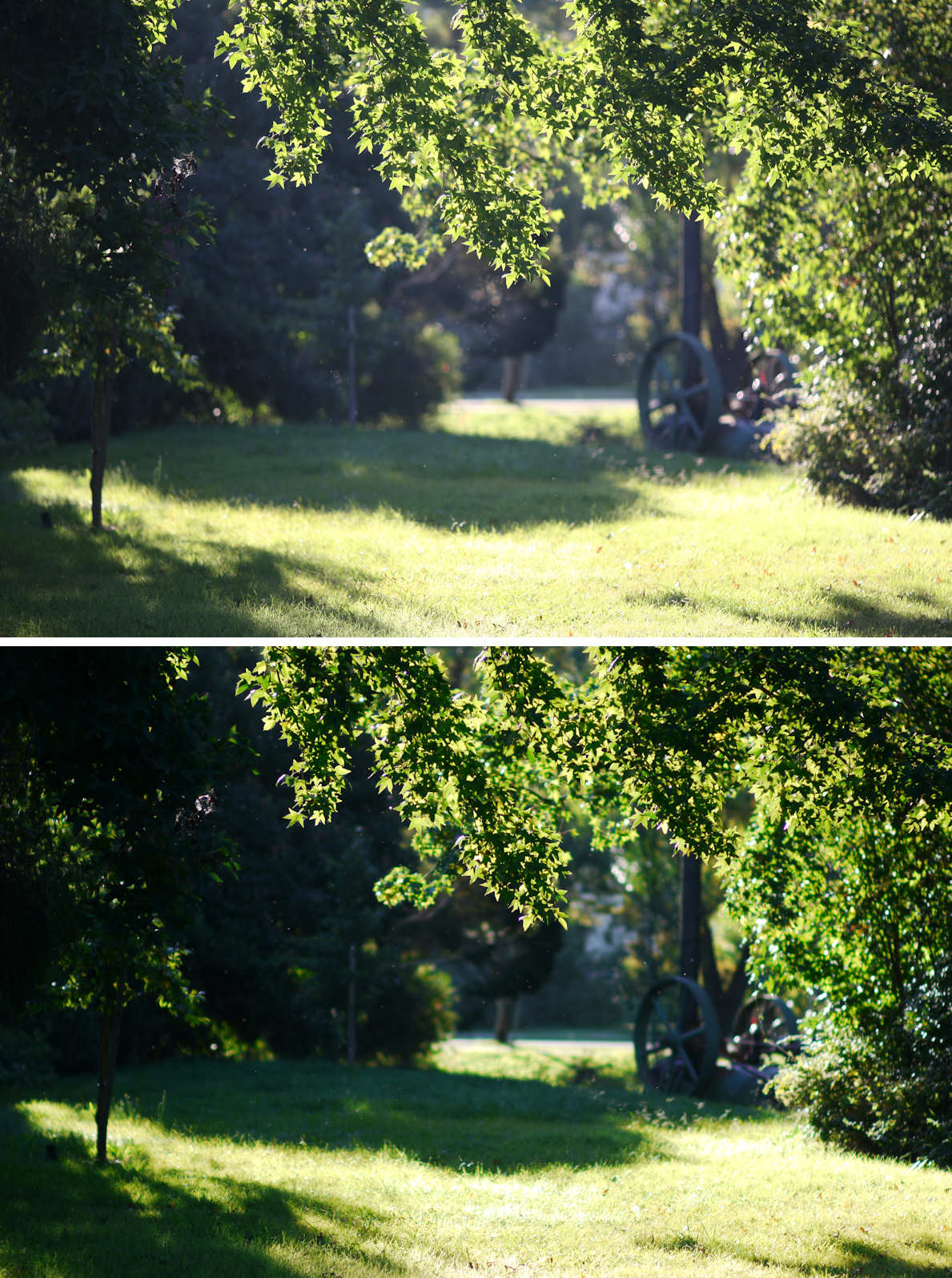


OK, have you decided which you would prefer or are they both similar enough you would be happy to use either?
1st image, the Canon is the top one, while the other two images, the Canon is the image on the left (with the unfortunate vertical line I stuffed up in my editing of the files, and I apologise too for the jpeg compression artefacts – I am not used to Corel’s software which I have had to resort to as my laptop with PS on it just died).
In the 2nd image taken late in the afternoon, the Canon 1D Mark III rendered it a lot cooler than in reality.
The important point in these images is how the background is rendered – almost identical – and that purple fringing is not problematic in any of these.
I think I am on a winner here with this 85mm lens – and it has manual aperture control, plus I can use it on the Canon 1D Mark III if I wish.
I can’t see much difference between the two, other than the more contrasty rendition by the Panasonic (I forgot I had it set to Dynamic Film Mode), and perhaps the 85mm lens draws out of focus foregrounds less well, and it may be a touch less sharp wide open.
For those who are budget challenged, or who just want a small kit to carry around, the Rokinon 85mm f/1.4 is worth a look at that price!
For those who need 10fps, relatively fast AF, weatherproofing, TTL flash, remote TTL flash, or flash sync 1/500th sec (with Pocket Wizards) for outdoor fill in flash in the sun at wide aperture, then you will have to keep your Canon kit as the Panasonic outfit just won’t cut it on these requirements.
Sunbury BackRoad music festival this weekend
Written by Gary on March 23rd, 2011If you are in Melbourne, Australia this weekend, then head on up to the annual Sunbury BackRoad music festival this Saturday, 26th march 2011.
It promises to be a very pleasant afternoon indeed with Australian 70’s rock bands playing from about midday to sunset in a farm setting with Mt Macedon as a backdrop.
I attended last year and used it as a photographic opportunity – my photos taken with a Panasonic GH-1 can be seen here:
http://www.ayton.id.au/gary/JAlbumAll/photojournalism/2010_SunburyMusicFest/index.htm
Bring your picnic chairs and indulge in local wines, and food, and just sit back and relax.
Forecast is for a lovely dry afternoon with a very pleasant max. of 20deg C – you may need a jumper to keep you warm as the day progresses unless you plan on getting up and dancing.
Details are on their website – see you there.

Panasonic GH-1 with Canon EF 135mm f/2.0L lens.
Post-script:
See some of my photos taken at this year’s 2011 music festival here.
The versatile Olympus ZD 50mm f/2.0 macro lens
Written by Gary on March 21st, 2011One of my favorite lenses of all time is the incredibly sharp Olympus ZD 50mm f/2.0 macro lens.
This lens gives a field of view and depth of field as for a 100mm f/4 lens in the 35mm full frame world.
Let’s see what you can do with this lens on a now old technology Olympus E510 dSLR which of course adds image stabilisation.
A typical use for a macro lens is to shoot close up subjects and it will do so to give a 1:2 macro.
Here for example is a tiny juvenile potentially lethal Red Back Spider crawling on the edge of a bench, not an easy target in office lighting, and thus not the sharpest image of a continuously moving subject!
My preferred technique with such close up shots is to set the lens to manual focus and set the focus to the magnification you need, in this case, to the closest focus, then move the camera in and out from the subject until it is in focus. For still life macros, this is best achieved on a tripod with macro focusing rails. For an impromptu shot of a moving subject such as this one, hand held had to suffice.

The next most useful use for this lens is as a portrait lens such as this candid portrait of nuns at the Spanish Steps in Rome where it isolates the subject very nicely indeed and giving a nice out of focus bokeh effect to the rest of the scene whilst still giving enough details in the background to provide adequate contextual information:

Into the morning light, it gives a delightful candid image of these two children playing in a park in Florence:

It can handle contrasty street photography images such as this one:

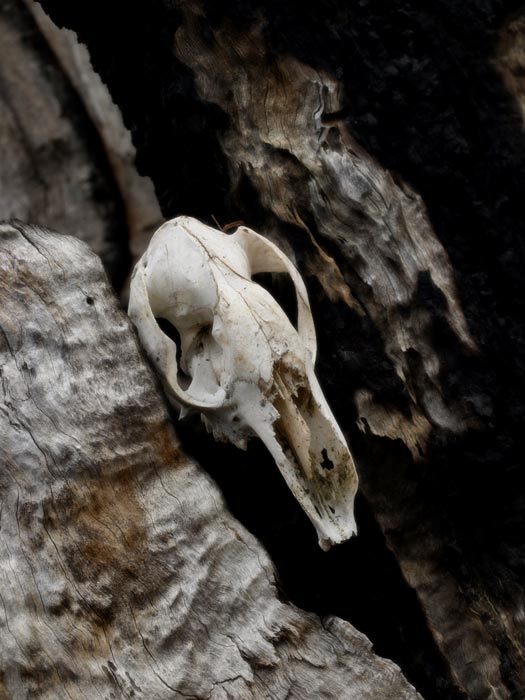
or used to document still life subjects such as this kangaroo skull after the bush fires in Victoria’s Grampians region:
The f/2.0 aperture with image stabilisation of the E510 allows low light shots hand held such as this one of the crescent moon and Venus taken from an aeroplane at 30,000 feet through the window after sunset:

and it is great for indoor shots such as museums, art galleries, etc as in this image taken in a quite dark room in Monte Cassino:

and this candid night time snap of two Italian strangers passing in the night in Sorrento (note – if shooting into street lights at night, I would strongly advise you remove all filters as most filters add flare such as in this image):

For this image of Venice at dusk I used a miniature tripod to allow smaller aperture for depth of field and a longer exposure to give some motion:

More photos with this combination can be seen here.
If you need to get more magnification but be further away, you can mate it with the superb Olympus EC-20 2x teleconverter and use the Olympus Ring Flash to give shots such as this one of a bee “hanging on tight to his dreams”:

or this butterfly:

My daughter is just getting interested in photography and has decided the type of images she wants to capture on her overseas trip is mainly portraits with blurred backgrounds.
Unfortunately for me, out of all my cameras and lenses, she has selected to take my Olympus E510 with my lovely ZD 50mm macro lens as her only lens (maybe I will convince her to take a kit lens). The f/2.0 aperture has also allowed her to develop a much better understanding of the relationship of aperture and image characteristics than a f/5.6 kit lens would ever allow and so she will learn much from this lens.
I fear I may never see it again!
I am looking forward to Olympus producing a Micro Four Thirds version of this lens as the current Four Thirds version does not AF on my Panasonic GH-1 which is a real pity. Apparently the Panasonic GH-2 allows AF with this lens, so that maybe something for potential buyers to consider.
2011 – a disastrous few months gets worse – floods, cyclones, quakes, tsunamis and now nuclear risk
Written by Gary on March 14th, 20112010 was the year the 12 year drought broke in south-eastern Australia thanks to La Nina.
But La Nina and tropical cyclones in northern Queensland brought the worst flooding in 100 years throughout much of eastern Australia, impacting vast areas of Queensland and north-western Victoria. 99% of Queensland now is covered by state and federal disaster relief arrangements.
Then Christchurch, New Zealand, was devastated by a second earthquake in a few months.
Now we have Japan being brought to its knees by one of the 10 most powerful earthquakes of the last century recording 8.9 on the Richter scale and which moved Japan’s main island an incredible 2.4m closer to the US and altered the earth’s spin.
Although causing surprisngly minimal structural damage to Japan’s earthquake-designed buildings, the resultant tsunami devastated the northern coastal cities and now, Japan faces a major risk of a nuclear meltdown at one of its nuclear power plants in Fukushima while a second one has leaked radiation, and suffered a hydrogen explosion at midday today and it too is at risk.
The tsunami caused a terrible loss of life with well over 10,000 thought to have died in one city of 17,000 alone.
Over 200,000 have already been evacuated from the nuclear 20km exclusion zone which has been put in place.
A nuclear meltdown would not only be an environmental catsatrophe, but will have massive effect on Japan with a potential to make an important region of 30km diameter uninhabitable for many generations. Japan and the world can ill afford another Chernobyl.
One must question the wisdom of building nuclear power plants in regions at risk of severe natural disasters.
It seems the Japanese engineers were falsely reassured that in the past 300 years, no earthquake larger than magnitude-eight had struck in the Japan subduction zone. That, in turn, led to assumptions about how large a tsunami might strike the coast.
Many of Japan’s manufacturing plants have either been flooded or had minor earthquake damage, or just closed down as a precautionary measure pending further risk assessment and the outcome of the nuclear plant instability.
Affected manufacturing includes:
- Sony has halted production at eight electronics plants in the Fukushima and Miyagi prefectures (including a Blu-ray factory which was flooded, stranding over one thousand workers who were forced to seek refuge on higher ground).
- A Sony Technology Centre is also located in Sendai.
- Panasonic revealed that falling building structures have caused minor injuries to several workers at its factories located in the Miyagi and Fukushima prefectures. These facilities mainly dealt with digital cameras, audio equipments and electronic parts.
- Panasonic’s Lumix camera factory in Fukushima is ~80km from Fukushima 1 plant.
- Panasonic’s new EV Energy plant in Sendai (a joint venture with Toyota and run by the entity PrimEarth EV Energy Co) which makes metal hydride batteries for cars is said to have been destroyed.
- Toshiba has shut down operations at its semiconductor plant in the northern prefecture of Iwate.
- Sanyo is also said to have implemented shut downs.
- Canon announced that although some damage occurred, it will not halt production.
- Canon confirmed that around 12 employees suffered minor injuries at its lens factory in Utsunomiya which is 200km from Fukushima 1.
- Nikon’s dSLR plant is in Sendai some 6km from Sendai airport (see this image for its proximity with Nikon’s factory marked as A) and 100km from Fukushima 1 nuclear power plant. It seems it has had little direct damage, but one could expect the regional devastation to surely impact its ability to be productive in the short term.
- the Nikkor lens factory at Tochigi, is midway between Tokyo and Sendai
- Olympus does not appear to have been significantly affected directly.
- global production of LCD-related components may be severely impacted, as Japan accounts for a substantial share in the worldwide manufacturing of colour filters, glass substrates, polarizers, cold-cathode fluorescent lamps (CCFLs) and light-emitting diodes (LEDs) used in LCD panels and products.
- The Japanese car industry has been hard hit with Nissan closing four car factories, Toyota closing three and Honda closing two.
- It is estimated that 7% of Japan’s industrial output will have been wiped out with this disaster assuming the nuclear situation is stabilised.
Japan’s economic situation was not great prior to this disaster with debt levels at 200% of GDP, government budget deficit at 7% of GDP and a recent downgrade of its credit rating last month. Japan’s stock market fell 5% today on the concerns of the costs of this disaster.
2 million homes in Japan’s freezing north are currently without power.
Japan’s transport infrastructure has been severely impacted as its rail system on which Japan is heavily reliant upon has been compromised.
Fortunately, Japan’s steel industry has not been significantly affected.
The rising oil prices due to the current Libyan civil crisis/war and other unrest in the Middle East will not help their cause.
There is a still risk of further severe after-shocks with a greater than 50% risk of a quake greater than magnitude 7.0 occurring in the next few days with possible secondary tsunamis.
Meanwhile, a volcano (Shinmoedake) in Japan’s south-west erupted again, perhaps due to the earthquake. It had erupted for the first time in 52 years in January 2011.
Some images of before and after the tsunami hosted on Australia’s ABC news website.
Post script 15th March 2011:
Further explosions at the Fukushima nuclear plant has raised local radiation levels and heightened risk of nuclear meltdown resulting in Japan’s PM wideing the exclusion zone from 20km to 30km and the Japanese stockmarket falling over 10% today after the 6% fall yesterday.
New Olympus compact super zoom with the lot – well almost – a glimpse into a future Micro Four Thirds camera
Written by Gary on March 2nd, 2011Olympus has announced their SZ-30MR – an interesting 24x optical super zoom compact camera with a few new features which I suspect will be incorporated into the next Oympus Micro Four Thirds body.
Dual TruePic III+ image processing engines:
- multi-recording – records full-resolution, 1080p HD video and 16-megapixel stills at the same time.
- record two different movies at once:
- in wide-angle and close-up ( presumably via digital zoom)
- full HD and lower resolution, or
- original and filtered (using one of the SZ-30MR’s seven Magic Filters for movies)
1080p HD video
- most current Olympus cameras are not full 1080p HD
9 frames per second in full 16-megapixel resolution:
- this presumably needs a global sensor to do 9fps using an electronic shutter
- Micro Four Thirds users are eagerly awaiting this technology to make its way to them, but I would be surprised if it does this year.
New Art Filters:
- Watercolor — transform your images with a finish like that of watercolor paintings;
- Sparkle** — shoot photos with the luxurious feel of twinkling lights;
- Punk — create two-tone images full of rock-and-roll spirit
3D still image creation via panning:
- automatically produces an industry standard .mpo image file
Smart panorama mode:
- automatic panoramic stitching while just panning the camera
Beauty mode:
- automatic applies filter to smooth skin
- also a manual in-camera blemish removal tool
Eye-Fi SD card compatibility:
- allows immediate upload of image file via WiFi to a computer.
Is the high ISO image quality of the Panasonic GH-2 really that good?
Written by Gary on March 2nd, 2011Dpreview.com just updated their comparative studio images to include the new Panasonic GH-2 micro four thirds camera.
Click on the link and for one of the comparison images choose Panasonic GH-2, and out of interest I had a look at the ISO 3200 images and to my eye, although having a touch more colour noise, they had more image detail and looked better than most dSLRs at ISO 3200, in particular, better than the Canon 7D, Canon 550D, Canon 1D Mark IV, Nikon D3100, Nikon D300s – check them out yourself – don’t believe me!
Don’t just look at the noise (the GH-2 does have a little more noise than the latest dSLRs) but look at the image detail – the GH-2 wins easily here, and I would always take image detail rather than over-zealous in camera noise reduction which irreversibly destroys it.
That’s a pretty amazing result!
Where things fall down for the GH-2 is at ISO 6400 and ISO 12800, but I think most of us would be very happy indeed with those results at ISO 3200 and below!