Christmas presents in Australia for 2010 – which camera?

Written by Gary on November 13th, 2010

Following on from my previous post comparing the compact mirror-less digital cameras such as the Micro Four Thirds which should be on most people’s potential list for a travel, walk-around, compact camera with high image quality, I thought I would elaborate on other potential purchases.

In general ignore how many megapixels the camera has – almost certainly it will have enough for your needs, and perhaps too many which will mean larger file sizes which impacts storage for minimal benefit in image quality unless you are using the best lenses and a tripod.

The best camera is the one you will have with you – although the very small sensors in compact digital cameras may make them almost useless for low light situations where flash is not allowed or is useless – such as art galleries, inside churches, indoor concerts, etc – the much larger sensor of Micro Four Thirds makes these situations much easier to photograph with good image quality.

HD video is usually available in two main formats – AVCHD which compresses the video to a smaller size designed for TV playback but is much harder to display or edit on computers, and Motion JPEG which has much larger file size but is much easier to display and edit on computers. There is also two main sizes of HD video1920x1080i which takes up the most file size and tends to be not so good for moving subjects as the compression required tends to adversely impact the image (24mbps compression is much better than 17mbps for this), and LITE which is 1200x720p and this tends to be a good compromise for most of us, particularly if one wishes to shoot motion jpeg for ease of use.

If you need a 10x zoom lens for travel, then check out my previous post here which compares options for high image quality from Micro Four Thirds, NEX or dSLRs. If you want a super-zoom camera in a smaller package and are willing to give up the high image quality from larger sensors, then the current best super-zoom digital camera is the Panasonic FZ-100 which easily beats the Canon SX30see here.

The compact, high image quality,  general purpose camera:

  • Panasonic GF-2 – the best of the slim designs with touch LCD but not yet in stores
  • Panasonic GH-2 – the best HD video capable camera of this type with swivel, touch LCD and most importantly, the fastest autofocus but not yet in stores
  • Panasonic GH-1 – a great HD video capable camera but latest models cannot be hacked to give the best HD video, however, at present, they are great value as the price has dropped substantially – I bought mine at $A3000 when it first came out mid 2009, but you can now buy them new at $A1189 with that 10x kit lens, and another great deal is $A1199 with the 20mm f/1.7 lens – not bad when you can only get the 20mm lens in Australia for $A749! You can even get it with the 20mm lens plus a 45-200mm lens for $A1449 – now that is quite a bit of bang for your buck – but remember, the GH-2 will offer much better AF, video and EVF than this camera, so you may prefer to wait and pay a bit more and get the better camera. Nearly all of my Europe 2010 holiday photos were taken with this camera and its fantastic 10x zoom kit lens – these are generally straight from the camera without any processing other than resizing for the web.
  • Panasonic G2 – if you can’t wait for the GH-2 or can’t afford it, but want touch LCD, maybe this camera will suit your needs. $A899 with kit lens.
  • Olympus E-P2 – a great photographer’s compact camera with built-in IS, the best EVF, and much better flash control than the Panasonics. $A1385 with kit lens and EVF.
  • Olympus E-PL1 – when you can’t afford the above, this is a pretty good camera, although may frustrate the advanced user. However, it allows for use of the best EVF available, and is the ONLY micro Four Thirds that currently allows wireless TTL flash – but for most of us, this feature is not of great importance. $A699 with kit lens.

A waterproof, almost indestructible compact camera for the beach, parties, kids, etc:

  • unfortunately, your iPhone is not waterproof, nor drop proof, so there is a great need for a camera to solve these issues.
  • do not take a compact camera with a moving protruding lens to the beach – you just need a little sand to get in there and you can kiss it goodbye!
  • Olympus started this genre with their revolutionary SW series, now called Olympus TOUGH, but have not managed to compete with models from Canon and Panasonic on image quality – nevertheless, if you can pick up 2nd hand ones on Ebay for well under $A200, they may solve your beach and kids needs.
  • the Canon D10 had good reviews when it came out in terms of image quality, but it is not the most pocketable design and its video capabilities are now very dated.
  • the preferred choice at present would seem to be the Panasonic FT2 at $A449 which is waterproof to 10m, drop proof to 2m, dust and frost proof, while offering optical image stabiliser, a 4.6x optical zoom covering 28-128mm focal length, ability to zoom even during video, AVCHD Lite video at 720p at 17Mbps quality for smaller file sizes, or 720p motion jpeg for easy use on computers.

A pocketable compact point and shoot:

  • there are times when even a Panasonic GF-2 is too big to take with you, and the waterproof cameras above just don’t have enough features or image quality, a 3-4x zoom pocketable point and shoot may be just what you need.
  • dpreview.com has just compared the enthusiast point and shoot cameras here and concluded that the winners are the Canon Powershot S95 (28-105mm lens, 100x58x30mm) and the Panasonic Lumix DMC-LX5 (24-90mm lens, measuring 110x66x43mm) although they didn’t get to test the Canon G12.
  • note that these are only marginally smaller than the far better Panasonic GF-2 which measures 113 x 68 x 33mm, but the lens is much smaller than a 3x zoom lens on the GF-2, and thus is more pocketable, but you make big sacrifices in image quality and versatility.

A cropped sensor digital SLR:

  • for when you need to capture fast action, but with reasonable HD video
  • be warned, to get the most from these cameras, you should buy the best quality lenses with the largest apertures you can afford – if you just buy the kit lens with f/5.6 aperture you may as well buy a Micro Four Thirds camera.
  • Canon offer 3 main new EOS dSLRs models which would be very capable and one would need to look at their budget to decide between them.
  • Canon 7D – the more expensive and heaviest of the three but the most features (including dual processor, more AF points, better viewfinder, 8fps burst rate, thus the best of the three for sports/action photography), more weatherproofed, longer life shutter, but unfortunately, the LCD is not articulated as on the 60D, nor is there manual audio control for videos or support for SD cards. $A2199 with the kit lens, or $A2829 with the better 17-85mm lens.
  • Canon 60D – $A1579 with kit lens although you may be well advised to consider $A2349 for the better 17-85mm kit lens package. A nice upgrade from the 50D as it adds HD video with manual audio control, articulated LCD, wireless TTL flash from built-in flash, electronic level (horizontal only, not both as with 7D), SD cards but you lose CF cards, AF microadjustment, PC socket, and the multi-axis controller stick (replaced by a less ergonomic Quick Control Dial). Max. burst rate is 5fps. 9 cross-type AF sensors.
  • Canon 550D – the budget model $A1375 with 3x kit lens, the viewfinder is no where as good as the better models with a true pentaprism and lacks the many of the features of the 60D or 7D, such as having only 1 cross-type AF sensor.
  • Nikon D7000 – $A2099 with kit lens
  • Olympus E5 – $A2199 body only, but you get a semi-pro weatherproofed body with IS, articulating LCD and reasonable video – it would be a great complimentary sports/action camera for those with Micro Four Thirds as accessories such as flash will be compatible. This is a great option with the Olympus ZD 50-200mm SWD lens – you just can’t get such a lens on the Canon 7D or a Nikon. There are a lot of excellent lenses for this Four Thirds format, and many are selling very cheaply on Ebay 2nd hand as users worry Olympus may drop the format in favor of the Micro Four Thirds format – a great time to pick up some bargains perhaps!
  • one should also consider older but still very good cameras such as the Nikon D90 ($A1285 with kit lens), Olympus E30 ($A999 with kit lens, no video) , Olympus E3 which have become much more affordable – the Olympus E3 for instance provides a semi-pro, weatherproofed body but no video for a very reasonable price (if you can find one new now that the E5 has replaced it)
  • for those who cannot afford the above, each of the manufacturers have cheaper entry level dSLRs but personally I would consider a Micro Four Thirds camera over these unless I needed it specifically for sports/action use.
  • I have compared the Canon 550D, 7D and the Panasonic GH-1 on my post here.

The “affordable” full frame dSLR:

  • to me, now that we have Micro Four Thirds to adequately fill the compact interchangeable lens digital camera niche, a full frame dSLR makes more sense than a cropped sensor dSLR such as those discussed above (unless you need it for sports/action photography, in which case a 7D will give more telephoto reach, faster AF and faster burst rates than a 5D MII).
  • a full frame dSLR allows full use of the pro lenses while generally giving better dynamic range, lower image noise, potentially more spatial resolution, and even more options to blur the background and make your subject pop.
  • full frame dSLR though does come at a price – not only monetary for the much more expensive camera body, but you will want the expensive, heavier pro lenses (average $A1500-3000 each), a much sturdier, larger, heavier, more expensive tripod and tripod head, and camera bags to carry it all in.
  • a 70-200mm f/2.8 lens will weigh ~1.8kg by itself and will not be discrete!
  • there are few affordable options
  • Canon 5D Mark II: gives lots of pixels (21mpixels) for your dollar ($A3049 body only) and very good video options but has slow AF and issues in the rain
  • Nikon D700: gives great high ISO performance and better build quality but at only 12mpixels ($A3549 body only)
  • Sony A850: gives the most pixels (24mpixels) for your dollar ($A2499) with built-in image stabilisation but no video and no live preview LCD and its not a Canikon and lenses, and support levels are not up to what is available around the world for either Canon or Nikon.
  • Sony A900: similar to the A850 but 5fps instead of 3fps and better viewfinder coverage ($A3599)
  • frustratingly for Nikon fans, there is no 24mp affordable Nikon FX dSLR yet – surely it must be coming soon!

Have you noticed a trend? Seems Panasonic has become THE leader in camera design for compact cameras and also for video capability!

  • best compact point and shoot – Panasonic LX-5
  • best super-zoom point and shoot – Panasonic FZ-100
  • best waterproof point and shoot – Panasonic FT-2
  • best video-optimised mirror-less dSLR – Panasonic GH-1 and GH-2
  • best compact mirror-less for beginners – Panasonic GF-2
  • best large sensor affordable HD video camcorder – Panasonic AF100/101 – see here

Oh, and just in case you haven’t heard, for $US700 you can buy a lens adapter from Birger Engineering which will allow use of Canon EF and EF-S lenses on Panasonic GH1, GH-2 and AF100/101 cameras with full control of aperture, auto-focus AND optical image stabiliser – the perfect excuse to have one of these cameras AND a Canon full frame camera or a Canon 1D.


Compact mirrorless digital cameras compared: Olympus E-PL1 vs Panasonic GF-2 vs Sony NEX5

Written by Gary on November 11th, 2010

Time to have a brief interlude from my European holiday posts, and look at some potential Christmas presents 🙂

Most of us want a compact digital camera which gives dSLR level of image quality, ability to blur backgrounds, and use different lenses as needed – this is where the compact styles of the new mirror-less digital cameras come in.

At present, I would consider the compacts of the Micro Four Thirds range as well as the Sony NEX 5 – let’s look at their relative sizes:

  • Sony NEX-5      117 x 59 x 38mm 287g w. battery plus 3x zoom 62x60mm at its most compact, and weighs 194g, uses 49mm filters
  • Panasonic GF-2 113 x 68 x 33mm 265g w/o battery plus Pan. 14-42mm 3x zoom 64x61mm, and weighs 165g, uses 52mm filters
  • Olympus E-PL1  115 x 72 x 42mm plus Olympus 3x zoom 62x43mm collapsed, and Mark II version weighs 112g, uses 40.5mm filters

Each of these cameras have had their user interfaces simplified to allow easier use by those used to point and shoot cameras, and thus will be a compromise for those wishing advanced photographic functionality as seen in the larger models such as the Panasonic GH-2, or dSLRs.

The Micro Four Thirds cameras have the big advantage that there are two big manufacturers producing a range of innovative cameras and lenses, and were the first on the scene so there is already a wide range of options, while their functionality, in particular, the AF speed of the Panasonic cameras is rapidly improving.

For instance, you have a choice of buying one of 6 dedicated zoom lens starting at the “28mm”  angle of view for the Micro Four Thirds:

  • Panasonic 14-45mm – older, heavier, slightly larger 3x zoom with optical IS
  • Panasonic 14-42mm – the current, budget 3x zoom with optical IS
  • Olympus 14-42mm – a budget, very compact and light, collapsible zoom but no IS as Olympus includes this in the camera
  • Olympus 14-42mm Mark II – coming in 2011; even lighter (112g) while having faster and quieter AF than the mark I lens.
  • Panasonic 14-140mm – a large, heavy lens but covers 10x zoom with HD video optimisation and optical IS – a unique lens! – this was my number one lens for daytime use on my recent Europe trip.
  • Olympus 14-150mm – a large, lens which covers just over 10x zoom with silent AF for video but no optical IS

As well as 3 pancake lenses when you wish to go super compact:

  • Panasonic 20mm f/1.7 – a must have lens for low light and is very sharp
  • Panasonic 14mm f/2.5 – their latest pancake offering 28mm angle of view unfortunately image quality has been sacrificed
  • Olympus 17mm f/2.8 – a budget pancake useful for general street photography offering the classic street photographers’ angle of view of 34mm
  • personally, I would prefer to have a 10mm or 12mm pancake rather than a 14mm or 17mm, so hopefully they will bring one out soon.

Then you have a range of other dedicated lenses for Micro Four Thirds – see here, including macro lens, fisheye lens, 7-14mm ultra wide angle zoom lens, a 9-18mm lens perfect for travel and landscapes, and a nice super telephoto zoom (100-300mm) which gives an incredible, hand holdable telephoto reach of a 600mm lens.

The main advantage of the Sony NEX-5 is that, even though it has a larger sensor with marginally better image quality from the sensor at present, it is relatively cheap and small (excluding the larger lenses) while including a tilting LCD, 5-7fps burst rate, HDR, and sweep panorama modes, but it has many problems of its own which may well outweigh these advantages.

So lets start with the problems that may be a show stopper for you with the Sony NEX-5:

  • very limited range of autofocus lenses which are designed for it – currently only 3 lenses – 16mm f/2.8 pancake, 18-55mm f/3.5-5.6 IS and 18-200mm f/3.5-6.3 IS, the later two dwarfing the camera and impacting the ergonomics of holding the kit.
  • at f/2.8, the pancake is going to have very limited ability to blur backgrounds, unlike the Micro Four Thirds 20mm f/1.7 which not only allows a LOT more light in, but allows a much better chance of blurring backgrounds, and if used on an Olympus camera, you also get image stabilisation.
  • very limited ability to use Sony A-mount lens is limited by very slow AF, if AF is possible at all.
  • no electronic flash hotshoe – you cannot use your existing flashes, but must buy a proprietary Sony flash designed only for this camera which is also difficult to screw on – now that is a crazy design
  • very limited video modes – my favorite video mode is 720p but the NEX-5 does not support any 720 mode – you get HD at 1080 or resort to tiny VGA 640×480 video. The cheaper NEX-3 does have 720p but no 1080i video.
  • very limited exposure compensation – only +/- 2EV compared to the usual +/- 3EV, but even worse, no exposure compensation available in the iAuto mode!
  • perhaps the worst menu design of the models listed here
  • no electronic viewfinder (EVF) option to allow placing camera at eye level to minimise camera shake, better viewing in sunlight, and more discrete use in situations where a bright LCD screen may be distracting to others.
  • high ISO is not available in iAuto mode – maximum is ISO 1600.
  • iAuto tends to over-expose and worse, you cannot correct this
  • poor battery life
  • poor shot-to-shot times if you preview shots
  • live histogram unavailable when you need it most

The advantages of the Panasonic GF-2:

  • Micro Four Thirds standard and compatibility
  • large range of dedicated AF lenses and many of the Four Thirds lenses work well in AF
  • EVF capable – the ability to attach one of the better EVFs although not as good as the optional Olympus EVF.
  • touch screen interface makes use much easier and allows one to easily select a subject to AF on
  • the fastest AF available in this genre of cameras
  • the best video capabilities in this genre of cameras (although not as good as the larger Panasonic GH-1 and GH-2)
  • built-in flash (albeit only GN 6m and there is unfortunately 2nd curtain sync, and worse, no flash exposure compensation – you will need an external flash for this – but at least a hotshoe is provided, unlike the Sony solution)
  • built-in stereo microphones for video
  • full support for Panasonic’s 3D video lens
  • slimmer with pancake lens attached than the Sony with pancake and thus more pocketable (in a jacket pocket)
  • Lumix 14-45mm 3x zoom lens sharper across the whole image wide open than the Sony equivalent.
  • Lumix 20mm f/1.7 is as sharp in the corners as the Sony 16mm f/2.8 wide open, even though it is f/1.7, and is considerably sharper at f/2.8 than the Sony.
  • Unfortunately you cannot buy the GF-2 bundled with either of these preferred lenses – you will have to purchase these separately at a higher price, or better still via the internet.

The advantages of the Olympus E-PL1:

  • Micro Four Thirds standard and compatibility
  • large range of dedicated AF lenses and many of the Four Thirds lenses work well in AF
  • built-in image stabiliser which works on all lenses including legacy lenses
  • built-in flash (GN 12m) which is pop up bounce-capable, and hot shoe for external flashes
  • the best flash control of these models
  • EVF option – one of the best EVF’s available – also works on the higher end model, the Olympus E-P2
  • Art filters for special effects

Conclusion:

  • if money was not an issue, the Panasonic GF-2 with 20mm f/1.7 lens, a 3x zoom lens (the Lumix 14-45mm lens is a lot sharper than the newer budget 14-42mm lens, but a little heavier and larger, and appears to be sharper across the whole image wide open than the Sony 18-55mm lens)  and an external flash such as the Olympus FL-36 (buy it 2nd hand from Ebay) would make a great compact kit and allow nice bounced flash at parties, etc for flattering portraits, as well as providing the fastest AF and best video in the slimmest kit.
  • if you would prefer more manual controls instead of using the LCD touch screen to change settings, then consider the Panasonic GF-1 or the Olympus E-P2.
  • cheapest price goes to the Sony, but I think there are too many issues with this camera and buying into it at this stage seems a false economy – I would rather go with the Olympus E-PL1 unless there was a specific Sony feature I had to have – and currently there is no such feature that would entice me.
  • if your prime aim is to use electronic flash or legacy lenses, then the Olympus E-PL1 is the way to go, and hand held in low light, the image stabilisation plus f/1.7 of the 20mm lens will easily beat the Sony with its f/2.8 pancake lens for stationary subjects.

Post-script:


Europe holiday – Denmark part VI – the fantastic art galleries

Written by Gary on November 10th, 2010

I must admit, I loved walking through Copenhagen’s art galleries, particularly as they allow you to remember your experiences by taking photos (unlike those in Amsterdam and Canberra whose paintings I have now largely forgotten), and encourage others to visit.

Denmark’s national gallery is the Statens Museum for Kunst (Kunst is Danish for art):

figures

Michael Kvium’s “Choir”:

choir

the delightful “Artist’s wife and child”:

wife and child

So many more goodies from this gallery can be seen in my album here.

Next is the Glyptotek which is primarily statues from Ancient Roman and Greek era such as these ones displayed in this very nice auditorium in which classical music artists play to a silent audience:

auditorium

If you happened to have become bored with Roman and Greek statues after being in Rome or the Louvre, then there is still something else rather special – four beautifully crafted rooms with the most awesome marble sculptures by Stephan Sinding, Rodin, and others, such as this beautiful piece titled “Love” made in 1909 by Stephan Sinding:

Love

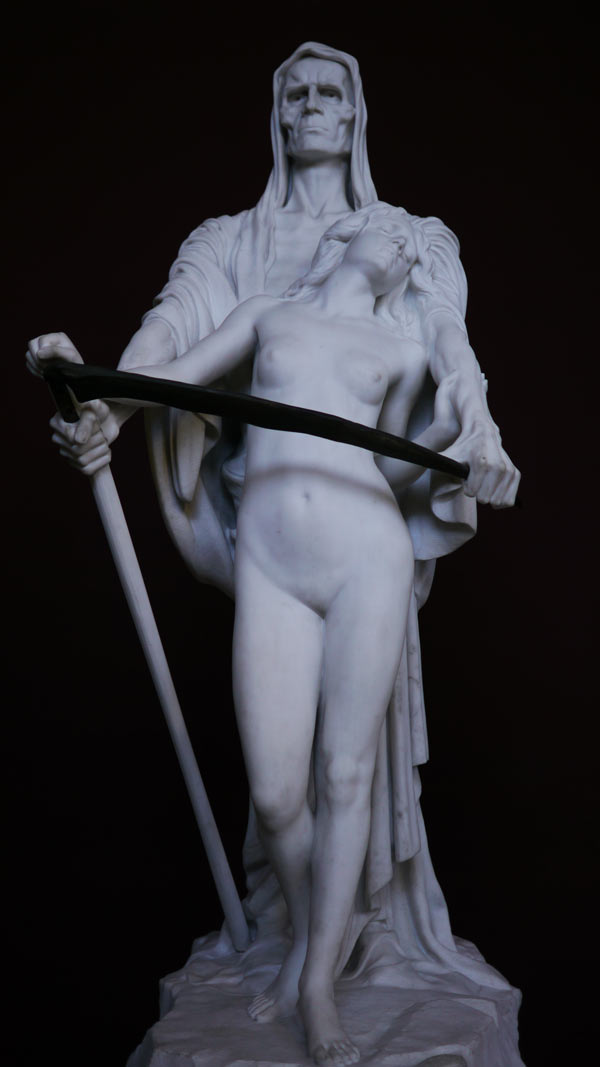
and “Death of a maiden” made in 1912 by Elna Borch:

Death of a maiden

and finally, there are a couple of floors of paintings by French Impressionists, plus, a collection of Degas sculptures and figurines.

For a taste of what you can experience in this enormous collection, see my album here.

Next we have the collection of works held in the Hirschsprung Gallery such as “Nude woman doing her hair before a mirror” by Eckersberg in 1841:

Nude woman

and one of my favorites, Kroyer’s 1882 “When there is no fishing”:

No fishing

More from this art gallery can be seen in my album here.

Finally, one should not miss Rosenborg Castle in Copenhagen – it not only contains gems such as this 1667 nude painting of Denmark’s Queen Sophie Amalie with Juno:

Queen Sophie Amalie

some wonderful tapestries, lots of Royal artefacts, and the Treasury displays the Royal jewels including these crowns with incredibly large rubies and sapphires:

Queen Sophie Amalie

More of these from Rosenborg Castle can be seen in my album here.

All of the indoor photos from these art galleries and castles were taken with the Panasonic GH-1 Micro Four Thirds camera with Leica-D 25mm f/1.4 without flash.


Europe holiday – Denmark part V – Frederiksborg Castle

Written by Gary on November 10th, 2010

While you have the Copenhagen Pass, you have no excuse not to catch the train to Hillerød and take a short walk through the lovely town, have lunch at one of the very nice cafes, and take a leisurely stroll around the Frederiksborg Castle which holds paintings documenting the history of Denmark and its Royal Family, as well as some contemporary art works, including the portrait of our Crown Princess Mary.

It is even more pleasant if you have a beautiful sunny day like I did, although storm clouds were never far away:

the castle

The ceilings are incredibly ornate with thousands of sculptures such as these:

the ceiling

While the main hall is host to a beautiful wall size portrait of the Danish Queen Alexandra of England, Empress of India, and consort of King Edward VII:

Queen Alexandra of England

Crown Princess Mary:

Crown Princess Mary

And one of the copies of the historic Bayeaux tapestry which documented the invasion of England in 1066:

Bayeaux tapestry

More photos from this wonderful castle are here.

Photos inside the castle were taken with Panasonic GH-1 Micro Four Thirds camera with Leica-D 25mm f/1.4 lens.


Europe holiday – Denmark part IV – Roskilde

Written by Gary on November 10th, 2010

The Copenhagen Pass gives you free train travel to regional cities such as Roskilde, famous for its annual music festival in summer.

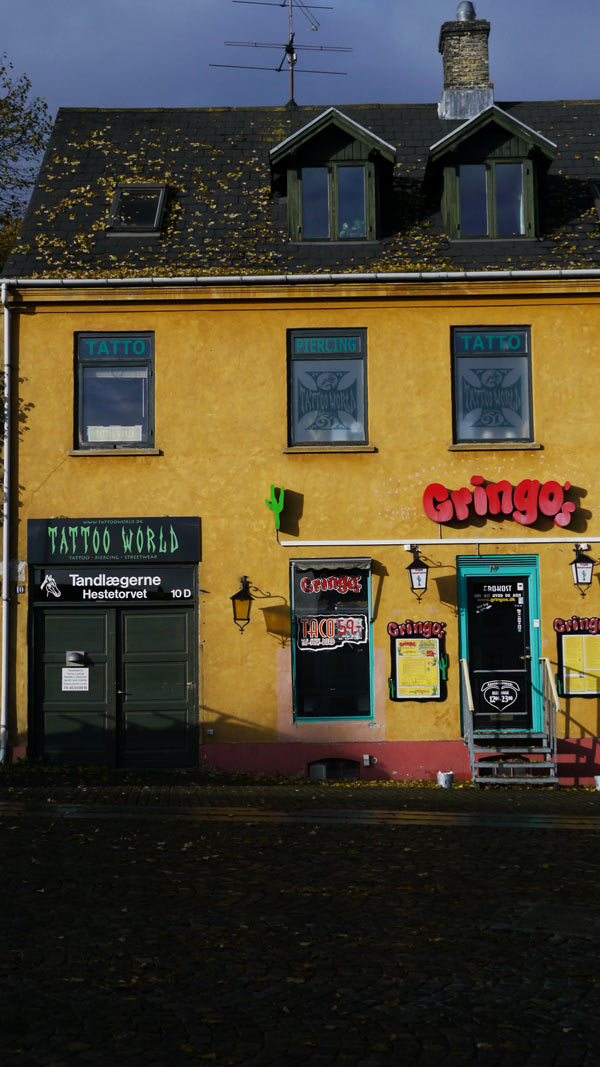
Here is a tatoo parlour near Roskilde train station:

tatoo parlour

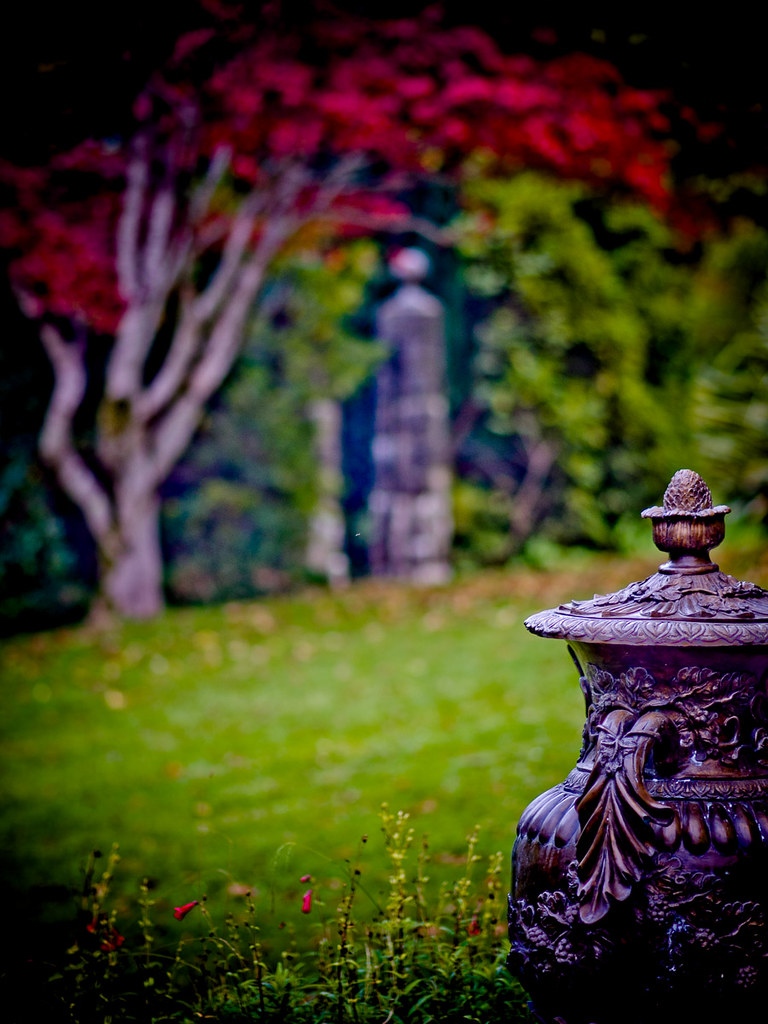
Unfortunately, entry to this wonderful little avenue was closed in October, but the light was right, so here is a shot through the gates:

Roskilde gardens

Did I mention, Scandinavian countries are generally so clean, with very little graffiti or litter:

Roskilde houses

And, of course, Roskilde’s cathedral where many of the Royal family have been entombed is easily found:

Roskilde cathedral


Europe holiday – Denmark – Part III – I think I have fallen in love with Copenhagen

Written by Gary on November 8th, 2010

Copenhagen seems to remind me a lot of my home city – Melbourne – a very culturally orientated family city with a good mix of multicultural aspects, cafes, bars, it’s people are generally friendly, but in addition, it is a much more photogenic city, although much colder.

I loved its train system, the Copenhagen Pass was well worth it if one is going to visit a few museums and catch a few trains to almost anywhere on the main island. The trains were clean, not crowded, and even catered well for cyclists, although few seemed to catch the train while I was there. The trains have WiFi, and even a “silent” part of the carriage where people are not allowed to talk or make noise – how nice is that!

I stayed at the Scandic Copenhagen Hotel which is very close to the city (only a 10 minute walk to the Central Station, even closer to Vesteport station), but far enough away to be quiet. I highly recommend this hotel, staff were friendly, room very clean, and the Junior Suite was extremely roomy at 46 sq. m (instead of the usual 26 sq. m and 14 sq.m in some hotels) with lots of windows to take in the views, and not overly expensive by European standards, particularly when you have free WiFi in your room and full buffet breakfast included! Just be warned, breakfast can be very busy and noisy as there are a lot of guests, but there was never any major issues there, and I loved it so much, I extended our stay there to 9 days.

Another little aspect to be aware of is that the hotels in Scandinavia seem to give you adjoining two single beds with an individual doona on each when you request a double bed. Now this was actually conducive to a better night’s sleep – or perhaps I just did a LOT of walking every day!

Here is the view from my window looking west, away from the city, one late afternoon after a few showers had passed (Panasonic GH-1 Micro Four Thirds with gradient filter to bring out the cloud detail):

hotel view

Most of our time though in Copenhagen was filled with sunny days, albeit only 8-10deg C, just a touch warmer than Stockholm, but one still needed a coat, hat, gloves and scarf when the breeze picked up or the sun went down.

canals

Ameliaborg palace in Copenhagen:

Ameliaborg palace

And, a view from my hotel room at dusk:

dusk

Copenhagen seems to be a great compromise between the Scandinavian cultures, level of tourism, safety, cleanliness and cost effectiveness, it is just a pity it is so cold, and those damn bikes clogging up the pedestrian access everywhere.

Perhaps they need to make a computerised multi-storey bike park where cyclists can drop off their bike and a computerised transport system stacks them away out of the public’s way?


Europe holiday – Denmark – part II – Halloween in Copenhagen

Written by Gary on November 8th, 2010

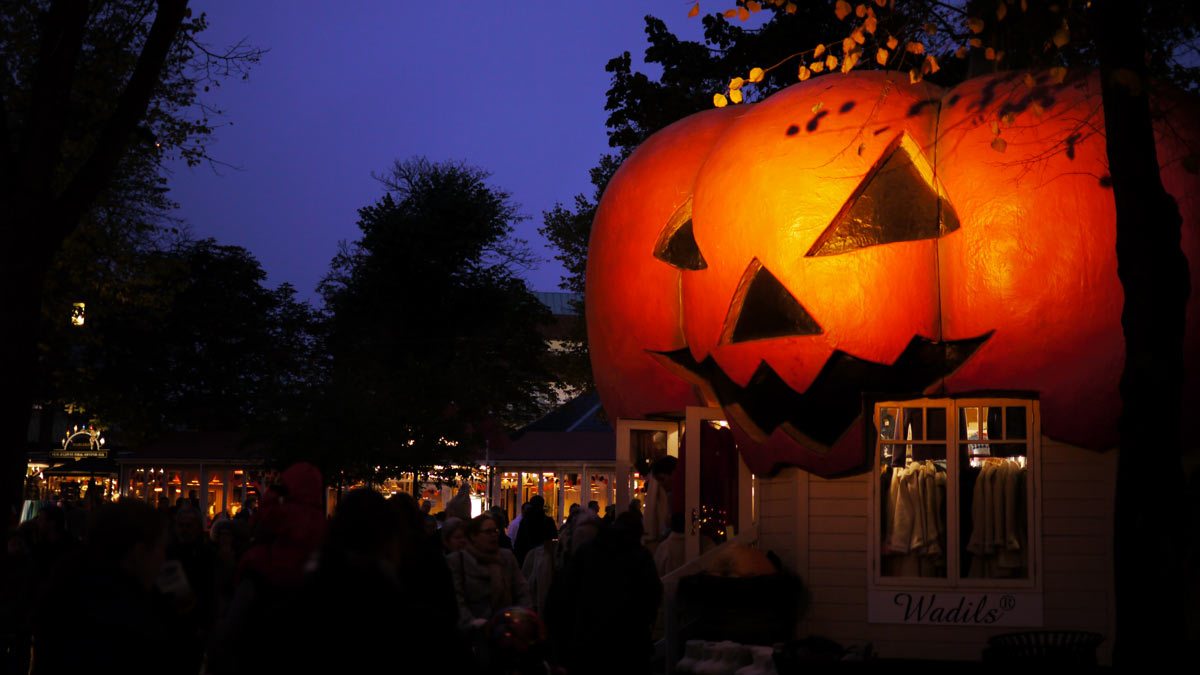
Our visit to Copenhagen just happened to coincide with Halloween and Copenhagen’s Tivoli amusement park opened for the week of school holidays, and of course was packed with families making the most of the Halloween theme and rides.

It was a freezing cold night with intermittent showers but that did not stop the locals from having fun (Panasonic GH-1 Micro Four Thirds camera with Leica D 25mm f/1.4 lens).

Halloween at Tivoli

During the day, Tivoli was much more bearable for an Aussie without thermal underwear!

Tivoli

Meanwhile back at Copenhagen’s Central Station, it was time for a toilet break for the young one while the tourists wait as the sun gets lower (Olympus E510 with ZD 50mm macro lens):

Tivoli


Europe holiday – Denmark – part I – cyclists heaven

Written by Gary on November 7th, 2010

Coming to Copenhagen from Stockholm in October, one is immediately aware of the substantially higher numbers of tourists and multiculturalism.

The Copenhagen restaurants and bars still seem to be dominated by tourist-oriented British/American food as I mentioned in the previous post on Stockholm, but it does have some very nice Italian restaurants which served great food, and not just pizza and pasta.

The numbers of cyclists seem to have increased exponentially, and they were the main threat to my personal injury – it seems cyclists assume they have right of way, even if pedestrians have a green light, and many of the cyclists just don’t stop to give way to you – you do have to be a bit more aware here!

I had not researched Denmark prior to going there, and thus I was caught off-guard by Denmark’s love affair with cycling – I suspect that if you were a young adult and didn’t cycle to work in Copenhagen, you might be regarded as a second class citizen. I was fascinated by the clothes the Danish wore whilst cycling – no helmets, but it seems, fashionable clothes and even high heels is the trendy way to travel here. They have bikes designed for every purpose, and the ladies generally used bikes with elevated handles to allow them to sit very elegantly with straight backs.

I just can’t imagine this degree of cycling taking off in Australia with its rigid bike helmet laws discouraging fashionable cycling!

Denmark's love affair with cycling

After I returned to Australia, I was telling friends about this cycling culture, where even ladies would be seen cycling home in the cold and rain at 9pm at night, and they informed me that Copenhagen had become so famous for this, there has been a web blog devoted to Copenhagen Cycle Chicks – a blog which presumably started off as a sexy voyeuristic site but seems to have become more a social documentary site – it is worth a check to see what I am talking about. However, I am not sure how the Danish ladies feel about this, although it does seem many love the attention.

It is certainly fascinating watching how the Danish people carry everything on their bikes, including their children in boxed carriages at the front, yet apparently, they have a very low rate of cycle injuries per kilometer cycled.

Our first night in Copenhagen coincided with their annual cultural night which was a great way to get acquainted with the city.

Ice sculptures on Copenhagen’s cultural night taken with the Panasonic GH-1 Micro Four Thirds camera with Leica-D 25mm f/1.4 lens without flash:

Ice sculptures on Copenhagen's cultural night

See more of my Denmark photos here.


Europe holiday – a few days in beautiful, chilly Stockholm

Written by Gary on November 7th, 2010

Flying from Rome to Sweden in October is a bit of a shock to the system.

The midnight Arlanda Express train from the airport was safe, clean and fast, although not exactly cheap.

Rome’s beautiful Autumn weather of generally sunny days with temperatures in the 20’s, was suddenly replaced with generally sunny days and temperatures barely reaching 8 deg Celsius.

It was time to don the coat, hat, scarf and gloves, and as I discovered too late, a lip moisturiser is a must!

Gone were the crowds of tourists, and the multitude of gypsies, beggars and others who exploit the tourists, gone too was the dirt, grime, litter, graffiti and chaotic traffic.

Gone were the beautifully tanned, olive skinned Italians and replaced with a different beauty, the Swedish blondes.

Gone was the pizza and pasta every day, and replaced with reindeer and elk steaks, and delicious marinated herring, although like most of the Western world, there were many British/American restaurants and bars offering their over-priced hamburgers and fries, or second rate steaks and tourist-oriented unimaginative desserts.

Food, coffee and alcohol were all much more expensive in Stockholm than in Rome, although the food quality from the better, more authentic Swedish restaurants was memorable, and a great culinary experience for not much more money than those rather ordinary steaks from the previously mentioned establishments.

It was fantastic to walk 20 minutes from the Central Station and find yourself in a beautiful National Park which took about 2 hours to walk around the main lake which at that time of year was surrounded in Autumn leaves.

Stockholm's National Park next to the CBD

The old part of town, Gamla Stan, is a must see, with some very nice restaurants indeed.

Stockholm's Gamla Stan

The Stockholm City Hall is where the Nobel Prize is presented, and a feature is the Golden Hall with its 18 million tiles of gold-leaf which form beautiful mosaics – unfortunately, I only had a second to get this shot before it was filled by a crowd, and it is a bit under-exposed, but still shows the extent of the mosaics.

As I wanted to have a very compact camera for this occasion, this was shot with the Panasonic GH-1 with Olympus 17mm pancake lens – one of the few times I resorted to using this lens on this holiday:

Stockholm's Golden Hall

No trip to Stockholm would be complete without allowing a couple of hours to explore the Vasamuseet museum which houses the Vasa – an incredibly ornate preserved wooden ship which was built as Sweden’s largest ship ever with an extra deck of cannons, but sank during her maiden voyage in 1628 due to miscalculation of ship design to cope with the many cannons. Although the cannons were retrieved not long after, it was not until the 1950’s the ship itself was re-discovered and carefully brought to the surface and restored.

This was taken using the Panasonic GH-1 Micro Four Thirds with Leica-D 25mm f/1.4 lens – the lighting in there is quite dim, thus you will need a wide aperture lens, and a relatively high ISO – a point and shoot or dSLR with kit lens is not really going to do the job!

The Vasa

If you can brave the cold, then there are a multitude of sight seeing tours by boat, although these locals in an open boat at sunset with a decent chill factor of the breeze must be well aclimatized to the conditions:

Stockholm's sight seeing boats

Stockholm is definitely a city to walk around, just make sure you dress for the cool to cold conditions in October, and you will be rewarded with lovely Autumn scenery and nice people who generally speak excellent English. September is significantly less cold and perhaps would be a more preferred month for the traveler wanting to get out walking.

Walking around Stockholm

Even in the cool breezes, walking around Stockholm is a most enjoyable experience, with its beautiful harbour

Stockholm's harbour

and unique architecture:

Stockholm's architecture

If only it wasn’t so far from Australia!

More of my photos from Sweden can be found here.


Europe holiday – Rome V – art works inside the Vatican using the Leica-D 25mm f/1.4 lens

Written by Gary on November 6th, 2010

Most of the art galleries in Italy do not allow photography, but the Vatican allows photography except inside the Sistine Chapel itself.

The lighting is quite variable, and thus a lens such as the Leica-D 25mm f/1.4 or the Olympus ZD 50mm f/2.0 macro is very handy to have with you – tripods are impossible, and you do not want to be using electronic flash!

These photos were taken with the Leica-D 25mm f/1.4 lens on the Panasonic GH-1 Micro Four Thirds camera.

They even had a Van Gogh painted ca 1890 (ISO 400, 1/40th sec, f/1.4):

Van Gogh

And a version of Rodin’s The Thinker:

Rodin

Much of the collection, is either religious symbolism, art nudes or disturbing, graphic depictions of violence, such as this large tapestry wall mural of which only a small section is shown here:

Violence

More of my photos of the Vatican collection can be found here.