Which affordable low light street photography lens?

Written by Gary on January 16th, 2011

There are 2 main lenses most people need for their travel photography:

  • general purpose zoom lens – eg. a 10x zoom is favored by many such as the Panasonic 14-140mm HD lens
  • a lens for hand held low light (eg. indoors in art galleries or restaurants with friends) or night photography

Other commonly desired lenses include a ultra wide angle zoom (eg. the Olympus M.ZD 9-18mm) and a wide aperture macro/portrait lens (eg. Olympus 50mm f/2.0).

This post is to look at what is available in the 30-50mm focal length range (in 35mm terms) for cropped sensor travel cameras at a reasonable price.

Although I love my Panasonic Leica-D 25mm f/1.4 Four Thirds lens which is my favorite general purpose lens now, it is too expensive to be included in this category, as are the Canon and Nikon pro lenses such as the 24mm f/1.4 and 35mm f/1.4 lenses.

Panasonic are rumoured to be making a Micro Four Thirds version of this fabulous 25mm f/1.4 lens which one could expect to be much more affordable as it does not need the more complex design of a Four Thirds lens which is further from the sensor.

For Micro Four Thirds then, the main lens to consider is the brilliant Panasonic 20mm f/1.7 ASPH pancake lens:

  • although Panasonic place a ridiculous RRP of $A799 on it in Australia, it is available for $US350 in Asia and in the US.
  • this lens is incredibly sharp even wide open – see dpreview.com which shows that at f/1.7 even out to 50% towards the edge it’s resolution is above 1150 line pairs, and at the corners this drops to 750. At f/2.2 it is much better still across the frame.
  • this lens does have some CA and some distortion but these were part of the compromise for such as small lens design and are corrected in-camera by Panasonic bodies but may need correction in post-processing when used on Olympus bodies.
  • it’s AF is not the fastest or quietest but usually this is not a great problem in practice unless shooting video.
  • it also does not come with a lens hood given it is a pancake design, and unfortunately has the rather unusual 46mm filter thread, but at least t does not rotate so one can use polarising filters.
  • at 100g, combined with sharp optics and an almost perfect street photography focal length of 40mm, this is regarded as the one must-have lens for Micro Four Thirds users.

If you are looking at a lens for a Nikon DX dSLR, your main affordable choice is the Nikon 35mm f/1.8G DX:

  • a consumer level cheap lens with rather ordinary optics – disappointingly soft wide open.
  • it weighs twice as much as the 20mm f/1.7 but does have a 52mm filter thread and comes with a lens cap
  • at an effective focal length of just over 50mm, it is getting a bit long for street photography, but then I use 50mm a lot so this may not be a show stopper.
  • see dpreview.com which shows that this lens is very soft wide open with only its centre sharpness exceeding 1150 line pairs while corner sharpness drops to a very soft 450 line pairs. It is best used at f/3.5 but even at this aperture, CA becomes prominent which will need post-processing to remove.

Samsung NX users have the option of the Samsung 30mm f/2 pancake lens:

  • see dpreview.com which shows good sharpness wide open, perhaps comparable to the 20mm f/1.7 wide open but not as sharp as the 20mm lens is at f/2.0.
  • it does better than the 20mm lens in terms of CA and distortion – but these are corrected in-camera for the 20mm anyway.

Sony NEX camera users are out of luck, there is no such AF lens available for their system as yet.

Canon APS-C dSLR owners have the Canon EF 35mm f/2.0 lens:

  • non-USM thus noisy AF
  • poor bokeh quality as unlike the above it is an old 5 bladed aperture design
  • relatively sharp in the centre – but “really bad in the corners” – see here.

Canon users also have the EF 28mm f/1.8 USM lens:

  • gives a nice 45mm effective focal length
  • uses 58mm filters
  • a much better build than the above, weighs just over 300g, but still very soft in the corners wide open – see here

Sigma produce a 30mm f/1.4 lens in mounts for Canon, Nikon and Four Thirds:

  • a heavy lens at 430g, with a large filter of 62mm
  • HSM AF is fairly fast and quiet
  • sharp in the centre wide open but extremely soft in the corners – see here for tests on a Canon APS-C dSLR

Conclusion:

While the latest Canon and Nikon dSLRs have marginally better high ISO performance than a Panasonic GH-2, marginally better ability to blur backgrounds, and certainly have better AF for moving subjects, and you can have remote TTL flash if needed, if you want edge to edge sharpness to match the Panasonic 20mm f/1.7 or the Samsung 30mm f/2.0 lens, then forget the cheap 35mm f/1.7 and f/2.0 lenses and pay up for the professional quality lenses as the consumer Canon and Nikon lenses have very soft images away from the centre wide open.

In low light, Olympus Micro Four Thirds / Pen camera body users get the extra benefit of in-camera image stabilisation which extends the hand held capability of the 20mm f/1.7 (or 25mm f/1.4 lens) even further.

My preference is to pick the Panasonic 20mm f/1.7 up for $US350, and use it with a Panasonic GH-2 if video and its other benefits are a priority, or team it with an Olympus E-PL2 if image stabilisation, remote TTL flash and smaller body size is your priority – but in this latter case you may need to do some post processing to remove CA and distortions.

It will be very interesting to see when Panasonic brings out as a 25mm f/1.4 Micro Four Thirds lens, and Olympus bring out an even wider 12mm or so prime which hopefully will be about f/2.0 aperture.

Image stabilisation is NOT available with prime lenses on Canon or Nikon cameras.

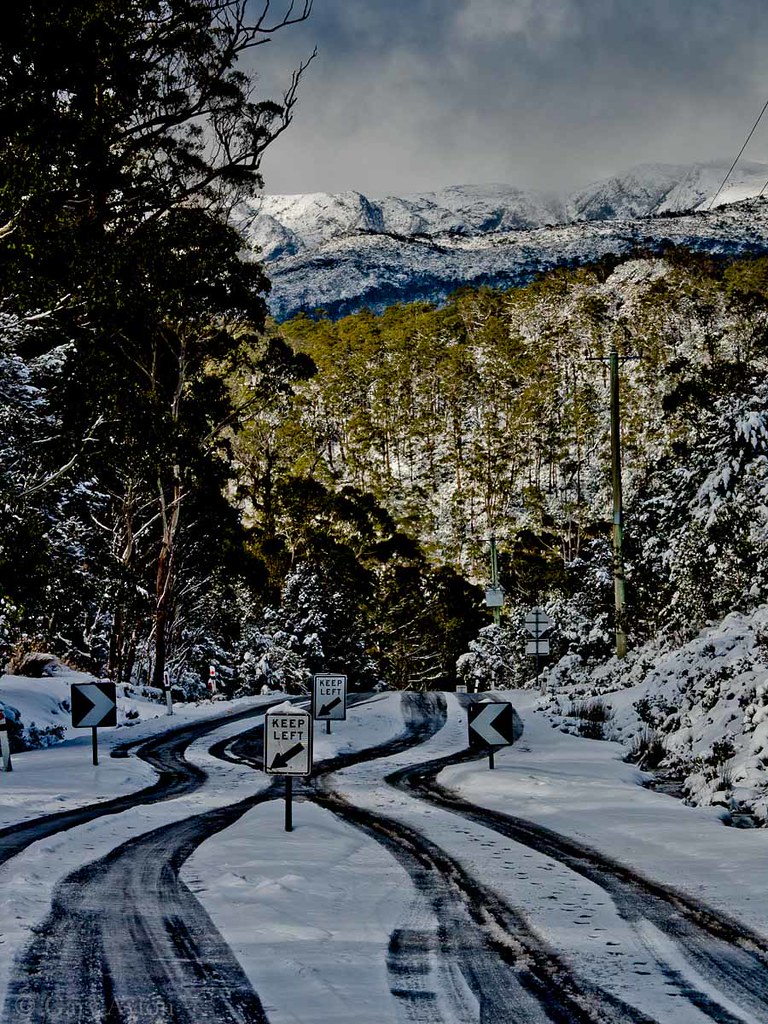
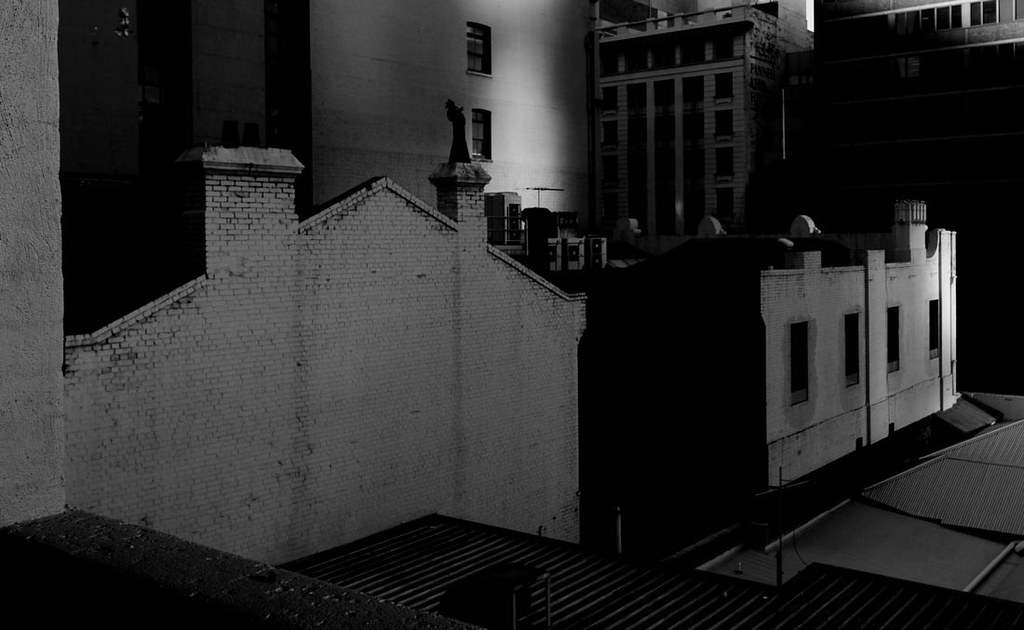
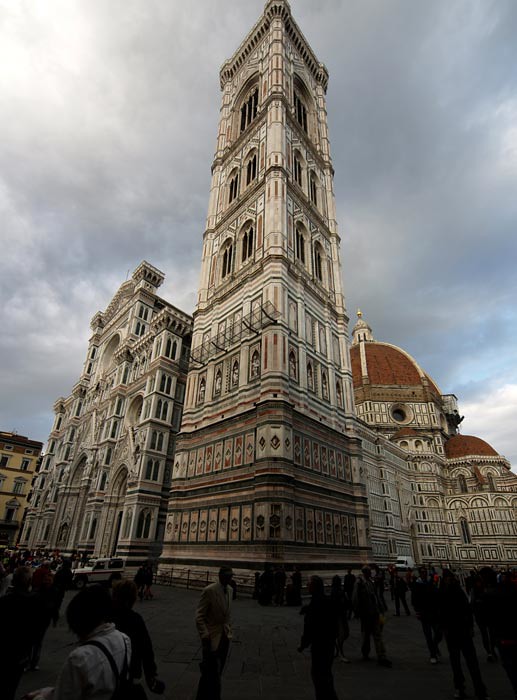
Some of my low light and night photos using the Panasonic GH-1 with a Leica-D 25mm f/1.4 lens hand held can be seen in these galleries:

All my shots on this page were done with the older GH-1 with either 14-140mm lens or the 25mm lens  – the indoor (eg. photos inside the vatican) and night shots were with the 25mm f/1.4 lens (no IS) with only the night ones of the Vatican being on a tripod, the rest were hand held.
These photos were taken in Denmark with same combination (day shots mainly 14-140mm lens, indoor and night shots all hand held with 25mm f/1.4 lens on GH-1 – EXCEPT for 1 night shot from my hotel room where I used a tripod).
These photos were taken in Melbourne on one day with GH-1 plus 25mm f/1.4 without tripod.
 

Now its Victoria’s turn for 100 year floods

Written by Gary on January 16th, 2011

Queensland’s floods are subsiding and the clean up  has started in Brisbane. To date 17 have died and a further 21 still missing and likely to have died.

An incredible 700,000 square kilometres of Queensland has been declared a disaster zone, with substantial inundation damage, severe infrastructure damage, shortage of fresh food or drinkable water, and many thousands still without basic amenities of power, sewerage.

What is worse, there is still 2 months of their wet season to go and La Nina will threaten more floods.

La Nina has now sent NSW, Victoria and Tasmania unseasonally heavy rains which in the north-western plains of Victoria has resulted in current flood disaster with over 40 towns affected, many with record flood levels or at least the highest in 100 years, and still the flood waters threaten towns as it flows towards the Murray River.

This flood appears to be likely to be Victoria’s worst flood disaster on record and comes only months after many of the towns were flooded in September.

La Nina has also produced major rainfall event in Sri Lanka which has had its annual rainfall in the past week, and drought to Argentina.

A major flood event that is not caused by La Nina has killed over 500 in Brazil, largely from resulting mudslides.


Queensland flood catastrophe worsens

Written by Gary on January 11th, 2011

Australia is a land of extremes, we have had 12 years of drought over much of Australia with the hottest decade on record which culminated in the devastating Black Saturday bush fires in summer 2009 when temperatures in Melbourne hit an unprecedented 47degC – my posts regarding this can be seen here.

La Nina has brought a wet, cool, humid 6 months to Victoria and our unseasonally wet summer continues, but this is nothing to what has happened in Queensland over the past few weeks where they have often been receiving Victoria’s annual rainfall in a day and repeated episodes of this. The last major La Nina was in in 1974 which resulted in Australia’s wettest year on record and major flooding as well as cyclone Tracy which devastated Darwin.

Much of Queensland has been covered with flood waters for weeks and all the dams are not surprisingly full with limited capability for further flood mitigation.

Heavy rain and storms continue over Queensland.

Yesterday, the Queensland town of Toowomba was hit by a devastating, surprise “inland tsunami” – an unexpected 8m wall of water rushing through the main streets washing away all before it and resulting in 8 dead and 72 missing as of this morning with that figure expected to “rise dramatically” according to Premier Bligh. This wall of water came from torrential rain (80-200mm in 30 minutes – a ” 1 in 100 year localised event”  for that region) in the nearby Lockyer Valley and disappeared almost as fast as it came, to continue on to cause major flooding downstream, washing away houses.

Here is a sample of how fast the creek rose:

To try to understand this type of event, imagine that if you had a 1km wide and long flat paddock with no inflows or outflows other than the direct rain, at 100mm in 30 minutes, the whole paddock will be filled with water 100mm deep (ie. 4 inches). This equates to a volume of 100,000 cubic metres = 100 megalitres.

Now imagine a potential 10m wide creek within a valley which is 1km wide, if there was no run off from the mountain sides, and no inflows or outflows, that creek would become 100mm deep after this amount of rain.

BUT, as a crude calculation, if all the run off from the mountains 0.5km on either side of the creek ran into the creek immediately, then 1 kilometre of catchment draining into 10m wide creek results in a 100x multiplier effect (1000m valley width / 10m creek width) – ie. the creek would rapidly rise to 10m and this wall of water would rush downstream. For every 1km length of valley, 100 megalitres will be added to the flood plains below.

This is why bushwalkers and campers do not camp in dry creek beds in areas at risk of heavy rain in the catchment of the creek bed – which could be a 100km away!

Queensland’s capital city, Brisbane lies on the banks of the Brisbane River which is now at risk of major flooding in the next 36 hours.

Major flood level of the Brisbane River is regarded as being at a level of ~3.6m, with the Wivenhoe Flood Mitigation Dam still managing to delay water flows into the Brisbane River.

At 9am today, the forecast was that the river is expected to peak at 3m tomorrow which will inundate perhaps 500 houses but if levels are more than this perhaps 7000 homes are at risk. Authorities have indicated 30-70 suburbs are at risk.

The Wivenhoe Dam reached full flood mitigation capacity today and further inflows will by necessity be allowed to flood Brisbane.

At 3pm today, this forecast has been revised to give a peak height of the Brisbane river at major flood levels of 4.5m at the high tide tomorrow afternoon, not too far off the 5.45m of the 1974 flood, but levels on Thursday are expected to EXCEED the 1974 flood and “devastating”!

The nearby city of Caboolture on the Sunshine Coast has been advised to evacuate today.

The Wivenhoe Dam was built above Brisbane to prevent a recurrence of the devastating 1974 flood when the Brisbane River hit just over 5m, and it was calculated that it would reduce flood levels in the Brisbane River by ~2m. See history of Brisbane floods here which show the highest flood on record was the Feb 1893 flood when the Brisbane River hit over 8m resulting in boats floating onto their Botanic Gardens.

The Wivenhoe Dam supply capacity is 1.15 million megalitres (“100% capacity)”, and can hold a further 1.45 million megalitres in a flood before it runs risk of failure. On the 6th Jan it was at 100% capacity, and by 9am yesterday it had reached “148%” capacity – filled to half its flood additional capacity in only 4 days!

Remember, assuming 100% run off, as in saturated soils, each 1mm rainfall results in 1 megalitre per square kilometre of catchment.

The dam has a 7000 square kilometer catchment and the recent inflows have equated to water twice the volume of Sydney Harbour EVERY DAY!

This has forced water authorities to release water from the dam which is contributing by necessity to minor flooding of Brisbane River at this stage and moderate flooding later today and tomorrow as levels reach 2-3m.

The ongoing heavy rain and fog  is not only hampering rescue efforts by limiting helicopter rescues but it runs the risk of further unprecedented flash flooding throughout Queensland and it was hoped the dam will prevent major flooding of Brisbane itself.

Some areas between Maroochydore and Warwick are expecting further rain today well in excess of 50mm per hour (2 inches per hour)!

Many spent a cold, wet night on their roof tops last night and are still to be rescued this morning.

Ipswich levels will hit 16-18m today (in 1974 they hit 21m) – this has now been revised to be forecast at more than 22m and up to a third of the city is expected to be inundated.

One third of Queensland has been declared a disaster area – that is ~600,000 square kilometres – an area larger than the whole of France.

Best case scenario for many Queenslanders is that they are likely to be isolated in their homes for perhaps a week or more as roads continue to be closed, many others will have severe damage and losses to their homes and businesses from which it will take many months if not years to recover.

Bureau of Meteorology warnings here.

11th Jan 2011, 9pm update:

Premier Bligh has announced a revised figure, with up to 40,000 homes now at risk of being affected by the Brisbane floods while 100,000 will lose power for the next few days.


Olympus offers a couple of nice, albeit belated Christmas presents – the E-PL2 Micro Four Thirds and a nice fast aperture compact camera

Written by Gary on January 6th, 2011

Olympus has just announced 2 new cameras – the E-PL2 Micro Four Thirds and a nice fast aperture compact camera – the XZ-1.

The E-PL2:

  • a higher featured version of the entry level E-PL1 camera which makes it more of a photographer’s camera
  • new EVF port also allows for the new PENPal Bluetooth accessory for sending small jpegs to mobile phones (excluding iPhones)
  • new twin MAL-1 macro light option
  • larger LCD screen, more controls, and faster AF than the E-PL1 while also providing eye detection AF, 1/4000th sec max. shutter, 1/180th sec flash sync, new battery, Dramatic Tone Art filter.
  • it also comes with the new collapsible kit lens which is lighter, has faster and more quiet AF than the E-PL1 kit lens, and can also take accessories for fish-eye, wide angle and macro capabilities.
  • the above features combined with those existing on the E-PL1 such as built-in image stabilisation, 720p HD video and flash will make this a very attractive camera to many.

The Olympus XZ-1:

  • another very interesting compact in that although it uses a much smaller sensor than Micro Four Thirds, it partly makes up for this by providing a fairly unique fast aperture zoom lens covering 28-112mm focal length range at a maximal aperture of f/1.8-2.5.
  • this large aperture lens combined with sensor shift image stabilisation will go some way to allowing better low light images than is possible from most compact digitals, but as with all tiny sensor cameras, you will not be able to get substantially out of focus backgrounds as you could with a larger sensor camera such as a Micro Four Thirds or a dSLR.
  • nevertheless, it is more pocketable than the above and you can use remote TTL flash or flash on the hot shoe so it has potential as a fairly discrete carry around camera to take when the larger cameras would not be practicable.

Other “compact digital” cameras  announced this week include:

  • Olympus SP-610UZ – 22x ultra zoom with effective focal lengths ranging from 28mm wide angle to 616mm super telephoto, and thus significantly upgrades the range compared to the older SP-600UZ 15x zoom range and adds HD video and 3D pan mode,
  • Olympus TG-310 and TG610 Tough waterproof compacts
  • Olympus VG-120 compact with 2-130mm range and 720pHD video
  • Sony’s 5 new Cyber-shot cameras which have 1080p HD video and 3D mode  (models DSC-TX100V, DSC-TX10, DSC-HX7V, DSC-WX10 and DSC-WX9) and use the Sony’s 16mp “Exmor R” back-illuminated CMOS sensors
  • Sony’s 6 entry level CyberShot cameras (DSC-W510, DSC-W530, DSC-W560 and DSC-W570) with sweep panaroma mode and 720p HD video
  • Casio TRYX with rotating frame design to allow I’m not sure what!
  • a multitude of Panasonic, Samsung, Fujifilm and Canon compacts
  • NB. all of the above cameras have sensors MUCH smaller than Micro Four Thirds, and thus their image quality will be no where near as good, particularly in low light conditions, and thus none are really of much interest to me as I value image quality, but they may be adequate for your needs or as a 2nd camera to always carry with you in case your iPhone is not up to the task.
 

What will 2011 bring for the photography world – and what should it bring?

Written by Gary on January 3rd, 2011

2010 showed us a glimpse of what is likely to come with:

  • the continued rise in popularity of large sensor compact digital cameras with interchangeable lenses such as the Micro Four Thirds system by Panasonic and Olympus, and the systems by Sony and Samsung
  • the increasing dominance of Panasonic in the quality of compact digital cameras
  • the introduction of slate-type multi-touch devices such as the Apple iPad and the Samsung Galaxy.
  • the improving HD video capabilities of dSLRs
  • the need for better lenses to cope with increasing megapixel density in dSLR cameras – both Canon and Nikon embarked on serious revamping of their pro lenses – Olympus had already designed their pro lenses to cope with this increased megapixel density.

What can we expect in 2011?

  • more of the same but with incremental improvements
  • Canon and Nikon may finally decide to enter the mirror-less interchangeable lens compact camera markets which must surely be cannibalising their entry-level dSLR sales as well as compact digital camera sales – Nikon has been rumoured to be looking at a smaller sensor than Micro Four Thirds, while Canon’s “EIS” is rumoured to be approximately the same size sensor as Micro Four Thirds but in 3:2 aspect ratio.
  • an Apple iPad II to correct a lot of the very annoying deficiencies of the initial iPad – see my many blogs of my frustrations.
  • a multitude of iPad-like devices using Windows 7 and Android operating systems
  • the Panasonic GH-2 should dominate the travel photography world given its versatility, relatively compact size, the best HD video of all hybrid/dSLR cameras, the best electronic viewfinder, a relatively fast AF system and touch-screen flip out/swivel LCD screen – what more could you want? (I can think of a few but this camera should satisfy the needs of most travel photographers).

What would I like to see?

  • Panasonic and Olympus to bring in more lenses for Micro Four Thirds, in particular, more fast prime lenses – I would love to see a 10mm or 12mm f/2, a 50mm f/2 macro, a 100mm f/2 macro and a 200mm f/3.5 OIS lens – oh, and there is need for a cheaper consumer level macro lens – perhaps their 35mm macro?
  • Olympus to give us a really compact Micro Four Thirds body as well as a semi-pro level weatherproofed body similar to the GH-2 (given that it seems Olympus may not be producing any more entry level dSLRs such a body is highly likely).
  • Olympus to create a macro flash system for Micro Four Thirds.
  • a Windows 7 device that works as nicely as an iPad but without all the problems of an iPad.
  • a global electronic shutter in a Micro Four Thirds to finally give us silent photography for use in weddings, classical music performances, etc, as well as the possibility of high burst rates such as 10-40 fps still photography.
  • Panasonic and Olympus in Australia to start pricing their products to reflect their pricing in $US – why should Australian’s pay almost twice as much when hour dollar is par with the $US?
 

Panasonic issues firmware update for Lumix 14-140mm lens

Written by Gary on December 8th, 2010

The firmware update is said to improve AF speed and optical image stabilisation in movie mode.

See here for instructions on installing it.


The rising dominance of Panasonic in compact cameras – arguably the best in each category

Written by Gary on November 28th, 2010

If one browses through a previous post of mine on which camera to buy for Christmas 2010, one quickly realises that there is one common theme:

It seems Panasonic has become THE leader in camera design for compact cameras and also for video capability!

  • best compact point and shoot – Panasonic LX-5
  • best super-zoom point and shoot – Panasonic FZ-100
  • best waterproof point and shoot – Panasonic FT-2
  • best video-optimised mirror-less dSLR – Panasonic GH-1 and GH-2
  • best compact mirror-less for beginners – Panasonic GF-2
  • best large sensor almost-affordable HD video camcorder – Panasonic AF100/101 – see here

Note that the HD video of the GH-1 and GH-2 is also better than any dSLR, and the image quality of the GH-2 HD video easily beats the new Canon 60D – see here and to quote:

  • The GH2 is stronger at high ISOs
  • The GH2 resolves almost twice the detail and resolution in 1080p mode than the Canon, 3x more in crop mode
  • The GH2’s colour and dynamic range are equal, and the GH1’s mud & banding issues are fixed
  • The GH2 does not have the serious moire and aliasing issues of the 60D in 1080p, and especially in 720p
  • 2 hour clip limit rather than 12 min cut off on Canon 60D, 7D and 5D

Panasonic are making rapid improvements to electronic viewfinder image quality, contrast-detect AF speed and HD video capabilities – all of which are critical technologies in the above market places, while their sensor development is improving quite nicely to give very acceptable image quality at higher ISO’s which has always been an issue in smaller sensors.

To my mind, Panasonic’s main weakness is in their flash technology – their cameras to date do not have the same control of flash as we would expect from high end cameras – certainly no where near as good as Olympus cameras. Fortunately, you can use Olympus flashes on Panasonic cameras, but there are still unnecessary limitations imposed by the cameras, particularly when used with legacy lenses in TTL auto mode.

And, I do  wish they would incorporate in-camera image stabilisation as well as their optical stabilisation, because it seems little to add, but which would make their cameras even better for use with legacy lenses. If you use legacy lenses a lot, then look at the Olympus Pen cameras instead.

My other main wish for Panasonic (and Olympus) is to get their flash sync speed up to 1/320th sec instead of 1/160th sec so that flash fill in in daylight could be more effective.


Navigating the iPad file system jungle – could it have been more poorly designed?

Written by Gary on November 23rd, 2010

OK, so the iPad is really just for dummies with more money than sense – well I got sucked in by Apple’s lack of documentation as to its considerable limitations – see all my previous posts on the iPad.

Each application you buy or download has its own discrete data storage area which is NOT shared with other apps.

It seems the only data storage area within the iPad which is shared amongst various apps is the Photos app folders and albums.

Let’s explore a few little process issues for iPad  users – processes which should be very simple.

The photo albums:

  • while you can create various photo albums on your main computer and select these in iTunes to be copied to your iPad, you cannot use the iPad itself to create new albums, or move photos between albums, or even delete these photos, but you can Copy to the clipboard or email them.
  • any images saved from Safari or other apps will go ONLY into the Saved Photos folder and then cannot be moved to another folder.
  • any images copied from your camera or SD card are added to Event folders and to All Imported and Last Imported albums where they CAN be deleted, emailed or copied to the clipboard.
  • thus you cannot create your own albums or slideshows using the iPad alone and the Photos app – you need iTunes on a computer, or you need to copy photos to a different application with its own folders.
  • furthermore if you re-connect to your computer, you do not get access to these images via iTunes (but a warning that iTunes may indeed delete them during sync if you are not careful) – you must try to find it as a drive in My Computer if it is being nice to you and showing up as a drive.

Download a file from the internet:

  • open up Safari web browser, navigate to the web page you want
  • let’s say there is a photo on that web page you would like to add to your album of photos on iPad
  • well this is at least easy, hold you finger on the photo and you get two options – Save (which does add the image to your Saved Photos folder accessible by Photos or many other apps – but bad luck if you want to move it to a different folder – that is not possible!) or Copy (which copies it to the clipboard, but you can’t paste it into Photos or any of the Photos albums).
  • but what if you wanted to download a pdf file?
  • using Safari to open and display a pdf is possible, and you can have it saved as a separate Safari tab for future use, but you can’t save the pdf file anywhere, nor can you copy to clipboard or email it, let alone even think of editing it.
  • you can partly get around this mess by buying an app such as Downloads HD – but you still will not be able to copy a photo to a photo album of your choice.

Paste a file:

  • well, you have selected Copy from Safari or Photos which copies that file to the clipboard memory space so you can paste it somewhere else
  • but where can you paste it?
  • not in Photos or its albums, not in apps which you would expect would support pasting of files such as Air Sharing, DropBox, Documents or Stash
  • you CAN paste these files into some apps such as USB Disk (which has a rectangular icon at the bottom which is supposed to indicate how many items are in the clipboard and available to paste BUT unfortunately does not seem to show them).

Instead of being a device to make you more productive, it has the opposite effect – frustration after frustration once you get past the novelty of the nice touch interface.

Perhaps Apple’s philosophy is “Let the buyer beware ” instead of being a bit more transparent in documenting what in can and can’t do!

Oh, and if you are wondering, the iPhone uses a similar folder management system, but at least with an iPhone, you are not really expecting it to be your main web browsing and file management tool as is the case with the iPad.

If there are ways around all this, please feel free to add comments, as I am sure there are thousands and thousands who are just wondering why they spent their hard earned cash?


Why would anyone buy the new Olympus E-5 dSLR – well there are a few very good reasons!

Written by Gary on November 21st, 2010

Olympus has been very quiet of late in updating their Four Thirds dSLR cameras and lenses – largely due to the combination of the global financial crisis and the distraction of the successes from their Micro Four Thirds mirror-less camera system with which they are joint partners with Panasonic.

Indeed, the success of the Micro Four Thirds camera system which has taken the photographic world by storm has meant that the Four Thirds dSLR system seems to have become even more marginalised to the extent that its future seems uncertain.

I suspect another important factor is that the sensor contract with Panasonic is apparently ending early 2011 and this has apparently prevented Olympus from sourcing other sensor options such as the new Kodak sensors – 2011 may give us a very different picture of the future of Four Thirds!

Why then would anyone pay $2000 or so for what is a rather modest upgrade of the Olympus E-3 semi-pro dSLR that is the Olympus E-5?

To my mind the reasons fall into these categories:

  • existing Four Thirds users and others who wish to upgrade to a camera that is not only an excellent photographer’s camera with great image quality (especially at ISO 800 and below), weather-proofing, excellent build, adequate pixels, AF and burst rate for most photography, swivel LCD, inbuilt image stabiliser, and finally some HD video capabilities.
  • as a compliment to the Micro Four Thirds camera, which are not designed to handle the larger lenses as are the larger dSLRs, but the E-5 will still be able to use the same electronic flashes and similar accessories, while the Four Thirds lenses can be used on Micro Four Thirds cameras via an adapter and you still maintain full aperture control and a variable degree of AF capabilities.
  • wildlife photographers looking for a relatively light, compact, weatherproof, super-telephoto kit – when combined with the 3.3kg 90-250mm f/2.8 or 300mm f/2.8 lenses – do you really want to carry around a $A10,000 Canon 400mm f/2.8 IS lens and all the gear that needs to go to cope with its 5.4kg back breaking weight?
  • storm chasers like Mark Humpage who love the weather-proof compact Olympus kits
  • those who believe that Olympus will not leave Four Thirds users out in the cold in a few years, or do not care if they do.
  • those who want to use one of the superb, unique Olympus Four Thirds Zuiko Digital lenses.

Let’s look at the last category – those unique Zuiko Digital lenses, renown for their superb optics with edge-to-edge performance not usually possible on Canon or Nikon lenses which must use a larger image circle, and physics dictates that aberrations increase exponentially the greater the distance from the centre.

There are some Four Thirds users deserting the system quite reasonably given the uncertainties which Olympus’ marketing department have contributed to, and this has meant lower demand for, and thus often lower prices for these excellent lenses, especially in the second hand marketplace – this means potential for snapping up some excellent lenses, but a risk you may only be able to use them for the next few years or decade if Olympus does indeed cease support for Four Thirds – which I think is unlikely.

Olympus ZD 50-200mm f/2.8-3.5 SWD:

  • I am a BIG fan of this lens
  • you cannot buy a Canon, Nikon or Sony lens which covers the same field of view as this lens with comparable combination of aperture, image quality, image stabilisation (built-in the camera), weatherproofing, close focus, weight, size, price and bokeh.
  • RRP has been $A1300 or so which means it is not a super expensive
  • although it is a little big and heavy for many people, it is no where as big or heavy as you would need for a Canon or Nikon equivalent field of view
  • it weighs 1kg but similar lenses from Canon or Nikon weigh at least 1.36kg, and over 1.5kg if you go for the traditional 70-200mm f/2.8 IS lens
  • it’s length is only 157mm which means normal backpacks will hold it mounted to a camera – you will need a special photo backpack which you have to take off your back to access if you try mounting a Canon or Nikon 70-200mm f/2.8 lens to a dSLR.
  • this lens alone would make me buy the E-5 if my old E-510 gave up the ghost – it is too big for Micro Four Thirds use, but when you want blurred backgrounds at a bit of a distance, or lower light capabilities at long focal lengths, this is one versatile lens
  • furthermore, you can combine it with the excellent Olympus EC-14 (1.4x) or EC-20 (2x) teleconverters for even more telephoto reach – up to 800mm f/7 hand holdable in daylight!
  • see more comparisons of this lens in the table on my web page here

Olympus ZD 150mm f/2.0:

  • I do not own this lens as it is a bit expensive for me at $US2499 while RRP in Australia is a ridiculous $A4299 and a street list price of $A3199 even though the $A is on parity with the $US  (thanks for trying to promote your system in Australia Olympus!), but this is a superb, unique lens.
  • I love my Canon 135mm f/2.0 lens on a 1.3x crop Canon 1D Mark III which gives an effective 189mm field of view, but it is not image stabilised (a big issue when you must resort to 1/320th sec or slower for fill-in flash portraits) and suffers from quite a bit of flare.
  • the 150mm f/2.0 lens in contrast is designed to be quite a different beast – it gives a field of view of a 300mm lens while allowing a fast f/2.0 aperture to still retain shallow depth of field but not too shallow and allowing faster shutter speeds  than a 300mm f/2.8 or f/4 lens would allow, and of course you get image stabilisation courtesy of the cameras.
  • if one was using a full frame dSLR, you would need at least a 300mm f/4 IS to match the field of view and depth of field characteristics, but you lose 2 stops of light coming in, so you would need to use 2 stops higher ISO to compensate, and you may still not get the superb edge-to-edge image quality of the smaller Olympus lens, while use with a 2x teleconverter only gives f/4 aperture instead of a dim f/8 aperture as with a 300mm f/4 lens.
  • at 1.6kg it is quite a heavy lens for its size, but is a relatively compact 150mm in length which is substantially shorter than a Canon 300mm f/4 lens at 221mm long.
  • it would make a superb astrophotography lens as there are no optical IS elements to adversely impact the image quality of pin point stars and the f/2.0 aperture would allow shorter exposures.
  • LensTip have just reviewed this lens and their tests re-affirm how superb this lens is.

The other superb Olympus ZD lenses:

  • the other pro and super pro Olympus lenses are superb with edge-to-edge image quality generally not possible on Canon or Nikon equivalents, but these are either too expensive for most of us (eg. over $US6000 for the 300mm f/2.8 or 90-250mm f/2.8), or the benefits over Canon or Nikon equivalents are not quite as substantial (the 14-35mm f/2.0, 35-100mm f/2.0, 11-22mm, 50mm f/2.0 macro) while the Olympus 7-14mm f/4 can potentially be replaced by the cheaper Panasonic Micro Four Thirds 7-14mm lens, although image quality uncorrected by software or Panasonic Micro Four Thirds cameras is not as good and the superb Panasonic Leica-D 25mm f/1.4 can potentially be replaced by the much smaller, and cheaper Panasonic 20mm f/1.7 Micro Four Thirds lens. (Note you cannot use a Micro Four Thirds lens on a Four Thirds camera!)

I am sure others will have their own reasons for buying an E-5, but now that the Canon 7D offers an articulating LCD, reasonable weatherproofing and better HD video, the E-5 camera itself is perhaps not a sufficiently compelling reason to buy into Four Thirds at this stage – it is only when  you look at the unique camera-lens options available that you realise, there is a great reason to buy an E-5 over a Canon 7D or Nikon 300s.


Pre-Raphaelite art and photography exhibition at the National Gallery, Washington

Written by Gary on November 20th, 2010

AMENDMENT: my apologies for any confusion, I had initially assumed this was in Canberra not Washington as the website address was nga.gov and my brain must have wanted it to be nga.gov.au, thanks Tim for letting me know!

The national art gallery in Washington is hosting an exhibition displaying works of Pre-Raphaelite art and photography which is primarily British  works made soon after the invention of photography in 1839.

If you can’t get there before it closes January 30th, 2011, or if you would like to read more about these works and see some examples online, check out their slideshow here.

“As photography gained a foothold in the 1840s, John Everett Millais, William Holman Hunt, and Dante Gabriel Rossetti formed the Pre-Raphaelite Brotherhood. These young painters and their followers wished to return to the purity, sincerity, and clarity of detail found in medieval and early Renaissance art that preceded Raphael (1483–1520). But they were also spurred on by the possibilities of the new medium, which could capture every nuance of nature. Indeed, Pre-Raphaelite artists painted with such precision that some critics accused them of copying photographs.

Many photographers in turn looked to the language of Pre-Raphaelite painting in an effort to establish their nascent medium as a fine art. Both photographers and painters—many of whom knew one another—drew inspiration directly from nature. In choosing subjects, they also mined literature, history, and religion, as well as modern life. Together they developed a shared vocabulary that is explored in this exhibition through the genres of landscape, narrative subjects, and portraiture.”

Here is the first image of the slideshow – Millais’ “A Huguenot, on Saint Bartholomew’s Day, Refusing to Shield Himself from Danger by Wearing the Roman Catholic Badge”, 1851–1852, oil on canvas, The Makins Collection”

Millais

In contrast, many of Raphael’s highly idealized, complex frescoes can be seen at the Vatican such as the 847AD Fire in the Borgo, Rome painted in 1514 which I took the following photo of last month while I was visiting the Vatican:

Fire in the Borgo

More of my photos of the Vatican art works can be seen here.