new Metz flashes – 58AF-2 and 50AF-1

Written by Gary on August 20th, 2010

Metz has just announced two new camera-specific flashes in versions for either Canon, Nikon, Pentax, Sony, or Four Thirds (includes Olympus and Panasonic Micro Four Thirds).

These  may be of interest to many as they add some features missing on the branded flashes, in particular:

  • extra wide diffuser which allows coverage of lenses as wide as 12mm focal length in 35mm camera terms.
  • secondary light which adds fill light and catch lights while the main light is swiveled to bounce off a wall, etc
  • extended range of manual flash output settings – 25 levels
  • wireless master TTL function (58AF-2 only) even if camera model does not support wireless TTL – but only for Canon, Nikon and Olympus – seems that although TTL flash works on Panasonic, Pentax and Sony cameras, the wireless TTL does not work on these according to the pdf documentation

58AF-2

I had hoped this would add wireless TTL flash capability to my Panasonic GH-1 Micro Four Thirds camera, but seems that this is not the case – otherwise it would have made the perfect (albeit a bit large and heavy) solution, particularly when you can also get the Metz slave wireless TTL ring flash – the 15 MS-1 which would make up for the fact that Olympus and Panasonic have been very slow to redesign their macro flash system.

However, perhaps the Metz promo documentation accidentally left out Panasonic in the wireless TTL capability as the MS-1 documentation reads:

“The remote TTL flash operation of the mecablitz 15 MS-1 digital can be used for digital cameras of the following makes: Canon, Nikon, Olympus/Panasonic, Pentax/Samsung and Sony-Alpha. In this case, the camera must either have an integrated flash unit acting as master, or be equipped with add-on flash (e.g. Metz 58 AF-1 digital).”

Well I am a bit confused, perhaps someone can enlighten me on this one!

Will you get wireless TTL capability with a Panasonic?

Given that many Micro Four Thirds users also have either a Canon or Nikon dSLR system, it would have been nice to have a new third party flash such as one by Metz which could be used in TTL mode on each of the different cameras as with the Metz SCA flashes such as the Metz 54 MZ-4i digital and Metz 44 MZ-2 digital, but neither offer wireless TTL flash. Perhaps the next SCA flash from Metz will offer wireless TTL.

The documentation does not indicate whether the wireless TTL functionality can be allocated to groups of flashes as with the branded flashes, nor whether you can mix branded flashes with these in wireless TTL mode.

Metz press release here.


High ISO performance – which camera?

Written by Gary on August 20th, 2010

Many people get hung up on high ISO performance as if that is the prime feature of a camera that will give them great photos.

For some types of photography, they would be right!

Astrophotographers and pro sports photographers are amongst those who really want low noise at high ISO, for the rest of us, 90% of our photos can be taken at ISO 800 or less and any modern cropped sensor dSLR or Micro Four Thirds camera will do a reasonable job of that.

High ISO performance is not the only feature useful in low light or sports photography, other features include:

  • ability to auto-focus – modern contrast detect AF cameras such as Micro Four Thirds can give better low light AF for stationary subjects than dSLRs, but for moving subjects, phase contrast AF with dSLRs is the way to go.
  • high quality, and thus usually expensive, wide aperture lenses
  • image stabilisation – this can be critical for hand held shots of stationary subjects – but of much less help for moving subjects
  • telephoto reach – this is primarily a function of pixel density of the sensor for a given focal length lens
  • burst rate for action shots
  • weatherproofing
  • size – the best camera is the one you are willing to take with you – size may matter!
  • out of camera jpeg quality

Now back to the original topic – which cameras are best for high ISO shooting?

I have grouped together results from DxO’s tests on RAW files and hopefully these groupings will provide some perspective and demonstrate that high ISO performance is related to sensor size and sensor technology.

It demonstrates the gigantic gulf in high ISO performance between point and shoots and the much larger sensor dSLRs, and this is the reason why many are choosing the size compromise of Micro Four Thirds.

It also shows that if you want substantially better high ISO performance than Micro Four Thirds can offer you, then you really need to be looking at full frame dSLRs as these would be the ideal complimentary system.

Note that the much larger sensor and much more expensive medium format cameras generally have comparatively poor high ISO performance as these sensors are optimised for high image quality at low ISO for tripod-based work.

The higher the ISO rating, the better the sensor for high ISO images in RAW mode.

ISO rating > 2000 modern full frame dSLRs with low pixel counts:

  • Nikon D3S 12mp 2009 – ISO rating 3253
  • Nikon D3 and D700 – 12mp 2007/2008 – ISO ratings ~2300

ISO rating 1500-2000 – the modern full frame dSLRs with high pixel counts:

  • Nikon D3X 24mp 2008 – ISO rating 1992
  • Canon 5D Mark II 21mp 2008 – ISO rating1815
  • Canon 1Ds Mark III 21mp 2007 – ISO rating 1663

ISO rating 1250-1500:

  • Canon 1Ds Mark II 17mp full frame 2004 – ISO rating 1480
  • Sony Alpha 850 and 900 24mp full frame 2009 – ISO ratings 1415 and 1431
  • Canon 5D 13mp full frame 2005 – ISO rating 1368
  • Canon 1D Mark IV 15mp 1.3x crop 2009 – ISO rating 1320
  • Phase One P40 40mp medium format 2009 – ISO rating 1307

ISO rating 1000-1250:

  • Phase One P65 Plus 60mp medium format 2008 – ISO rating 1158
  • Canon 1D Mark III 10mp 1.3x crop 2007 – ISO rating 1078
  • Canon 1D Mark II 8mp 1.3x crop 2004 – ISO rating 1003

ISO ratings 750-1000 – the modern cropped sensor cameras and old full frames:

  • Nikon D90 12mp 2008 – ISO rating 977
  • Canon 1Ds 11mp full frame 2002 – ISO rating 954
  • Leica M9 18mp full frame 2009 – ISO rating 884
  • Nikon D5000 12mp 2009 – ISO rating 868
  • Canon 7D 18mp 2009 – ISO rating 854
  • Sony NEX-3 and 5 14mp mirrorless 2010 – ISO rating 830 and 796
  • Pentax K-x 12mp 2009 – ISO rating 811
  • Sony Alpha 550 14mp 2009 – ISO rating 807
  • Nikon D300s 12mp 2009 – ISO rating 787
  • Canon 550D 18mp 2009 – ISO rating 784
  • Panasonic GH-1 12mp 2009 – ISO rating 772 (but early models do have excessive banding)
  • Sony Alpha 500 12mp 2009 – ISO rating 772
  • Sony Alpha 450 14mp 2010 – ISO rating 769

ISO 500-750 – the majority of cropped sensor cameras and medium format cameras:

  • Canon 30D 8mp 2006 – ISO rating 736
  • Canon 20D 8mp 2004 – ISO rating 721
  • Canon 1000D 10mp 2008 – ISO rating 719
  • Samsung GX-20 14mp mirrorless 2008 – ISO rating 714
  • Canon 40D 10mp 2007 – ISO rating 703
  • Canon 450D 12mp 2008 – ISO rating 692
  • Canon 50D 15mp 2008 – ISO rating 696
  • Canon 400D 10mp 2006 – ISO rating 664
  • Canon 500D 15mp 2009 – ISO rating 663
  • Leica M8 10mp 1.3x crop 2006 -ISO rating 663
  • Pentax K20D 14mp 2008 – ISO rating 639
  • Canon 350D 8mp 2005 – ISO rating 637
  • Phase One P45 Plus 39mp medium format 2007 – ISO rating 622
  • Sony Alpha 380 14mp 2009 – ISO rating 614
  • Sony Alpha 350 14mp 2008 – ISO rating 595
  • Nikon D200 10mp 2005 – ISO rating 583
  • Olympus E3 10mp 2007 – ISO rating 571
  • Canon 10D 6mp 2003 – ISO rating 571
  • Nikon D3000 10mp 2009 – ISO rating 563
  • Nikon D60 10mp 2008 – ISO rating 562
  • Pentax K200D 10mp 2008 – ISO rating 561
  • Nikon D40 6mp 2006 – ISO rating 561
  • Nikon D50 6mp 2005 – ISO rating 560
  • Olympus E520 10mp 2008 – ISO rating 548
  • Sony Alpha 300 10mp 2008 – ISO rating 538
  • Olympus E620 and Pen EP1 12mp 2009 – ISO rating 536
  • Sony Alpha 330 10mp 2009 – ISO rating 535
  • Hasselblad H3DII 39 39mp medium format 2007 – ISO rating 532
  • Olympus E30 12mp 2008 – ISO rating 530
  • Nikon D70 and D70s 6mp 2004/2005 – ISO rating 529
  • Nikon D80 10mp 2006 – ISO rating 524
  • Pentax K10D 10mp 2006 – ISO rating 522
  • Sony Alpha 200 and 230 10mp 2008/2009 – ISO rating 521 and 531
  • Nikon D40X 10mp 2007 – ISO rating 516
  • Pentax KM 10mp 2008 – ISO rating 513
  • Olympus Pen EP2 12mp 2009 – ISO rating 505

ISO rating 250-500 – older or smaller cropped sensor cameras:

  • Panasonic GF-1 12mp 2009 – ISO rating 498
  • Nikon D2Xs 12mp 2006 – ISO rating 489
  • Olympus Pen EPL1 12mp 2010 – ISO rating 487
  • Nikon D2X 12mp 2004 – ISO rating 476
  • Panasonic G1 12mp 2008 – ISO rating 463
  • Fujifilm FinePix S5 Pro 6mp 2006 – ISO rating 448
  • Olympus E510 10mp 2007 – ISO rating 442
  • Nikon D2H 4mp 2003 – ISO rating 352
  • Fujifilm FinePix S3 Pro 6mp 2004 – ISO rating 346

ISO rating 200-250:

  • Mamiya ZD 21mp medium format back 2008 – ISO rating 245

ISO rating 150-200 – the modern 4-4.5x crop point and shoots:

  • Canon Powershot S90 10mp 2009 – ISO rating 185
  • Fujifilm FinePix S100fs 11mp 2008 – ISO rating 177
  • Canon G11 10mp 2009 – ISO rating 169
  • Canon G10 15mp 2008 – ISO rating 156

ISO rating 50-150 – compact (6x crop) or older point and shoots:

  • Canon G9 12mp 2007 – ISO rating 146
  • Panasonic LX3 10mp 2008 – ISO rating 94 (but at least it has a wide aperture lens)
 

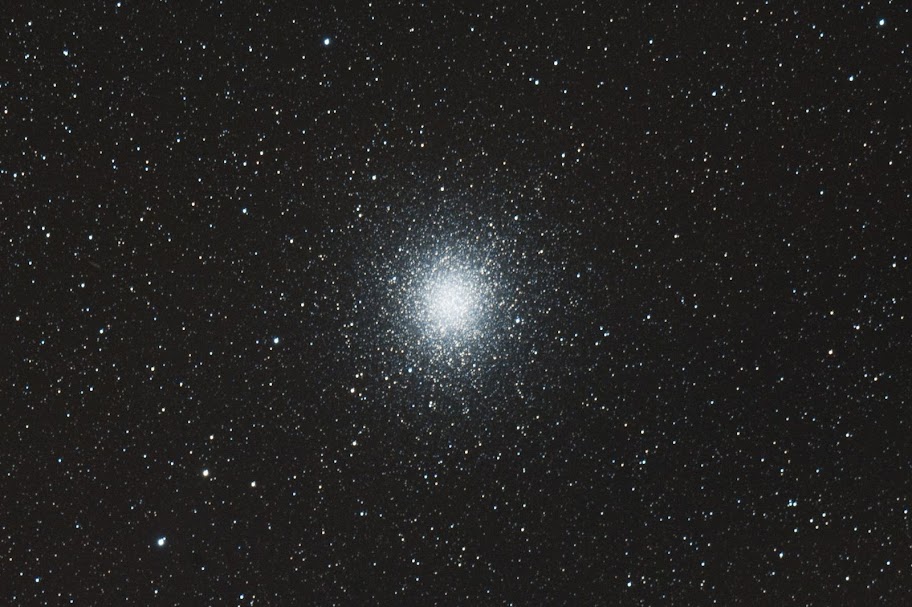
Astrophotography – Omega Centauri globular cluster with the Panasonic GH-1

Written by Gary on August 15th, 2010

This week my friend and I took the opportunity of clear skies and no wind to brave the Winter cold and set up his computerised telescope mount and Williams Optics 4″ f/7 refractor telescope.

Just before the clouds came in, I managed to swap his Nikon D700 with my Panasonic GH-1 Micro Four Thirds camera body, and without having time to check focus (and forgetting to switch to my usual RAW + JPEG), I managed to get one shot in.

Thankfully, it was practically parfocal with his Nikon D700 and even though the GH-1 had twice the magnification as the full frame D700, the focus was very acceptable.

I decided to shoot at ISO 3200 despite knowing that my version of the GH-1 (being one of the first), suffers from severe banding noise at high ISO.

Nevertheless, given the circumstances, I am very happy with this shot which was an unguided 60sec exposure at f/7 with automatic dark frame noise reduction done in-camera and the only PS was levels to darken the background and minimise the banding, and, cropping and  resizing for the web (no sharpening or NR in PS):

I have always wanted to image this globular cluster as it has always amazed me at how many stars can be located in one cluster like this – just awesome!

Omega Centauri

The Nikon D700 having the same number of pixels but much larger photosites given the larger sensor, obviously had much less noise but was also at half the magnification – you can’t have everything!

Unlike my Olympus dSLR which has Live Boost option for Live Preview which really helps visualise stars, the Omega Centauri at f/7 was NOT visible in the GH-1 EVF or LCD, nor the D700 live view, and thus to focus accurately, I would have needed to find a brighter star or planet.

The banding is an issue primarily with the early models of the GH-1, but most digital cameras, even the Canon 5D Mark II can show banding in shadow areas. It can be reduced using Nik Dfine software – perhaps I shall buy it one day to try it out!

More of my astrophotography can be found here.

And here is my friend’s Nikon D700 version which I think was a 4 minute exposure at ISO 1600 and thus has a lot more stars visible and the centre highlights are blown given the exposure was 4x the exposure of the above GH-1 exposure, and he did not need to resort to adjusting levels to remove banding:

Nikon D700 version


Fast 50mm lenses

Written by Gary on August 15th, 2010

I have started a resource page of 50mm lenses for 35mm and Micro Four Thirds cameras as these lenses are likely to be considered as portrait lenses on cropped sensor digital cameras and many might find it useful to have a list of lenses with some links.

Feel free to add your comments to this post here – but spammers forget posting comments on my website – I have a super intelligent spam processing system which will delete spam type comments that do not contribute to other readers.

The page on 50mm lenses is here.

Hope it is useful to some of you.

By the way, the term “fast” in this context refers to wide aperture lenses – and I have restricted it to lenses f/2.0 or wider aperture.


Auto focus, Micro Four Thirds cameras, the new Fuji hybrid AF system and the future

Written by Gary on August 6th, 2010

The Micro Four Thirds camera system, along with other mirror-less camera systems are  currently solely reliant on contrast detect autofocus systems.

Contrast Detect AF (CDAF):

Contrast Detect AF relies on assessment of the image contrast at the sensor and then uses a series of iterations of lens element movements so that it can reassess the level of contrast and determine the point of maximum contrast.

The capability of this mechanism to achieve fast AF is limited by the weight of the lens elements involved in focus, the AF motors, the data communication band width between the camera and lens, the AF computer algorithms, subject contrast and movement.

At present technology, even with Panasonic adding 2 extra lens coupling pins for the Micro Four Thirds standard and developing smaller lenses optimised for CDAF, while the AF is very fast for slow moving or stationary subjects, even in low light, even with this optimisation, it has great trouble locking onto faster moving subjects, and thus has limited applicability to sports photography.

When using non-CDAF optimised lenses, AF can be VERY slow, if it works at all (generally will not work on Panasonic GH-1, G1, GF-1 models but will work slowly on later Panasonic models or on Olympus models).

CDAF does have a number of significant advantages over phase contrast AF such as:

  • allows almost any area of the image to be the AF point instead of specified AF sensor sites
  • works even at small apertures as long as there is enough light coming in
  • allows face recognition AF
  • allows AF tracking of slow moving subjects of a specified appearance just by selecting a subject to lock onto
  • eradicates the perennial problem of AF calibration errors

Phase contrast autofocus:

All current dSLRs use phase contrast AF sensors as the primary mechanism.

The AF sensors are generally located under the SLR mirror and some light passes through the mirror then through light splitting prisms to reach the bank of AF sensors.

The light is split so that each sensor detects only light coming from one side of the lens.

Basic AF sensors detect the lateral displacement of a vertical line in the image when the image is out of focus, with the line being displaced to opposite sides of centre depending on which side of the lens the light is coming from.

The camera computer can then use this information of lateral displacement to accurately determine the correct position of the lens focus element required in order to achieve focus.

This makes AF very fast and even predictive continuous AF is fast and can be quite accurate.

Unfortunately, if there is no vertical line, such as sensor will not function, and thus most newer and more expensive dSLRs use AF sensor with horizontal and vertical capabilities (“cross hair” sensors) which increase the chance that it will be able to use part of the subject to AF upon.

As the distance from the lens to the sensor is potentially different to the  distance from the lens to the imaging sensor, there is a potential that different lenses, different temperatures, etc can result in minute changes to these distances and thus the potential for consistent back-focusing or front-focusing to occur which requires AF calibration to correct. Fortunately this is now possible by the end user with newer camera models – previously you would need to send the camera and lens to the manufacturer for calibration.

Another problem is that due to cost issues, generally only the centre AF sensor is made sensitive enough to allow lens apertures up to f/8 while other AF sensors may only work at wider apertures.

This means that if you try to use a 2x teleconverter with an f/5.6 lens, phase contrast will NOT work.

Hybrid AF systems:

dSLR’s:

Most dSLRs made in the last few years have “Live Preview” mode in which the mirror is temporarily raised and light hits the sensor directly, thus bypassing the phase contrast AF sensors, and thus CDAF must be used. Unfortunately, these systems are not generally optimised for CDAF and thus AF in live preview is quite slow.

A handful of cameras allow phase contrast AF during Live Preview whilst having the mirror in the normal down position by having a separate image sensor in the pentamirror compartment which sends the video feed to the LCD screen. This was first seen in the Olympus E330, and has since been taken up by Sony in some of its models.

Mirror-less camera systems:

Fuji has just announced a new “hybrid AF” technology which essentially converts strips of image sensor photosites into phase contrast AF sensors.

See dpreview’s description of how this works.

This is an exciting development which may allow cameras like the Micro Four Thirds to have fast and accurate action AF without having to worry about mirrors, and then perhaps we will see the development of very fast burst rates of much more than 10fps as there is no physical limitations of moving the mirror up and down.

Olympus is taking their time in developing their new Four Thirds dSLR and this is rumoured to be quite different to previous models and likely to allow both fast CDAF and phase contrast AF – and perhaps optimised for either Micro Four Thirds or Four Thirds lenses – perhaps we will see something in the next few months.

Creating AF lenses from legacy manual focus lenses:

As mentioned in a previous post here, Olympus appears to be working on a new Olympus OM adapter for Micro Four Thirds which not only includes a 0.5x wide converter to give the natural field of view of these lenses but which would also allow fast CDAF.

Also, as mentioned in this post, Panasonic appear to be working on an adapter which includes a pellicle mirror and phase contrast AF sensors which would allow phase contrast AF with Four Thirds lenses and perhaps other legacy lenses when mounted on Micro Four Thirds.

Now these would be a very exciting developments indeed!.

Whatever happens, the improving sensor technology along with improving AF technology will only make the Micro Four Thirds cameras even more compelling as THE camera to take with you every where.


Photographic image quality – the roles of sensor size, pixels and other factors

Written by Gary on August 5th, 2010

There is a lot of confusion around on the internet regarding what is the best camera, etc to buy and most people buying cameras will be hoping for the best quality photos for their money.

Hopefully I wont be adding to this confusion, but rather provide some general rules of thumb.

My Rule Number 1:

For most photographic subjects, the MOST important factors in the quality of the photograph are:

  • the subject itself
  • the lighting of the subject
  • the vision of the photographer in selecting a composition, point of view, perspective, depth of field, point of focus, exposure duration, exposure, contrast management and white balance (if a color image is chosen).
  • timing of the photograph may be critical to its success in capturing a critical moment, expression or emotion.

Note, the camera equipment itself is very much a secondary component, although for some subjects, the capabilities and characteristics of the camera and lens +/- tripod and filters, etc MAY be critical to enabling the photograph.

For many photographic opportunities, what is far more important than the characteristics of the camera, is whether or not you brought the camera with you – the best camera is the one you are willing to take with you – for many, this means small with adequate image quality is KING.

Amateur photographers tend to pontificate far too much on relative technical aspects of camera and lens image quality and pixel peeping, and perhaps should take a leaf out of the professionals books – professionals concentrate more on lighting than the camera or lens, although they generally have a high end camera and lens anyway so that image quality will be good enough as long as they get the other factors right as outlined above.

My rule number 2:

For most people the number of pixels is largely irrelevant.

For the same size sensor with the same sensor technology, the more pixels means less image quality in terms of dynamic range, exposure latitude, more noise at high ISO, but perhaps less obvious noise due to smaller pixels.

5-8 megapixels is sufficient to allow very acceptable printed enlargements up to 11″x16″ if the sensor size is reasonable and attention has been paid to ensuring image sharpness if sharpness is important to the image.

A high quality image taken with a 10mp cropped sensor from a dSLR can be printed with acceptable quality to 20″x30″  – very few people need larger prints.

20+ megapixels can allow more detail or cropping to attain a 20″x30″ print, but means your storage space will need to double compared to a 10 megapixel sensor.

The professionals who wish to have greater image quality will generally consider a medium format digital with 50+ megapixels but at substantial cost and loss of portability and functionality compared to dSLRs.

My rule number 3:

Take care in selecting your sensor size – sensor size DOES matter and has a number of important implications.

The benefits of increasing sensor size given similar sensor technology:

  • the greater the possibility of having higher image quality in terms of image detail, dynamic range, exposure latitude, lower noise at high ISO
  • the greater the possibility of choosing narrow depth of field to make your subject “pop” with added dimensionality, or to selectively focus on a single plane of focus
  • physical limitations of resolution due to diffraction effects comes in at smaller apertures – thus before diffraction starts adversely affecting resolution, a cropped sensor dSLR may be sharpest at f/5.6-8.0, a full frame camera may be sharpest at f/8-11 , conversely a point and shoot camera may require an aperture of f/2.8 to avoid diffraction effects.

The problems with increasing sensor size:

  • increased cost of sensor and lenses – camera and lenses need to be bigger and heavier to cover the larger image circle
  • shallower depth of field for a given aperture, focal length and subject distance which may be quite problematic when you wish to make everything “sharp” such as in landscapes
  • more difficult to use because the shallower depth of field forces you to select the point of focus and any errors will be much more objectionable
  • image quality towards the edges tends to decline according to the laws of physics – the aberrations increase exponentially the further from the centre of the image – this means larger sensors will expose any weakness in optical designs and mandate more expensive optical designs to ensure edge-to-edge of frame image quality.
  • for the above reason, it is often easier to make higher performing wide aperture lenses if there is only a smaller image circle required – however, this is yet to be realised by Olympus other than its range of unique, superb f/2.0 zoom lenses.
  • the increased details usually mandate closer attention to minimising camera shake or mirror vibration effects often requiring use of image stabilisation, tripod, mirror lockup or a higher shutter speed.
  • the larger the equipment size, the less likely you will take it with you and the more intrusive it can be on your subject which can adversely affect your photo opportunities.

Point and shoot digital cameras have tiny sensors which substantially limits image quality so that enlargements printed are generally limited to 8″x12″  while image noise or loss of image detail is problematic above ISO 200-400, and there is NO capacity to make your subject “pop” by selective focus unless it is a macro shot.

This is one of the reasons for the success of the Micro Four Thirds system – it offers many a perfect balance between size and image quality while its versatility in lens selection brings back the fun to photography.

Those wanting even shallower DOF, higher ISO capability or dynamic range should consider a full frame dSLR instead or to supplement a Micro Four Thirds system.

My rule number 3:

Telephoto reach for a given lens is proportional to the pixel density of the sensor as long as the lens can match the sensor resolution and as long as camera shake or subject movement can be minimised.

Thus, for cameras with reasonable dSLR quality image quality, the Micro Four Thirds and Four Thirds cameras have the highest pixel density and thus can give you the most image detail for the same size lens – this is one reason why I love the Olympus Four Thirds dSLR combined with an Olympus ZD 50-200mm f/2.8-3.5 – it gives the most compact, high quality 100-400mm f/2.8-3.5 telephoto reach available.

Not far off is the Canon 7D or Canon 1D Mark IV with their 17mp but larger sensors.

Many sports venues now limit people to using 200mm focal length lenses – if you want the most reach at 200mm, get an Olympus Four Thirds dSLR.

My rule number 4:

Those wanting to shoot fast action will generally need a camera with fast AF for action photography, preferably with a fast burst rate, and probably with further telephoto reach.

A mirror-less camera system such as Micro Four Thirds, Sony NEX or Samsung NX relies on contrast detect AF which, currently is much slower than high end dSLR phase contrast AF systems when trying to autofocus on fast moving subjects, and thus cannot be recommended for this usage at present.

Thus, if this is critical, then one should select a camera such as:

  • Canon 1D Mark IV
  • Canon 7D
  • Nikon D300s
  • Olympus E-3 or E-30

Note that a “budget” full frame dSLR such as the Canon 5D Mark II will not be as suitable as it’s AF system has been limited to cut costs.

Be aware that professional sports cameras such as the Canon 1D mark IV are complicated beasts to use as you need to tailor the many options for AF functionality to your subject – this is not for the faint hearted!

My rule number 5:

Usually the characteristics of the lens is MORE important than the characteristics of the camera.

When choosing a camera system, look at what lens you will need, what you can afford and what you would be prepared to bring with you given size and weight considerations.

Just a little explanatory note – remember when comparing lenses used on different cropped sensors, it is handy to convert them into equivalences for a lens used on a 35mm full frame camera:

  • to get lens on a 35mm with an equivalent field of view, multiple the lens focal length by the crop factor
  • to get lens on a 35mm with an equivalent depth of field wide open at the above focal length, multiply the aperture by the crop factor
  • hence a 50mm f/2.0 lens on a 2x crop sensor (eg. Olympus dSLR) will give the same field of view and depth of field as a 100mm f/4.0 lens on a 35mm camera BUT it will allow 2 stops MORE light in which means you can get away with two stops lower ISO than on a full frame camera which negates any difference in image noise.
  • of course, on the full frame camera, you could use a 100mm f/2.0 lens which would give even shallower depth of field and the same amount of light in, but probably less edge-to-edge image quality and perhaps too shallow DOF. To match this on a Micro Four Thirds, you could use a Leica-M Nokton 50mm f/0.95 or similar.

A few short examples:

Head and shoulder portraits often are most flattering when using a lens such as one with 35mm camera equivalence of a 100mm f/2.8-4.0 or similar. Too short a focal length means you have to get too close which creates unflattering distortions of facial features.

People often get far too excited about super narrow depth of field and spend a fortune on lenses such as the superb Canon 85mm f/1.2 which is renown for its shallow DOF – but at f/1.2 it is much too shallow a DOF for a head and shoulders portrait where you wish to get everything in focus from ears to tip of nose, and it’s very slow AF may mean you miss a lot of opportunities.

Many Canon users would be better off with the far cheaper 85mm f/1.8 lens although it is does have more aberrations wide open, or perhaps a 135mm f/2.0 lens.

Nikon users have the luxury compromise of an 85mm f/1.4 lens.

There is no such AF wide aperture short telephoto lenses available in the Four Thirds system so Olympus dSLR users would have to consider the superb ZD lenses such as the 50mm f/2.0 macro, the 35-100mm f/2.0 zoom or resort to using the  Nikon or other lenses in manual focus mode only.

On the other hand, there is no Canon or Nikon lens that can match the size, features and price of the Olympus ZD 50-200mm f/2.8-3.5.

Environmental portraits often are better with a wide lens to allow some context to be included and thus a 35mm equivalent of a 50mm f/2.8 tends to give good results (for a cropped sensor Canon or Nikon, a 35mm f/1.4 lens, in the Four Thirds world, the Leica-D 25mm f/1.4, or in Micro Four Thirds, the Panasonic 20mm f/1.7 pancake lens are well suited to this).

Specialist lenses such as the 85mm f/1.2, tilt-shift lenses, ultra wide angle lenses and super telephotos are MUCH more difficult to use and often have limited uses – think twice before you buy them!

Lens bokeh can be a very important quality which can detract from your photos, each lens has its own characteristics of out of focus areas and many photographers end up with a bucket load of lenses trying to find the one that suits them best.

Professional sports photographers will want to use their super telephotos on a monopod – eg. 300mm f/2.8, 500mm f/4, or if shooting indoors, perhaps the 70-200mm f/2.8 IS. For wide angle shots, the superb Nikon 14-24mm f/2.8G lens can’t be beaten on image quality for that focal length range.

Wedding and fashion photographers will usually want their mandatory 70-200mm f/2.8 IS lens.

Astrophotographers will want a lens with minimal aberrations wide open – this means NO optical image stabilisation elements and no zoom – hence a favorite is the Canon 200mm f/2.8 lens.

Tilt-shift lenses used to be the domain of Canon and Nikon, but Micro Four Thirds may change that dramatically by allowing one to convert essentially any legacy lens into a tilt-shift lens while allowing the easiest assisted manual focus system available courtesy of the absence of mirror.

Of course, almost any lens ever made can be mounted on a Micro Four Thirds camera albeit in manual focus and with a 2x crop factor, although it seems Olympus is working on a special 0.5x AF adapter which may provide AF and normal field of view for these lenses which would be extremely exciting indeed!

My rule number 6:

Consider the judicious use of filters.

A polarising filter is almost mandatory when shooting nature scenes with significant amounts of foliage such as streams in a rain forest.

A square or rectangular gradient filter is almost mandatory when shooting landscapes with substantial areas of sky which is not lit from the sun behind you or which contains light coloured clouds.

My rule number 7:

To attain maximum image detail to enable high quality enlargements greater than 20″x30″, attention to obsessive compulsive detail is mandatory.

This means a large enough sensor, accurate focus, heavy duty tripod, and mirror lockup unless you are shooting with electronic flash which will minimise camera shake.

This will also mean maximum optical resolution, which for larger sensors usually means stopping down to f/5.6-11.


An excellent tutorial on high speed sync flash or Super FP flash

Written by Gary on August 3rd, 2010

See Neil van Niekerk’s excellent tutorial he has just posted demonstrating High Speed Sync flash (HSS) on a Nikon D3 and on a Canon 5D.

For Olympus and Panasonic users, this technology (which was actually first developed for Olympus OM film SLR cameras) is equivalent to Super FP mode.

The actual maximum flash sync speed in normal flash mode depends upon the camera – most Micro Four Thirds and entry level dSLR cameras have a flash sync of ~1/160th-1/180th sec, while pro level dSLRs tend to have a flash sync of 1/250th sec.

High Speed Sync (HSS or Super FP mode) is very confusing to most people, and this tutorial goes a long way to helping you understand it.

It’s main purpose is to allow wider apertures to be used in flash photography in sunlit conditions, but as Neil points out, most single flash units will not be able to overpower full sun even in HSS mode as HSS mode inevitably results in a substantially reduced maximum power output or Guide Number, and this reduction is power is generally in proportion to the higher the shutter speed selected.


The Olympus OM 135mm f/2.8 on Micro Four Thirds – a nice, compact combination!

Written by Gary on July 29th, 2010

The Micro Four Thirds camera system is getting some very nice lenses, but in the telephoto range, there are still none faster than f/5.6 at the 135mm native focal length although there is a Lumix 100-300mm f/4-5.6 OIS  coming next year which will give ~f/4.0.

You can use a Four Thirds ZD 50-200mm f/2.8-3.5 or the superb ZD 150mm f/2.0 lens, but neither will AF on GH-1, and will AF slowly on an Olympus Micro Four Thirds, not to mention, they are both really too large for this format camera.

Here is where the beautiful compact Olympus OM lenses can come in (even better if you have an Olympus camera so they become image stabilised).

The Olympus OM 135mm f/2.8 has become a permanent fixture in my Micro Four Thirds walk-a-round kit as it gives you 2 extra stops of aperture compared to the Lumix 14-140mm HD lens which allows faster shutter speeds to stop moving subjects better, allow lower ISO for low light video on a tripod, and allow more background blurring.

Here are a few examples of it hand held on the Panasonic GH-1, and thus without image stabilisation, all at f/2.8, no sharpening or cropping:

Sleeping on the edge:

seagulls

Sulphuric acid and the peacock:

peacock

African musician at Melbourne’s Moomba festival:

musician

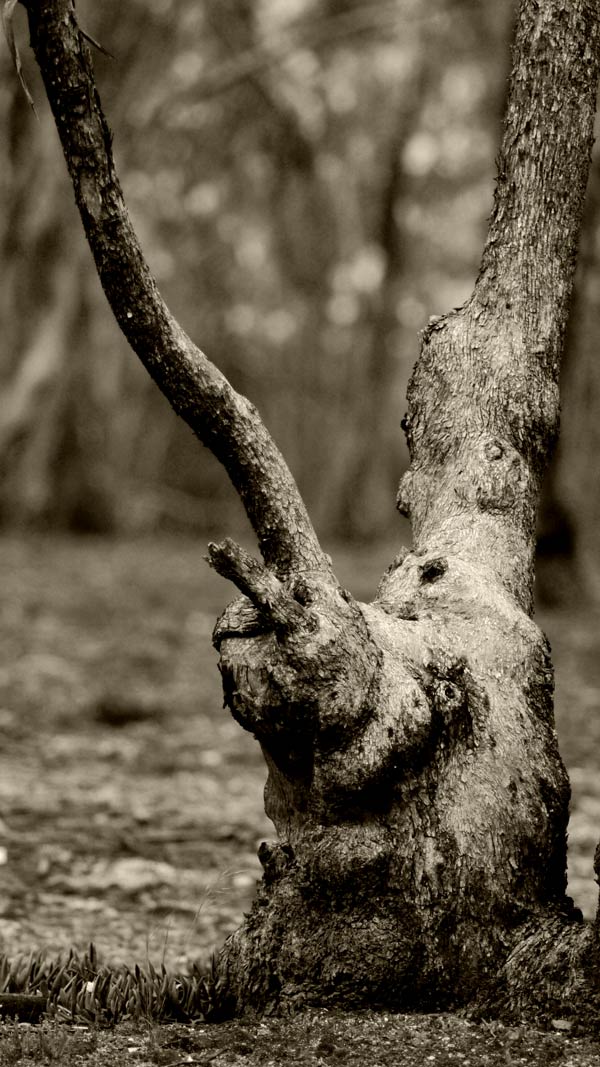
And to test the bokeh, it does quite well with annoying background highlights with minimal hard ringing:

tree bokeh test

If you do not wish to have 270mm equivalent focal length field of view in your hand at f/2.8, you can opt for the slightly smaller, but easier to hand hold without IS, the Olympus OM 100mm f/2.8:

The Olympus OM 100mm f/2.8 with OM-EOS adapter on a EOS-M43 adapter (yep, that gives 200mm field of view at f/2.8 – now that’s what I’m talking about for compact size!):

OM100mm

Memo to Panasonic and Olympus: PLEASE give us a compact telephoto with wide aperture, and if it is a Lumix, it will need to have OIS – in fact why not make a 100mm f/2.0-2.8 macro OIS and a 150mm f/2.8 OIS.


Micro Four Thirds to get world first twin digital interchangeable 3D lens

Written by Gary on July 28th, 2010

Panasonic has just announced it will be developing a world first twin digital interchangeable lens – a compact, twin 3D lens for instant 3D video and still photos.

The 3D lens will be similar to that on its new 3D HDC-SDT750 camcorder and will project dual images onto the sensor and allow instant creation of 3D video compatible with its 3D VIERA televisions and 3D Blu-Ray TM disc players.

In the camcorder version, the 3D images result from capturing the right and left images (each with 960 x 1080 pixels) that enter through the lenses and are recorded using the side-by-side method.

If this same method is used in M43 cameras, one would assume new cameras or at least new firmware would be needed to record this, and still images perhaps would be limited to 960×1080 pixels.


Micro Four Thirds with Leica-D 25mm f/1.4 plus Olympus WCON-08B 0.8x wide converter

Written by Gary on July 25th, 2010

Ok, perhaps I was a bit silly, but I just couldn’t resist the opportunity to buy a superb Olympus WCON-08B 0.8x PRO quality wide converter which was designed for the Olympus E-20 when it came out in 2001.

In the USA, they come up on Ebay regularly for the price of a good polarising filter, but they don’t come up much on Ebay in Australia so I snapped it up.

Here is the combination on my Panasonic GH-1 Micro Four Thirds camera (but it would also work on a Four Thirds dSLR and you would get image stabilisation as well):

GH-1 + Leica-D + WCON 08B

Why, oh why would I buy something like this in this day and age??

Number 1 – it was a reasonable price – albeit twice the price of a good polarising filter here.

Number 2 – it is said to be one of the BEST wide converters you can get – although it is big and heavy for a wide converter

Number 3 – it’s rear thread is 62mm – perfect for my superb Leica-D 25mm f/1.4 lens, and the unique Panasonic Lumix 14-140mm HD lens for Micro Four Thirds.

Number 4 – it may save me carrying around my heavy and expensive Olympus 7-14mm lens, if it gives me just that little bit more width.

Number 5 – it looks good with the Leica-D and makes an interesting talking point while impressing those who know little about photography – after all, the whole idea of Micro Four Thirds is to be under-stated and look more like a casual camera belying it’s awesome image quality for its size, but sometimes you need to give people some confidence in your photographic capabilities 🙂

Why it may end up being false economy:

Number 1 – while it converts the Leica-D 25mm f/1.4 to a 20mm f/1.4, it is very soft on the edges at f/1.4 but pretty good at f/2.8, but I suspect I will be much better off buying the far smaller and lighter Panasonic 20mm f/1.7 pancake lens one day when I can afford the $A700 for it.

Number 2 – while it converts the Lumix 14-140mm lens to a 11-110mm lens, I would be much better off getting the very nice Olympus 9-18mm lens for Micro Four Thirds which still allows me to use ND gradient filters, etc and is much smaller and lighter.

So, I took it out for a test run today at one of my favourite Melbourne locations, the old artist colony at Montsalvat:

at f/2.8, it performed very well, first, without the wide converter, no sharpening just a little extra contrast added to the jpeg:

no wide converter

and with the wide converter ON – showing almost no vignetting or barrel/pincushion distortion and reasonable but acceptable loss of sharpness at the edges – remember, I am pushing the image circle of Four Thirds lenses here by using native 16:9 image aspect ratio which is a wider sensor than a normal Four Thirds sensor!

with wide converter

I think that is a very acceptable result indeed!

But at f/1.4, the edge softness becomes quite noticeable, although depending on your image, this may not be an issue:

wide converter at f/1.4

Indoors into the window light is often problematic for many lenses, but even at f/1.4, this combination did a wonderful job of controlling flare:

wide converter at f/1.4 indoors

More photos here.

I think this wide converter will be useful and fun to play with – as long as I don’t drop it while screwing it on!