lessons of the Olympus C-8080WZ

Written by Gary on August 17th, 2008

The Olympus C-8080WZ “prosumer” digital camera was released in 2004 and totally changed my approach to photography and taught me some valuable lessons of digital technology.

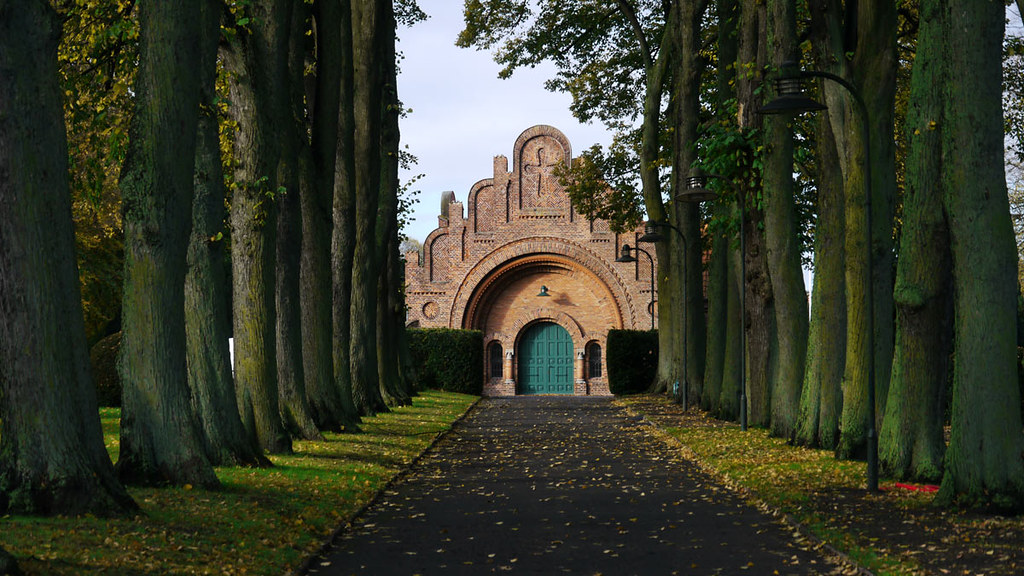
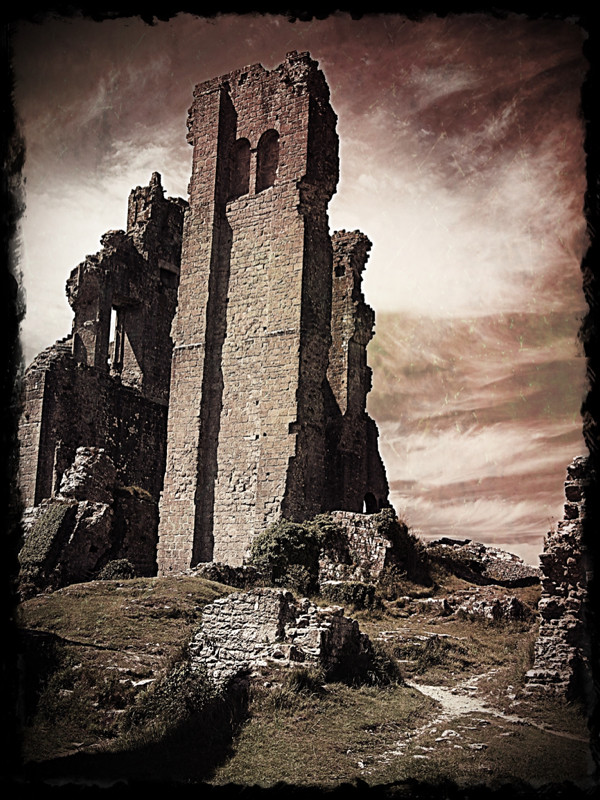
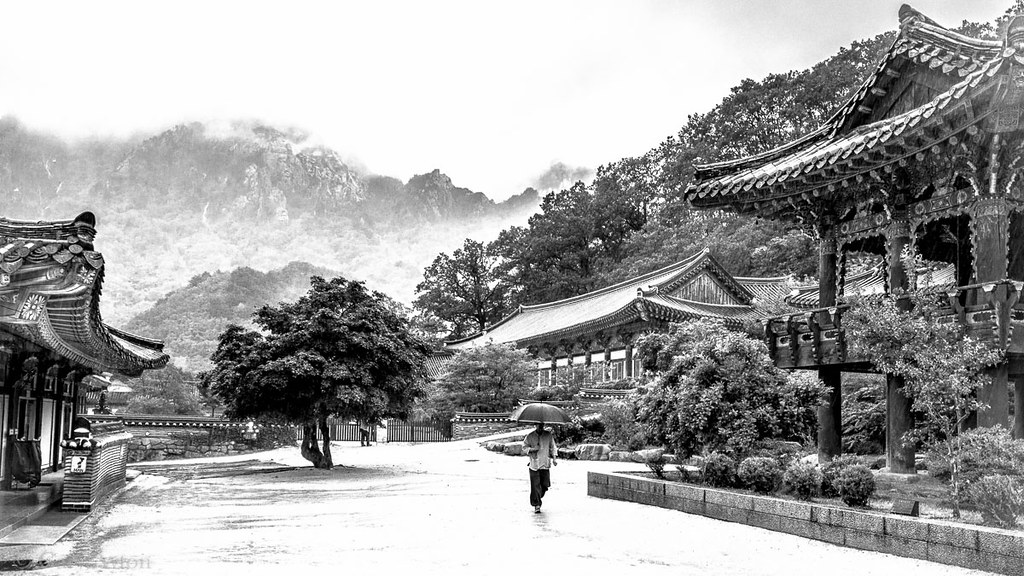
some of my photos with the C-8080WZ:

I am writing this blog in mid 2008 because Olympus and Panasonic have just announced their new Four Thirds Micro system which may create some very innovative products but these are likely to be evolutions of the technology of the C-8080WZ albeit with much advanced functionality and hopefully overcoming the C-8080’s shortcomings.

The C-8080 was arguably the best 8 megapixel prosumer camera of 2004-2005 with one of the best lenses ever seen on a non-dSLR prosumer digital camera.

I used it as my main travel camera to France (see my photos of France in 2005 here) where I was able to take night time photos of Paris from the top of the Eiffel Tower with the camera OUTSIDE the wire fence and I was able to compose and focus using the flip out live LCD, something I could not have achieved other than by luck using the dSLRs of the day:


ga_F_Paris_P8295328

I even managed to get a reasonable photo of a very dim comet LINEAR T7 in a region affected by light pollution, by using a teleconverter adapter on it and attaching it to a motor driven telescope mount:


ga_CometLINEART7_2040521_P5210263

I still have my C-8080 but for 99% of my photography, I now use digital SLRs and I reserve the C8080 for when I need silent photography and/or movie mode such as at my daughter’s cello concerts.

As good as dSLRs are, they are still audibly noisy mainly due to their mirror moving out of the way for the exposure.

The Four Thirds Micro system promises to change that as it does not have a mirror but will function more like the C-8080 but with interchangeable lenses.

I loved my C-8080, it was so versatile and with such good image quality for a prosumer as long as you used it appropriately (eg. at ISO 50-100 and for relatively short exposures), that I fell in love with photography again after all my film years and their frustrations.

I even used it to start exploring digital infrared photography although the lens was not optimised for IR light and tended to give a central hot spot as do many dSLR lenses.


ga_IR_Gumtree_P9101442

BUT there was also several big frustrations with the C-8080:

  • the very slow RAW file write time of 13secs per image
  • the inability to visualise the image during this write time
  • an AF system that had major problems focusing on low contrast subjects, in particular, faces – it would always seem to prefer to focus on a more contrasty background than on my subject’s eyes
  • even worse, was the poor manual focus override capability, in particular, the difficulty in determining when a subject was in focus using manual focus
  • the relatively small LCD, although of “normal” size for the time
  • dodgy stepped zoom function operated by a lever on the camera

Even worse was the realisation that a lot of money was paid for this camera and its wonderful lens, and yet, in only two years or so, the rapid growth in technology would make the camera body relatively redundant and practically worthless, along with the lens.

Despite their wait in hope, Olympus C-8080 fans hoping for an upgrade to address its shortcomings were disappointed that Olympus seemed to put its energies instead into either dSLRs (although this was a great thing to do) and cheaper styled non-dSLRs. Now their wishes may be partly realised with the Micro system.

So how do these lessons apply to the new Four Thirds Micro system?

Well firstly, it separates your investment into camera bodies which depreciate rapidly (often within 3 years), from lenses which should remain functional for many years to come as long as the camera system remains available and updated. This is great news, because as serious photographers, we value our lenses and hopefully we will buy the best we can afford and now we can hope they will grow with our technology.

Secondly, with the new technological advances, many of the C8080’s shortcomings have been overcome or can be expected to be overcome such as:

  • slow RAW write time – this is now a non-issue
  • image noise – using the much larger sensor of the Four Thirds, image noise has been dramatically reduced, and can be expected to further be reduced as technology improves
  • manual focus accuracy – this has already been much improved in the magnified Live Preview modes of current dSLRs and this technology can be expected to be applied to the new cameras
  • dodgy zoom function – zoom will now be available on the lens itself, although I suspect some Micro system lenses may allow zoom to be controlled via the camera
  • small LCD – LCDs are now averaging about 3″ in size and we could expect high resolution as with Nikon dSLR LCDs

But there are a few areas that still need to be proved to be solved:

  • AF on faces – the new cameras will still be using the contrast detection method of the C8080 instead of the proven speed of dSLR AF, but hopefully the technology has improved enough that AF on faces is now reliable (face recognition algorithms may be of help here, although I’m not a big fan of this mode)
  • general AF – contrast detection AF in Live Preview mode of current dSLRs is still quite slow and requires a very steady camera and subject, it will be interesting to see how rapid this is improved, or perhaps supplemented by optical rangefinder type viewfinders
    • I suspect, we will need to use new 11 pin lenses instead of current 9 pin lenses to achieve optimum speed with this contrast detection AF
  • the loss of optical SLR viewfinder – many people will be happy to use the rear LCD to compose and focus as they do with point and shoot cameras, but a lot of us still like to hold the camera to our eyes and reduce camera shake for most of our photography – will the electronic viewfinders (EVF) be good enough and will they produce optical viewfinders (similar to Leica rangefinders) and if so, how will they link the view with the lens focal length and allow for parallax error
    • OGAWA: “Practical use of liveview has been considerably improved with the E-420, and if we continue improving that system, we anticipate it will be possible to use it at a level without significant problems. Technical development continues to advance. However, if one asks whether it is currently on a level with current SLRs, it’s not there yet, no. We want to develop M4/3 over a long span of time, so please take things on a bit more of a long-term view.”
  • It will be interesting times indeed as new camera bodies and Micro system lenses are rolled out, and hopefully providing us with relatively cheap bodies which we can afford to depreciate rapidly, whilst giving us new possibilities of interchangeable lens photography as mentioned in my previous blog of the new Four Thirds Micro system

    The new Micro system is destined to mothball my C-8080 for good, such is life for digital cameras.


    Olympus ZD 7-14mm f/4 lens

    Written by Gary on August 17th, 2008

    I have been lucky enough to have owned this unique lens for over a year now.

    Olympus rate it as part of their super pro series and it is expensive, relatively big and heavy (780g) for a wide angle lens, weatherproof and as usual for Olympus pro lenses has a circular aperture diaphragm.

    This lens is an amazing piece of work, feels well built and works very smoothly, although the large convex protuberant front lens makes one anxious that you will damage it if not being careful. But it does have a very nicely fitting metal lens cap which just slides on with precision and stays on.

    This lens is approximately equivalent to a 14-28mm lens on a 35mm camera giving it the equal widest ultra wide zoom lens available for any digital SLR. The lens is not a circular fisheye but a rectilinear lens which means it will keep straight lines straight when they are parallel to the sensor plane.

    It has close focus to 25cm (just under 10 inches) and when used at 7mm focal length at f/11, the depth of field includes 21-37cm when at closest focus, and an amazing 26cm to infinity depth of field when focused at 40cm.

    For maximum resolution, it should probably be used at f/5.6 as diffraction impairs resolution of lenses on Four Thirds sensors at f/8 or smaller. So at focal length of 7mm and aperture of f/5.6 and a focus point set to 0.7m you should have depth of field from 40.5cm to infinity, still very impressive.

    see Olympus specifications for this lens here.

    When used on a camera body with IS built-in, is the ONLY ultra wide zoom digital SLR kit with image stabilisation capability. Now many will say that IS is not needed on a ultra wide angle lens but in practice, IS further pushes the creative boundaries that can be achieved with this lens as it can be hand held at shutter speeds down to 0.5sec at is widest zoom and still achieve sharp images.

    Now why would anyone want to shoot hand held at 0.5sec?

    Well it becomes VERY handy for a range of situations including:

    • allowing one to show water motion in streams and waterfalls
    • allowing one to blur out moving people to simplify a scene or concentrate attention to a single person in a crowd who is not moving
    • allow one to do night photography with available lighting


    ga_Dock_GB190342

    This image was taken hand held, above my head, in light rain (remember this lens is weatherproof), on a cold Melbourne night with IS on at 0.5 sec shutter speed!

    BUT you say, you could do all this even better on a tripod?

    Unfortunately, tripods are very difficult to use well with an ultrawide lens even if you took the trouble to bring one with you. Composing images with ultra wide lenses usually means camera position and angle is critical to good results and moving a mere inch or so makes a great difference. This becomes frustrating on a tripod, and often the tripod will not allow you to be positioned where you need it – either very close to the ground, above your head, through objects, or suspended over water fountains, etc.

    Now, at these strange camera positions needed, Olympus makes your life MUCH easier by allowing you to avoid breaking your back or embarrassing yourself if you have a camera body with either a hinged live AF LCD view such as the Olympus E330, or a rotating LCD with non-realtime AF such as with the Olympus E3.

    As I don’t own the E3, one of my favorite walk around outfits is the 7-14mm mounted on an E330 and the 50-200mm mounted on my E510 – these two kits combined make for a lot of creativity and just shear fun without being too much of a weight burden.

    This combination of high quality ultrawide angle with image stabilisation down to 0.5sec hand held shutter speeds, ability to compose with camera in strange positions via LCD and weatherproofing all means that you have a unique tool that is ONLY possible with the Olympus Four Thirds system, and soon will also be possible with the Four Thirds Micro system with a silent camera body and movie mode hopefully up to 1200fps – now if you can’t get creative with this there is something wrong!

    see some of my photos taken with the Olympus ZD 7-14mm lens

    The main downside with this lens apart from expense, weight, size is that inability to use filters, although this is not a big issue as the convex front lens seems to create a polarising effect and this lens is not really designed for landscape panoramas with gradient filters (you would be better off trying the Olympus ZD 11-22mm for architecture and landscapes) but rather as a close up creative lens. In addition, you need to take care that light sources do not hit the front element which may cause potentially unwanted flare points.

    If you can’t afford this lens, then Olympus are producing a consumer ultrawide zoom lens – the ZD 9-18mm which will give a 35mm coverage of ~18-36mm which will suit most people and will allow the use of filters for landscape work.

    Be warned, this lens will not suit everyone – ultrawide angle lenses are HARD to use well – they are NOT really for getting everything to fit in such as panoramas, but are BEST used close to your main subject (often inches away) and making use of the ultrawide angle to exaggerate perspective, make use of lines, and emphasise your main subject.

    One of the main problems with ultrawide photography is not getting everything in, but keeping distracting elements OUT, hence the need for very careful selection of camera position, angle and focal length. Elements in a photo that do not add to the photo only detract from it and should be removed from the composition, and this can be very hard with a ultrawide which tends to get everything relatively sharp due to its wide depth of field.

    Furthermore, when used to image people, it will exaggerate features while making people either fat or thin depending on their position in the frame, the result is rarely flattering (see my comparison of lenses used in portraits) but can be very creative as shown in this image taken of statues only inches away:


    ga_Melb_GA046137

    One thing I would have loved to have been able to do is use the Olympus ring flash on it, but alas it doesn’t fit, although you can hand hold the ring flash next to the lens but this defeats the purpose of an encircling ring flash to give relatively shadowless images.

    This is one fun lens to play with!


    The Olympus ZD 50-200mm f/2.8-3.5 SWD lens

    Written by Gary on August 16th, 2008

    I have had this lens for a couple of months now and I am extremely impressed with it.

    In 35mm terms, this lens gives a telephoto reach of 100-400mm at f/2.8-3.5.


    Gunammatta_GA310997

    Now this image would have been even more dynamic if a 1.4x or 2x TC was used as well – next on my wish list!

    Unlike my Canon gear, it gives me high optical quality zoom at wide aperture with 400mm telephoto reach in a nice relatively compact and light lens (although much bigger and heavier than many other Olympus lenses) with a nicely made lens hood which even has a nice touch of a sliding window so you can adjust a polariser filter if needed.

    Of course, it is image stabilised when used on an IS camera body such as the Olympus E510/520/E3.

    see my comparison of specifications of this lens with those offered for Canon and Nikon.

    Despite its 1kg weight, I can carry it with only one finger on my Olympus E510 – something there is no chance I could do with on my Canon 1DMIII – which, although you wouldn’t do this routinely, points to how easy this is to carry for long periods despite its weight.

    There are many things to like about this lens apart from its optical quality and telephoto reach:

    it is weatherproof – this is a big issue to me as it often starts to drizzle rain on a walk and it is during these times the best photos can be had – not the time to put the camera away – it would be even better matched to the almost waterproof Olympus E3.

    it has beautiful bokeh – very nice blurred background quality as a result of its circular aperture diaphragm that most Olympus ZD lenses also have, but is accentuated by the narrower depth of field of the telephoto end of this lens at wide apertures.


    GA180633

    the background blurring capability allows the subject to be emphasised very nicely and thus it makes a fantastic portrait lens, especially at the longer focal lengths wide open.

    see my comparison of background blurring capability of lenses for portraiture here.

    it has a relatively short close focus of 1.2m for a lens of this class (most other full frame lenses of this reach would have a close focus more like 2.4m) which means you can use it for your portraits but perhaps just as importantly, it becomes a very nice long telephoto macro lens with a 1.2m working distance so you don’t scare critters such as dragon flies while still giving high quality 1:2 macro performance.


    GA200716

    Flower in the shade, hand held at 200mm (400mm telephoto reach) with IS on.

    I just discovered that whilst the original version of this lens can be matched very nicely with the Olympus macro flash system. Thus the Olympus ring flash bayonet mount fits on the lens hood mount of this lens perfectly and is powerful enough for the 1.2m working distance. This could be used for editorial/fashion style portraiture although be aware that at this distance you wont get nice big ring flash catchlights in the subjects eyes and if the subject is looking towards the camera, you will most likely get red eyes which will need removing later.
    Be aware that the bayonet mount for the lens hood is different on the SWD version of this lens and thus you have to hand hold the ring flash in place – why did Olympus do this!!!
    see compatibilities here.

    and if this were not enough, the wide aperture and high quality allow you to combine this lens with either of the Olympus ZD teleconverters for surfing shots, wildlife, etc.

    assuming you are using it on an IS-capable camera body, you have an image stabilised outfit with:

    the 1.4x TC then gives you a 35mm equiv. telephoto reach of a 140-560mm f/3.9-4.9 lens.

    the 2x TC gives you a 35mm equiv. telephoto reach of a 200-800mm f/5.6-7.0 lens – still very usable although you might be considering a tripod or monopod at the longer end.

    for most people, this lens combined with the very nice Olympus ZD 12-60mm (ie. 24-120mm – or the cheaper ZD 14-54mm which covers 28-108mm) and perhaps a ZD 50mm f/2.0 macro for closer working distances and more compact outfit, maybe all they need for 95% of their purposes.

    This is what makes the Four Thirds system so attractive – quality optics designed for the system, weatherproofing, circular diaphragms, built-in image stabilisation in the cameras and portability.

    And hopefully soon, you will be able to use this lens via an adapter on new silent Four Thirds Micro bodies with movie capabilities (hopefully even 1200fps one day).

    Finally, here are samples of some of my photos taken with this lens

    I highly recommend this lens – its one most people who can afford it should strongly consider getting, in short, I love it!

    If you can’t afford it or its size is an issue for backpacking or travel, then consider the lesser capable but cheaper and lighter Olympus ZD 70-300mm f/4.0-5.6 ED lens which gives a telephoto reach of 140-600mm at f/4-5.6 although at lesser image quality and the smaller aperture means it will be less capable as a portrait lens or for mating with teleconverters, but you do get an amazing reach in only a 620g lens which will suit many people.

    Of course, this doesn’t mean full frame Nikon or the Canon 1DMIII are not good, they just have different strengths such as less noise at high ISO, a little more dynamic range and, currently, faster burst rates of 6-10fps.

    For instance you could buy a Canon 1DMIII and use a Canon EF 300mm f/4L IS lens to give you 390mm reach at f/4, and get away with 1-2 stops higher ISO, but it would be heavier and much more expensive package, and less versatile.

    Feel free to add comments and a link to your photos with this lens (you may need to click on the post title to bring up the comments field).


    The new Four Thirds Micro camera system

    Written by Gary on August 16th, 2008

    Olympus and Panasonic have just announced a new camera system with interchangeable lenses based on the existing Four Thirds sensor size but without a reflex mirror.

    see more information and links here

    This is very exciting news for a number of reasons.

    The removal of the mirror will have some downsides compared with digital SLRs such as loss of dSLR AF speed, reliance on electronic viewfinder or a non-SLR rangefinder type optical viewfinder.

    BUT the loss of the mirror brings a multitude of other possibilities whilst retaining the image quality of a relatively large image sensor (well larger than most non-dSLR cameras) AND the ability to use almost any lens ever made via adapters (including existing Four Thirds Olympus/Leica/Panasonic/Sigma lenses in AF, but also legacy Olympus OM, Nikon F, Carl Zeiss, Leica R or M lenses in manual focus only mode).

    We will now see a convergence of current point and shoot digitals with video cameras and dSLR systems which will allow some really cool possibilities such as:

    A high quality slim compact take anywhere camera that can be extended as needed by changing lenses. Such a camera would make a very nice back up camera to your main dSLR camera and would potentially even be considered by fussy “cool” adolescents who refuse to use dSLRs because of their bulk.

    A Leica M-like silent optical rangefinder with compact wide angle lens for those candid photographers.

    A dSLR quality camera that could shoot at 1200 frames a second silently in a similar way that the current Casio EX-F1 but with ability to use any lens and at higher image quality. If you haven’t seen the possibilities of 1200fps SLO-MO image capture then check this site out.

    A slim, compact, silent camera to which you can attach a high quality wide aperture telephoto (eg. 150mm f/2 to give equivalent of 300mm f/2.0 in 35mm terms) and take either stills or movies in silence of your daughter’s classical music concert without causing annoying noises or having to be so close that you are distracting.

    A slim, compact, silent camera for which new high performance compact, light lenses can be made never before seen at that image quality and size. Certainly the design of ultra wide angle lenses can be simplified with this design and we could expect some very interesting lenses in both ultra wide and lenses with large zoom ranges in the telephoto end.

    Potentially, a dedicated astrophotography camera which has no need to lock mirror up and is light enough it doesn’t adversely affect telescope balance, and having a very short sensor to flange distance that it will be able to focus at infinity on Newtonian telescopes that can’t do so on normal dSLRs.

    I can see lots of possibilities with this development, and I’m looking forward to seeing how Olympus, Panasonic & Leica proceed.


    Welcome to my blog

    Written by Gary on August 15th, 2008

    My website has an extensive range of tips, tutorials and links to help others with their photography and provides some many tips on choosing which camera to buy, in addition to a sample of my own personal photography.

    As I am also a computer programmer using Delphi, I have created a free photography calculator for Windows that you can download and play with with.

    For the locals in Melbourne, Victoria, Australia (not Florida), there are links to weather and what’s on.

    For visitors and travellers, there are pages on the local attractions and travel tips and info.

    So, welcome to my blog and website and hope it is useful to you.

    Remember, I am not selling anything (although you can buy prints of my photos and there are the usual Google ads. etc that help pay to keep this website alive).

    The content on this website is written in good faith by me and although I have my personal biases I try to make them self-evident.

    cheers

    Gary Ayton

    email: GaryAyton1 at gmail.com