New 2.5x macro lens from Olympus – the Olympus mZD 30mm f/3.5 macro

Written by Gary on September 21st, 2016

In addition to the brilliant new OM-D E-M1 mark II and the 2 new PRO level lenses announced at Photokina this week, Olympus also announced a new “PREMIUM” level but affordable macro lens for Micro Four Thirds which is a world 1st being able to shoot as low as 2.5x macro (in 35mm full frame terms) and still be able to shoot subjects at infinity with fast AF.

The lens is very light and compact at only 128 g (4.5oz) and 57mm long (2.24″) and having a small 46mm filter thread.

It thus is also well suited to underwater work and for this it is compatible with certain Olympus housings  and lens ports (PT-EP13 (E-M5 Mark II), PT-EP10 (for the E-PL6/E-PL5), PT-EP11 (for the E-M1)) as well as having a couple of its own dedicated underwater accessories – PPZR-EP07 focus gear, Antireflective Ring POSR-EP11.

AF is said to be 20-30% faster than its previous Olympus macro lens, the weathersealed Olympus mZD 60mm macro lens,  and is designated MSC – silent and smooth AF and aperture for movies.

The close focus is down to 9.5cm with a working distance of 14mm in front of the lens giving a field of 13.9 x 10.9mm which is able to reveal subjects the unaided eye cannot see.

It has 7 circular blades for nice out of focus rendering when stopped down.

It appears that it is not weathersealed but users will mainly use this for controlled environments indoors out of the wind, or in an underwater housing.

RRP is $US299.

PPZR-EP07 Underwater focus gear

Underwater Antireflective Ring POSR-EP11

As reviews are posted I will link them on my wiki page for this lens.


Olympus announce new flagship Micro Four Thirds camera – OM-D EM-1 Mark II and 2 new pro lenses

Written by Gary on September 20th, 2016

Olympus used Photokina to announce their new flagship professional model Micro Four Thirds mirrorless camera – the E-M1 Mark II which they say improves upon the original model in nearly every aspect and leap frogs above APS-C cameras in terms of speed and value to the photographer.

I must say the specs to blow away the newly announced Canon EOS M5 mirrorless camera even if you don’t consider the amazing range of dedicated fast AF lenses available for Micro Four Thirds.

Specifications:

  • FASTER, MORE ACCURATE BURST MODE
    • 18fps full size RAW with C-AF in electronic shutter mode
    • 60fps full size RAW with locked S-AF in electronic shutter mode
    • 2x more buffer capacity
    • 3x faster internal write speed
    • 50% faster start up time from camera switch on
  • PDAF area coverage now 81% greater than in Mark I, now covers ~80% of each frame dimension, up from 60%
  • 3.3x more AF points – all 121 PDAF AF points are now cross-type and offer DUAL FAST AF with PDAF and CDAF which are used in every shooting mode.
  • new AF algorithm for much better subject tracking as well as in detecting subject from background even when background is close and of similar colour and texture
  • new “AF Cluster Display” can display the AF points being used to track the subject in real time
  • new “PRO Capture” can start capturing images as soon as you start to depress shutter and up to you depress shutter fully allowing lag free pre-capture of 14 RAW frames to reduce chance of missing a precise moment
  • new electronic viewfinder with faster 120 fps refresh rate and shorter 6msec reaction time giving crisp and smooth vision giving 60% faster response rate
  • as with Mark I, it is dustproof, splashproof and freezeproof with similar form factor
  • reliability improvements:
    • new battery compartment
    • new battery is longer lasting and charges faster
    • improved grip which is more secure and offers better handling
    • at last we get dual SD card slots and UHS compatibility
  • image quality:
    • new 20Mp live MOS sensor with low power consumption and higher speed data read out and improved dynamic range and noise performance of 1 f stop better noise
    • TruePic VIII double quad core image processor
    • re-developed image stabilisation system now gives 5 axis Sync IS at up to 6.5EV stabilisation!
    • 50/80mp HiRes shot with image blur of moving subject prevented using TruePic processor
      • should be awesome for high resolution tripod product shots or film scanning with less moire than with dSLRs
    • 4K video up to 30P and Cinema 4K at 237Mbps quality
  • optional accessories include:
    • HLD-9 / AC-5 battery holder grip with keypad for use in either landscape or portrait orientation
    • RM-CB2 remote cable
    • FL-900R weather sealed flash with GN 58 and compatible with 10fps sequential shooting
    • STF Twin Flash for macro and 1st of kind to be weathersealed
    • PT-EP14 underwater case
    • improved Olympus PRO Service
      • next day delivery replacement unit for professionals if they choose additional paid Advanced or Elite level of service in selected countries
      • default Standard Plus level of service applies to all registered users
      • video hotline to help resolve issues before sending camera to repair

New PRO lenses:

Olympus mZD 25mm f/1.2 PRO

  • wide aperture standard lens for shallower depth of field and lovely bokeh as well as for low light work
  • weathersealed
  • manual focus clutch?
  • RRP $US1199?
  • see my wiki page for more details

Olympus mZD 12-100mm f/4 IS PRO

  • 1st ever travel professional grade 8.3x zoom lens covering 24-200mm in full frame terms at constant wide aperture of f/4
  • optical IS for Sync IS at up to 6.5EV IS with the E-M1 MkII
  • weathersealed
  • manual focus clutch
  • close focus to 15cm adds macro capability
  • RRP $US1299?
  • see my wiki page for more details


Photokina 2016 press event video

Okay, I am impressed – at last on paper – now for the reviews – I will post links to these on my wiki page as they are available.


One week in South Korea – Part 5 – Seoraksan National Park

Written by Gary on September 5th, 2016

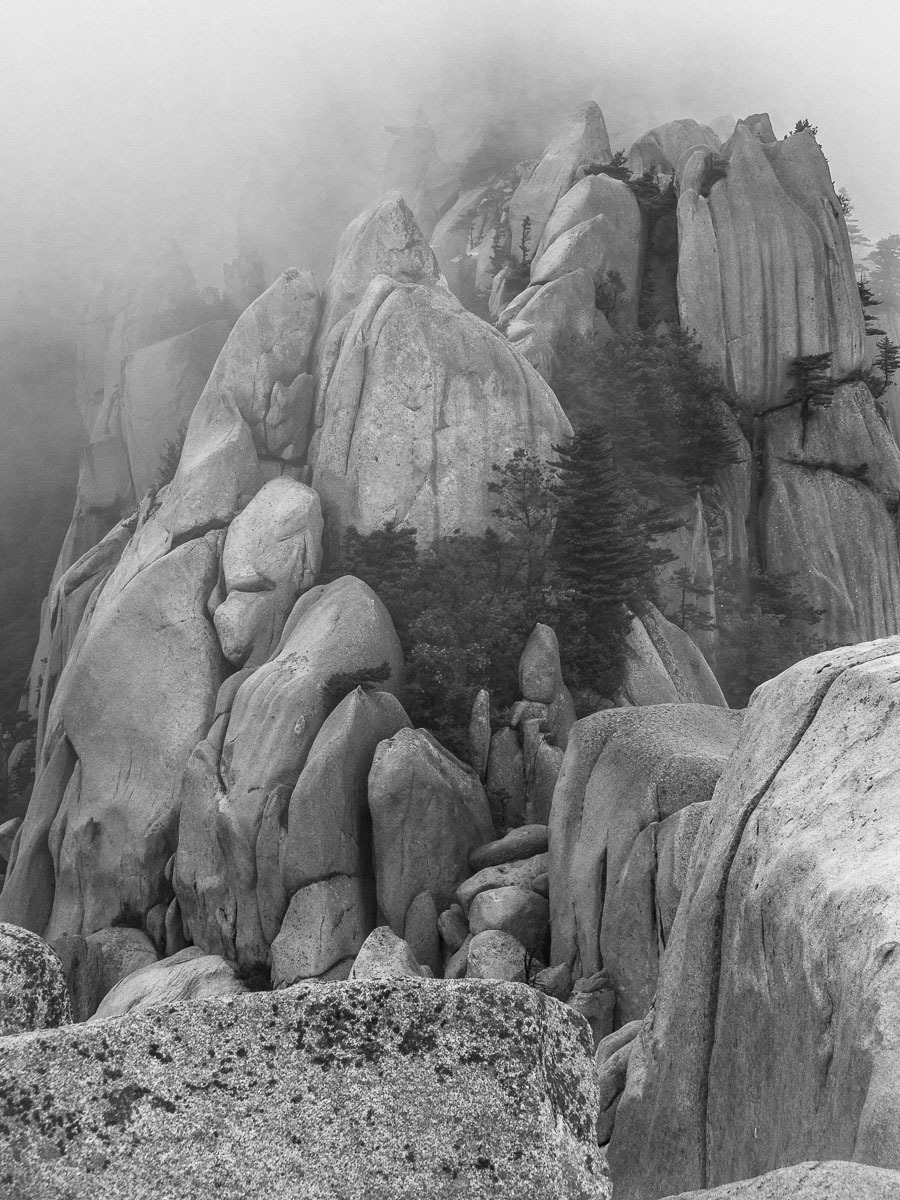
Seoraksan National Park is a beautiful mountainous park dominated by rugged granite peaks and maple gullies amongst cyprus forests only 15 minutes drive from the coastal resort town of Sokcho on the north-eastern coast of South Korea.

One should take care with mosquitoes as there apparently is a small risk of mosquito-borne Japanese encephalitis virus and even malaria according to WHO, but the more dangerous animals such as tigers and bears are now extinct from most of South Korea including in this region.

Sokcho is a 3-4 hour bus ride from Seoul depending upon traffic conditions.

These images were taken with Micro Four Thirds cameras – the Olympus OM-D E-M1 and E-M5 with the Olympus mZD 40-150mm f/2.8 and Olympus mZD 7-14mm f/2.8 lenses.

We only had one day in our itinerary to hike in the park and that one day coincided with almost constant heavy rain which absolutely soaked not only my active wear but also my Olympus E-M1 with 40-150mm f/2.8 lens and its lovely rain protective lens hood which fortunately are highly water resistant and did not suffer any ill effect from the constant rain over a 5 hour period – unlike my friend’s “water-resistant” Garmin watch we failed permanently half way due to the rain.

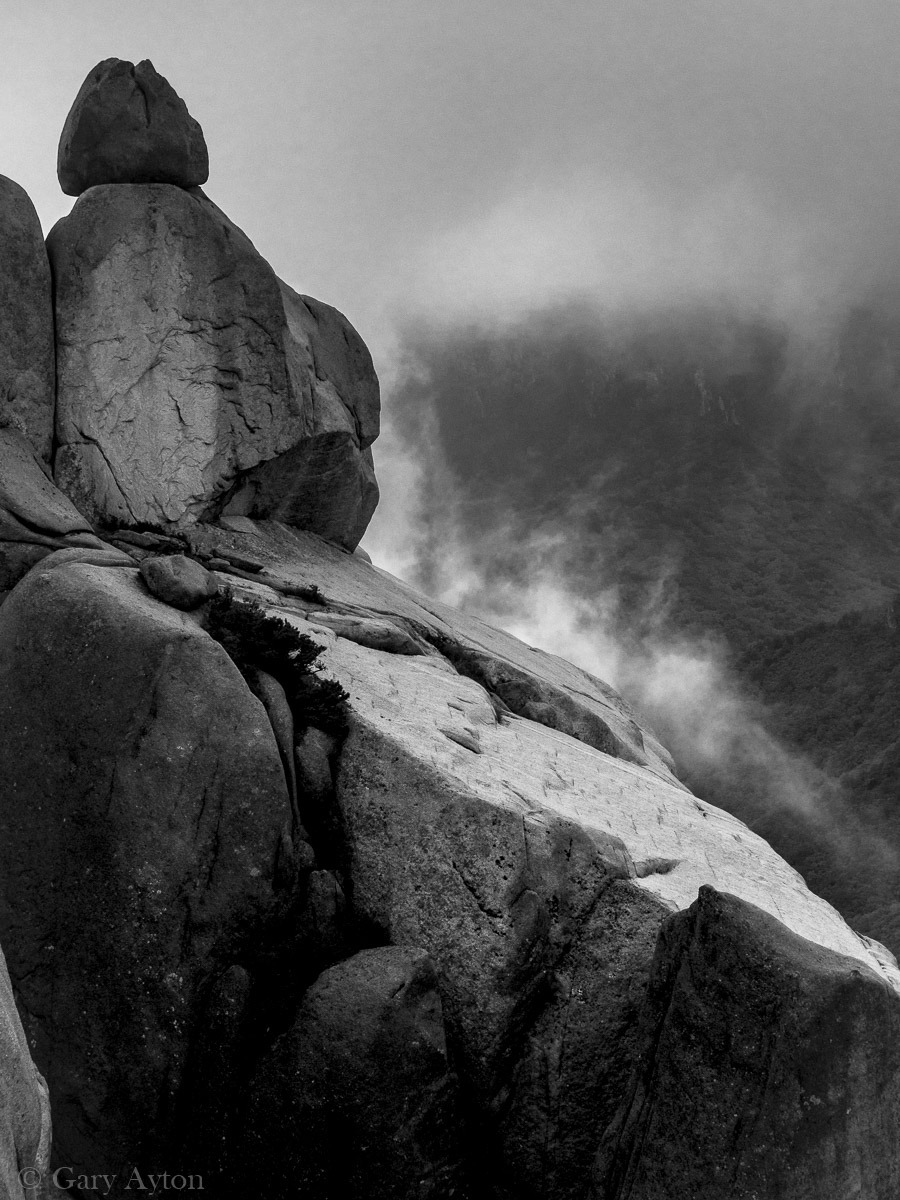
The hike we chose was to the rugged granite peaks which was some 11km and 5hrs return in the rain with seemingly thousands of steps and a total ascent of over 600m to the ~1200m altitude peak which overlooked the Sokcho valley in the very brief intervals where the clouds parted and we could see what was below us.

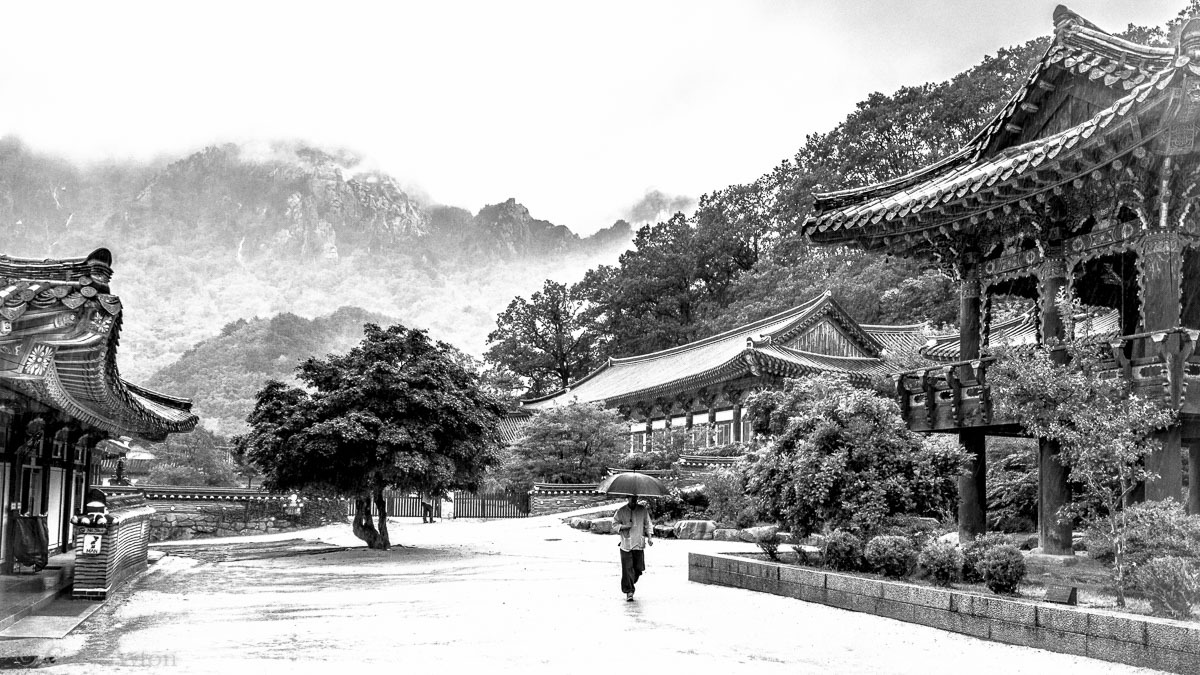
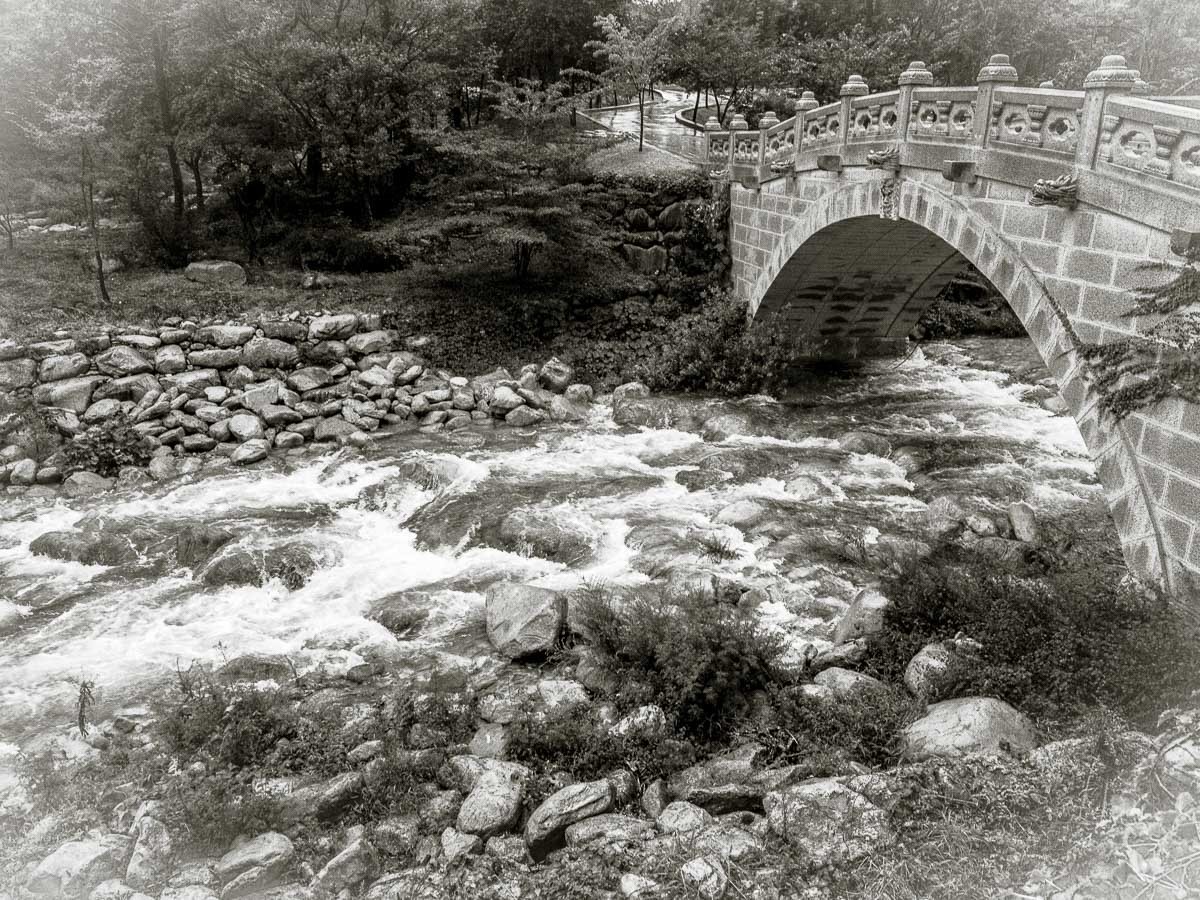
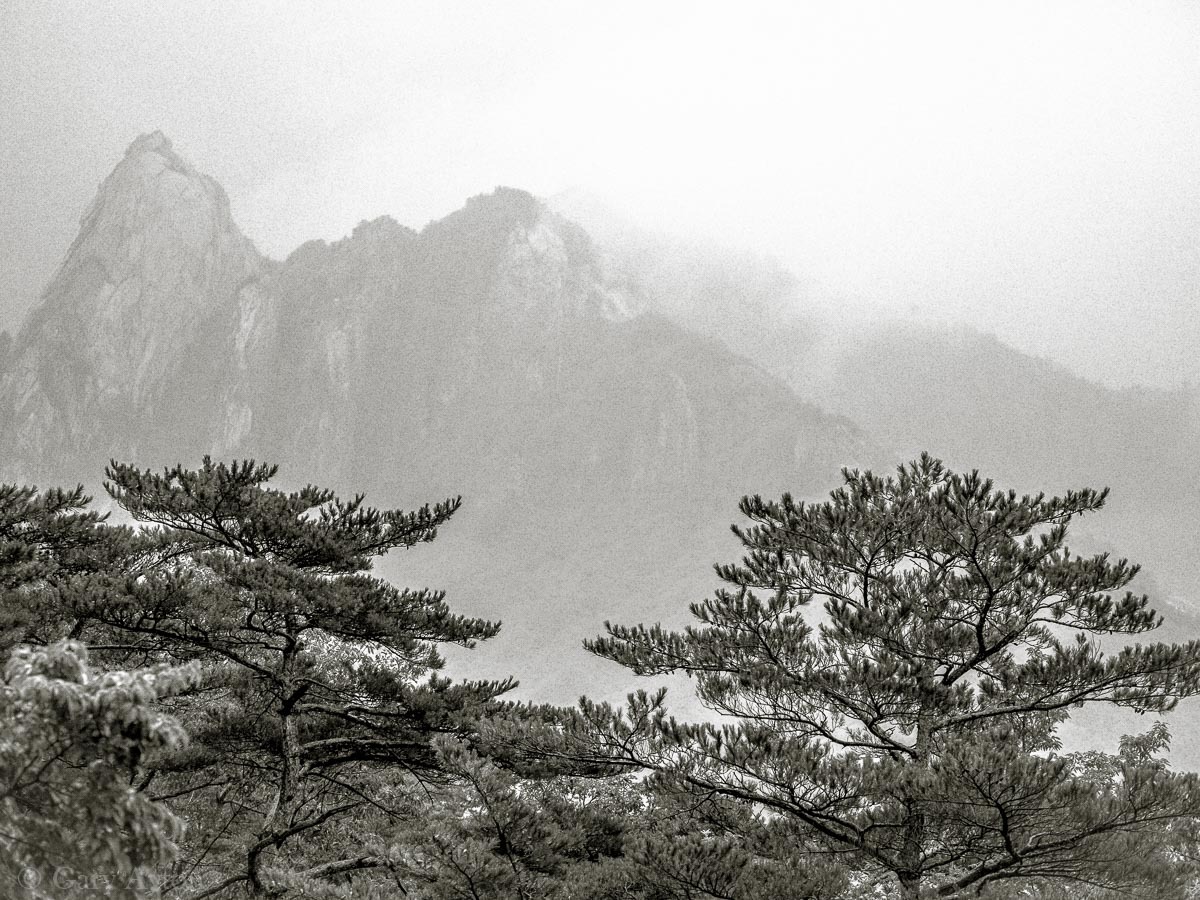
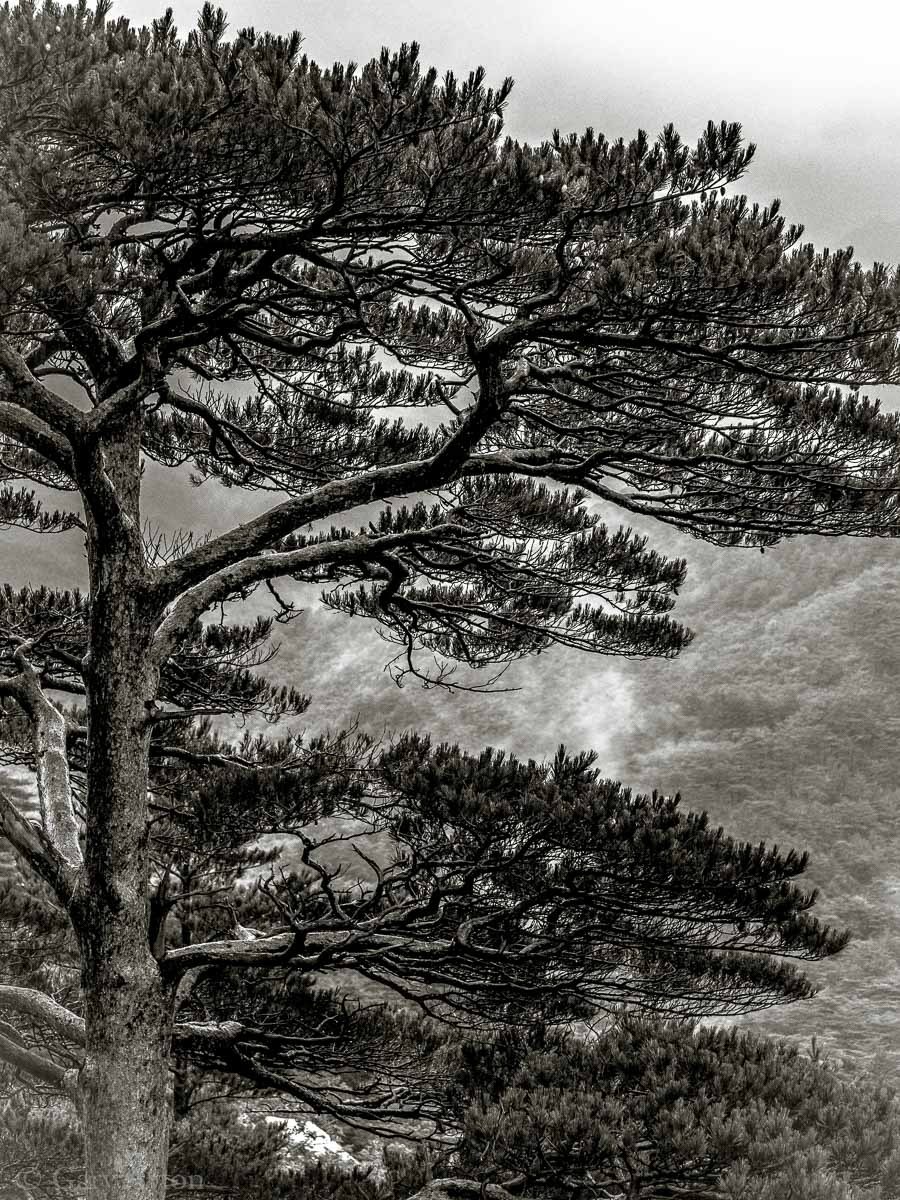
The scenery so reminded me of Japanese ink sketches that I decided to post-process these images in that style.

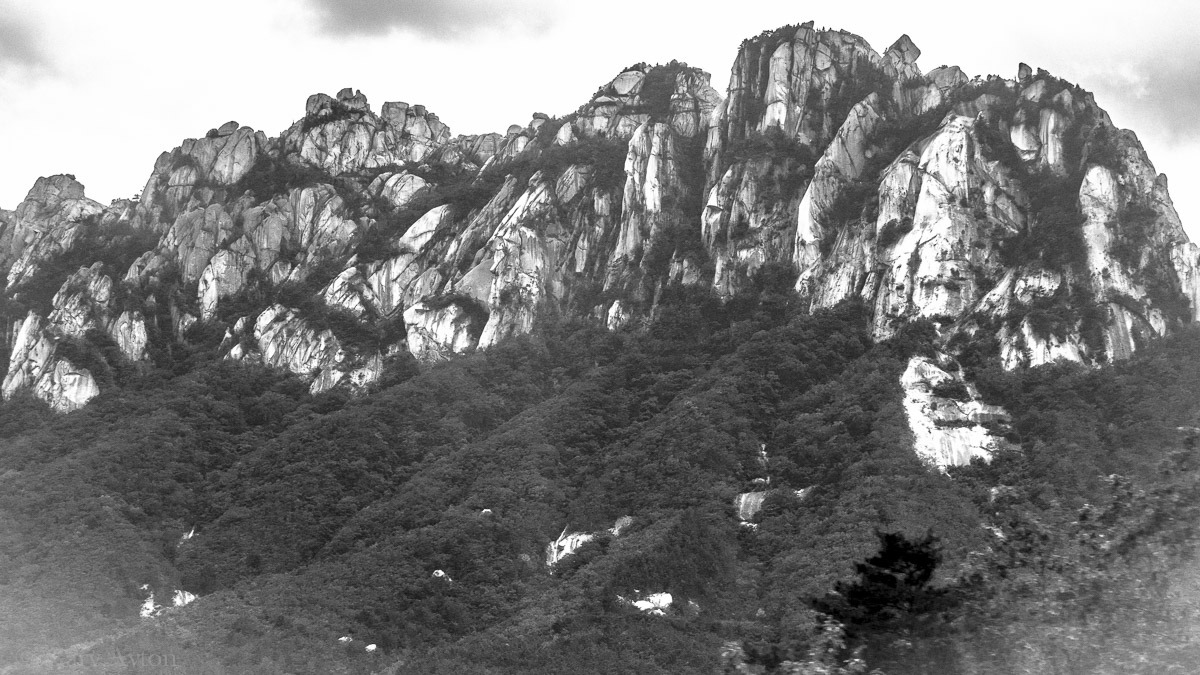
The peaks which we were to climb up as seen from the Seoul-Sokcho bus.

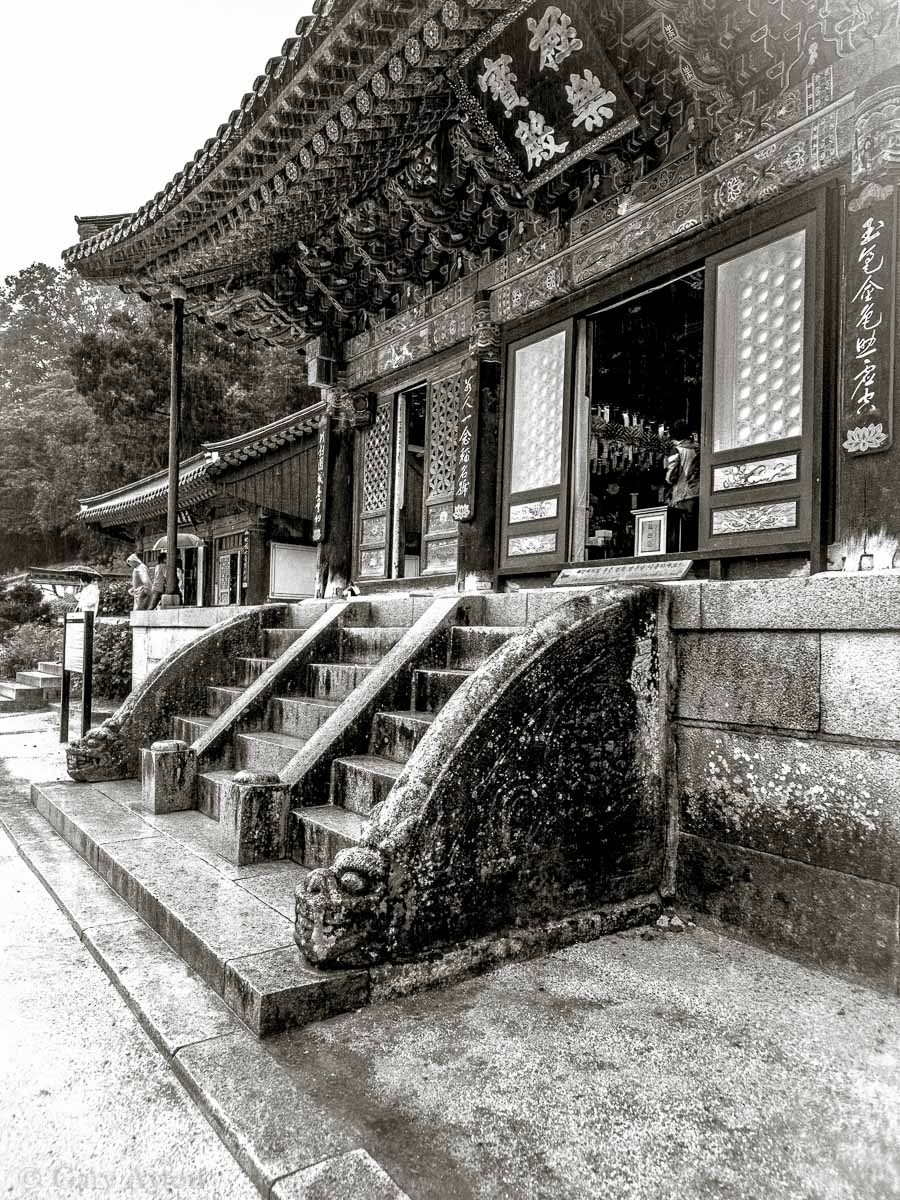
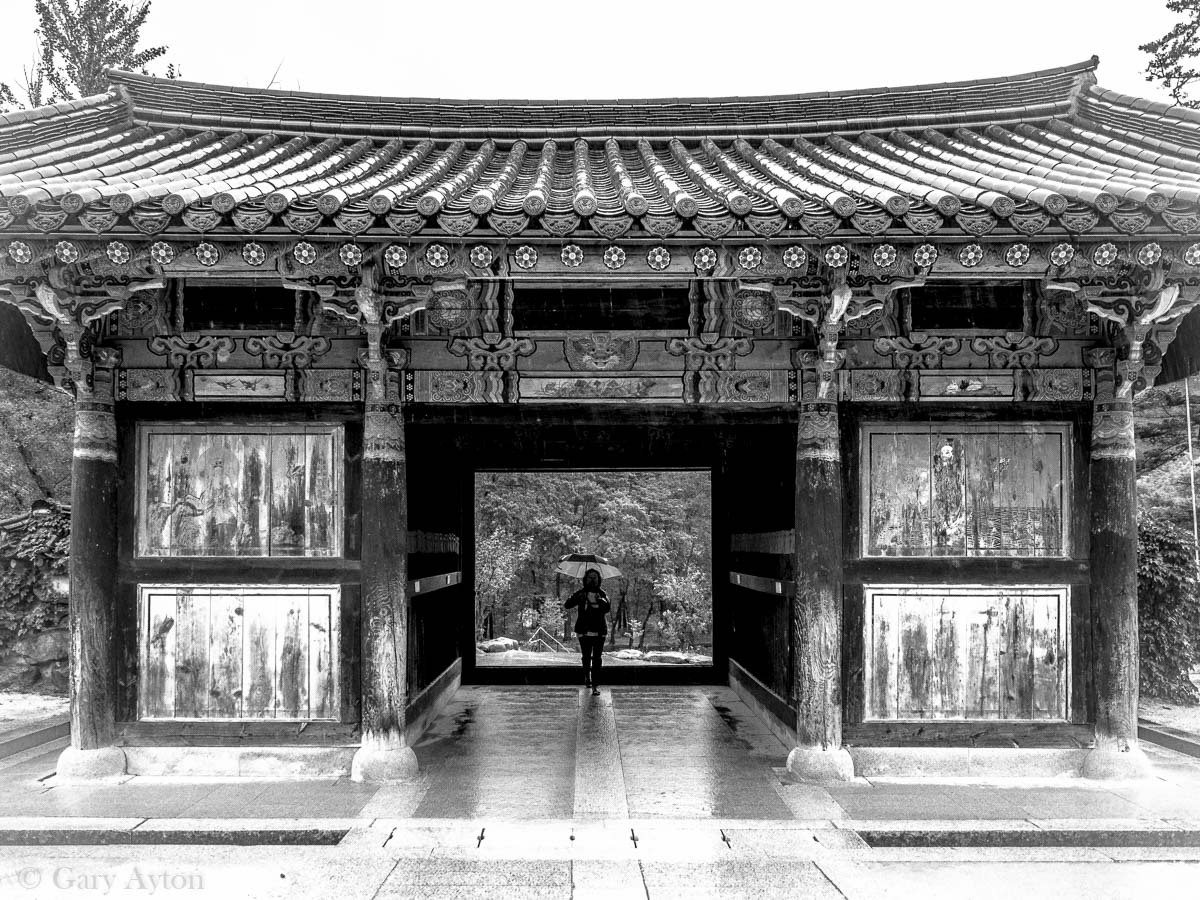
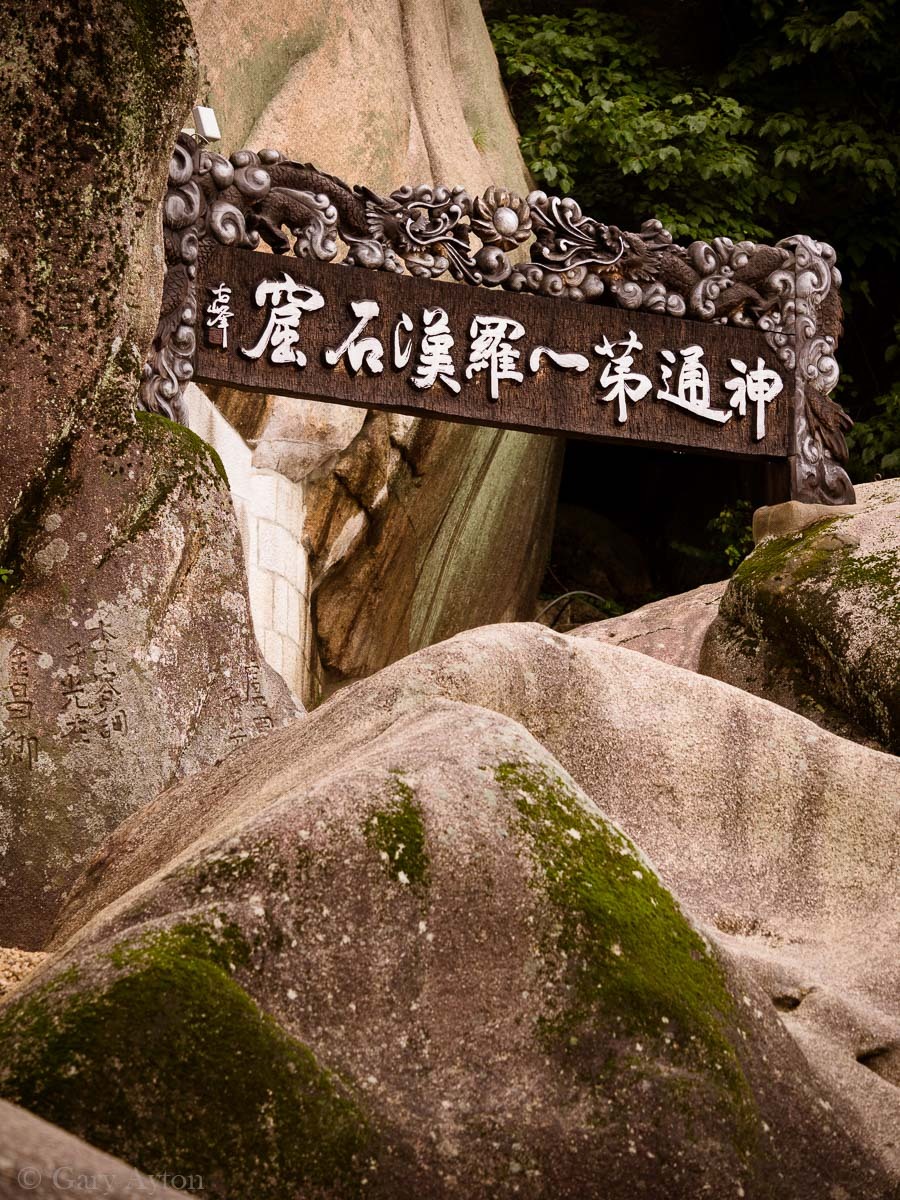
At the start of the walk is a Buddhist Temple which provided for some very nice imagery:

Whilst at this temple we took pity on a very keen Canikon elderly Korean man who was trying in vain to get some shots of this temple with his camera on a tripod wrapped in towels to keep the camera dry as well as trying to hold an umbrella in the wind – unfortunately for him he did not choose a weatherproof camera and lens with image stabilisation such as we had with our Olympus gear, and so we helped him out by holding his umbrella so he could get his shot.

As we start our walk alongside a fast flowing stream, we walk over some nice old bridges:

and then perhaps half way up our ascent we arrive at a remote old Buddhist temple built into the mountain side:

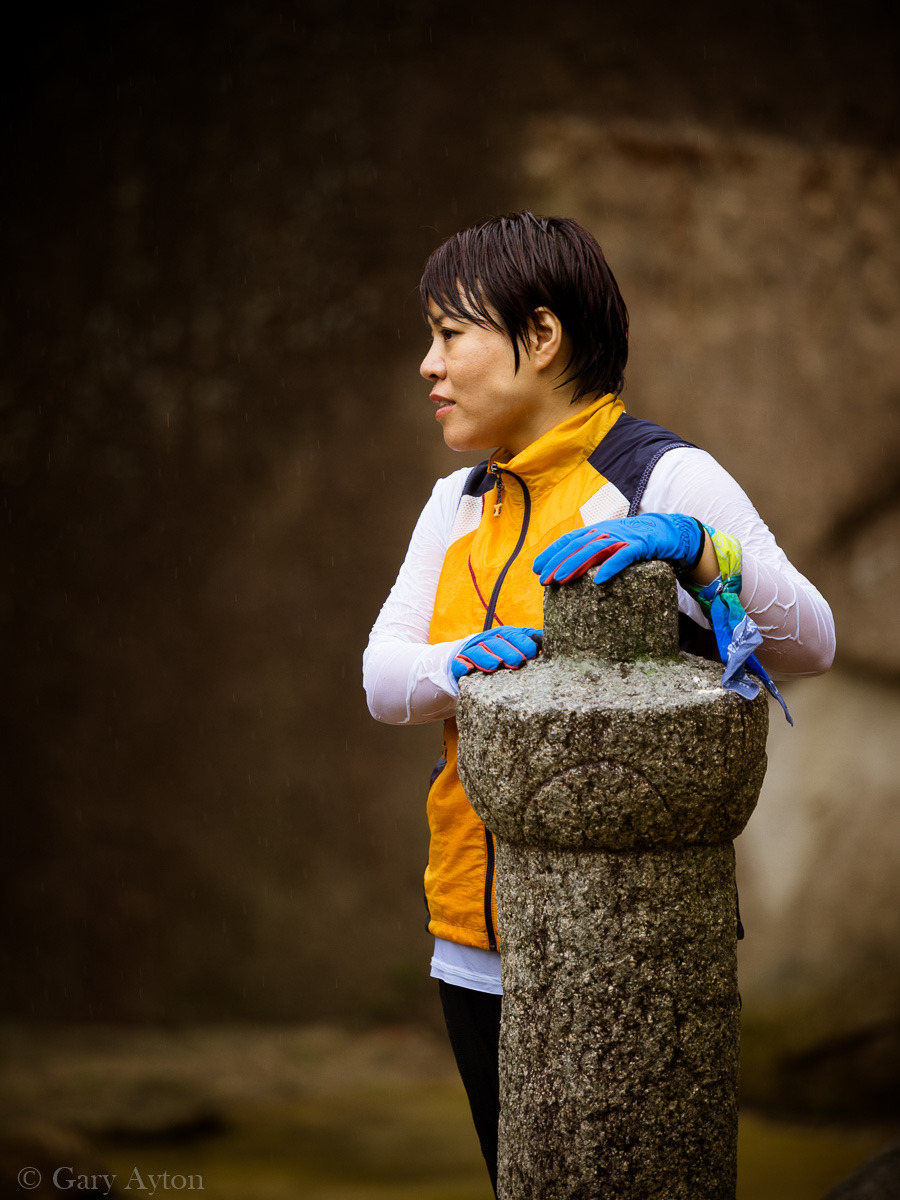
a tourist wet and tired and its only a third of the ascent work down:

Perhaps at this point I should have said a few prayers because the ascent from here on became very steep indeed but gave very rewarding vignettes dominated by these beautiful trees amongst the peaks:

and now ascent into the clouds:


and finally to the peak – the hiker and his umbrella – as we found – no match for the strong up-draught winds hurtling upwards and playing havoc with the umbrellas:

The price to pay for these beautiful sights was 3 days of very painful calf muscles but thankfully, we did not trip and fall in the wet, slippery conditions.

After the hike, an incredibly kind young Korean lady who worked in a park cafe finally worked out what we were trying to ask her – “where is the local thermal spas?” and she offered to drive us there as the cafe had closed and so we made it to the thermal spa baths which were in another valley – but to our naive surprise they were authentic Oriental style baths which banned all forms of clothing – so when in Rome ….


One week in South Korea – Part 4 – Seoul by day

Written by Gary on September 5th, 2016

Seoul is an interesting city to walk around the various neighborhoods, and unfortunately we did not get time to visit more palaces or other interesting sights such as the Seoul Tower, the wall around the city, etc.

So this gives me incentive to head back there another time to continue my explorations.

These images were taken with Micro Four Thirds cameras – the Olympus OM-D E-M1 and E-M5 with the Olympus mZD 40-150mm f/2.8 and Olympus mZD 7-14mm f/2.8 lenses.

cityscape

From the top of a building

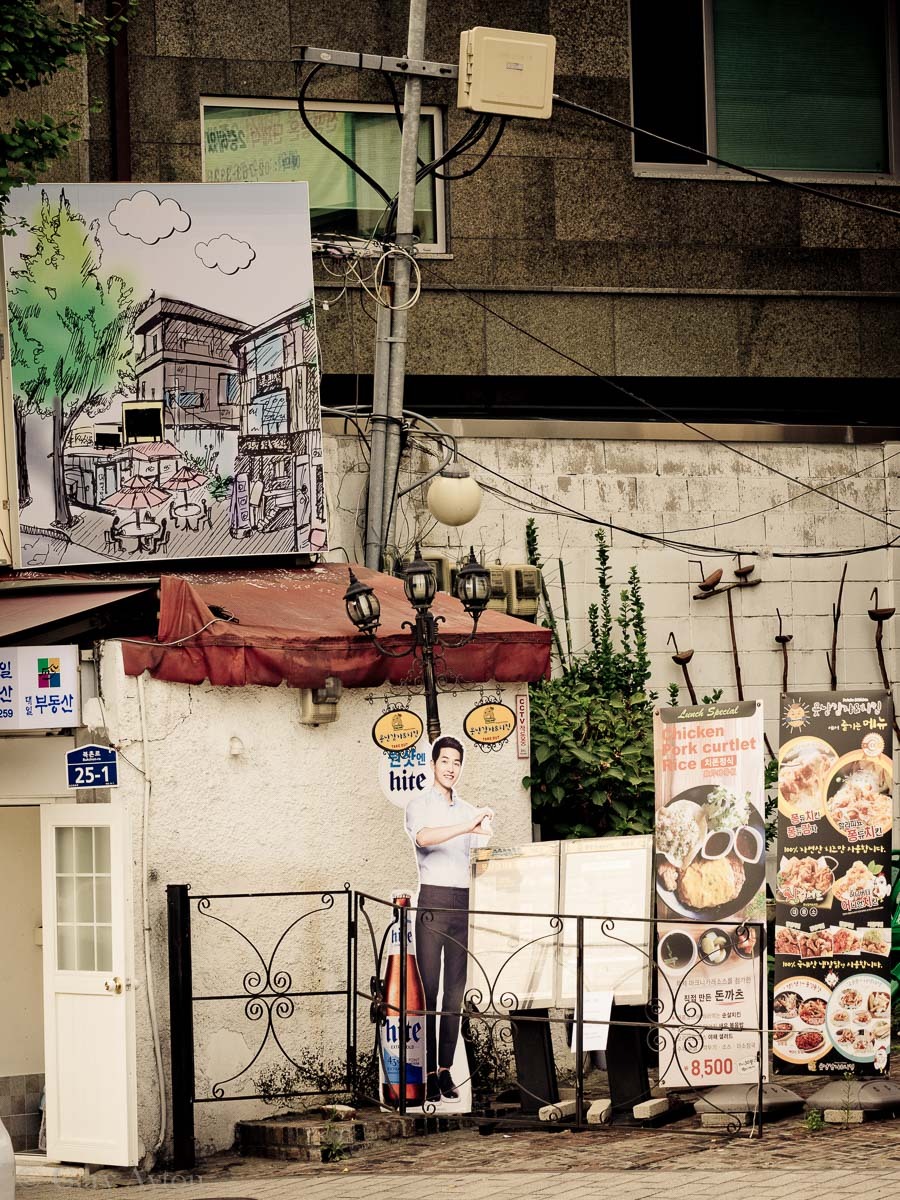
Quintessential Seoul urban streetscape.

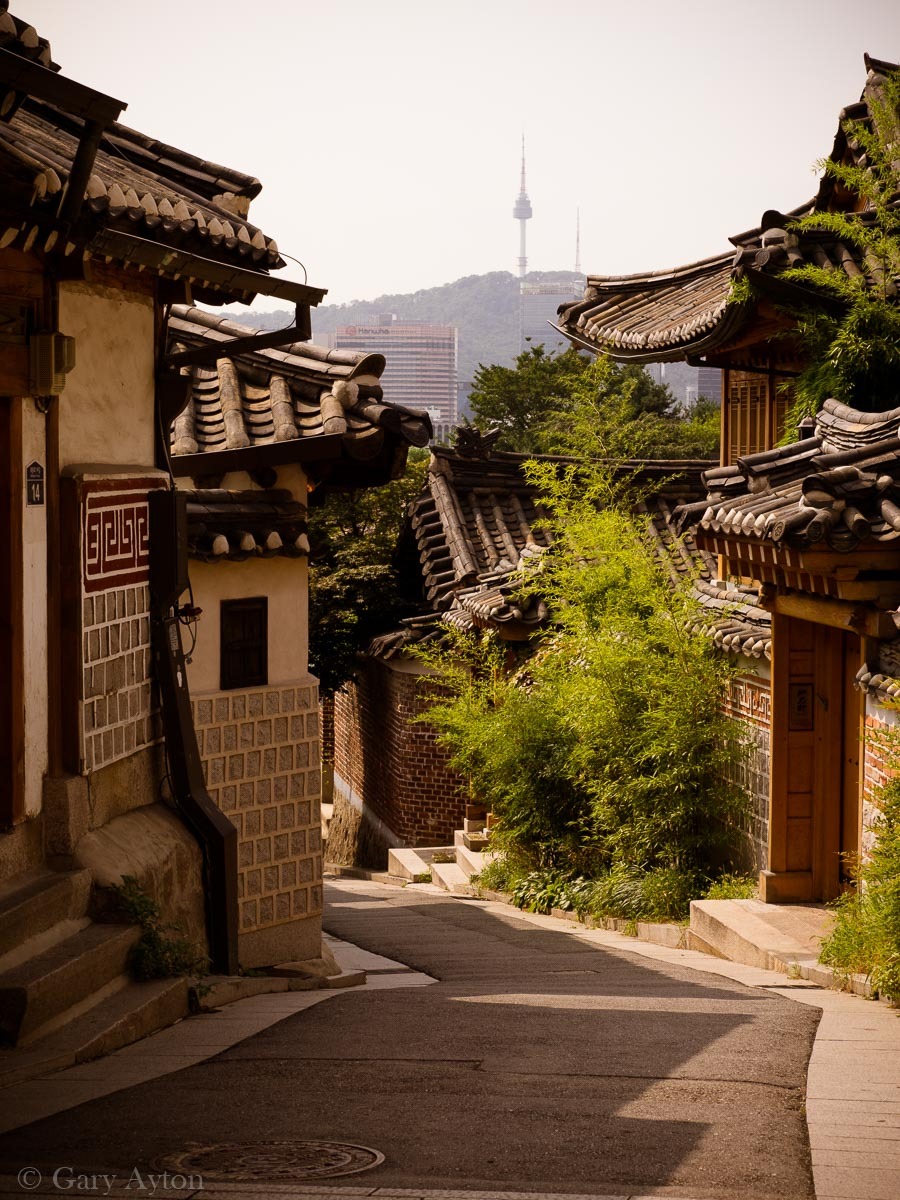
The old and the new – traditional Korean residences with the Seoul Tower in the background.


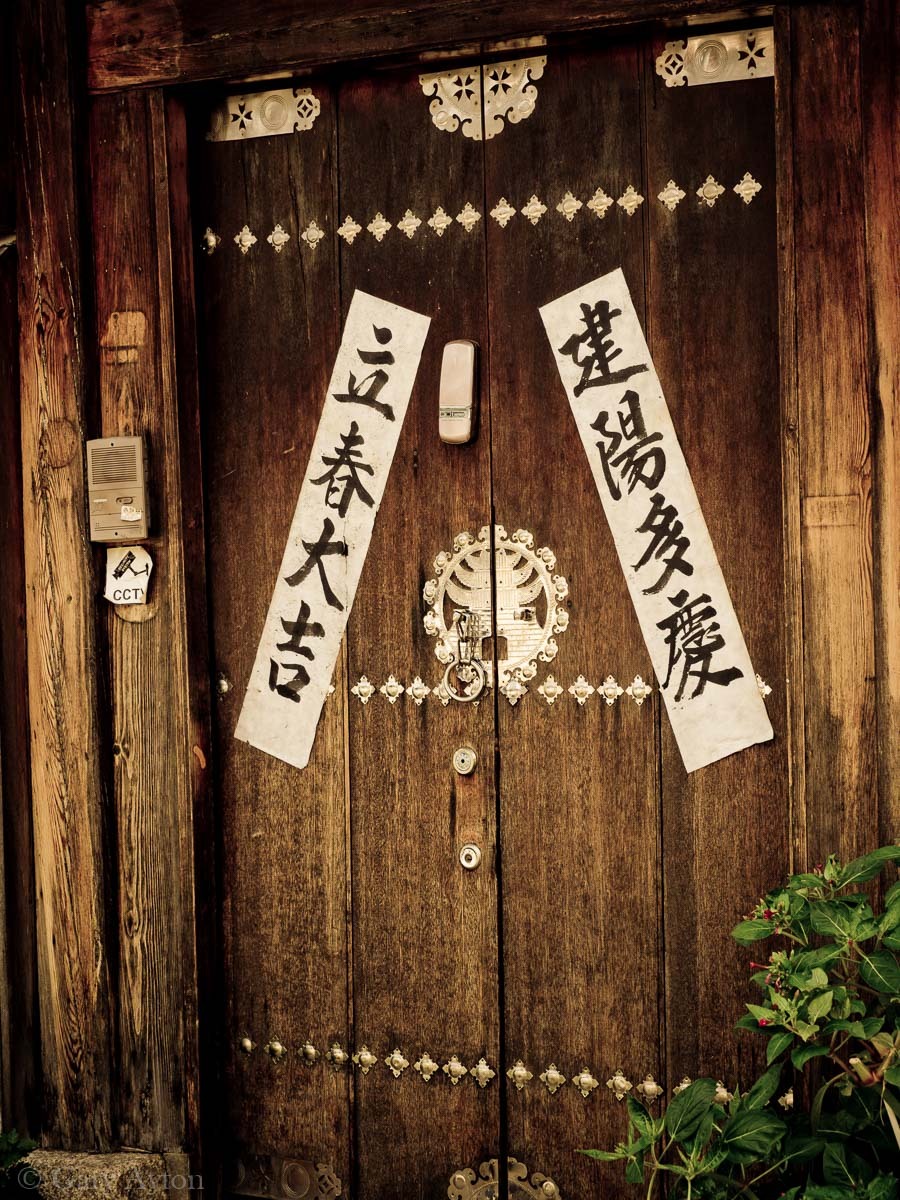
Korean gate

Gate on one of the traditional residences.


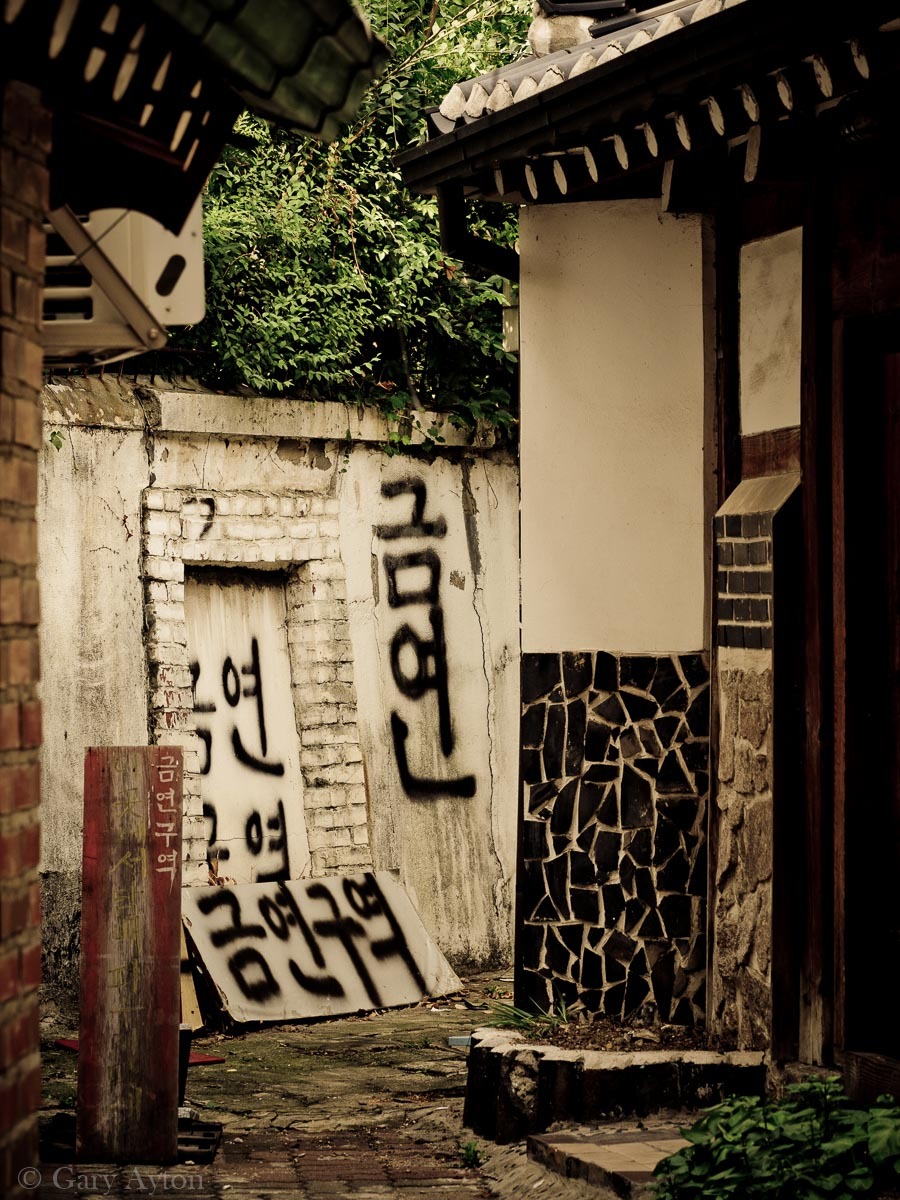
graffiti

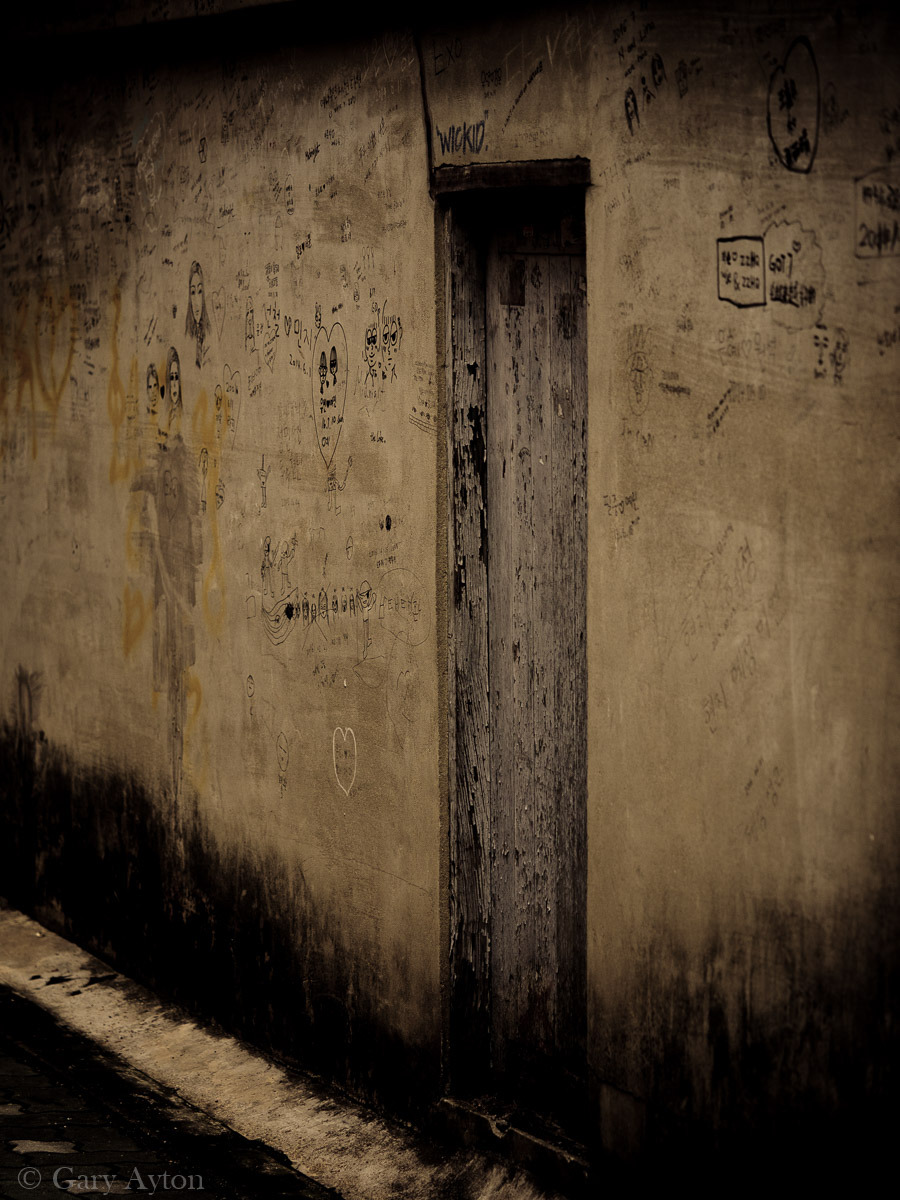
Seoul is generally a very clean city at least on the surface and has very little graffiti – but I did manage to find some in a remote alley way.

and some minimalistic graffiti in a shopping area laneway.

another gate to a residence


One week in South Korea – part 3 – Seoul at night

Written by Gary on September 3rd, 2016

Seoul in August is a wonderful balmy warm and seemingly safe city to explore at night as long as you take reasonable care and respect the locals who rarely like being photographed unless they are doing it themselves – the number of young Koreans walking around taking selfies as they walk is quite disturbing for safety reasons alone – luckily there is no Pokemon Go in South Korea (due to military security concerns with Google street view imagery – although there is a small area in Sokcho where it is possible).

I had no safety concerns carrying my cameras and even having them visible on the subway trains at night – something I would be reluctant to do in my own city of Melbourne !

Usually when I walk streets at night I carry discrete wide aperture lenses on my compact Micro Four Thirds cameras (OM-D E-M1 and E-M5) which allow low light photography and allow the camera to be quickly returned to a jacket pocket – for example the Panasonic 20mm f/1.8 pancake lens and the Olympus mZD 12mm f/2.0. In Seoul, I decided to ditch the 12mm lens and use the larger Olympus mZD 7-14mm f/2.8 for greater versatility.

The most popular districts to explore are Itaewon, Hongdae and ultra-modern Dongaemun.

Itaewon

Itaewon is where the US Military tend to congregate at bars and clubs, and thus is the main district for Caucasian tourists – although the night we went there, there were very few of either and it was mainly the local Koreans, and in the back alleys you did need to keep your eye out for opportunistic predators although we did not see any aggression or criminal activity even to 1-2am.

We enjoyed an awesome, albeit, expensive, authentic Korean BBQ in one of the side street cafes, then headed off to some of the bars for some cultural exchanges.

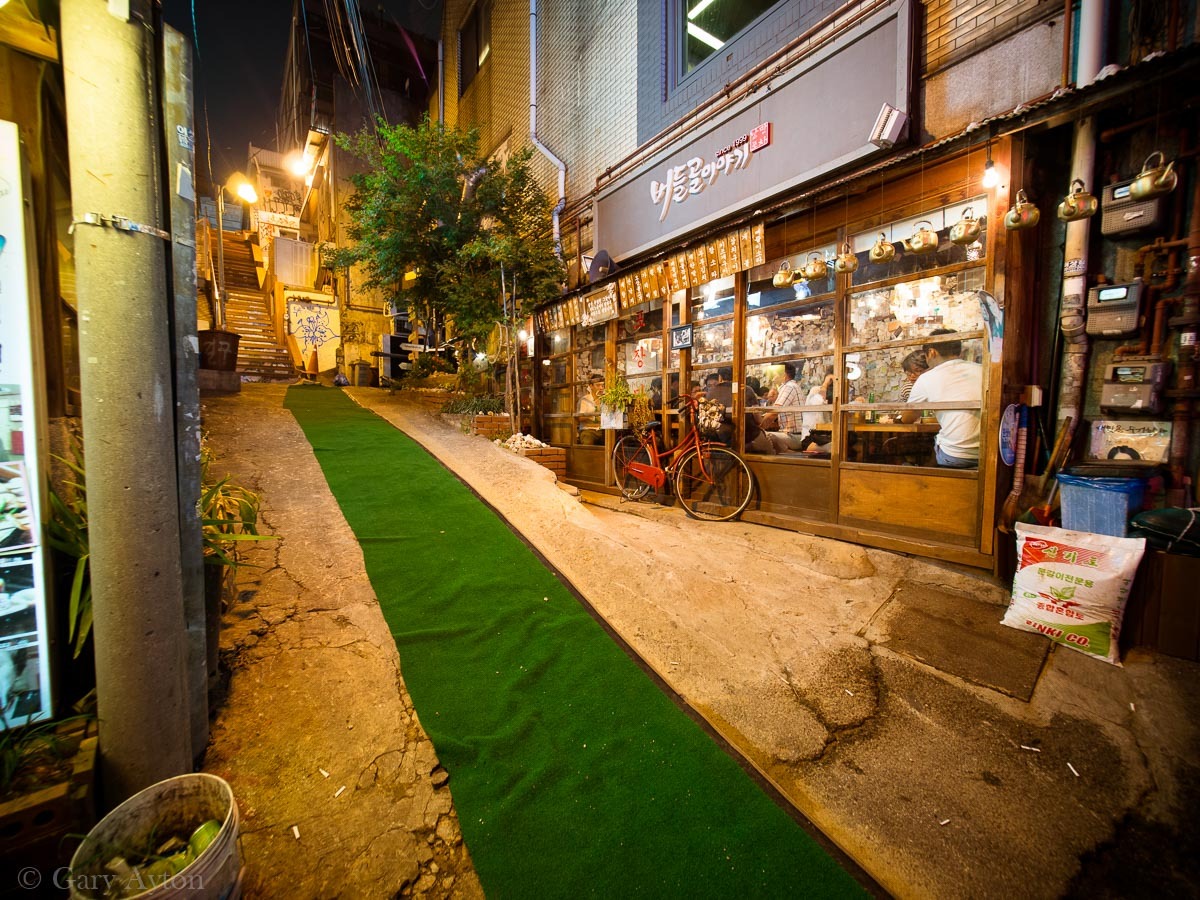
Back alleys of Itaewon where there were a few dodgy people.

Dongaemun

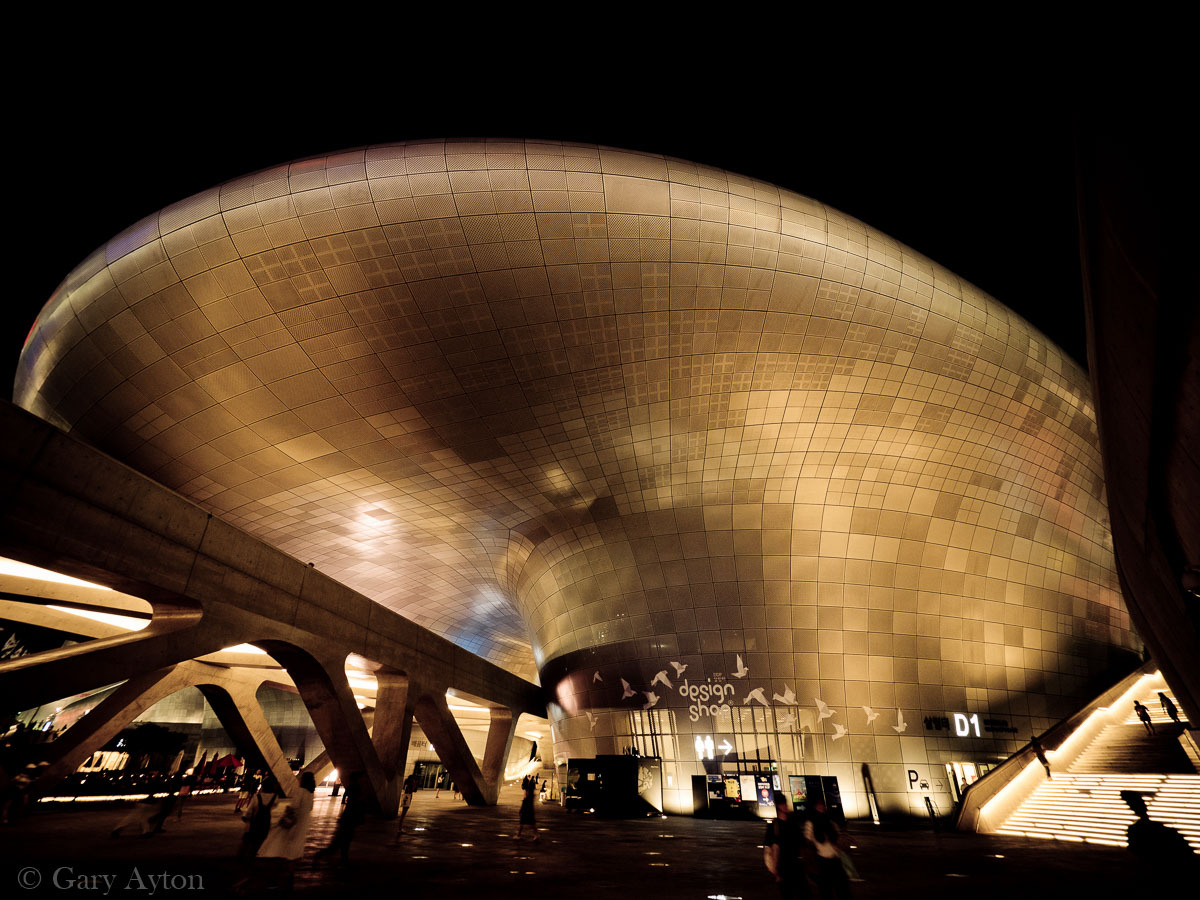
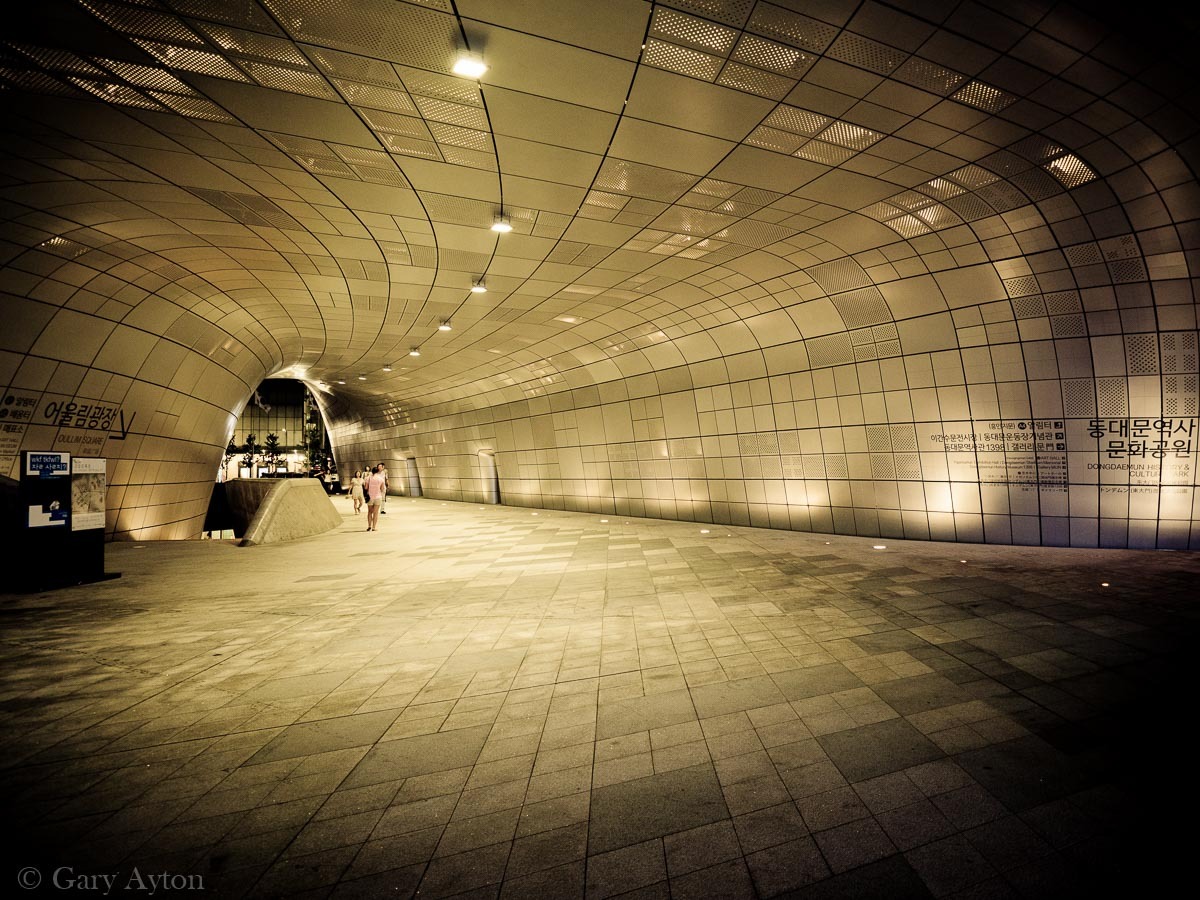
Dongaemun is a popular night precinct for shoppers with lots of street shops, shopping plazas, market and the ultra-modern Dongaemun Design Plaza (DDP).

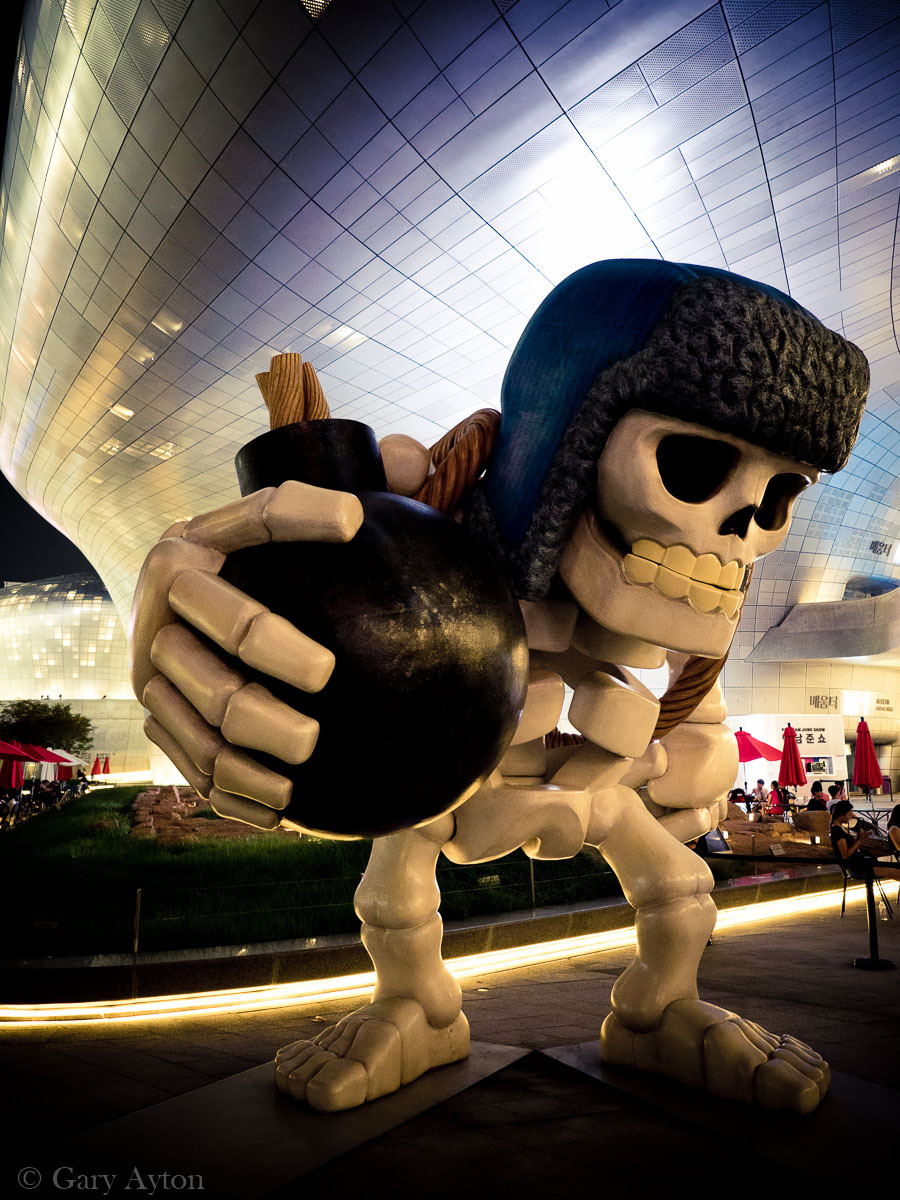
DDP

DDP

DDP

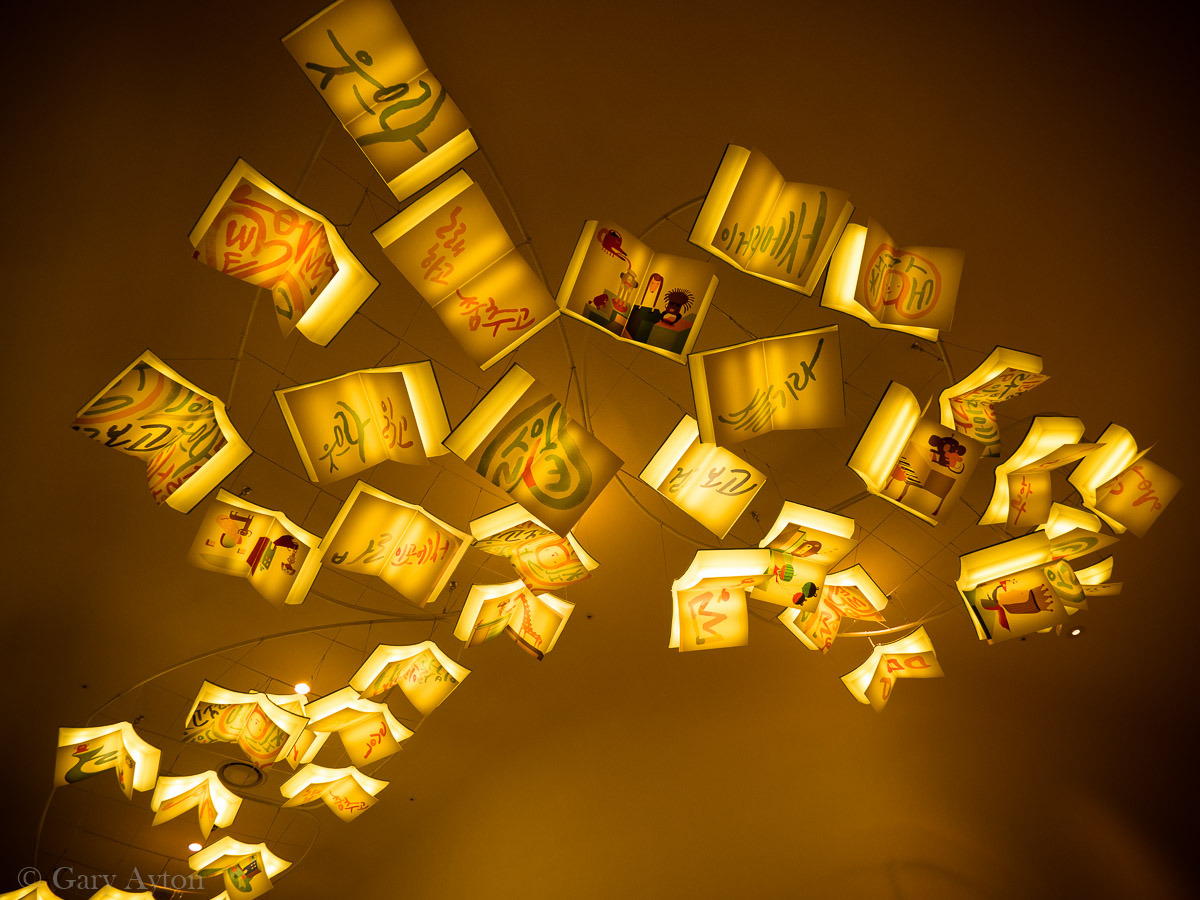
Ceiling mobiles display in DDP.


DDP

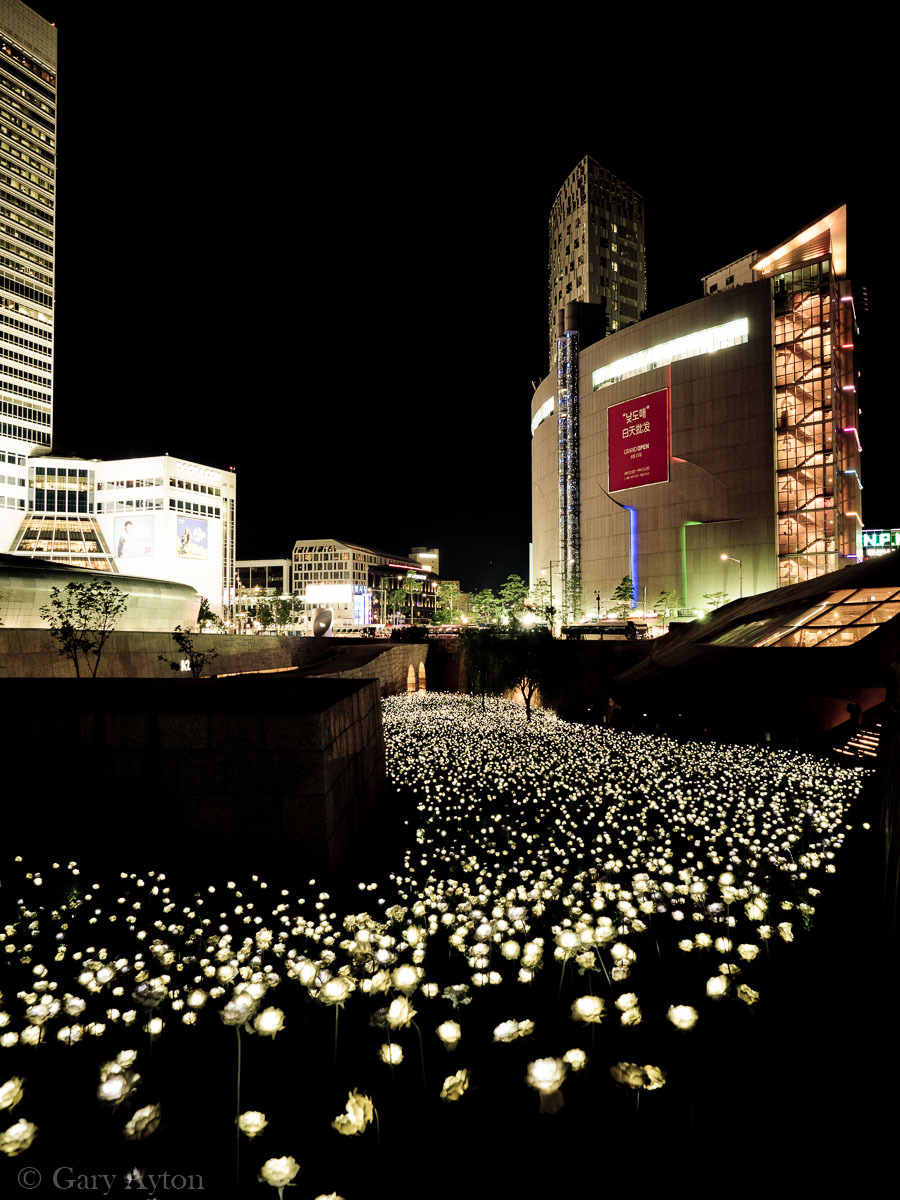
Dongdaemun Design Plaza and the newly opened shopping plaza in the background right.

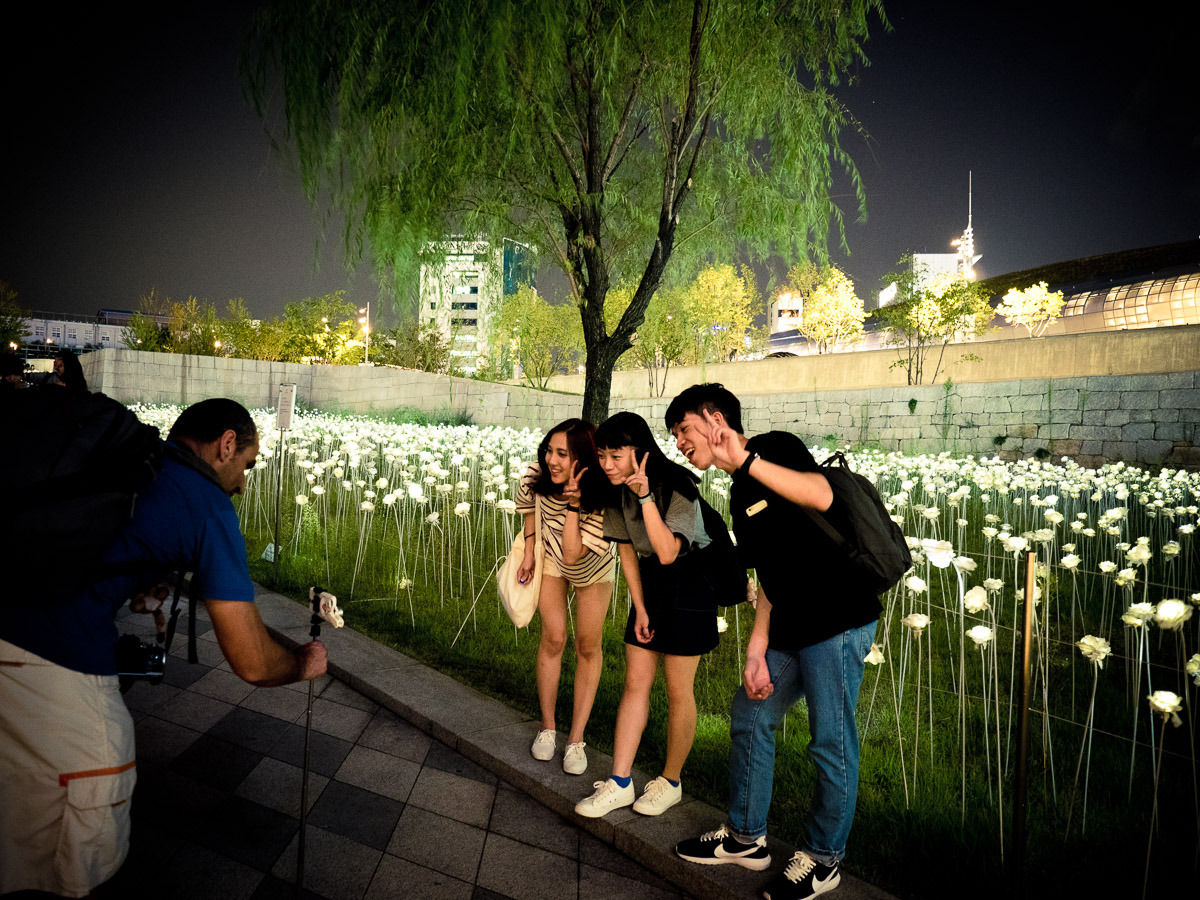
Helping out the locals with their selfie sticks.

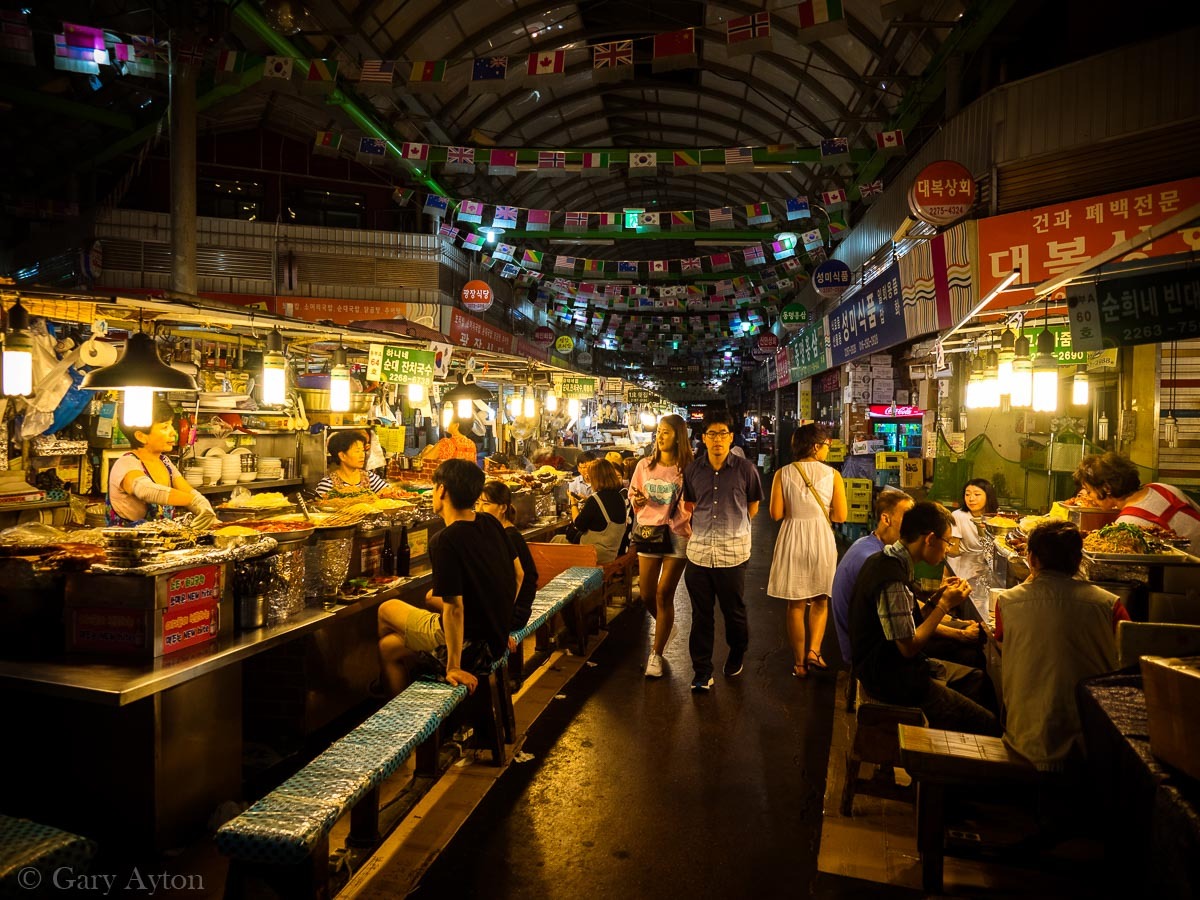
Street stalls

A market which unfortunately had largely closed by the time we arrived at 10pm

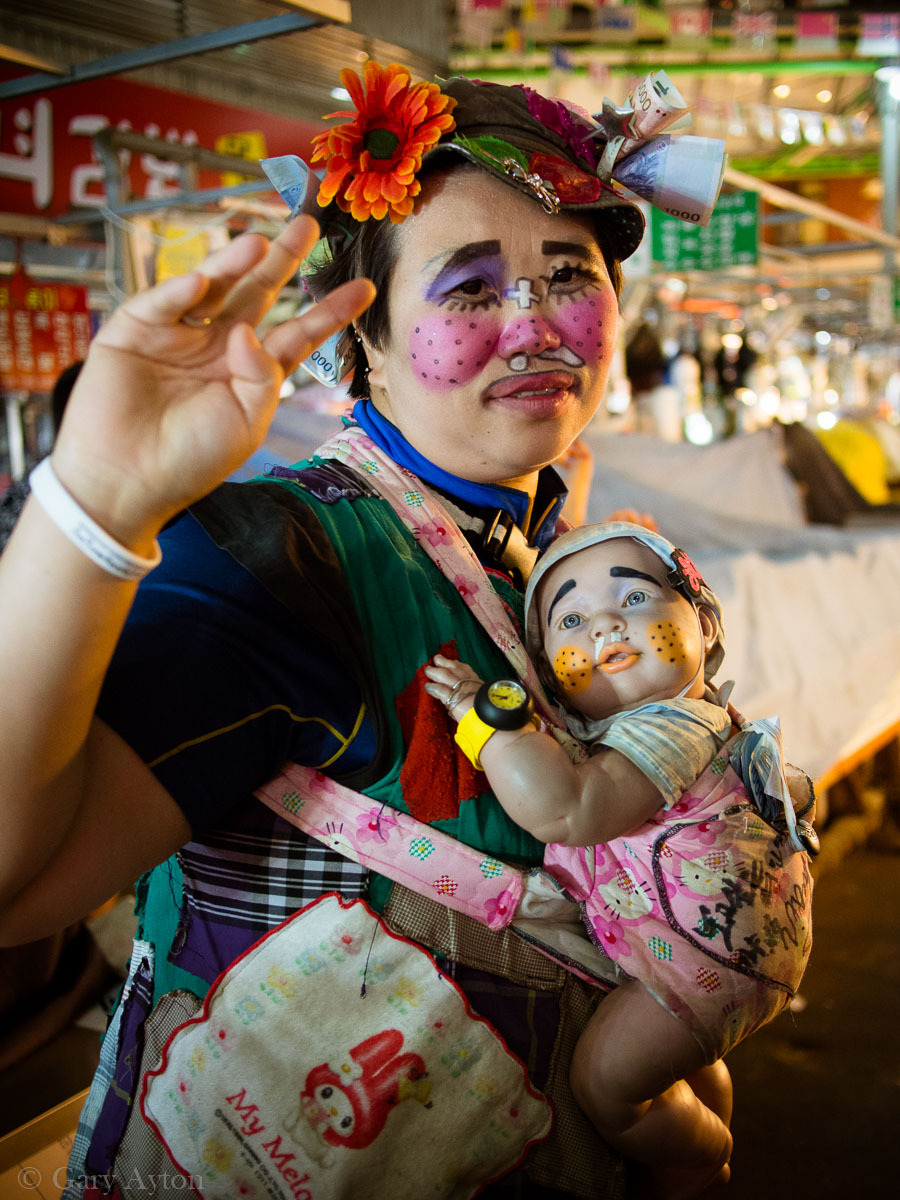
A market mobile karaoke lady with her doll who was keen to pose for me.

This was a signal to call it a night – perhaps too much soju?

Just managed to catch the last train on the subway – a rare deserted platform but we made it back to our hotel!

Hongdae

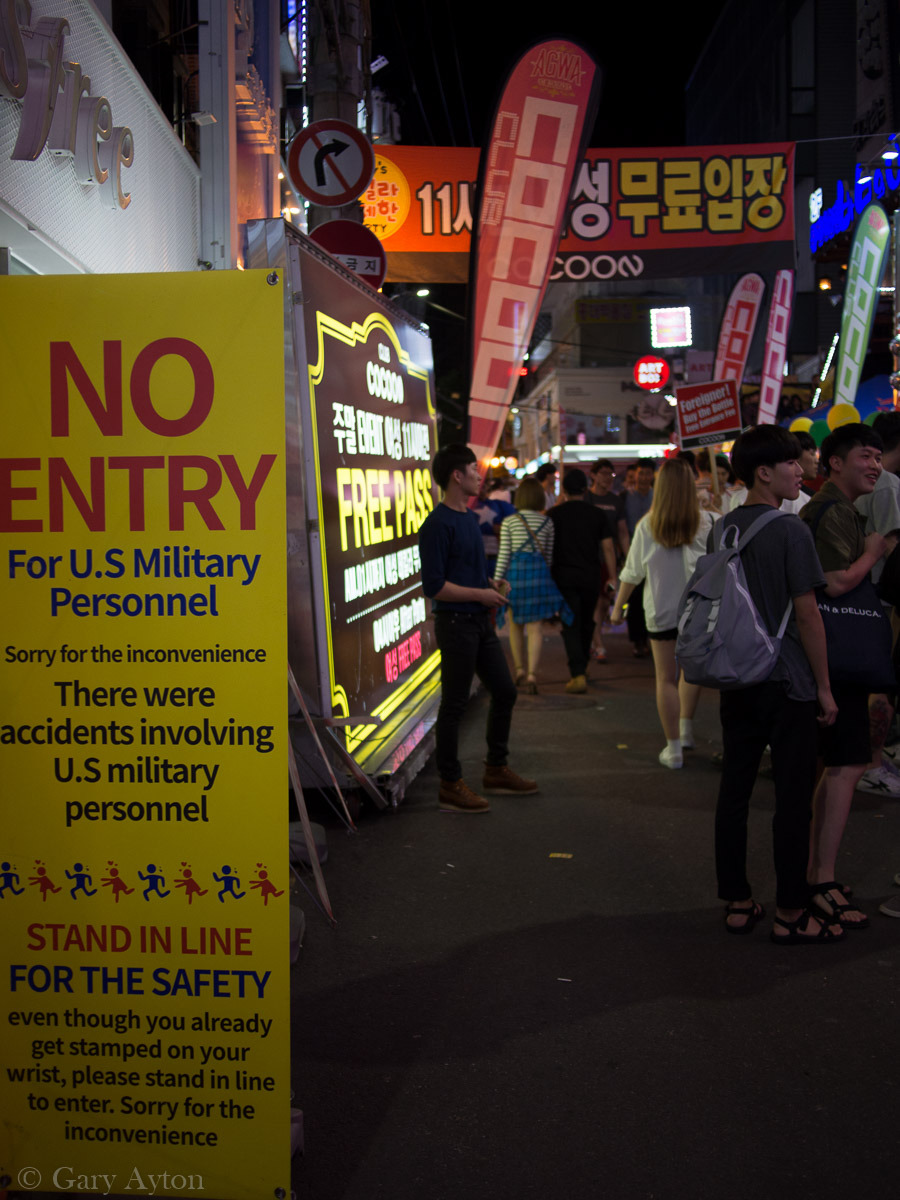
Hongdae is a Korean university student night precinct with many bars, clubs and shops, lots of intoxicated young Korean adults and few older adults while there were signs banning US military fro entering clubs due to potential conflicts, and the clubs seem to have an age cut off of 38 years, so no entry for an old guy like me but again, despite the flow of alcohol, there was no overt aggression or criminal activity evident and we felt safe walking the streets and there were plenty of taxis near by to take us back to the hotel (as long as you had the name and address of the hotel in Korean!). I took very few photos here but we did find a quiet late night bar for a dart throwing competition at 2am which finished the day off nicely.

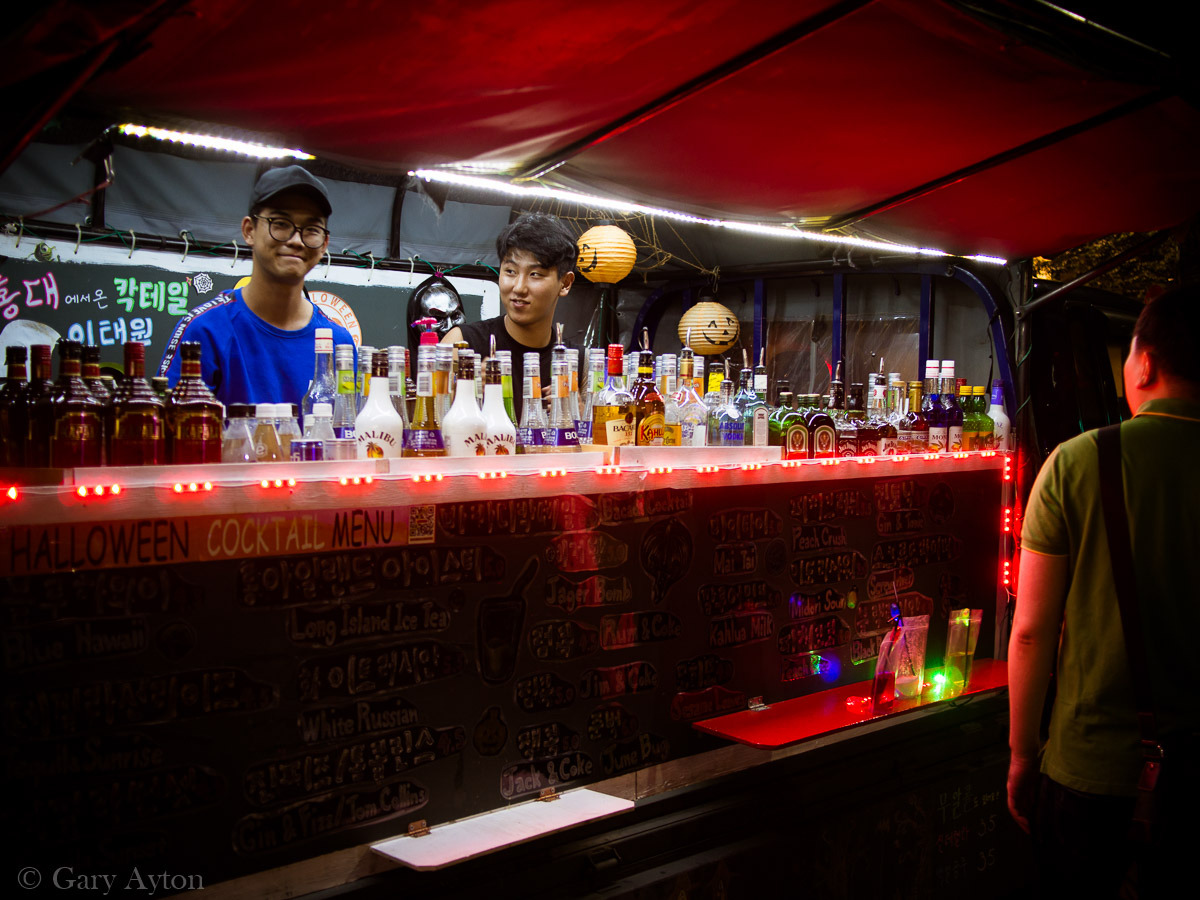
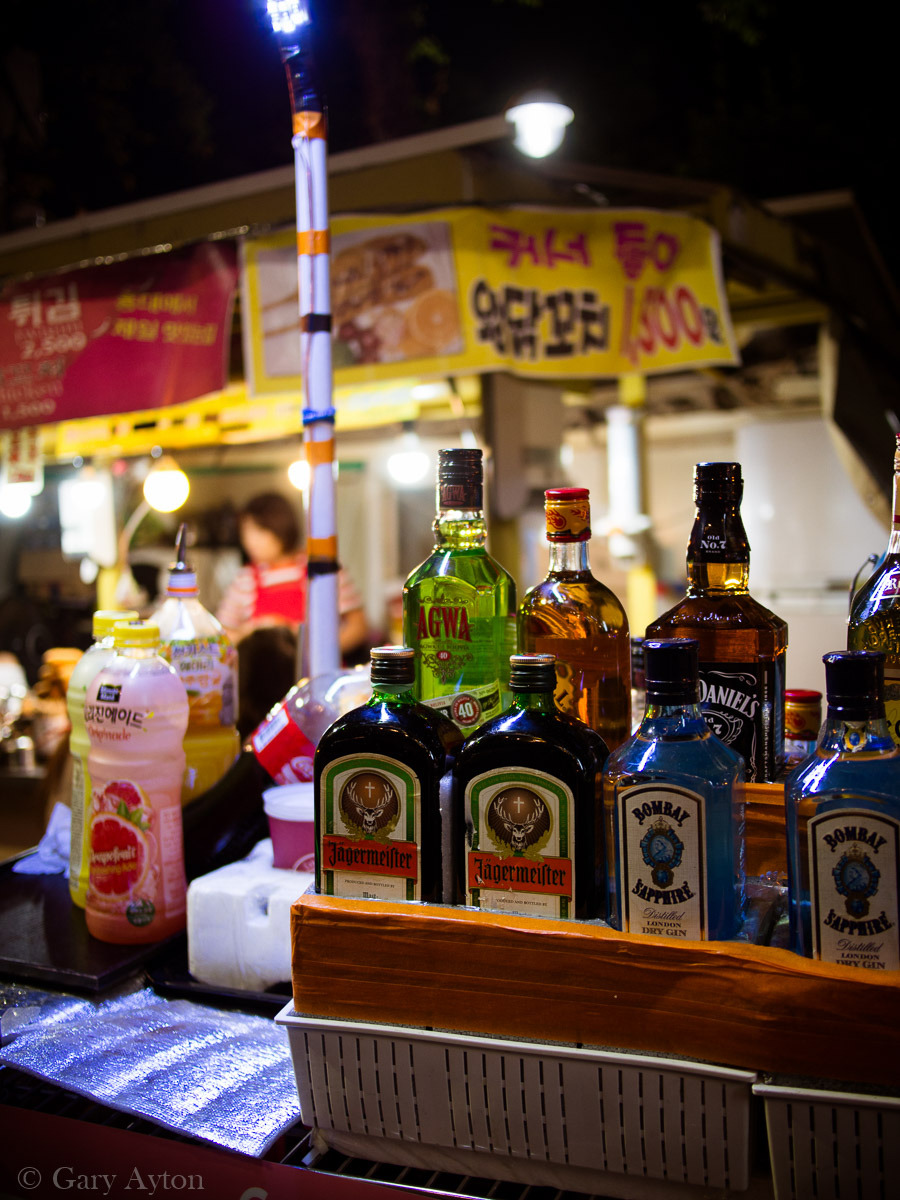
street alcohol vendor for the students

Street alcohol vendor for the students (the vendor refused to allow his photo but did allow this shot).

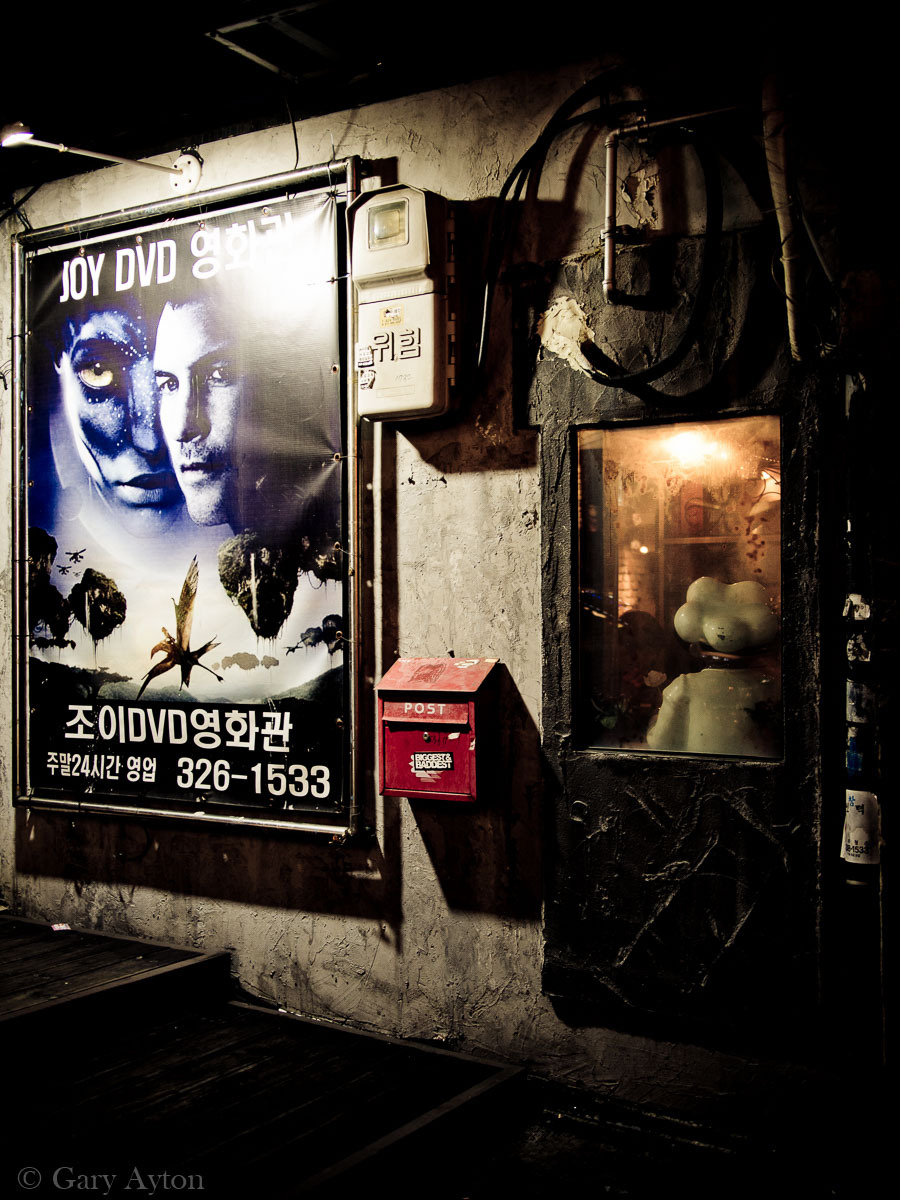
Back alleyway.

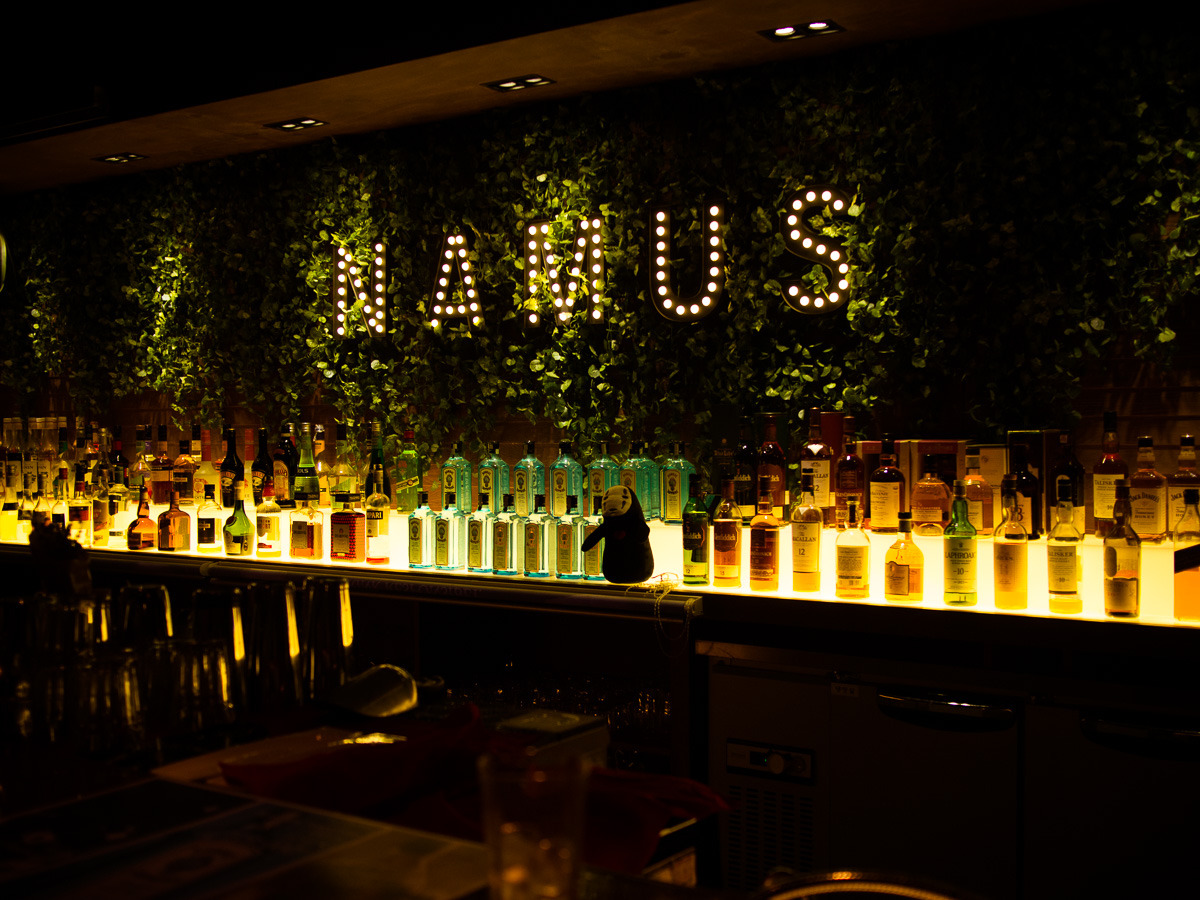
Hongdae bar

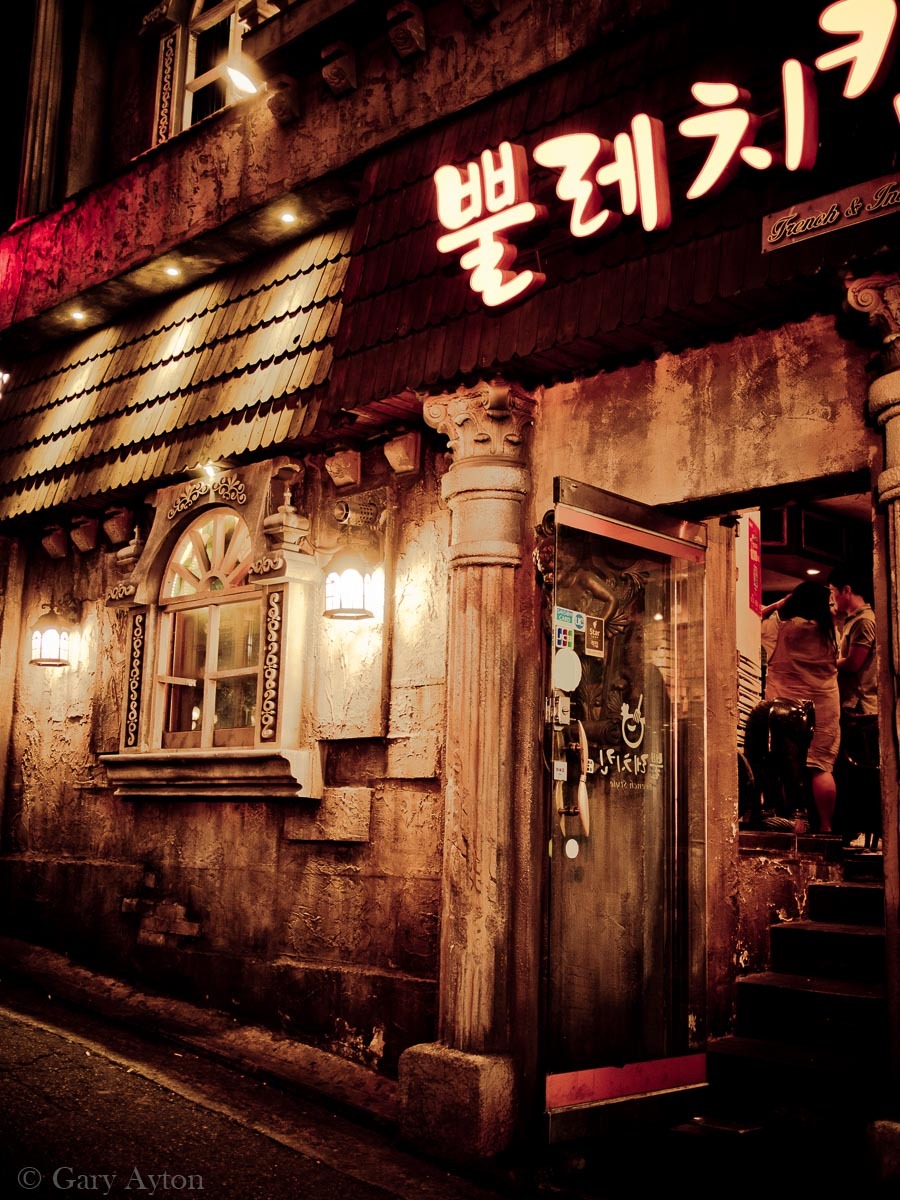
Older style Hongdae bar.

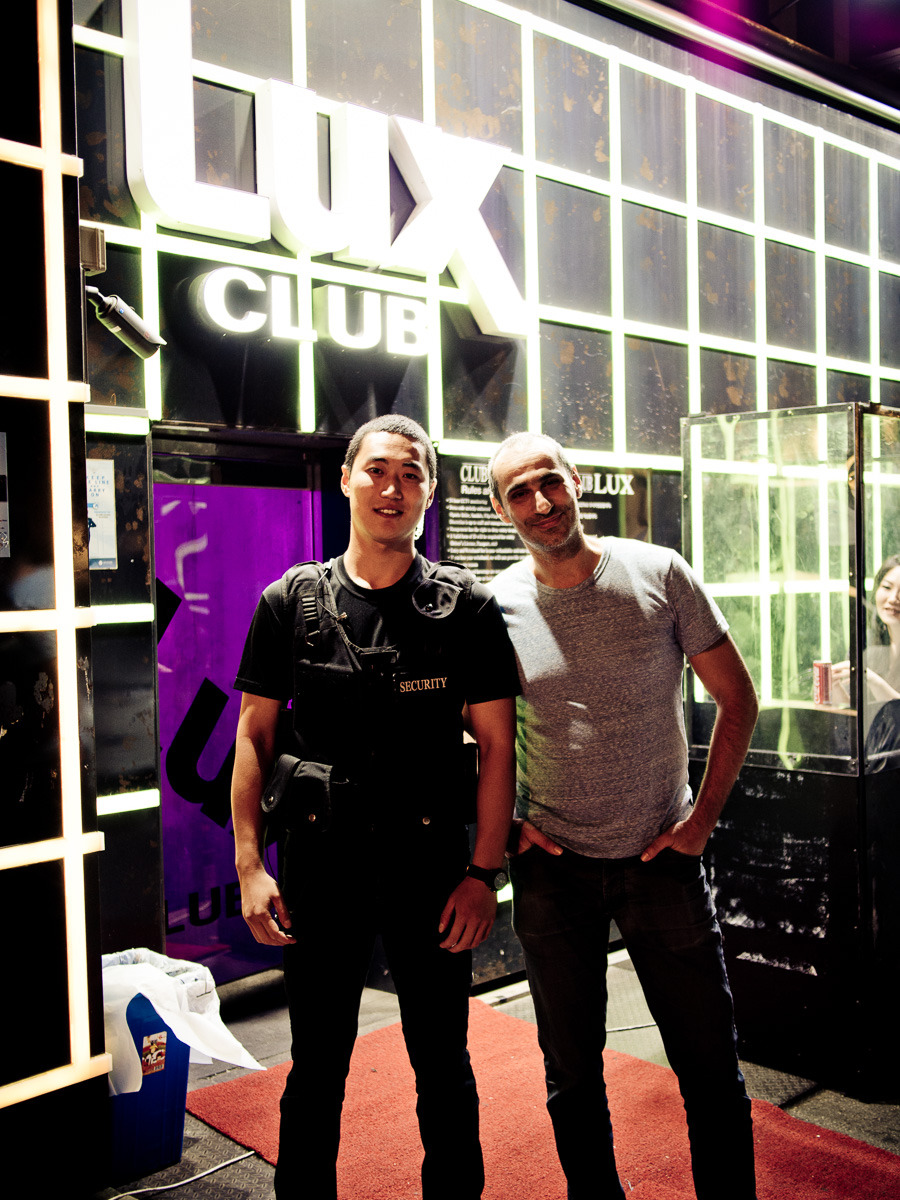
This club security guy politely refused entry to the club for my travel buddy who was devastated as apparently now too old to go clubbing!

Not only older folk are banned from the clubs but also the US Military! Korean prevention is the best medicine!

Hongdae street bar.

Finally found a quiet bar where we could relax, talk and play some darts.


One week in South Korea – part 2 – The Secret Garden

Written by Gary on September 2nd, 2016

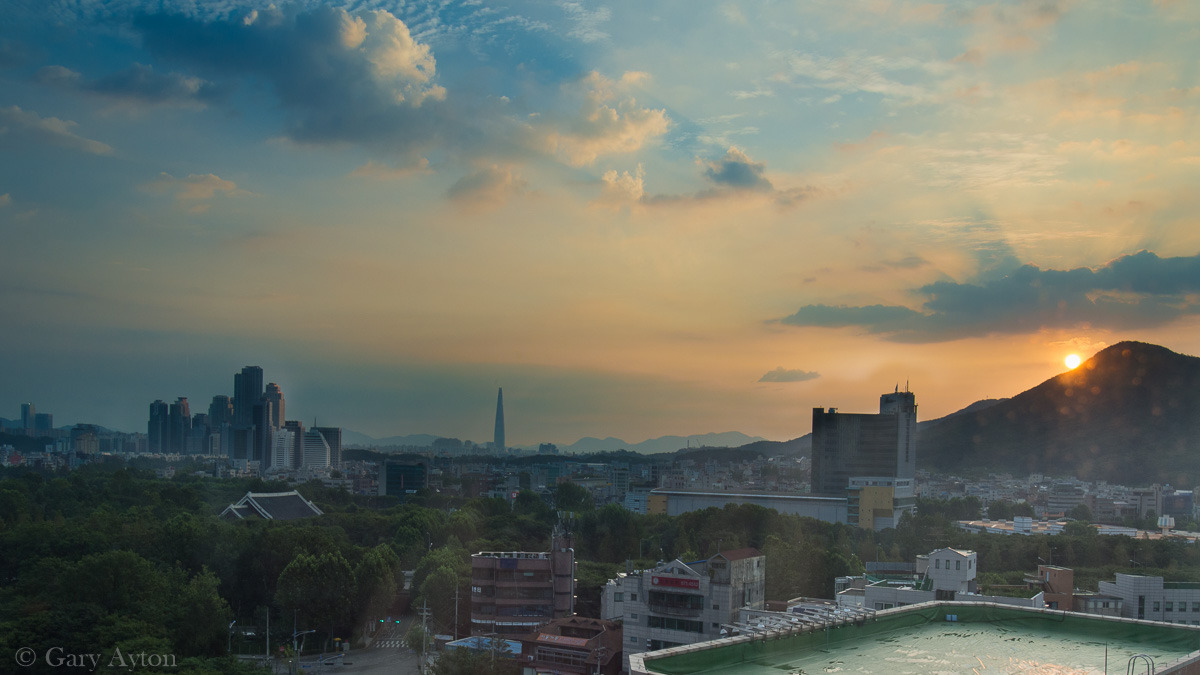
sunrise from my hotel room

My first sunrise in Seoul – from my hotel room using the Olympus mZD 7-14mm f/2.8 ultra-wide angle zoom lens

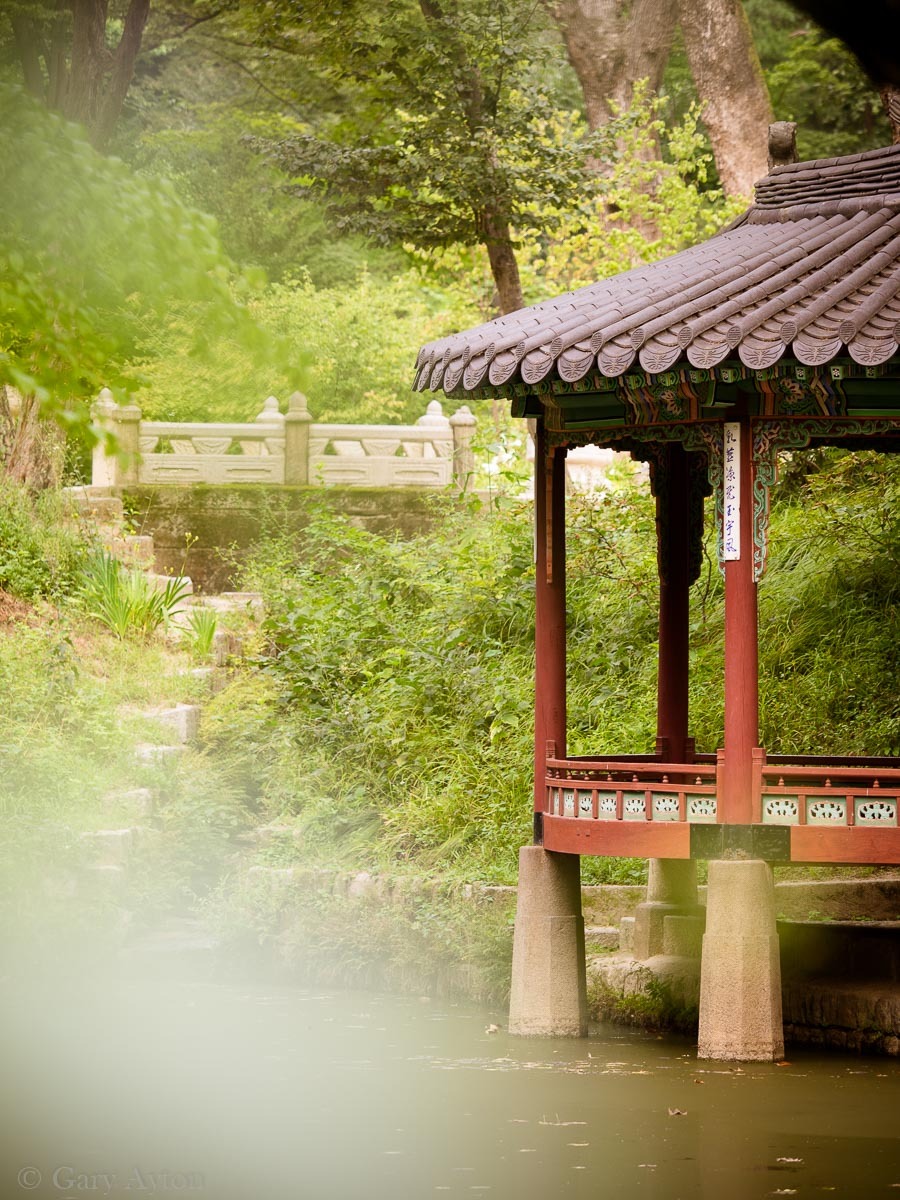
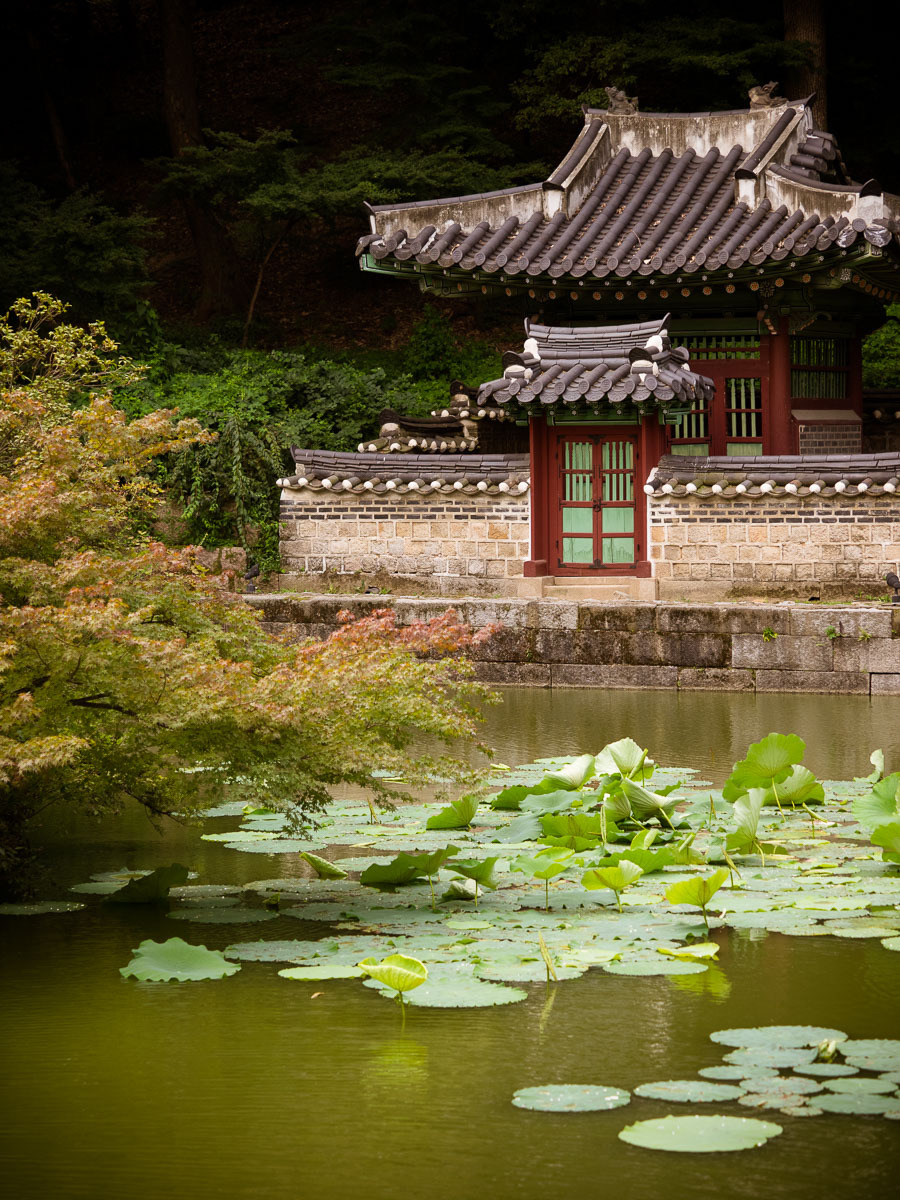
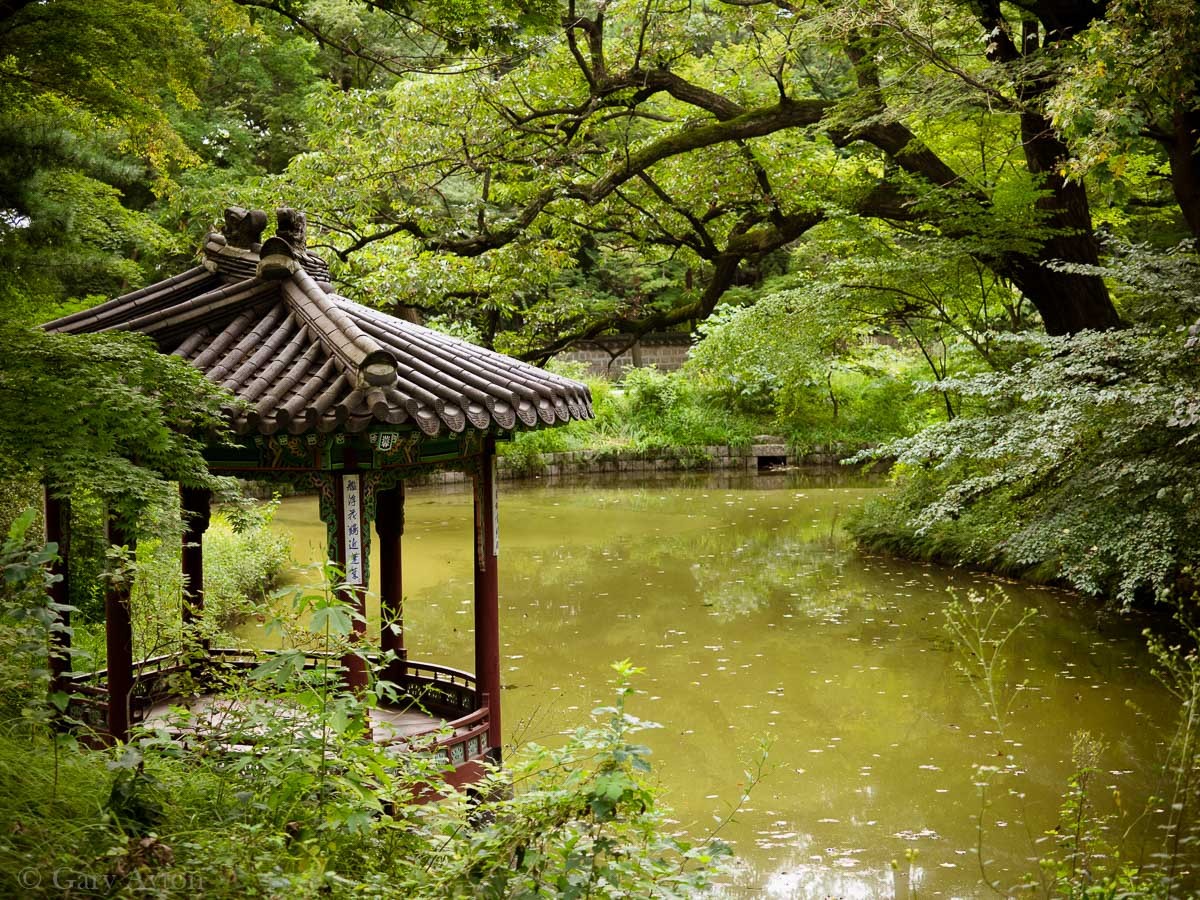
Our first morning in Seoul was a hot 34degC partly sunny, humid day with little wind as we headed off to a guided tour of The Secret Garden in Changdeokgung Palace – a lovely relaxing walk with plenty of shade and beautiful little vistas.

The local Koreans seem to love to hire traditional apparel and wander the palace grounds and taking selfies, and on some I was asked to assist and others I asked them for permission to take an even better shot with a proper camera and lens – my trusty Olympus OM-D E-M1 Micro Four Thirds camera mated with the Olympus mZD 40-150mm f/2.8 lens while I also carried a E-M5 with Olympus mZD 7-14mm f/2.8 ultra-wide angle zoom lens for the occasional wider perspectives.

It was a great introduction to Korean culture, although unfortunately much of these palace structures were severely damaged during the early 20th century Japanese occupation.

As I mentioned in my last post, the Korean people I met were lovely, quiet, generous, respectful and honest looking people with no evidence of pick pocketers, violence or aggression.


Out of a population of 50 million, there are apparently only some 130,000 muslim people, and these are nearly all foreigners.


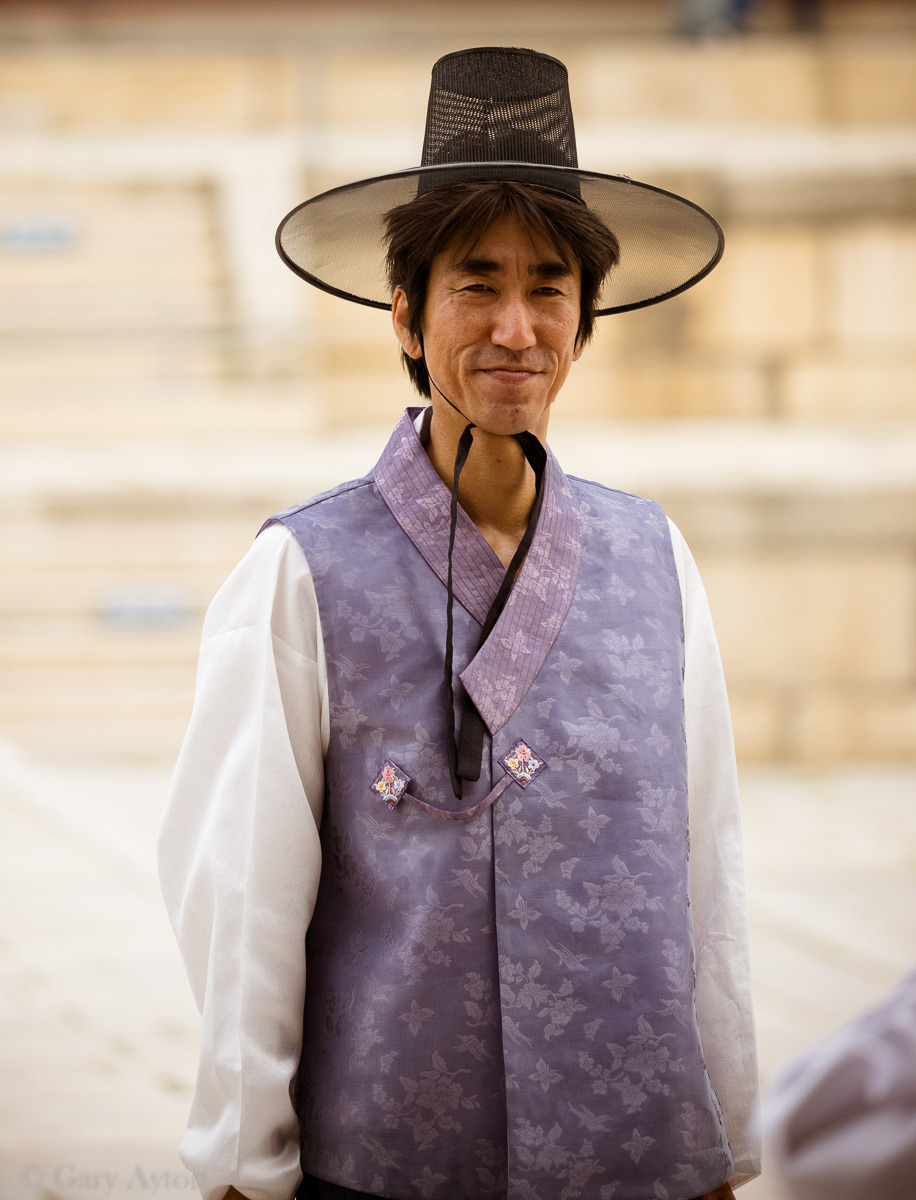
A modern Korean lady on the garden tour.

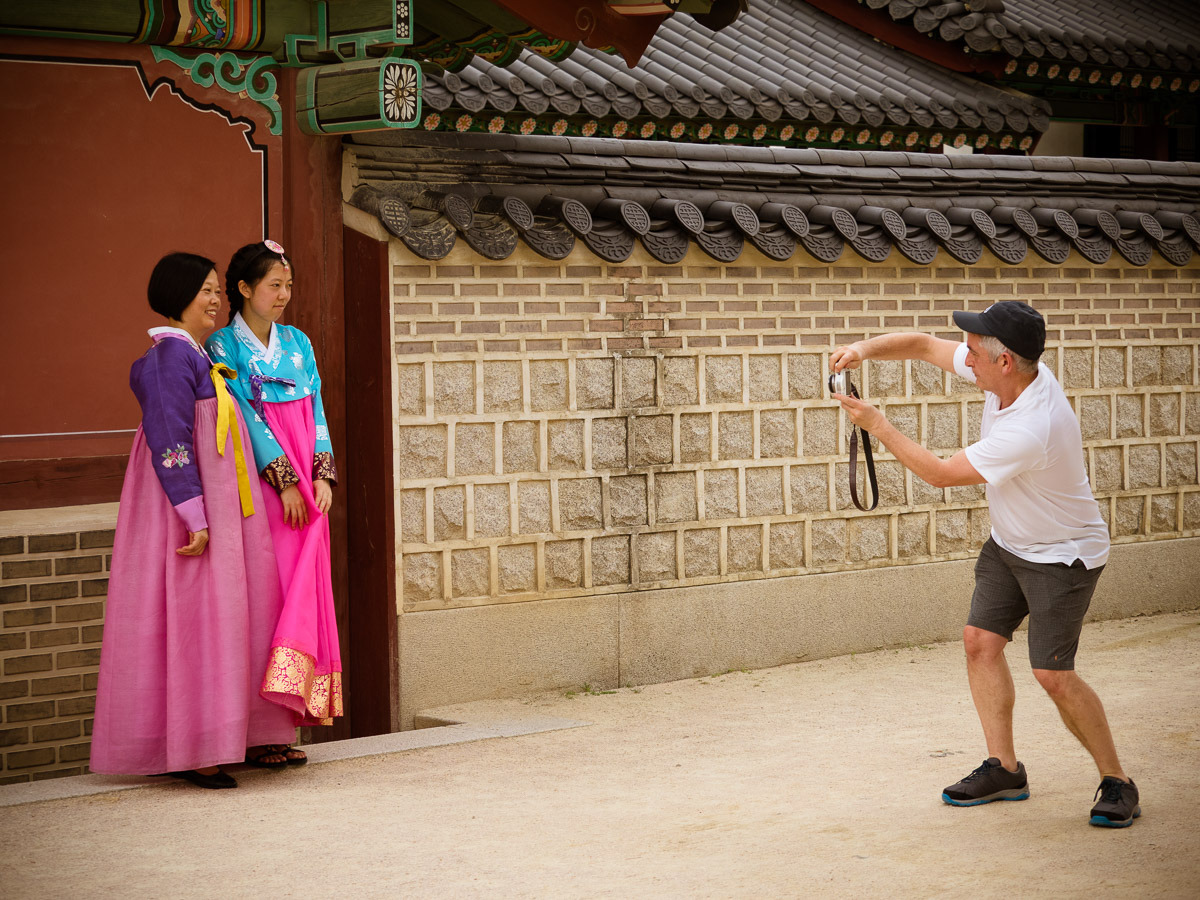
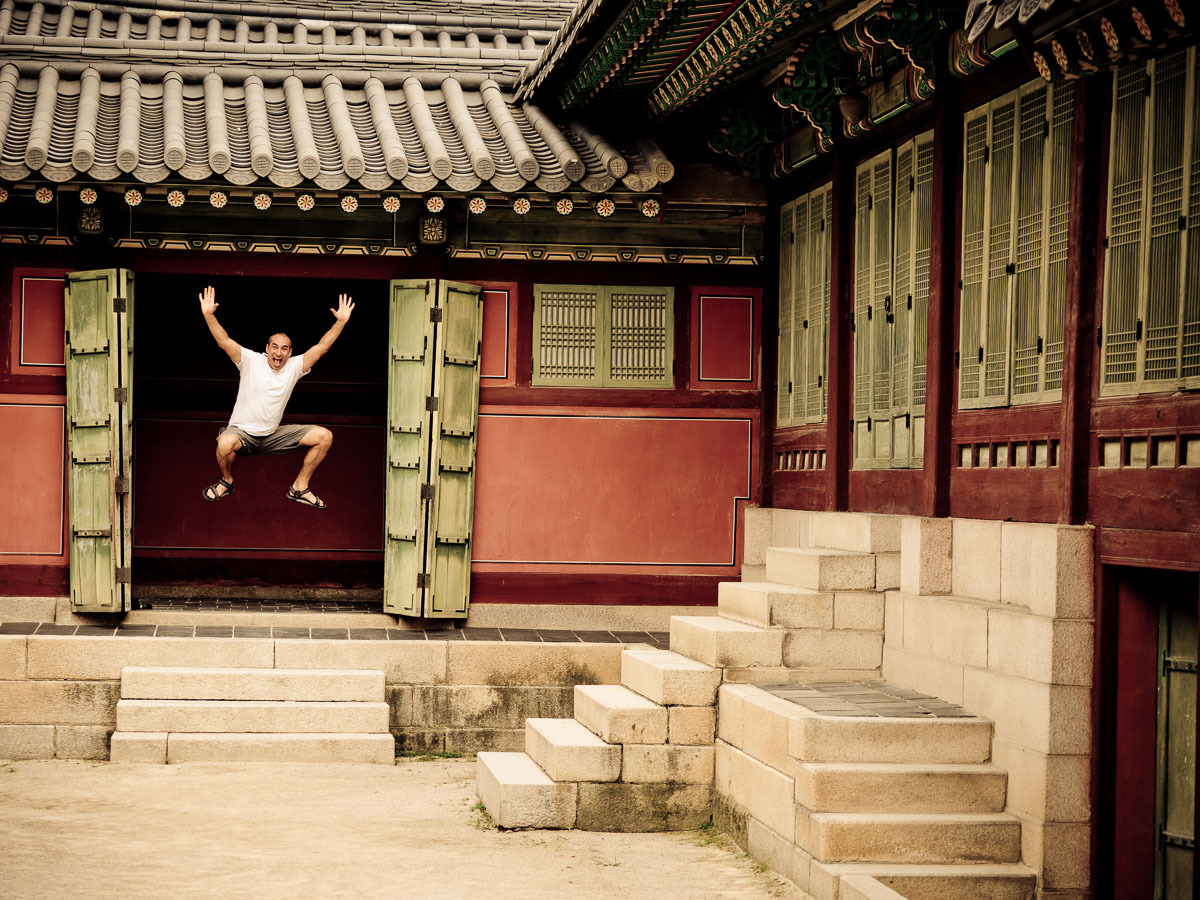
Yours truly helping out a couple of ladies with their “selfie” shots.

Of course there are hundreds of shots one can achieve of the gardens and palaces which I will not post here apart from these:

My crazy tour buddy!


One week in South Korea – part 1

Written by Gary on September 1st, 2016

Last week I had the fantastic opportunity of spending some time in South Korea (the Republic of Korea), most of which was in its bustling capital Seoul but also a weekend in the coastal resort town of Sokcho on the eastern coast and adjacent to the beautiful Seoraksan National Park.

This first post is to give some background of South Korea and introduce its culture.

Geography and how to get there.

South Korea is the mountainous southern part of the Korean Peninsula located between China and Japan and, obviously, south of North Korea, with which it is still technically at war and thus is separated from it by a Demilitarised Zone (DMZ).

Seoul has a population of 25 million (half of Korea’s population) being the world’s 6th leading city and 4th largest economy while over half the population live in high rise apartments and only 3% are non-Korean foreigners and half of these have Korean ethnicity! South Korea had the world’s lowest birth rates in 2009 but it has been increasing since

It’s time zone is only 1hr different to Australian Eastern Standard Time.

From my home town, Melbourne, Australia, there are no direct flights to Seoul as thus I needed a short flight to Sydney first before catching a direct 10hr 30m flight via Asiana Airlines.

One should allow around 90 minutes to get from Incheon Airport to Seoul CBD by bus or taxi, and there is also a train service.

Be warned taxi drivers can be lacking in safety awareness with Korea having high road trauma rates, one of our taxi drivers thankfully slowed to 140kph in 80kph zone.

In Seoul, there is a very advanced subway system, just download the app for your smartphone to navigate it, purchase a CityPass card at the vending machine (there are English instructions), load it up with some won – perhaps around 5000-10000 won at a time (~$US5-10 and this pass can be used on buses, or even to buy food in some shops).

Half of all tourists are Chinese.

Climate:

South Korea has a humid continental climate and a humid subtropical climate and the best time to visit for comfort is Sept-Nov (autumn) but no matter what time of year, an umbrella or rainwear is advisable.

Seoul has an average annual rainfall of 1,370mm, mostly in July and August which receive over 300mm each month.

There are four distinct seasons:

  • spring: late-March to early-May which may bring yellow dust pollution from strong winds from China and Mongolia
  • summer: mid-May to early-September which is hot, wet, humid and may be associated with East Asian monsoonal rains as well as a brief high rainfall period “jangma” which occurs in July
  • autumn: mid-September to early-November
  • winter: mid-November to mid-March which can be extremely cold with the minimum temperature dropping below −20 °C (−4 °F) in the inland region of the country

July and August are the hottest, most humid and wettest months, and we arrived in a mini heat wave with daytime temperatures of around 34degC with high humidity and night temperatures dropping to around 27degC. Later in the week the temperature cooled to 27degC max and 18degC minimums and the last two days on the east coast were dominated by heavy rains.

A brief history:

Koryo was one of the leading East Asian powers from around 1st century BC and ruled northern China, Inner Mongolia and parts of Russia for over a millenium of relative tranquillity.

Buddhism was introduced to Korea in the year 372.

In 1446, Sejong the Great, created a unique alphabet Hangul, which enabled anyone to easily learn to read and write.

These dynasties resulted in establishment of 12 World Heritage Sites.

In the 19th century, the Joseon Dynasty tried to protect itself against Western imperialism, but was eventually forced to open trade.

After the 1st Sino-Japanese War (1894-95), Korea was liberated from Chinese influence as a state of the Qing dynasty, and after the Donghak Peasant Revolution of 1894 to 1895 , a short-lived Korean Empire formed (1897-1910).

After Japan defeated Russia in the Russo-Japanese War (1904-05), Korea initially became a Japanese protectorate and then was annexed by imperial Japan in 1910.

Towards the end of World War II, Russia liberated Korea north of the 38th parallel, while USA liberated the areas to the south. After Japan surrendered to Western and Russian powers at the end of World War II in 1945, Korea was then divided into North and South Korea, and this, along with Cold War issues resulted in North Korea invading South Korea with China and Russia coming to aid the North, and USA-led UN forces backing the south in the Korean War (1950-1953) which saw Seoul change hands four times, until a truce was formed by signing an armistice, but the two states are technically still at war, and the threat from North Korea, always present and seemingly increasing.

 Culture, language and health:

It has the world’s eighth highest median household income, the highest in Asia, and its singles in particular earn more than all G7 nations, and half have no religious affiliation, most of the remainder are either Buddhist or Christian.

The world’s most innovative country in 2015 and has the world’s fastest Internet speed and highest smartphone ownership.

South Korea is the most industrialized member country of the OECD.

South Korea has a universal healthcare system and amongst the most technologically advanced healthcare in the world and has over triple the number of hospital beds per capita compared to USA, UK, Sweden, and Canada!

Compulsory military conscription for men continues and South Korea has very high defence spending – 15% of all govt spending.

Few Koreans speak English as it only became compulsory in schools this century and although young adults may be able to read some English, their verbal skills are quite limited. This is compounded by the very few English speaking tourists who arrive and the monoculture of 97% Koreans who live there. Despite this, the Korean language is quite phonetic and signs are often  in English.

Korean food is still largely devoid of Western influences (although there are some Western take away food places such as MacDonalds, Dominos Pizza and many coffee cafes), you will probably not find fish and chip shops, dim sims, potato cakes, french fries, chocolate bars, ice cream and in addition, wine is rare but beer, soju and whisky/rum are plentiful – in fact, the Koreans are generally heavy drinkers after their long hours at work.

The Korean population generally come across as quiet, cool, calm, collected, well dressed, high-tech savvy, generous, respectful and kind people with very little obesity issues although smoking and high alcohol intake is still problematic.

Seoul feels to me to be the safest of cities I have been to – I felt ashamed that I may cause offense in securing my valuables in the hotel room but I still did so. There is no evidence of pick pockets in the areas I visited and free WiFi is everywhere and given the apparent trustworthiness of the Koreans and lack of Western tourists, I felt I could get away with not using a VPN.

The widespread free WiFi – in hotels, on train platforms, bus stations, airports, etc, meant that one does not really need to have a Korean sim card or use international roaming – just switch phone to airplane mode and turn WiFi on and communicate using a messaging app such as WhatsApp.

Koreans respectfully bow to each other to thank or give leave and there is a strict aged-based hierarchical respect system stemming from Confucian and Buddhist teachings and Koreans are taught from a young age that they need to know who is their senior and who is their junior and that they must obey and respect their seniors, who in return, provides support and pay for meals, etc.

Young men in the city generally wear a shirt, tie, trousers with black belt and stylish shoes reminiscent of the well dressed Italian.

Young women generally wear smart summer dresses, shorts or short skirts whilst the upper part of the body for both sexes remains covered – no cleavages or open shirts (even for men as the upper torso is regarded as a sexual zone – legs are not).

The Koreans appear to have a body image issue as plastic surgery rates are amongst the highest in the world with some 25% of young adults having had surgery – and the surgical skills appear to be very high tech and transformative – see here for some mind blowing examples!

As most Korean young people live with their parents in high rise apartments, many go to resort towns for the weekends for romantic getaways in “Love Hotels” such as in Sokcho.

Koreans appear to like booking small rooms for karaoke fun for 2-4 people. K-pop is an extremely popular Asian music and culture phenomenon.

Communal thermal spas are generally true Oriental style with clothing and underwear banned, and a requirement for a good, long, whole of body soapy scrub and shower before entering the bathing area au naturale (although women and men have separate areas).
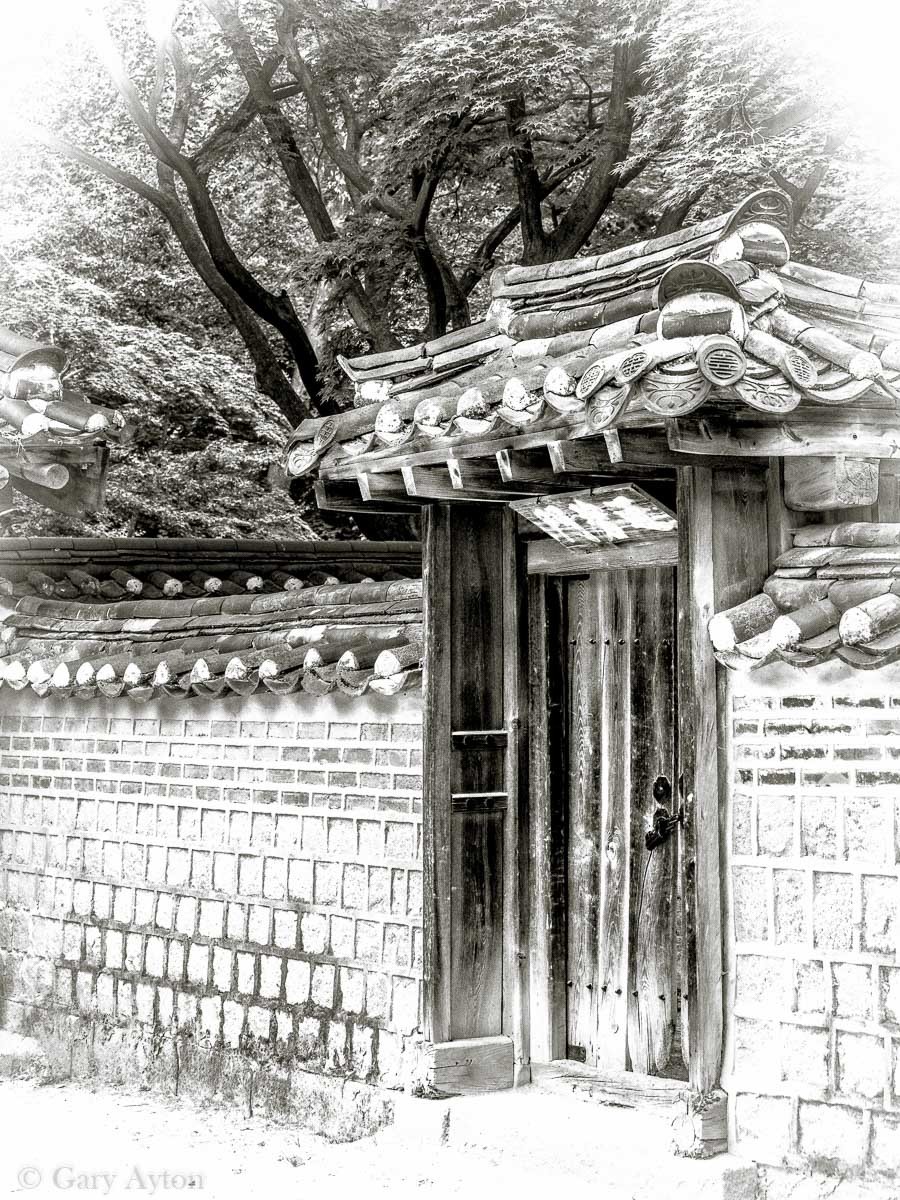
Korean temple

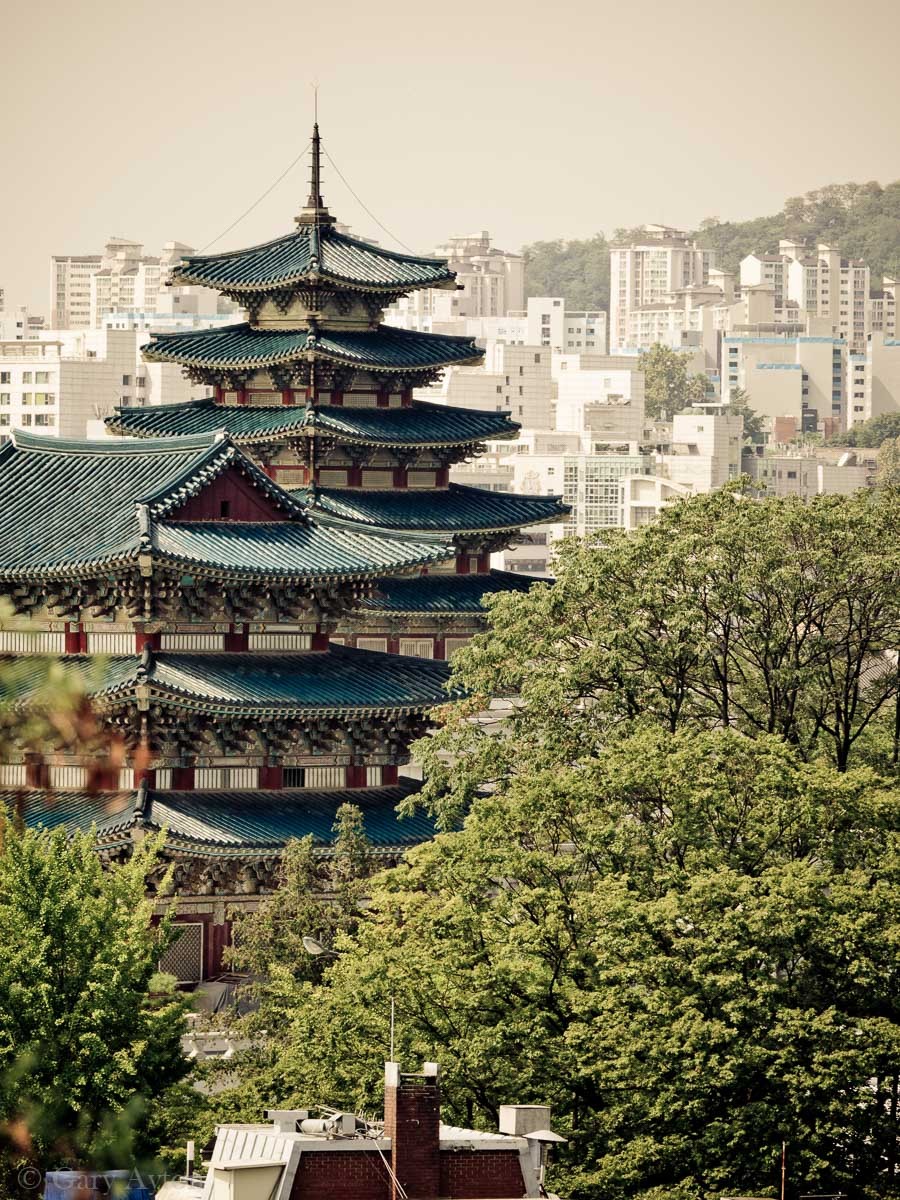
Korean temple in Asian ink sketch style – Olympus OM-D.

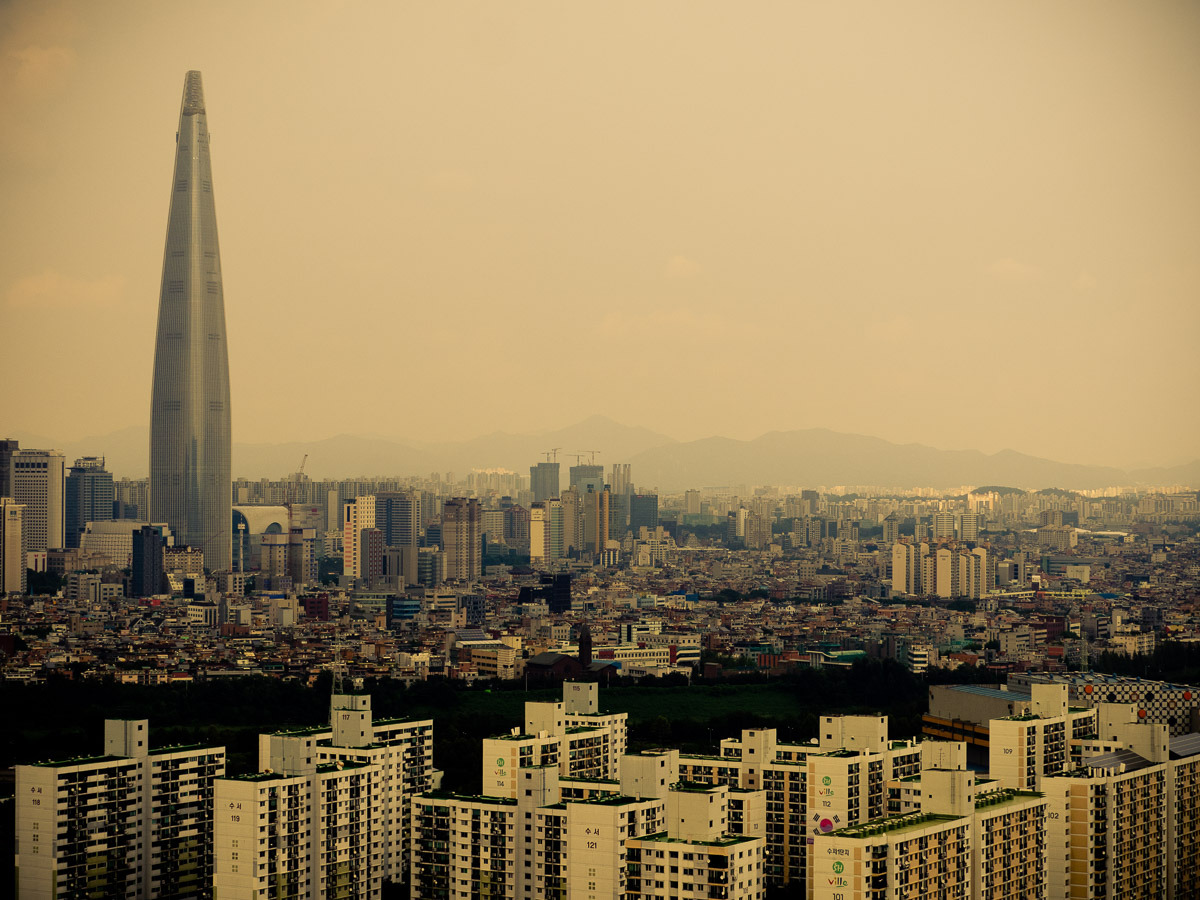
old and the new

Old and the new – Seoul – Olympus OM-D


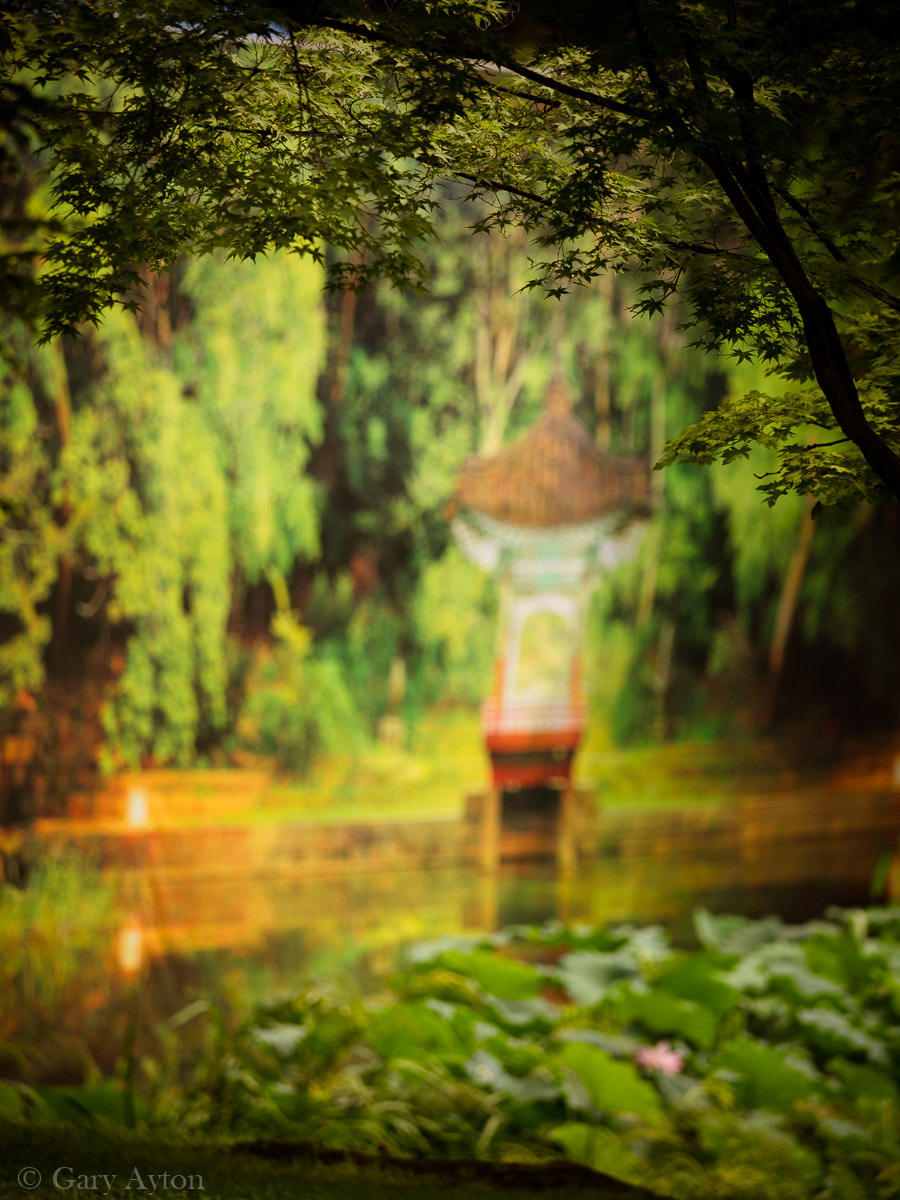
Olympus mZD 300mm f/4 bokeh

Written by Gary on July 22nd, 2016

The brilliantly designed Olympus mZD 300mm f/4 IS PRO lens for Micro Four Thirds is an amazing lens in terms of compact 600mm super telephoto capabilities with near diffraction-limited optical superb resolution and almost zero aberrations.

A 600mm super telephoto lens though usually has very limited utility – usually to shooting wildlife or sports at a distance.

Not so this lens, it is light enough and compact enough to walk around with and with its close focus of only 1.4m, it doubles up as a close up almost macro lens to allow taking shots of small things from a distance without scaring them.

It could even be used for people photography where a busy background can be compressed as well as rendered out of focus with a nice bokeh.

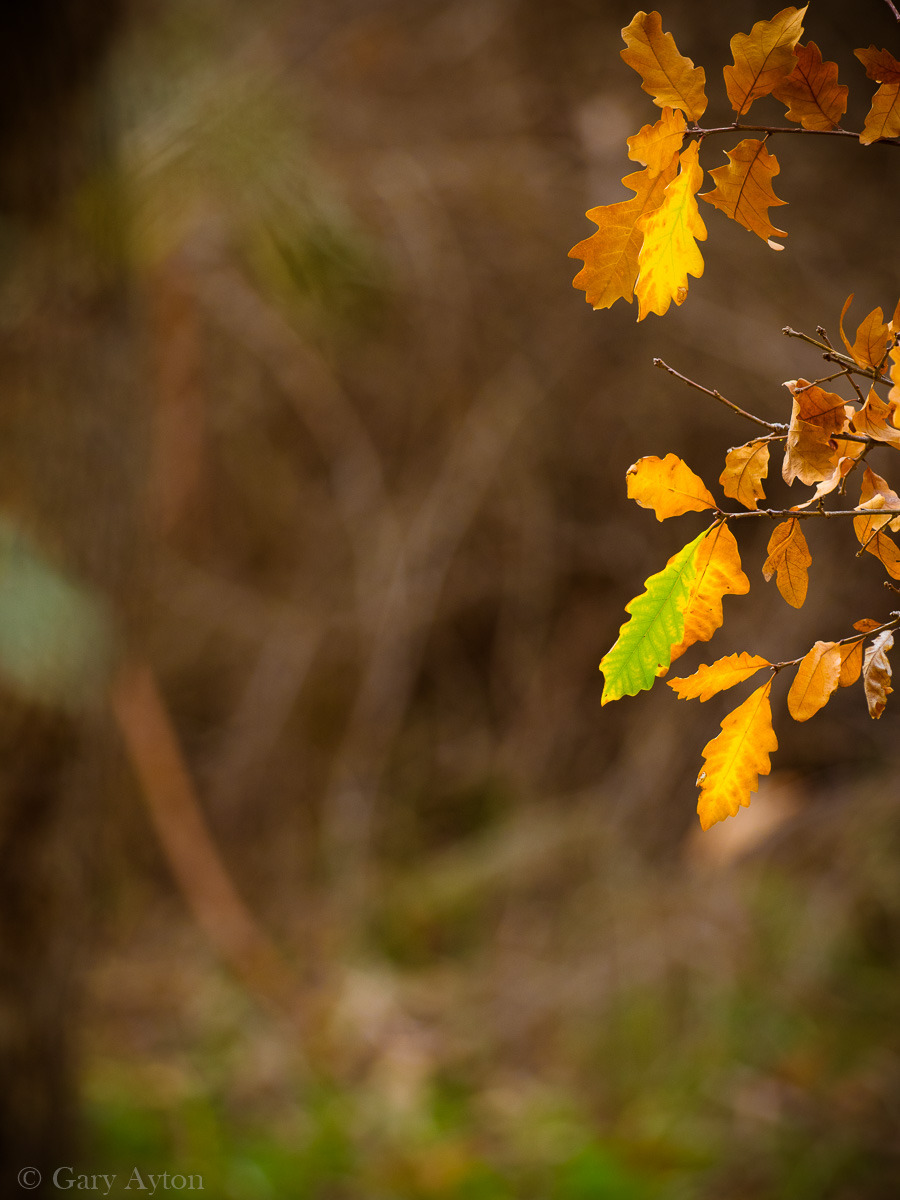
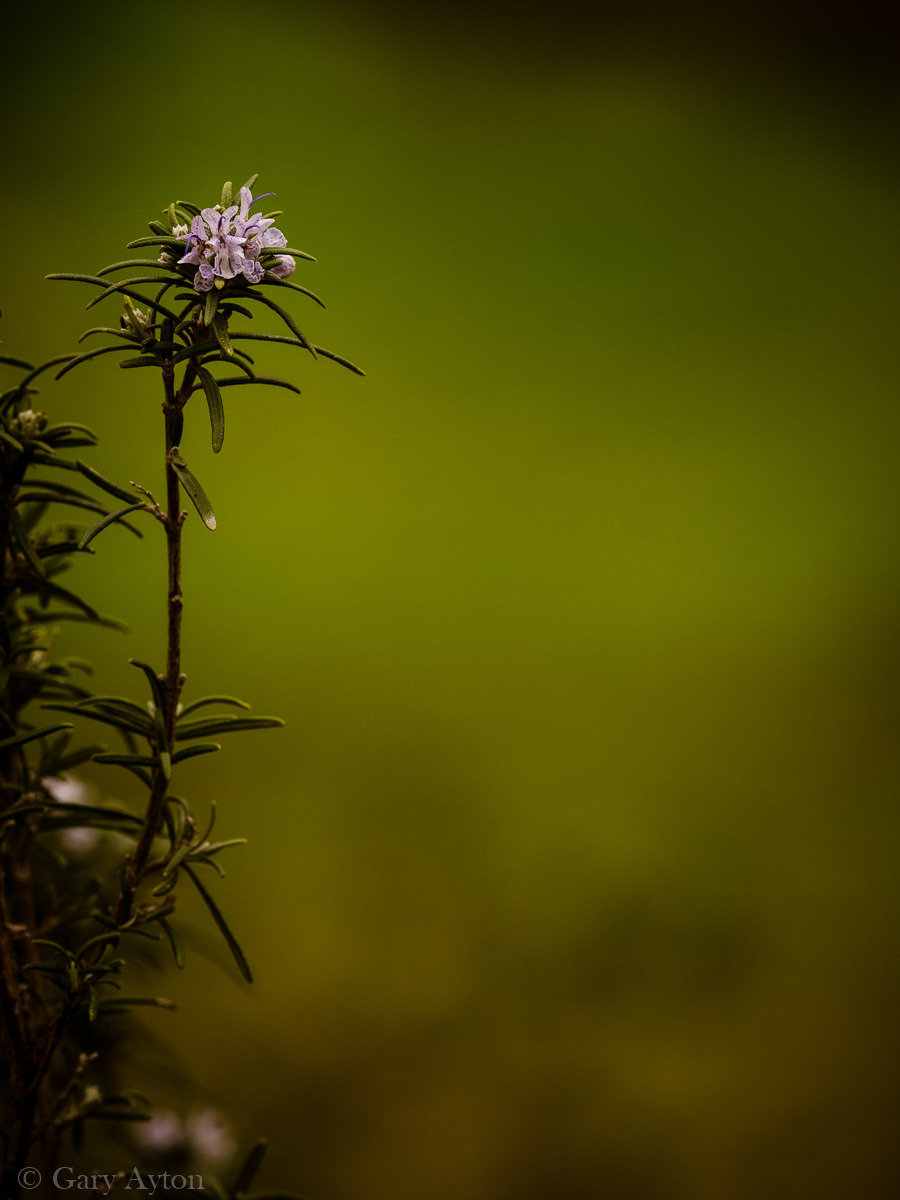
So here are a couple of examples of the bokeh with this lens:

oak leaves in winter

residual oak leaves in mid-winter.

bokeh flowers

Not sure what this plant is – a winter flowering plant I found on my walk yesterday through the Victorian goldfields, dodging incredibly deep and steep mine shafts littered all around – without any hazard protections – so one had to tread carefully indeed!

As you can tell – I love these Olympus lenses because they are sharp edge-to-edge and this has freed me from having to have my subject in the centre as with most dSLR lenses – the above were shot hand held in very overcast conditions.

Interestingly, 43rumors.com has posted that Olympus has applied for patents for a couple more fascinating super-telephoto lenses around the same size as this 300mm f/4 lens:

  • 200-300mm f/2.8-4 lens 228cm long
  • 300-500mm f/2.8-4 lens 338cm long

It will be very interesting indeed to see if these lenses eventuate as they also had applied for a patent for a 500mm f/4 lens measuring 338cm long.

See my list of Micro Four Thirds lenses.


Photographer laid low with MAN FLU

Written by Gary on July 14th, 2016

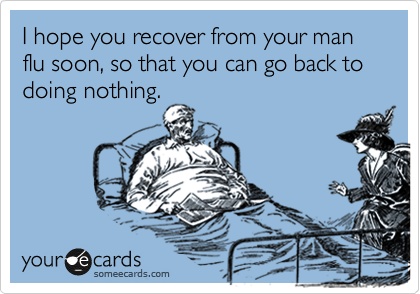
Ahh… I can hear the bugler boy playing “The togs last post” as the photographer lies helpless, banished to the man flu couch for 2 nights in a row with soaring fevers from a potentially nasty many flu for which there are apparently no treatments but “supportive care”.

care

But “supportive care” is no where to be had.

The family try to offer helpful advice such as “stop groaning it isn’t that bad” – but none of them have a Y chromosome so they wouldn’t really know how much suffering it causes.

man flu bed

Chapter 1: man flu delirium

Last night I even became delirious with the fever – I knew it must be a delirium for two reasons:

  • I decided to watch Quentin Tarantino’s movie The Hateful Eight and it seemed to go on forever without anyone dying but here was a bunch of strangers helping each other out,
  • and then, the impossible, in one scene, it was as if the camera man had forgotten to put the centre spot ND filter back on the lens which is essential for such panoramic medium format imagery, and I am sure Quentin would have made him re-shoot the scene, so half way, without perceiving the usual Tarantino violence, I decided I was indeed unwell and needed more rest before destroying my perception of the rest of the movie.

To prove how high my fever was I raided the family medicine chest where I found a thermometer marked “For PR use only” – don’t know where my wife gets these promotional use thermometers but she may as well throw it away and buy one of those new forehead ones – it’s impossible to keep your mouth shut for 5 minutes when you have a blocked nose!

Chapter 2: Why do guys with man flu become delirious so easily?

Well I am not altogether sure, but I suspect it has to do with the relative lack of neural connections in the brain and that large proportion of the brain devoted to the empty box.

Yes, my wife discovered the existence of this neural empty box when we had the hole dug in out ground for my tiny pool, I would spend hours just staring into the hole while she ran around frustrated and doing all the chores to which I was totally oblivious.

doing nothing

Apparently women do not have such a capacity to do nothing and think nothing for hours on end let alone for seconds. Guess this is why Mindlessness is all the rage – trying to get women to develop this box.

Men do rely on a few neural connections from this box to the reality box so they can keep checking and deciding if what they are experiencing is real or not – and a malicious virus like man flu can disrupt this and we are left with delirium.

Well that’s my simplistic explanation anyway.

Chapter 3: Man flu suffering is real

The women of the household just don’t understand how much suffering it can cause, my wife even suggested it is no where near like having a baby – but she only had two panadol tablets when she was in labour and I have had to have so much more  and have had to add in nurofen, so my suffering must be more, plus us guys don’t get the benefit of those endogenous opiates of pregnancy to ease the suffering.

And I don’t think they comprehend how hard it is to breathe through blocked nostrils while trying to sleep. Breathing is not too bad lying on one side as the upper nostril becomes unblocked while the lower one becomes block, the issue is the transition period when you roll over – both become blocked simultaneously and I awake with the same feeling of impending doom as I get when I get water up my nose in the swimming pool and I can’t reach the edge – it is for this reason my pool is small so I am never more than 1.5m from an edge in case I start drowning – this meant I could make the pool 6″ longer so I wouldn’t hit my head at the end while doing laps.

I even thought of going to the local hospital to get “supportive care” – but they seem to always ask the question that photographer’s dread – “Have you been traveling recently” – as if a photographer has not been traveling – but to answer this truthfully, you will end up in isolation with swabs taken from every orifice just in case you have a less deadly disease than man flu such as swine flu or MERS or whatever it is called – no thanks! That’s not for me!

I guess you can’t blame the staff after one patient who had MERS and only a 50% fatality rate managed to infect 82 people after going to the ED in South Korea last year.

So I write this potentially last post in a rare lucent interval between deliriums.

Chapter 4: is this really the end?

And if it is my last post, please let my loved ones know that my camera gear is actually quite valuable despite how much they resent it, so it might be in their interest to sell it for market price instead of taking it to the trash and treasure markets, or worse, consigned to the rubbish tip.

Oops, here comes another sneezing bout – if you remember, it was exactly 12 months ago that I last had man flu, and although I was lucky to survive that one, I didn’t come away unscathed – a nasty sneezing bout whilst sitting resulted in an incapacitating lumbar disc prolapse which almost stopped me going to the Red Centre of Australia.

Yes friends, never take things for granted, and make the most of the time you have.

nice knowing you

Apologies for the graphic details, but I felt it was important to elaborate to convey how much suffering us men folk go through and hopefully fight the lack of empathy for this condition which is clearly shown here:

flu tablets

While all this is tongue in cheek, there is research suggesting men are more vulnerable to chest infections as oestrogen is apparently protective – see here


Fanatic photographers are a different species to the rest of humanity

Written by Gary on July 3rd, 2016

I have seen lots of internet blog posts giving what to expect if you date a photographer, etc, and they are partly true, but usually have too many over the top attention seeking parts which are not really that true.

I have met many photographers over the years, and have had the privilege of shooting with them, and I think I have a lot of insights into what makes them tick, and how they behave.

So here is my take on how a photographer becomes hard wired in their brain which then controls how they relate to people, how they interact with the world, what inspires them, and why you should try to understand them – because they do not behave like the rest of humanity and you should take some care not to make false assumptions about their behaviour and their intentions.

1. They are creatives looking for inspiration

Just because they might occasionally stare at you or other people, this is NOT a signal they want to date you or date someone else!

They are almost certainly looking at the photogenic features of the person, cheek bone structures, eye socket depth and shadows, nose shape, jawline, their expressions, how light is falling on their face, does a short-lit or broad-lit light work best for them, how about Rembrandt or Hollywood styles of lighting, or perhaps loop or side or even rear lighting might work best.

If they are sitting or standing, they may well be also looking at their pose to gain inspiration as to what looks great so they can use these ideas another time.

They tend to treat most people the same, and generally do not care much for what others think of them or their photography as they have learnt one of the truths in life – what others think of you is none of your business – unless you are trying to run a business.

2. They generally don’t participate in living life as others do

Photography is about observing, looking for inspirations, finding interesting vignettes and graphical elements and textures where others see nothing.

They are often characterised as nerds but they are actually participating in mindfulness 24×7 – except when they are on the computer.
They take time to seek beauty in even the simple things that the rest take for granted, and beauty is not so narrowly defined as society’s version but appreciative of flaws, individuality and uniqueness. They look for the good and bad even in places where there seems to be none.

They take time to try to understand themselves better, why are they drawn to certain aesthetics or imagery, what emotions do they feel and why? They understand that the meaning of life is just to be alive, nothing more, nothing less, and that there is no need to rush around trying to achieve the impossible and that it is pointless looking for perfection, as one will never be content in doing so.

They understand you don’t need a reason to do everything in life, you can just do it because it gives you enjoyment, inner peace and satisfaction with just being you.

They are keen observers of people and nature and understand that life isn’t what is given, but it’s what you create, what you overcome and what you achieve, and what you can remember that give it meaning.

They understand there are only a finite number of autumn colours one will live through, so make the most of each season as it comes. They understand they need to take opportunities as they come and to make opportunities where none seemed to exist.

They understand the simple truths, that if you do not ask, the answer will always be no, and that, to get a time critical shot, you may have to ask afterwards and seek forgiveness if it has caused issues.

Whilst they seek out unusual places to go, love travel, often love getting out in nature or the grotty urban areas where most avoid, they generally do not have the time nor the inclination to actually participate in life – sports, weird adrenaline-rush activities such as bungie jumping, or even sex is no longer a priority, for they are generally loners more akin to a buddhist monk’s ascetism than normal humanity.

When they are out and about they take time to soak up the ambience, take in the smells and sights, continually looking around for the little things that people miss, how light is falling on objects, how would the scene look through different eyes by using different lenses and pre-visualising the scene in black and white with contrasts or even in infra-red instead of just being restricted to natural visual characteristics.

Most people love social connections and being in crowds of people, many photographers find solace and inspiration in being alone, perhaps with a muse to inspire.

They understand that they must never stop dreaming, for dreams provide nourishment to the soul and inspiration for their creativity and motivation to keep on living when otherwise this may be lost.

And perhaps what motivates them is as Albert Camus wrote, “A person’s life purpose is nothing more than to rediscover, through the detours of art or love or passionate work, those one or two images in the presence of which his heart first opened.”

And just like the monks, they come to know that just being away from everything, in a remote place, they become one with nature and connected with everything.

They understand that what they see is their choice – do they wish to see the dark side or the light side?

They understand that art is not what you see it is what you can allow others to see, and that an artist  sees what others only catch a glimpse of.

As they mature, they then come to understand that no one is truly free until they have no need to impress anybody.

Unfortunately, this means they are generally overweight and they need to be continually coerced into exercise.

3. They are obsessive compulsive hoarders addicted to everything photographic

Whether it be physical objects such as photographic accessories, cameras, lenses, lighting equipment, props, etc, or it be virtual objects such as inspirational imagery downloaded on the computer and neatly categorised.

No matter how much they are nagged to store their cameras and gear, it is not long before they are laid out all over the place so they can better access them.

4. They push boundaries to get that something different

This means they often will flaunt the law and enter into dilapidated buildings looking for unique imagery, and some will cross fences stating Private Property, although the wiser ones will seek permission first to avoid being shot.

Why enter without permission? Time and effort in getting permission is one factor, but another factor is that seeking permission places public liability issues on the property owner which he may well not want to be exposed to and thus inclined to decline permission – going onto the property without permission can thus be seen as a win-win scenario – avoiding the legal responsibilities for the owner, and risks being placed on the photographer who then manages these risks. However, this may expose the photographer to risks he is not aware such as asbestos, deep shafts, etc.

Photographers view the human body as artists have done so for millennia, the nude human form is not regarded as sexual, evil or criminal but as a graphic design subject from which aesthetics can be created from their natural curves and textures which interplay with the environment and light and, just as importantly, the shadows. Hence many will have their nude models posed anywhere that they can get away with and will allow a creative outcome, be it at the top of a cliff, in dilapidated buildings, on rural properties, in the city – the more unusual, the better for the photographer and model.

5. Travel and events are ALL about the photographic opportunities.

Travel destinations and timing of travel will generally be primarily determined according to photographic opportunities and not romantic or other ideals of travel.

Airline cabin baggage will be primarily camera gear and not books to read on the way.

6. They generally hate sunny days and love to get out in the weather.
Unlike the rest of the world, if they wake up to a sunny day, they groan and go back to bed.
Sunny days make for boring photos in general.

Photographers love the moodiness and ambience of cloudy days and inclement weather – some even go to extremes to chase storms.

7. When night falls, it is not time for a romantic interlude in front of the fire

No, it is time to get out and take more photos, or if this is not possible then it is time to post-process photos, and if there are none to post-process, then there is always time to search the web for inspiration.

They may not find as much time as you would like for romance, but the upside is, they will not judge you harshly for your supposed beauty flaws, and will love you for how you are, as they have had the privilege of seeing behind the curtains, and discovered that unlike the deceptions of society’s portrayal of women in the media, very few women indeed have flawless beauty without the help of the photographer and Photoshop. Just accept that they may be too honest if you ask them about your flaws.

8. They are very pragmatic in how they spend their money.

If there is spare cash it will not be spent on silly, sentimental objects which will only clutter the house.

They will not waste it on fancy, expensive cars or houses – they do not need these for status as they are generally loners who do not care about such things.

No, they will spend it on yet another lens or backpack, or perhaps even a tent if they a really serious about getting back into nature for their imagery.

And if they have deluded themselves or have finally come to the realisation that they are happy for the time being with what gear they have, they will spend the spare cash on another travel adventure.

So don’t expect roses, unless they can be also used as a prop on a shoot that week.

9. They will generally not talk to anyone that compliments their images by saying they must have a great camera

This is a major insult to their photographic skills akin to telling a great cook they must have a great oven, or a concert pianist they must have a great piano.

But don’t worry, you won’t have the camera thrown at you, as the photographer is so used to hearing this that they wouldn’t dare risk their precious camera on something that should not exist – someone who does not understand the creative process.

They will also avoid newbies who ask them what camera to buy so they can take great pics too.

The exception to this may be other photographers who are envious of their gear, but that is another story, and one that the more mature Buddhist photographer monk will disregard as being a sign of a wannabe who is far too engrossed in gear acquisition rather than image creation, or perhaps is just trying to gain leverage into the photographer’s knowledge base and photographic secrets.

10. They will only photograph what they want to photograph.

Your cousin is needing a photographer at her wedding to help her out – forget it, it is NOT going to happen unless the photographer is actually a wedding photographer and will actually be remunerated.

Everyone else knows how stressful such an assignment is – all risk and almost no gain, and hours wasted photoshopping on imagery they don’t really care about.

 Finally…

The above does not apply to all photographers and may not even apply to me!! But if you want steretypical internet meme material then there is a lot here to feed you.

Many are extremely social creatives who may not even understand much of the technical and theoretical aspects of photography, let alone their gear.

Many just use photography as a medium to connect with others, or just to ensure their precious memories are able to be retrieved later.