Occultation of Jupiter by the moon – using the Olympus E-M5 and iPhone TriggerTrap app

Written by Gary on February 19th, 2013

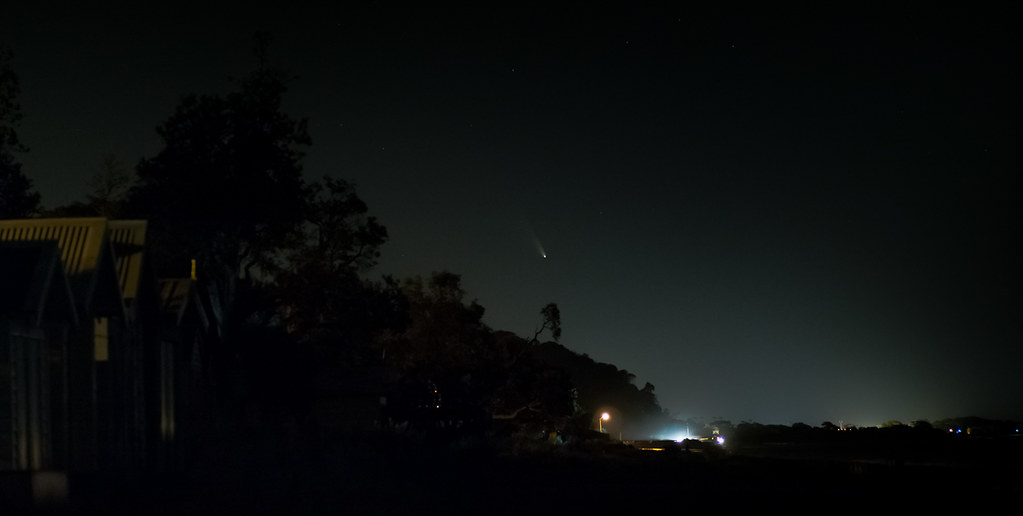
Last night Jupiter was occulted by the moon as outlined in a previous blog post here and this makes for a nice photographic challenge for astrophotography enthusiasts.
It was only visible from southern areas of Australia, the best sites were in Western Australia where the event would take place at a higher altitude and thus allow better seeing conditions.
Unfortunately for much of South Australia and Victoria cloud due to an upper level trough and incoming cold front combined in some areas with bushfire smoke, made site selection critical to any chance of capturing this event.

The weather forecasts and SkippySky suggested that central Victoria should be reasonable and thus we decided to stay overnight in the historic gold mining town of Maldon and set up near the top of nearby Mt Tarrengower.

Unfortunately the clouds were closing in fast from the south west so we decided to head north-east to a site near Goornong, not far NE of Bendigo.

Even here the clouds and bushfire smoke adversely impacted our viewing and the seeing conditions, particularly for reappearance were poor making it difficult to capture the bands on Jupiter or to gain sharp images of the lunar craters at high magnification.

This is where a mirrorless camera such as a Micro Four Thirds Olympus OM-D E-M5 with its 9fps burst rate and ability to fire this remotely using the iPhone app called TriggerTrap for which you need to buy the dongle to attach the iPhone to the camera.

A mirrorless camera is critical as a dSLR becomes a nuisance managing the mirror lock up and live view.

The pixel density of the E-M5 combined with its good dynamic range and high ISO capabilities makes it an even better sensor than a Nikon D800 for imaging Jupiter as Jupiter will have ~50% more pixels in size on the final image when using the same telescope systems.

For the highly magnified images, I used a 10″ Newtonian reflector telescope with 25mm eyepice and the afocal method by attaching the E-M5 camera with the Olympus 75mm f/1.8 lens to the telescope eyepiece.

I set the E-M5 to:

  • highest quality jpeg only (to maximise burst shooting with minimal owntime as the buffer writes to card)
  • manual focus
  • High speed burst
  • Live Boost OFF (otherwise the display becomes over-exposed for such bright subjects as Jupiter)
  • manual exposure – ISO 800-1600, 1/80th sec (slower when the clouds came over and the moon was setting lower)

The critical aspect is accurate focus and the Live magnified manual focus function greatly assists this.

Then it was a matter of waiting for the breeze to settle momentarily and fire of bursts of shots hoping that one will be sharp given the microsecond atmospheric changes in seeing conditions – the trick is to take as many shots as you can – as in poor seeing conditions such as we were experiencing perhaps only 5% will be reasonably sharp and detailed.

Initial occultation phase being hidden by the dark limb of the moon taken at ISO 800, 1/80th sec:


1st phase partial occultation


Reappearance of Jupiter with significant deterioration in viewing conditions taken at ISO 3200, 1/15th sec :


reappearance

Finally, a romantic bushfire smoke colored moonset with Jupiter below the moon – taken with the E-M5 using a Canon EF 135mm f/2.0L lens at ISO 3200, 1/10th sec, f/2.0:


moonset


It was a beautiful night out with balmy 30degC warm breezes and an absolute pleasure using the E-M5 with the TriggerTrap app – make sure you leave the apps “Focus” to ON even though you have set camera to MF as otherwise it does not seem to trigger. I used the Bulb mode on the app – just hold button down for a series of bursts then release.

More on astrophotography here, and more on lunar occultations here.


Comet Lemmon (C2012/F6), 47 Tucanae globular cluster and Small Magellanic Cloud imaged with the Olympus E-M5 camera

Written by Gary on February 17th, 2013

It has been an exciting week in the astronomy world with the near miss asteroid this morning following on from the amazing fireball meteorite over Russia which created shockwaves sufficient to break window glass an injure hundres of people.

In my last blog post I explained in detail the forthcoming occultation of Jupiter in southern Australia (mainly Perth and NE Victoria due to the expected cloud conditions elsewhere).

And tonight, I had the pleasure of photographing one of the 2 reasonably bright comets that are in the sky at present – the one I imaged was comet Lemmon which is passing the beautiful globular cluster 47 Tucanae and our neighbouring galaxy, the Small Magellanic Cloud.

This image was taken on 16th Feb 2013 with the Olympus E-M5 Micro Four Thirds camera mounted on a equatorial mount unguided for 60secs using a Canon EF 135mm f/2.0L lens at f/2.0 and ISO 3200. The long dimension of the image represents ~7 degrees field of view.

No cropping, just minimal tonal adjustments and some purple defringing:


Lemmon

I initially imaged it with the awesome Olympus 75mm f/1.8 lens at f/1.8 which gave excellent images apart from a touch of aberrations on the far edge. However, the field of view was twice as large as I needed for this shot, so I had to resort to the Canon 135mm lens to get the field of view exactly right.


Photographing the Feb 2013 lunar occultation of Jupiter from southern Australia

Written by Gary on February 3rd, 2013

Those of us who live in the southern parts of Australia may be fortunate enough to photograph this lovely celestial event which will take place about midnight on Monday 18th February 2013 in Victoria, but just after sunset in Perth.

The highest quality images of Jupiter will not be possible in Eastern states due to the event taking place very close to the north-west horizon and thus high resolution imaging will not be anywhere near as detailed as if Jupiter were high in the sky where there is less atmospheric disturbances.

Nevertheless it should be a fun and rewarding event for those who have the equipment and are prepared to do some planning.

As a minimum one would need a super telephoto lens with effective focal length of at least 600mm in 35mm full frame terms – the more the better, plus a sturdy tripod.

Those wishing to taking highly magnified images will need to attach their camera or video cam to a good telescope on a sturdy motor driven equatorial telescope, although with some hard work, a Dobsonian mounted telescope will be possible given the short exposure.

Traditionally, the best images of Jupiter are taken using a video camera attached to a telescope shooting frames at 10-60fps for up to 1 – 2 minutes (longer than 2 minutes causes blurring due to the rotation of Jupiter interfering with images), and then these images are stacked using special sofware such as Registax, then sharpened using wavelet or deconvolution technologies, then contrast is adjusted to get the final image.

The occultation of Jupiter will limit this approach as there is also the confounding movement of our moon.

Interpreting the astronomic data:

  • the moon phase will be 56% which is a touch after 1st quarter being at an angle of 97deg to the sun in relation to earth
  • the northern limits of visibility of the occultation (where it will be a grazing occultation) is an almost linear line running from near Canarvon in Western Australia, through just north of Flinders Ranges in Sth Australia, then to just north of Albury in NSW. there is no southern limit in Australia however, Hobart will not be able to witness the reapparance phase as the moon will be setting.
  • it will not be visible in any other country.
  • for Melbourne (latitude 37deg 43.7 south)
    • Jupiter will disappear behind the dark part of the moon at 12h 32:56 UTC (add 11 hours for AEDT daylight saving to give 23:32:56 local time) and will be 11 deg above the horizon at azimuth 307deg (37 deg north of true west)
    • Jupiter will reappear behind the bright part of the moon at 13h 10:01 UTC (add 11 hours for AEDT daylight saving to give 00:10:01 local time) and will be 5 deg above the horizon at azimuth 301deg (31 deg north of true west)
  • for Perth (latitude 31deg 56.4 south):
    • Jupiter will disappear behind the dark part of the moon at 11h 39:43 UTC (add 8 hours for WST to give 19:39:43 local time, ie not long after sunset) and will be 36 deg above the horizon at azimuth 344deg (74 deg north of true west)
    • Jupiter will reappear behind the bright part of the moon at 12h 45:38 UTC (add 8 hours for WST to give 20:45:38 local time) and will be 30 deg above the horizon at azimuth 327deg (57 deg north of true west)

Choose a camera, preferably a mirrorless one:

If you wish to use a camera instead, the best camera to choose would be one of the latest Micro Four Thirds cameras such as the Olympus E-M5, E-PL5 or the Panasonic GH-3 for the following reasons:

  • the pixel density is higher than on any dSLR and thus Jupiter, which has a diameter of only 0.01 arc seconds, will cover many more pixels (and thus theoretically capture more detail) on one of these cameras than on a dSLR for a given lens or telescope set up – here is the math:
    • if using a 5000mm effective focal length telescope, this will cast an image of Jupiter of only 0.9mm on the sensor
    • if you use a 36mp Nikon D800 full frame camera, Jupiter will cover 150 pixels
    • if you use an Olympus E-M5 camera, Jupiter will cover 240 pixels – that is 60% more pixels available
  • you will generally only need ISO 1600 on a 10″ Newtonian telescope to give a shutter speed of 1/600th sec at f/20, although if using a 3″ refractor telescope, you will need to be using closer to f/66 to achieve 5000mm focal length, and thus you may need ISO 6400 and shutter 1/300th sec
  • there is no mirror so you do not constantly need to be putting the camera in mirror lock up mode (not doing this will destroy your image detail by causing vibrations from the mirror)
  • they are designed for continous live view and magnified live view to assist manual focus is easier to access
  • the E-M5 can shoot at 9fps if you did want to select out the sharpest images or stack them – but you will want a remote shutter cable to avoid shaking the camera, and consider just shooting jpegs to avoid having to wait for the buffer to empty after a burst (use a fast SD memory card to optimise this)
    • hint: use TriggerTrap iPhone app and dongle connected to the E-M5, set E-M5 to Hi Drive mode, set exposure to desired shutter speed (not Bulb as suggested by TriggerTrap), and either use:
      • TriggerTrap “Cable Release” mode and hold iPhone app shutter release down for duration of burst – perhaps the easiest mode to use!
      • TriggerTrap “Timelapse” mode to duration (eg. the minimum of 13secs), and number of photos to desired number, press and release the app button and the app will control shutter release, although, as the camera’s cache is saturated, capture rate declines while the app still keeps pretending photos are being taken at the set rate.
      • works with iPhone 5 as TriggerTrap uses the headphone socket
  • they are amongst the lightest cameras which is handy when mounting on telescopes

First, the super telephoto approach:

  • sturdy tripod
  • super telephoto lens attached to camera of choice, lock the focus and change to manual focus
  • aim to compose image aesthetically in relation to horizon subjects
  • if you are lucky enough to have a few small clouds around, time it so the cloud is covering the moon and not Jupiter to better balance the contrast in brightness
  • consider 2 types of exposures (but bracket these to get the best for your set up and allow for atmospheric extinction if low altitude as they will be this time):
    • one for Jupiter itself eg. ISO 400, f/8, 1/600th sec
    • one for the Jovian moons and earthshine on the dark part of the moon: eg. ISO 400, f/8, 1 sec
  • don’t forget mirror lockup and use the self-timer to reduce camera shake

The telescope approach:

  • ensure telescope temperature has equilibrated by leaving outside for several hours to reduce poor refractive effects inside the telescope
  • if the telescope is a reflector, ensure it is accurately collimated
  • use an equatorial mount where possible and try to get reasonably accurate polar alignment – given the short exposures, precise alignment is not needed unless you are stacking many images
  • don’t forget to have the battery fully charged to drive the mount
  • decide between:
    •  prime focus (no eyepieces but lower magnification, although can use teleconverters)
    • eyepiece projection (use eyepiece and special eyepiece projection adapter for higher magnification)
    • afocal technique (use eyepiece and camera lens – useful for point and shoot cameras where the lens cannot be removed)
  • ensure focus is precise
  • consider 2 types of exposures (but bracket these to get the best for your set up and allow for atmospheric extinction if low altitude as they will be this time):
    • one for Jupiter itself eg. ISO 1600, f/20, 1/600th sec
    • one for the Jovian moons and earthshine on the dark part of the moon: eg. ISO 1600, f/22, 1 sec
  • don’t forget mirror lockup and use the self-timer to reduce camera shake
  • consider burst shots or video mode to help address issues with poor seeing conditions

Choose a location:

  • this is particularly a problematic issue with this occultation given it occurs so close to the N-W horizon
  • in Melbourne, the disappearance phase occurs when it is 11 deg above the horizon and the reappearance phase occurs when it is only 5 deg above the horizon
  • Perths viewer are much more fortunate here, as it starts at 36 deg above horizon with reappearance at 30 deg above horizon, so they should get far better images that the eastern viewers
  • so those in Melbourne would do best to find an elevated position with a clear view to the NW (the disappearance occurs at azimuth 307 deg (37 deg north of west) while the reappearance occurs at 301 deg (31 deg north of west) )
  • the good news is that light pollution is not such an important factor – it could be done in a suburban backyard if you can see the event without trees, buildings or mountains intervening.
  • determine horizon – given it will be just 5 deg above the horizon for the last phase in Victoria, Victorians may well wish to calculate how far east of a mountain they need to be so it does not hide it:
    • a top of a mountain will hide the horizon, if the viewer is within a certain range dependent upon the relative height of the object (eg. mountain or trees) above the viewer:
      •  ignoring refraction of light issues, the approximate distance in km = 3.57 x square root (height difference in metres)
      • thus for a 100m hill, the viewer should be more than 40 kilometres away if they wish to see the horizon without the hill intervening
      • for a 400m mountain, the viewer should be  more than 70km away
      • the Lerderderg State Park rises to over 500m and is NW of Melbourne and one needs to be 80km away
      • Mt Macedon at 615m height requires the viewer to be more than 90km away unless they can stand on another mountain
  • search for a site on Google maps in topography mode (so you can see heights of hills)  and use a paper triangle cut out to ensure line of site is clear of hills or mountains:
    • using A4 sheet of paper, use its width of 21cm as your East-West base, create a triangle with a north-south side of 15.8cm (for 307deg) and mark on it a 2nd hypotenuse line at the 12.6cm mark for the reapparance at 301 deg (assuming you are in Victoria)
    • hold the triangle with the right angle corner in your left hand, holding the base parallel with your screen, and the right side apex on your location.
    • the hypotenuse will then be your line of site to the occultation
    • for other locations with different azimuth readings, use N-S paper measure = E-W paper measure x tan (azimuth-270deg)
    • your selected site should also be able to be easily accessible with a telescope and on public land, and have no trees to the north west
  • lastly, the location should preferably be out of the prevailing wind on the night – in Victoria, this is usually south-westerly but may be westerly or north-westerly and occasionally south-easterly or easterly
  • potential locations near Melbourne include Mt Dandenong, Mt Macedon, south-west of Geelong, north-east of Ballarat, areas north of the Great Dividing Range.

 Then you need the weather to be kind:

  • thick cloud will obliterate your chances, as will any significant cloud on the horizon which does take a long time to move out of your way
  • strong winds will play havoc with your ability to keep the set up still
  • as it is summer, a hot day could really affect your telescope’s seeing if it is left in the hot car so give it plenty of time to equilibrate with the night air
  • seeing is likely to be poor at such low altitudes – unless you are in Western Australia, good details on the planet Jupiter will be hard to capture, you may just have to accept the outline of it’s bands.

If you plan well, practice and are lucky with the weather, you may be able to capture an image similar to this grazing occultation I took using a Canon S30 point and shoot camera through a 10″ Newtonian in 2005:


Jupiter

see also my wiki page on photographing occultations which also has links to data and maps for this occultation

BONUS: 2 fairly bright comets to photograph!

You may as well tackle 2 fairly bright comets if the conditions are good, you are away from light pollution and can piggyback your camera on a motor-driven equatorial mount telescope:

  • comet C/2012 F6 Lemmon
  • comet C/2011 L4 (PANSTARRS)

Appendix – examples of Olympus E-M5 for Jupiter:

  • Olympus ZD 50-200mm f/2.8-3.5 lens with EC-20 2x teleconverter:
    • Jupiter measures only 25 pixel diameter at effective focal length in 35mm terms of 800mm f/7; tripod exposure for Jovian moons at 20deg altitude: ISO 800, f/7, 1/4sec
  • Canon FD 500mm f/8 mirror lens:
    • Jupiter measures 30 pixels; exposure for Jovian moons ISO 800, f/8, 1/4-1/8th sec; For Jupiter’s bands: 1/200th sec;
  • Maksutov 500mm f/5.6 telescope with Olympus EC-20 2x teleconverter tripod mounted:
    • Jupiter measures 75 pixels; exposure with Jupiter at 30deg altitude: ISO 800, f/11, 1/4sec for the Jovian moons (the longest without substantial star trailing effect at eq. 2000mm focal length and can use IS set at 1000mm focal length)
  • 10″ f/5.6 Newtonian prime focus plus Olympus EC-20 2x teleconverter:
    • Jupiter measures 145pixel diameter; exposure ISO 1600, 1/200th sec at effective focal length in 35mm terms of 3625mm f/14
  • 10″ f/5.6 Newtonian afocal method using Olympus mZD 45mm f/1.8 lens with 25mm eyepiece:
    • Jupiter measures ~125pixel diameter; exposure ISO 1600, 1/300th sec at effective focal length in 35mm terms of 3125mm f/12
  • 10″ f/5.6 Newtonian afocal method using Olympus mZD 75mm f/1.8 lens with a 25mm eyepiece:
    • Jupiter measures ~215pixel diameter; exposure ISO 1600, 1/100th sec at effective focal length in 35mm terms of 5375mm f/21
    • this is probably the best compromise however resolution is still very highly dependent on timing of the shot in relation to the rapidly changing seeing conditions
    • sequential shooting highly recommended to allow selection of the sharpest images
  • 10″ f/5.6 Newtonian afocal method using Olympus mZD 75mm f/1.8 lens with a 25mm eyepiece plus 2x Barlow lens:
    • Jupiter measures 430pixel diameter; exposure ISO 3200, 1/60th sec at effective focal length in 35mm terms of 10750mm f/42

Don’t forget, this event will be at about 5deg from horizon for Eastern states, so you need to adjust your exposure to allow for about 2 stops of atmospheric light extinction!


Bokeh heaven with the Olympus 75mm f/1.8 lens on Australia Day

Written by Gary on January 26th, 2013

Today is Australia Day, and in Melbourne, we have an annual vintage heritage car rally and the locals take the opportunity of going for a stroll amongst the cars and snacking on the many options from the temporary food stalls while listening to free music and watching the aerial antics of the Roulettes.

I took the opportunity to have a leisurely stroll and play with my beloved Olympus mZD 75mm f/1.8 lens on the Olympus E-M5 Micro Four Thirds camera – an absolutely awesome combination when you want bitingly sharp images with beautiful smooth bokeh – a photographer’s dream!

So here I present a few from today.

vintage bokeh

vintage bokeh

and some of the Paparazzi Dogs – a new, larger than life size series of statues in Melbourne’s Federation Square:

Paparazzi Dogs

Paparazzi Dogs

seems they are using a Canon dSLR:

Paparazzi Dogs

If you are taking shots like these, make sure you turn off the E-M5’s face detection AF as this will over-ride your AF selection as in this shot where it automatically sets AF to the nearest person’s closest eye – great for portraiture but stuffs up your vintage car shots!

E-M5 face detection AF


Photographing the Australian Open Tennis and dealing with the pros and cons of the Olympus E-M5 Micro Four Thirds camera

Written by Gary on January 20th, 2013

This week I had the good fortunate to have a day off from work so I could buy a ticket for the HiSense Arena at the Australian Open Tennis and as usual I take opportunities like this to test out my camera gear and hopefully get some shots that portray the ambience of the occasion.

If you have read my blog posts or wikipedia articles on mirrorless cameras which includes Micro Four Thirds cameras such as the wonderful Olympus OM-D E-M5 camera, you will quickly realise I keep repeating that as good as they are, they do NOT autofocus on fast moving subjects and do NOT do AF tracking of a moving subject as well as a dSLR camera with true phase detect AF systems.

So why am I taking such a camera to a sports event?

There are many great reasons why an E-M5 camera is better than a dSLR for the tennis:

  • the camera and its lenses are nice and small so carrying it around is not a big issue and it does not become intrusive and obstruct your fellow spectator’s view
  • the higher sensor pixel density gives it the best telephoto reach for focal length which is important given they do not allow focal length more than 200mm into the event (such lenses are only allowed by accredited pro photographers who pay for that privilege)
  • the absence of a mirror means that it is much less noisy and this is a major issue during play when the crowd is silent and firing off a barage of shots in burst mode can really annoy those nearby
  • it can shoot at 9fps (albeit without sensor-based IS or continuous AF)
  • it gives great image up to ISO 800-1600 as long as your exposure is nearly correct with a wide dynamic range which is often needed at the tennis
  • it has the best image stabilisation available (just not in 9fps burst mode)
  • it looks cool  – and the tennis is really as much a fashion event as a sports event!

Now for the issues and how I managed them or would like to manage them:

  • no phase detect AF for moving subjects – you just have to deal with this like all photographers did prior to 1990 or so – pre-focus while they are stationery, half-press shutter to lock focus, wait until the action starts.
  • no pinpoint AF – this was a substantial problem. Even using only the small centre square place entirely over the tennis players body while relatively stationary, the camera’s AF algorithms somehow decides to ignore the subject if there is a lack of contrast of the clothing or skin and instead AF on more contrasty adjacent backgrounds such as letters on advertising hoardings. PLEASE Mr Olympus, add pinpoint AF! My method to get around this was to AF on their shoes so there is no distant background to confuse the system, keep the shutter half-pressed for AF lock, then recompose, and in 9fps, the focus is deactivated for subsequent shots in that burst.
  • shutter lag – there is a tiny but noticeable degree of shutter lag, one just needs to anticipate this and start shooting a touch before you want the shot.
  • long telephoto wide aperture lens selection – the only long telephoto I have for Micro Four Thirds is my very handy Panasonic 14-140mm HD OIS lens which was great when the light was bright but at f/5.8 at 140mm, one has to crank the ISO up too high when heavy clouds come over or they close the roof and use the lights. A better option would be the promised Panasonic 150mm f/2.8 lens which would allow 4 times as much light in and thus allow 2 stops lower ISO to be used. Hopefully someone will also make a 100-200mm f/2.8 lens which would be awesome indeed for the tennis!
  • image stabilisation in 9fps burst mode – although the E-M5 cannot do IS during 9fps shots, this is generally not a great issue given that you will need to be shooting at 1/500th or faster to freeze the action anyway. However, to get around this, if you have a Panasonic lens with OIS, turn the lens OIS on and turn the E-M5 IS off, and you will get OIS even at 9fps!!! Very cool indeed … here’s hoping the Panasonic 150mm f/2.8 lens has OIS!
  • camera settings – S-AF, RAW+jpeg, 9fps burst rate, AWB, vivid picture style for faster AF, OIS on, IS off, autoISO with limit at 1600, Shutter priority with shutter at ~1/500th sec.

So let’s look at what can be achieved with the Panasonic 14-140mm lens at 140mm in the stadium – all these have been cropped about 30-50%:

13th seed Serbian player, Ana Ivanovic serving it up to fellow Serbian, Jelena Jankovic:

Ana Ivanovic serving it up

Ana Ivanovic powering her way through:

Ana Ivanovic in full flight

The joy of hitting a winning shot, but then Ana looked like she was enjoying the whole game – her wonderful smile was always there!

Ana Ivanovic - the joy of hitting a winning shot

Ana Ivanovic pumped up after finishing off a winning set:

Ana Ivanovic pumped up as she powers her way over fellow Serbian Jelena Jankovic

When you need a break from the stadium, it is time to swap lenses to the awesome Olympus 75mm f/1.8 and go for a walk to the other courts where you can get closer to the action and shoot some iconic shots on the way:

Note, I turned off the burst rate when on these courts close to the action as I didn’t want to distract the players with noise – even though the E-M5 is very quiet it is audible at 9fps – although perhaps the players would not notice it from 5-10m away.

Belgian player, Yanina Wickmayer:

Belgian player, Yanina Wickmayer in a doubles event

Serbian player, Bojana Jovanovski:

Serbian Bojana Jovanovski in a doubles event

Thought this promo girl was from Skin Cancer Australia stand advising that tanning is not healthy – it gives old guys heart attacks, or at least the poor guy inside this promotional Wilson tennis ball:

cheeky hands

But not everyone attending the tennis wore skimpy shorts:

not everyone wears skimpy shorts

On the way back to the trains at Federation Square, a chap in overalls was chillaxing in the late afternoon sun watching the tennis on the big screen Melbourne style:

Chillaxing in Fed Square watching the tennis

Hopefully these tips have been useful, cheers.


Metabones Speed Booster focal reducer lens adapters for Sony NEX, Micro Four Thirds and Fuji mirrorless cameras

Written by Gary on January 16th, 2013

Metabones has just announced 0.71x focal reducer lens adapters which they have named “Speed Booster” for a variety of mirrorless cameras including Sony NEX, Olympus and Panasonic Micro Four Thirds, and Fuji-X.
adapter

Although expensive at $US599, these adapters will significantly add to the versatility of these camera systems as they will allow:

  • high image quality reduction in effective focal length and thus field of view will be closer to that of the native lens field of view – on a 1.5x crop camera such as Sony NEX, the crop factor becomes 1.09x, while on a 2x crop factor Micro Four Thirds camera, the crop factor becomes 1.42x (almost the same as a 1.3x crop APS-H Canon 1D dSLR camera)
  • effective aperture for exposure becomes 1 stop brighter, as in effect, more light is squeezed onto the sensor, in other words, it gives you 1 stop higher ISO in effect which can also mean 1 stop less noise
  • the Canon EOS adapter will allow aperture change, optical IS, EXIF data, presumably MF-ring activation of magnified view, and, on the post-2006 EF lenses, slow autofocus – an adapter which can do all this at last given that the long awaited Birger Engineering adapter that was meant to achieve these functions has not eventuated.
  • and of course, if you use a Olympus camera such as the E-M5, you will get sensor based image stabilisation to any lens – and perhaps you may not even have to dial in the focal length – we shall have to wait and see on this aspect
  • the white paper promises excellent correction of spherical aberration as well as field curvature, coma, astigmatism, distortion, and chromatic aberration. Intentionally, it has a very small amount of undercorrected spherical aberration at f/0.90 to improve the bokeh when the Speed Booster is used with ultra high speed f/1.2 objectives. Aberrations should be considerably less than with front-mounted wide adapters.
  • being a focal reducer, it increases resolution and contrast (MTF) compared with using the lens without this adapter as it should compress aberrations
  • improves telecentricity by moving the exit pupil further away and potentialy could reduce vignetting
  • improves image quality of wide aperture legacy film lenses due to improved interaction with low pass and IR filters on the camera sensor, although it appears that image quality may be worse in the corners with some lens combinations such as when using cheap 50mm prime lenses
  • physical length is reduced by 6mm on Micro Four Thirds and by 4mm on Sony NEX compared with using a normal adapter

Thus on a Olympus OM-D E-M5 Micro Four Thirds camera, here are some awesome possibilities:

  • Sigma 8-16mm DX lens = image stabilised 5.6-11.2mm ultra wide angle zoom lens which is even wider than the Micro Four Thirds 7-14mm lenses but the fixed lens hood may become visible
  • Canon TS-E 17mm f/4 tilt-shift lens = image stabilised 12mm f/2.8 lens which will give the same field of view and depth of field as a 24mm f/5.6 tilt shift lens on a 35mm full frame camera, but exposure value of an f/2.8 lens image stabilised
  • Canon EF 24mm f/1.4L II lens = image stabilised 17mm f/1.0 lens which will give the same field of view and depth of field as a 34mm f/2.0 lens on a 35mm full frame camera, but exposure value of an f/1.0 lens image stabilised
  • Canon 50mm f/1.2L lens = image stabilised 36mm f/0.85 lens which will give the same field of view and depth fo field as a 72mm f/1.7 lens on a 35mm full frame camera, but exposure value of an f/0.85 lens image stabilised
  • Canon 85mm f/1.2 lens = image stabilised 60mm f/0.85 lens which will give the same field of view and depth of field as a 120mm f/1.7 lens on a 35mm full frame camera, but exposure value of an f/0.85 lens image stabilised
  • Nikon 85mm f/1.4G II lens or Rokinon 85mm f/1.4 lens = image stabilised 60mm f/1.0 lens which will give the same field of view and depth of field as a 120mm f/2.0 lens on a 35mm full frame camera, but exposure value of an f/1.0 lens image stabilised
  • Canon EF 135mm f/2.0L lens = image stabilised 96mm f/1.4 lens which will give the same field of view and depth of field as a 190mm f/2.8 lens on a 35mm full frame camera, but exposure value of an f/1.4 lens image stabilised

The adapter will open up many exciting possibilities, particularly for those who already have full frame lenses.

Adapters will be available for Canon EF/EF-S, Nikon F/G/DX, Leica R, ALPA, Contarex, Contax C/Y , and Olympus OM lenses.

Note that cropped sensor lenses such as EF-S and DX can be used on Micro Four Thirds with this adapter as long as they do not have fixed lens hoods such as the Nikon DX fisheye, or the Sigma 8-16mm zoom, but the image circle is too small for use on Sony NEX size sensors.

Interestingly, I posted in Feb 2010 about a patent by Olympus for a similar type of adapter which would be a 0.5x reducer (2 f stops) for use with Olympus OM lenses, and it was hoped they would be incorporating SWD or contrast detect AF elements as well which would add fast AF to Olympus OM lenses when used on Micro Four Thirds cameras. Unfortunately, this has not seen the light of day, but perhaps this adapter from Metabones may inspire them to produce such an adapter.

See a review of the Metabones adapter by EOSHD from a video perspective here.


My Micro Four Thirds wish list for 2013

Written by Gary on January 1st, 2013

2012 was an amazing year for Micro Four Thirds.

3 fantastic new cameras (Olympus E-M5, Panasonic GH-3 and Olympus E-PL5)  which changed the way the photography world views the image quality and functionality of the Micro Four Thirds system to such an extent that for most people, they are more functional and much more fun with similar image quality to cropped sensor dSLRs.

Very nice range of lenses including the Olympus 12mm f/2.0, Olympus 17mm f/1.8, Olympus 45mm f/1.8, Olympus 60mm f/2.8 1:1 macro, and the awesome Olympus 75mm f/1.8, plus the nice f/2.8 zoom lenses from Panasonic.

Finally an update to the flash system – the Olympus FL-600R allows flash sync of 1/250th sec at last, and the 4 AA batteries gives much improved charge times compared to the FL-36R, and it comes with a LED video light. Furthermore, Panasonic at last have added wireless TTL flash to their latest camera – their brilliant GH-3.

2013 promises to deliver more goodies to value add to this fantastic compact camera system including:

  • new high end cameras with next generation electronic viewfinders and hopefully with further improved AF for moving subjects
  • phase contrast AF capable adapter for Four Thirds lenses
  • Panasonic have indicated they will make a 42mm f/1.2 lens and a 150mm f/2.8 lens in 2013-2014
  • WiFi connectivity to smartphones via the new WiFi SD cards

In addition to these, I would like to see the following:

  • new macro flash system – smaller to suit the smaller camera bodies, with flash sync 1/250th sec, ability to mount on almost any lens via filter thread adapter, and capable of being a master for remote TTL flash.
  • radio TTL flash capability – and preferably, if PocketWizard can add Olympus TTL capability to their existing Canon Flex-TT5 and Mini-TT1 radio system, that would be awesome indeed!
  • image stabilisation and AF capability in the new cameras in high burst rate mode
  • improved HD video codecs in the Olympus cameras
  • update the E-M5 firmware to add pinpoint AF
  • 1/8000th sec shutter speed
  • new lenses with fast, silent AF:
    • high image quality, wide aperture pancake lens to replace the Panasonic 20mm f/1.7 – it would be great if they could achieve f/1.4 but I would settle for f/1.8, and if they could sneak a leaf shutter in to give flash sync of 1/2000th sec – that would be extra awesome!
    • high image quality, wide aperture, compact, weatherproof super telephoto lens such as a 200mm f/2.8 or f/3.5 – even better if they can add close up capability and focus limiter switch
    • high image quality, wide aperture, compact, weatherproof super telephoto zoom lens such as a 100-200mm f/2.8 or f/3.5
    • high image quality, wide aperture, compact, weatherproof macro lens such as a 100, 135, or 150mm f/2.8
    • maybe a 25mm f/1.2
  • a new semi-pro Four Thirds dSLR (“E-7”) with:
    • sensor and image stabiliser at least as good as that in the E-M5
    • fast CDAF in Live View
    • relatively compact but still weatherproof and with E-5-like optical viewfinder
    • GH-3-like HD video capabilities
    • perhaps a PEN-compatible accessory slot to enable electronic view finder in Live View mode
 

Best cameras of 2012

Written by Gary on January 1st, 2013

Best cameras for 2012 depends upon what purpose the camera is needed for.

Nevertheless, a poll of 14,807 readers on dpreview.com gave the following:

Olympus OM-D EM-5 23.3% (3457 votes)
Nikon D800/E 22.1% (3273 votes)
Canon EOS 5D Mark III 14.4% (2133 votes)
Nikon D600 7.8% (1156 votes)
Sony Cyber-shot RX100 7.1% (1056 votes)
Fujifilm X-Pro 1 6.2% (914 votes)
Sony Cyber-shot RX1 5.6% (831 votes)
Sony Alpha SLT-A99 4.2% (617 votes)
Pentax K-30 3.3% (485 votes)
Panasonic Lumix DMC-GH3 2.2% (328 votes)
Canon EOS 650D / Rebel T4i 1.8% (266 votes)
Sony Alpha SLT-A57 1.2% (172 votes)
Olympus PEN-Lite E-PL5 .5% (79 votes)
Olympus Stylus XZ-2 iHS .3% (40 votes)

This list would certainly be a good starting point for those looking to buy a new camera as it does list the most important cameras of 2012.

If one wants a high image quality, compact, versatile, interchangeable lens camera, then Micro Four Thirds system is probably the best for most people and these are represented here by the Olympus E-M5, Olympus E-PL5 and the Panasonic GH-3 – the latter having the best video quality and features of all the listed cameras.

If one does not care about interchangeable lenses and just wants good image quality and compact camera size, then the Sony RX100 and RX1 along with the Olympus Stylus X-Z2 should be high on your list – see dpreview’s roundup of best compact digital cameras for enthusiasts.

If you want a digital SLR, then the full frame cameras are the way to go if you can afford them – the Nikon D800 and its cheaper version, the Nikon D600, the Canon 5D Mark III, or perhaps the Sony Alpha SLT-A99.

Wish you all a Happy New Year for 2013.


Is the Olympus dSLR strategy becoming more clear and hybrid Four Thirds and Micro Four Thirds cameras the future high end Olympus cameras?

Written by Gary on December 21st, 2012

43Rumors.com has just posted information suggesting the next new Four Thirds camera, presumably, the successor of the aging semi-pro Olympus E-5 dSLR, will be a hybrid camera – the fruit of a secret project named “Kasei” which commenced in 2009.

This hybrid camera is said to be able to use both Four Thirds lenses and Micro Four Thirds lenses with full AF capability, and will be released late 2013.

This is not really a surprise as it is the logical evolution of the Four Thirds system and as long as core Four Thirds functionality is not lost, it makes more sense than just creating a Four Thirds lens only dSLR.

The big question is how will they achieve this, and there are a variety of possible paths including:

  • an E-M5 style camera but with a new sensor with phase detect AF for the Four Thirds lenses and the next generation of electronic viewfinder which Olympus has been teasing us with.
  • an E-M5 style camera but with a phase detect AF equipped Four Thirds to Micro Four Thirds lens adapter in the same way that Sony NEX system can use the Sony Alpha lenses
  • a modular camera with optical viewfinder and mirror for use with Four Thirds lenses, and a EVF module for use with Micro Four Thirds lenses
  • a camera with hybrid optical and electronic viewfinder, plus mirror which is locked up during EVF use with Micro Four Thirds lenses or for movies and Live View mode with Four Thirds lenses
  • a camera with hybrid optical and electronic viewfinder with a translucent fixed mirror similar to the mirror in the Sony SLT cameras

The most likely solution is a high end Micro Four Thirds camera with the next generation EVF and a new Four Thirds adapter which allows fast AF with Four Thirds lenses.

Why do we need such a camera?

Whilst the Four Thirds consortium were probably correct in choosing the 2x crop sensor as it gave the best compromise of camera and lens size, cost, edge-to-edge image quality while still giving reasonable ability to blur the background and have access to reasonable high ISO performance and ability to print large prints to 30″x40″ size, they struggled to compete with the sheer market force of Canon and Nikon in the dSLR marketplace while their lenses were still quite big and heavy.

This left sales of the Four Thirds dSLR dwindling and becoming uneconomical with little possibility for revitalising sales in that segment alone particularly with competitive pressures of the falling prices of full frame dSLR which increasingly make the cropped sensor dSLRs less attractive other than for entry level buyers who can’t afford full frame dSLRs.

Then Panasonic and Olympus radically changed the camera world by introducing the Micro Four Thirds mirrorless system.

Micro Four Thirds has evolved to become the most versatile mirrorless camera system with the most extensive range of dedicated lenses and camera bodies, and importantly with the Olympus E-M5, E-PL5 and Panasonic GH-3, the system now has very high image quality and the fastest autofocus systems of any camera system ever made, while the Olympus E-M5 has the best image stabiliser system of any camera ever made.

But as good as these new Micro Four Thirds cameras are, they still have a couple of significant flaws:

  • the contrast detect AF does not autofocus well if at all on fast moving subjects and subject tracking is poor
  • options for telephoto lens choices or wide aperture zoom lens choice with fast AF are very limited

There is also a small army of dedicated Olympus Four Thirds fans out there who would love to be able to use their superb lenses on a camera with a sensor as good as in the Olympus E-M5 but with fast phase detect AF.

Unlike Canon and Nikon who never really valued their cropped sensor dSLRs sufficiently to create very high quality lenses designed for them, Olympus started from scratch and designed wonderful, telecentric lenses for the Four Thirds cameras, but now all we need is a modern camera with the image quality of the E-M5 to make the most of them.

Furthermore, Olympus and Panasonic have been making some very nice Micro Four Thirds lenses such as the superb Olympus 75mm f/1.8 lens and the Olympus 60mm f/2.8 macro lens which the Four Thirds users would love to be able to use but at this point cannot unless they buy a Micro Four Thirds camera.

There is a risk though that the Olympus E-5 dSLR may be the last optical viewfinder dSLR Olympus make and if this is the case, there may be some gnashing of teeth amongst the Olympus users, although the promised next generation electronic viewfinders may be good enough to placate even the die hard optical fans.

For these reasons, a hybrid Micro Four Thirds / Four Thirds high end camera with weatherproofing and fast AF for all lenses and high image quality makes a lot of sense and would value add to both systems and build on the amazing momentum that Micro Four Thirds has going for it while at the same time addressing its 2 main flaws.

I for one cannot wait to be able to use my Olympus ZD 50-200mm f/2.8-3.5 again with fast AF speed and get the same image quality or better than I get on my Olympus E-M5.

Meanwhile EOSHD.com‘s top 5 video/stills cameras for 2012 – the top 3 are all Micro Four Third mount cameras:

  1. Blackmagic Cinema Camera
  2. Panasonic GH-3
  3. Olympus E-M5 – better for stills, but the ONLY camera with image stabilisation in movie mode for legacy manual focus lenses – great for those needing to shoot without a video rig
  4. Canon 5D Mark III
  5. Sony RX100
 

Rainforest bushwalk with the new Olympus mZD 60mm f/2.8 macro lens

Written by Gary on December 8th, 2012

Olympus released the Olympus 60mm f/2.8 macro lens for Micro Four Thirds cameras in the middle of this year and I am now a proud owner of said lens.

I took it for a test drive on a few 4 hour rainforest bushwalks in our lovely Otway Ranges. I decided to leave my tripod and ring flash home so I could hike with a lighter pack – after all that is one of the enormous benefits of Micro Four Thirds – lighter, smaller cameras and lenses, reduced need for tripods as you can hand hold the Olympus 12mm lens down to about 1/3rd of a second to get those flowing water shots, and if you do want to bring a tripod, you can get away with a smaller, lighter tripod and tripod head.

These have had minimal post-processing in Lightroom with some vignetting added and some tonal adjustments done.

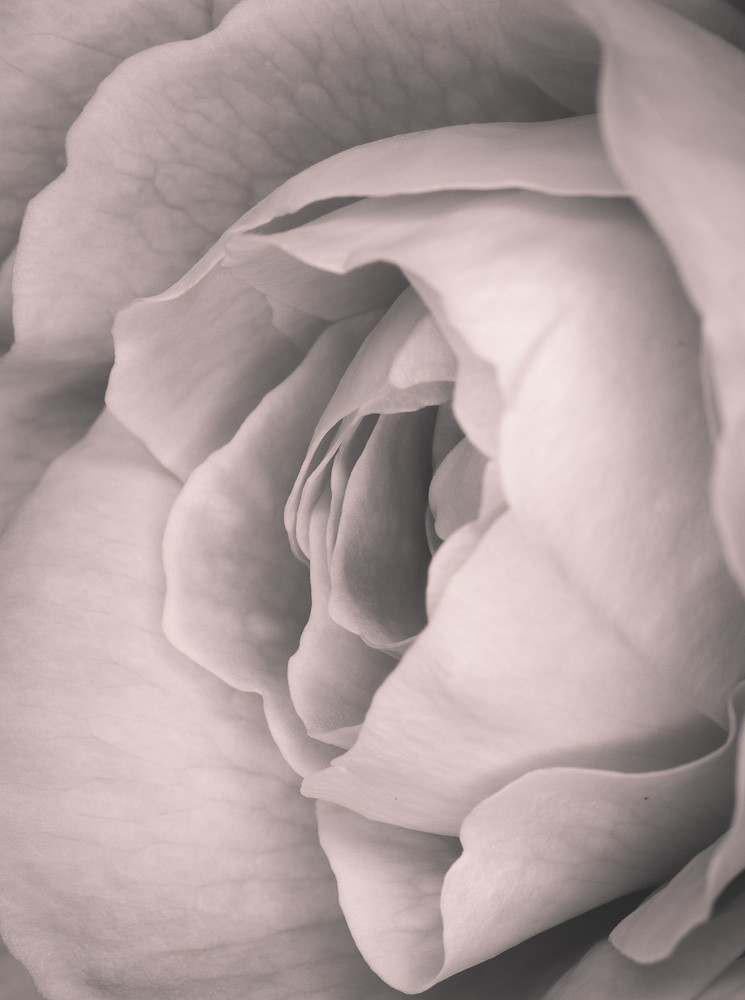
This lens has lovely bokeh!

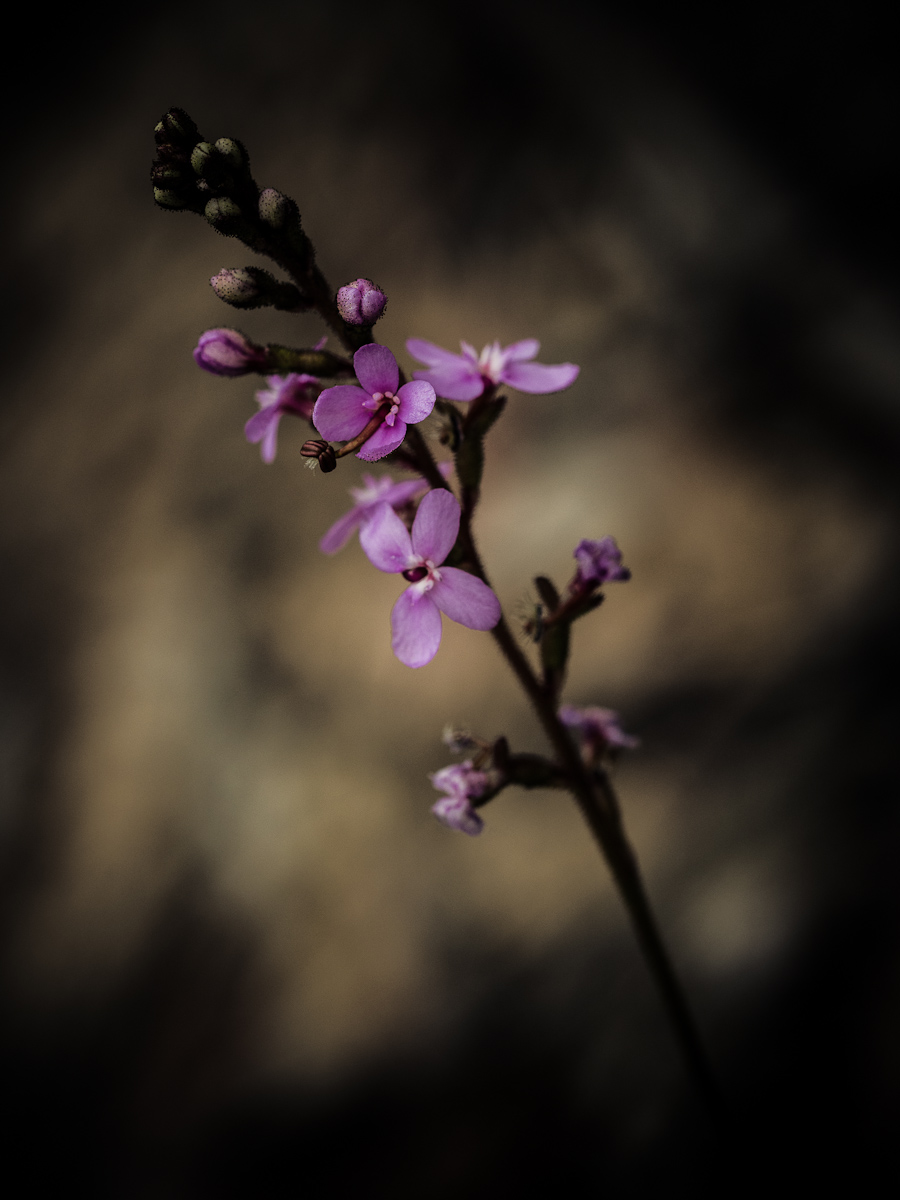
Carnivorous native rainforest wild flower, Stylidium graminifolium:

carnivorous wildflower

Romance in the rainforest:

romance

I spotted this tiny 3mm subject on a rock and thought it may be a rare type of carnivorous Otway snail … but on closer inspection it was just some hardened sap droplet which had fallen from the trees, but nevertheless, a worthy subject:

carnivorous snail or..

The Australian native bull ants are quite large ants measuring up to 2cm or so long, and have a painful bite which can be fatal if you happen to be allergic to it. This one was foraging in the dark recesses of the forest floor and was about 1cm long and normally very hard to focus whilst moving but the 60mm macro did a great job after a few tries of me getting used to how it worked:

bull ant

Lastly, a native Pelargonium wildflower:

Pelargonium

The many formal lens tests show that this lens is at least as sharp and optically excellent as is the brilliant Olympus ZD 50mm f/2.0 macro lens, but this lens is lighter, has closer macro capabilities of 1:1 macro, faster, more silent AF, and importantly has autofocus limiters and a switch to take you to 1:1 focus point.

For hand held work at close macro distances near 1:1, even using the fantastic Olympus E-M5 with its 5-stop 5 axis image stabiliser, the high magnification requires shutter speeds faster than 1/125th second for reliable shooting.

Now I am just waiting on the Olympus Ring Flash adapter, and hopefully Olympus will develop a new macro flash system which is smaller, lighter, and be a master for controlling the remote TTL flashes – a major deficiency with the current macro flash system.

More photos on my Flickr account using this lovely lens can be seen here.