Finally, Nikon produce a hi resolution semi-pro full frame dSLR, the Nikon D800, to compete with the aging but highly successful Canon 5D Mark II – time for a Canon 5D Mark III

Written by Gary on February 7th, 2012

Nikon has just announced an upgrade to their excellent but aging 12 megapixel Nikon D700 full frame dSLR.

After several years of not challenging the 20 megapixel Canon 5D Mark II on resolution and price, they have finally produced a comparable camera, the Nikon D800, with a class leading 36 megapixels.

Brief over view of the Nikon D800:

  • 36 megapixels full frame sensor
  • 15mp DX 1.5x crop mode when using DX lenses
  • 1.2x crop mode
  • 91,000-pixel 3D Color Matrix Metering III System
  • Advanced Scene Recognition System
  • improved 51-point AF system (15 cross-type AF sensors, 9 of which are active with lenses up to f/8) with face detection in OVF mode
  • EXPEED 3™ image processing engine
  • native ISO range of 100-6400, expandable to 50-25,600
  • in-camera High Dynamic Range (HDR) image capture
  • access to Picture Control presets via a dedicated button on the back of the body
  • weathersealed, USB 3.0, CF and SD card slots, intervalometer, optional GPS, 900g
  • 921,000-dot, 3.2-inch fixed LCD monitor without touch
  • flash sync 1/250th sec
  • shutter speed 30sec – 1/8000th sec
  • popup flash GN 12m at ISO 100
  • AE bracketing only up to 1EV steps which could be limiting for the HDR types out there.
  • 4 frames per second (fps) in FX mode at full resolution; 6 fps in DX mode using the optional MB-D12 Battery Pack;
  • 1080 30/24p and 720 60/30p HD video with full manual control, uncompressed HDMI output (8 bit, 4:2:2), B-frame compression H.264/MPEG-4 AVC, mono mic, dedicated headphone jack for accurate monitoring of audio levels while recording. Audio output levels can be adjusted with 30 steps for precise audio adjustment and monitoring. Stereo mic jack can also be adjusted with up to 20 steps of sensitivity. Video recording can be set to be activated through the shutter button, opening a world of remote applications through the 10-pin accessory terminal.
  • RRP $2995

There is also a Nikon D800E with identical features but without an anti-alias filter which comes in at $300 more.

There is much to like about the Nikon D800E, and studio/landscape photographers are likely to love it, but 36mp may be too much for most enthusiasts.

Now let’s see what Canon do with their soon to be announced Canon 5D Mark III.
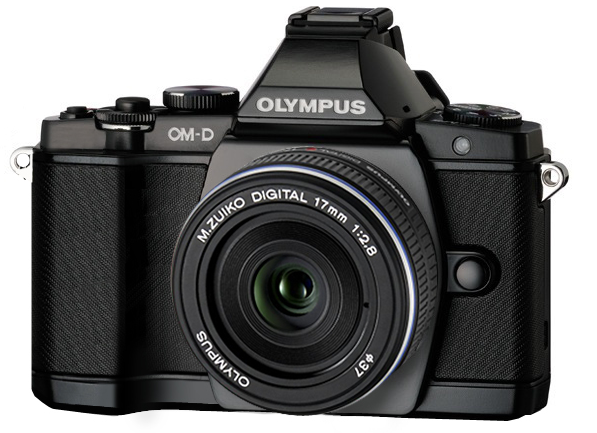
 

Could this be the camera I have been waiting for? A weathersealed Micro Four Thirds styled like the classic Olympus OM series? The OM-D E-M5?

Written by Gary on January 22nd, 2012

Olympus have announced a new style of Micro Four Thirds camera will be formerly announced on 8th February 2012 – you can get early email announcement by clicking on their Coming Soon section.

43rumors.com seem to be fairly confident that the “Olympus OM-D” will have the following specs:

– classic OM design
– It has a magnesium body
– It is weathers sealed
– weight 373 g (body only).
– 16 megapixel sensor optimized for High Dynamic Range
– 200 up to 25.600 ISO
– Built-in electronic viewfinder 1.44 million dots – positioned in the center of the body like the old OM optical viewfinders and same resolution as the external VF-2 viewfinder.
– 610.000 pixel OLED tilting 3 inch screen.
– Five-axis image stabilizer in body.
– FAST AF and 3D tracking
– Comes in Black or Silver.

– comes with an external weatherproofed flash with GN 10 – the FL-LM2 which can also act as a remote TTL flash trigger
– eye-detect EVF which also allows viewing of the IS effect, very handy for manual focus of telephoto lenses
– 2 more art filters
– HD video in .MOV MPG4 AVC, H.264 as well as motion jpeg format (not AVCHD), sound is PCM
– the 3″ 3:2 aspect 614K dots OLED touch screen is presumably the same Samsung screen as on the E-P3 which is an excellent screen, easily viewable in bright sunlight, but the default settings of “vivid info” do not give accurate colors so same may wish to change this setting to “natural-info” via the wrench menu.
– new “battery” has the capacity of 1220 mA
– optional weathersealed MMF-3 Four Thirds – Micro Four Thirds adapter with removable tripod mount
– optional grips and vertical grip with 2nd battery.
– optional underwater diving box – PT-E08
– optional new FL-600R flash with GN50 and built-in LED light for movie mode, and has a faster recovery than the FL-36 or FL50
– Price: Around $1,200 in USA or 1,100 Euro in Europe.

Here is an photo of it from 43rumors.com:

OM-D
I think it looks beautiful, just like my awesome OM-1 and OM-2 film SLRs, now we will have to wait and see how it functions and how good the images are.

I guess many may have hoped for a EVF moved to the far left so it could be used more like a Leica rangefinder, but Olympus I guess are wanting to maintain some posterity and the OM series design were big winners and very popular in the 1970’s – 1980’s. Personally I would have preferred the viewfinder hump to be less prominent to improve compact size.

Olympus have developed the fastest AF system currently available for stationary subjects (beating even the pro Nikon dSLRs) and has the enormous advantage that unlike dSLR phase contrast systems which require microcalibration for each lens, this contrast detect AF will be much more accurate than dSLR AF which is particularly important when using shallow DOF lenses. Furthermore you can set it to automatically detect and focus upon the nearest eye of your subject – now that is VERY handy indeed!

Hopefully the 3D tracking will allow a phase-contrast like experience for moving subjects, but I am not holding my breath on that.

I would have liked ISO 100 but I can understand Olympus has to compete with the larger sensor cameras for high ISO performance and do as they do – have a high native base ISO than ISO 100.

I love that they are keeping the in-body image stabiliser – I am not sure what 5-axis means – I guess it adds rotational movements as well as back and forwards, so could be very handy indeed for hand held macrophotography.

It looks as though it will have a new sensor which is about time for Olympus, I just hope it is an over-sized one as in the Panasonic GH series which allows 16:9 native images without cropping.

The tilt LCD is probably a reasonable option and offers another point of difference to the Panasonic bodies which have full flip out and swivel (which I do like as you can protect the screen better and do self-portraits, but tilt does allow for more discrete use).

I wonder if it is now time for Olympus to also introduce the OM adapter they filed a patent for 2 years ago which appears to have a 0.5x wide converter built-in with AF capability which then effectively converts old Olympus OM manual focus lenses back to their native field of view whilst adding AF but potentially giving even wider effective aperture?

It seems Olympus has finally decided to produce a lens just for me – a 75mm f/1.8 – perhaps I may be able to leave my much loved manual focus Rokinon 85mm f/1.4 at home now?

Olympus have also been rumoured to be announcing a weather proofed 60mm f/2.8 macro lens – another great addition to the Micro Four Thirds line up!


Very exciting indeed!

Please Mr Olympus, put an oversized GH-2 sized sensor in it so I can do native, uncropped 16:9 images!

I am also guessing it is time for Panasonic to produce a GH-3.


Options for a wide aperture 24mm effective lens – different systems compared

Written by Gary on January 19th, 2012

Most kit lenses give focal length ranges of 28-70mm in 35mm terms, and at f/3.5 aperture at the wide end, and most give considerable barrel distortion which is annoying.

High end zoom lenses may offer f/2.8 (or in the case of Olympus ZD 14-35mm pro lens, f/2.0)

But there are times when you need a wide angle lens of 24mm field of view and wide aperture for low light hand held shots of interiors where tripods are not allowed or your did not bring one, or for that matter at dusk or even at night.

Professional photographers wanting relatively shallow DOF or low light capabilities at 24mm focal length generally choose a full frame dSLR and combine it with a pro-level 24mm f/1.4 lens.

This combination will give better low light perfromance and shallow DOF than is possible on cropped sensor cameras, but the kit is BIG, HEAVY, EXPENSIVE (~$2500 for the lens alone)  and there is no image stabilisation available unless you choose a Sony option.

Those with cropped sensor dSLRs such as Canon APS-C or Nikon DX cameras, must settle with an expensive 14mm f/2.8 lens which gives a touch wider field of view and much greater DOF.

As mentioned above, if you have an Olympus dSLR Four Thirds camera, you can buy the big, expensive ZD 14-35mm f/2.0 lens and this will also have image stabilisation courtesy of the camera body.

If you buy a Sony NEX or Samsung NX, you will have to settle with a 16mm f/2.8 lens and no image stabilisation.

The most compact, affordable low light solution then is an Olympus Micro Four Thirds mirrorless camera which has image stabilisation built-in used with the fantastic new Olympus m.ZD 12mm f/2.0 lens.

This lens is not exactly cheap at just over $700 in the US, but it is a high end optic with a very nice manual focus capability better than most mirrorless lenses.

It will give potentially better low light performance than any cropped sensor dSLR, Sony NEX, Samsung NX system as the f/2.0 aperture allows 1 stop lower ISO to be used which should neutralise any high ISO benefit of the larger sensors, while the image stabilisation  provides potential for slower shutter speeds when you don’t have a tripod with you and the subject is not moving.

The Sony E 16mm f/2.8 is a cheap ($290), consumer pancake style lens with slower AF, not-so-nice manual focus than the enthusiast level Olympus 12mm f/2.0, while having lots of CA and very poor sharpness towards the edges (you need f/8 to get reasonable edge sharpness!) – it is certainly no match for the Olympus lens (although the Sony has better RAW distortion levels)  – see here. One can usually easily correct distortion but lousy sharpness is not easily resolved and the Sony lens distortion is a weird, wave-type pincushion distortion when straight lines are near the image edges, and this type is hard to correct in standard image correction software. Sony NEX landscape or architectural photographers will have to wait until Sony produce a better lens.

Of course, this Olympus m.ZD 12mm f/2.0 lens can be used on any Micro Four Thirds camera including the Panasonic GH-2, and G-3 but the Panasonic cameras do not have image stabilisation built in and presumably will not auto-correct the barrel distortion as do Olympus cameras.

None of the above will match the shallower DOF capability of a 24mm f/1.4 on a full frame dSLR, as the cropped sensor dSLR f/2.8 or the Olympus f/2.0 lenses, will only give DOF comparable to f/4 on a full frame dSLR, nor will they match the low light capability of f/1.4 aperture with good high ISO of a full frame sensor for moving subjects.

Nevertheless, the lovely compact size and relative affordability of the Micro Four Thirds option makes this a compelling choice for many people – I for one intend to buy one as I can’t take my Canon 1D dSLR, a 24mm f/1.4 lens and other lenses on international travel as they are just too big, heavy and expensive.


A quick close up portrait of a beautiful iridescent green-blue stag beetle using the Panasonic GH-1

Written by Gary on January 16th, 2012

I found this lovely beetle whilst going for a jog in a Eucalypt woodland near Melbourne and he obligingly sat on my hand for the long walk back to my car.

He wouldn’t let go of my camera bag and as I only had a couple of minutes to get a photo, here is what I had to come up with – apologies it wasn’t in its native environment. My wife let him go while I was out so I didn’t get another chance for a shot.

Nevertheless, all my trawling on the net and I haven’t been able to find one with the same blue on green colors.

I believe it belongs to the Lamprima spp. of the Lucanidae family and I guess it is a close relative of the Golden Green Stag Beetle.

Note the large mandibles.
stag beetle

Panasonic GH-1 Micro Four Thirds camera with Olympus ZD 50mm f/2.0 macro lens and Canon ring flash at f/16.

The ring flash was hand held away from the lens.

Some vignette added in Lightroom.


Panasonic announce 2 new high end wide aperture zoom lenses in concept stage for Micro Four Thirds – perfect for videographers

Written by Gary on January 12th, 2012

Indie videographers using the Panasonic GH-2 demand constant aperture zoom lenses and until now, one of their favorite lenses is the very big, heavy, expensive Olympus Four Thirds 35-100mm f/2.0 pro lens.

Panasonic have just announced 2 concept lenses for Micro Four Thirds which should delight these guys no end.

Both have the HD and X nomenclatures indicating that they are designed for HD video and that they are high quality.

The two are:

  • 12-35mm f/2.8 giving 24-70mm constant aperture in 35mm terms
  • 35-100mm f/2.8 giving 70-200mm constant aperture in 35mm terms

Given that the specs may change before production, many are hoping Panasonic can tweak a little more aperture (say f/2.5) just as they were able to do with their 14mm pancake which was initially slated to be f/2.8.

Although constant f/2.0 would be great, the practicalities are that such an aperture would make the lenses far too big and expensive for most Micro Four Thirds users and thus the above lenses which appear to only have a 58mm filter thread would make lovely compact high end zoom lenses.


Micro Four Thirds cameras gets a couple of new Sigma lenses and a few Panasonic converter lenses

Written by Gary on January 10th, 2012

Panasonic announced several new converter lenses for their 14mm f/2.8 and X 14-42mm lenses:

  • DMW-GWC1 Wide Conversion Lens – converts 14mm to 11mm for use on 14mm f/2.5 and the LUMIX G X VARIO PZ 14-42mm
  • DMW-GTC1 Tele Conversion Lens – 2x zoom – converts 42mm to 84mm for use on the LUMIX G X VARIO PZ 14-42mm
  • DMW-GMC1 Macro Conversion Lens – for use on 14mm f/2.5 and the LUMIX G X VARIO PZ 14-42mm
  • DMW-GFC1 Fisheye Conversion Lens – for use on 14mm f/2.5 and the LUMIX G X VARIO PZ 14-42mm

Sigma have announced two new lenses for Micro Four Thirds and Sony NEX mirrorless systems:

  • Sigma 19mm f/2.8 EX DN aspherical which will give 38mm FOV on MFT and 28.5mm FOV on NEX
  • Sigma 30mm f/2.8 EX DN aspherical which will give 60mm FOV on MFT and 45mm FOV on NEX

Neither of these are particularly wide aperture but presumably Sigma is targetting high optical image quality rather than pancake size or fast aperture.

I am not sure how these will go in a market of 17mm f/2.8 pancake, 20mm f/1.7 pancake, and 25mm f/1.4 high image quality Micro Four Thirds lenses which are already available. Perhaps they are largely targetting the relatively weak Sony NEX lens line up.


Canon introduce a large sensor compact fixed lens camera – the Powershot G1X – but is this what upgraders really want?

Written by Gary on January 10th, 2012

Canon have just announced the Powershot G1X “compact” camera with a 14mp 18.7mm x 14mm sensor about the same size as Micro Four Thirds (its active region may actually be smaller than that on a Panasonic GH1 or GH2)  and in 4/3 aspect ratio but with a fixed 28-112mm equivalent f/2.8-5.8 image stabilised zoom lens.

It has some nice features including:

  • the large sensor and 14bit RAW capture for high image quality
  • metal construction
  • compact lens about the same size as the Panasonic Lumix X 14-42mm F3.5-5.6 OIS powerzoom but with more telephoto reach.
  • 4 stop image stabiliser
  • flip out, swivel, hi-resolution (920,o00 dots) LCD screen
  • built-in flash with sync speed up to 1/2000th sec – nice but this flash is very limited with its low power output.
  • hotshoe compatible with all Canon EOS speedlights with sync speed 1/250th sec – now that is nice
  • face detection flash exposure compensation
  • SD/SDHC/SDXC memory card support
  • optical viewfinder but not through the lens viewing, but at least there is no black out during burst shots as with EVF.
  • built-in 3 stop ND filter so you can “use wider apertures” but it doesn’t have wider apertures at the portrait end!
  • HDR mode

Canon seem to have totally misunderstood the market with this camera.

It is relatively tall (117mm x 81mm x 65mm) for a compact, and heavy for a compact (534g) and ugly!

Those upgrading from a point and shoot not only want higher image quality but they want much better ability to blur the background than this camera can ever offer, and at $799, most people would be far better off buying a similarly priced and sized, but much more versatile Micro Four Thirds camera with which they can buy nice wide aperture lenses to blur the background with.

So here are a few deficiencies compared with a Micro Four Thirds camera:

  • you can’t change lenses so you will never be able to blur the background nicely as you can’t put a nice 45mm f/1.8 portrait lens  or  use  lovely legacy lenses such as the Rokinon 85mm f/1.4
  • you can’t use a wide angle or long telephoto lens
  • you can’t use a dedicated macro lens – although it has macro mode, it is only down to 20cm
  • it does not have an EVF so you cannot see through the lens with the camera at eye level which means you don’t get to see the effects of ND gradient filters, polariser filters or composing to a different image aspect ratio, or the many other nice features of EVF’s such as magnified manual focus, etc.
  • the LCD screen is not a touch screen
  • burst mode at 4.5fps is limited to 6 shots, to get more you have to reduce burst rate to a miserly 1.9fps
  • exposure compensation is only +/- 3EV not 5EV
  • HD video is limited to 24fps when using 1080i while 720p is only 30fps instead of 60fps and thus slow motion video is not possible
  • it appears there is no manual exposure movie mode?
  • it will be interesting to see how fast the AF is, will it be as fast as the latest Micro Four Thirds cameras which have the fastest AF for static subjects you can get?
  • no zoom ring on the lens, you only have the power zoom lever near the shutter button
  • you need to buy a lens adapter (FA-DC58C  with 58mm thread) to allow use of a polarising filter- what were they thinking?

Well, it is has a much larger sensor (6.3x larger) than its predecessors, the Powershot G12 and earlier, but in this new marketplace of mirrorless interchangeable lens compact cameras at similar price point and size it is most likely aimed at those with a Canon dSLR who want a compatible compact. Even those will be waiting for Canon to come out with their mirrorless system which will presumably have this same sensor.

If this camera had a wider aperture lens, then the high ISO capabilities, built-in ND filter, nice fast flash sync would make this a great camera but to me, the lens lets this camera down.

The first thing I do when I buy a camera is replace the kit lens with a wide aperture lens – you can’t do this with this camera.

Still it may suit some people and I am sure it will take great photos just as a Micro Four Thirds camera will do with its kit lens.

This presumably suggests Canon’s new mirrorless range will be based around this sensor, and if this is so, wouldn’t it be fantastic for everyone if they actually did something sensible and use the Micro Four Thirds lens mount technology so that they have a ready market for their lenses and cameras. Heck they could even negotiate with Olympus and Panasonic to create a unified hotshoe given they are almost pin compatible at present.

Micro Four Thirds users would then have the option of Canon sensor, TTL flash and lens technologies while Canon users would gain access to the lovely collection of micro Four Thirds lenses already available.

Guess I am just dreaming again.


Fujifilm announce a new high end mirrorless camera system with a new sensor design

Written by Gary on January 10th, 2012

The long awaited announcement from Fujifilm has finally arrived.

Their take on a mirrorless camera system is clearly targeting the enthusiast photographer who does not care for taking movies nor need zoom lenses, but who want high quality images using wide aperture prime lenses.

See here for details.

In short, it is based upon a new APS-C sized “X-Trans” sensor which has a new pixel array instead of usual Bayer pattern, and no anti-alias filter which should mean it can capture more detail than comparable traditional sensors with anti-alias filters.

The 1st camera, the X-Pro1 is expected to retail at $1600 body only and there are only 3 prime lenses available, each expected to cost $600-700.

The hybrid optical/EVF viewfinder is designed to change optical magnification to suit each of these 3 lenses, so I would not be expecting a big range of lenses.

That said, their traditional film era choice of lenses may well be adequate for the target audience (in 35mm terms):

  • 27mm field of view at f/2.0
  • 53mm field of view at f/1.4
  • 90mm field of view portrait/macro lens at f/2.4

Clearly they have done their homework on lens choice given the popularity of the following Micro Four Thirds lenses:

  • 12mm f/2.0 = 24mm
  • 20mm f/1.7 = 40mm
  • 25mm f/1.4 = 50mm
  • 45mm f/1.8 = 90mm
  • 45mm f/2.8 OIS macro = 90mm macro

However, personally I would have preferred the following range in 35mm terms:

  • 24mm at f/2.0
  • 35mm at f/1.8
  • 50mm at f/1.4
  • 90mm at f/2.0 with macro
  • 150mm at f/2.0 with OIS
  • 250mm at f/4 with OIS

I presume the optical viewfinder technology may be the limiting factor in providing such a range of lenses.

The Users Manual can be downloaded from Fuji here (pdf).

A few more features:

  • 16mp APS-C sized sensor with no anti-alias filter
  • SD/SDHC/SDXC memory card support
  • only +/- 2EV exposure compensation
  • auto switching between OVF and LCF screen via eye detection as with Panasonic GH series
  • manual switch on front right to switc between OVF and EVF and set the OVF zoom
  • aperture ring on lenses with Auto selection as well
  • for Programmed Exposure Mode, there is no P mode but you set both Shutter dial and Aperture dial to A (but only allows speeds 1/4000th sec – 1/4 sec) – makes good sense
  • all shutter speeds (1/4000th sec to 1 sec ) are selected and visible from the top dial – makes street shooting much easier, for Aperture Priority, set this to A for auto shutter speed
  • for Manual Exposure mode, just chose shutter speed and aperture that is not A
  • for timed long exposures 2-30 sec, set shutter dial to T then use EVF with menu buttons to select actual exposure
  • for Bulb long exposures, set shutter dial to B -can take up to 60 minute exposures but if you set aperture to A, the exposure will be set to 30 sec
  • the shutter button even has a traditional screw in shutter release cable facility – one of the few digital cameras to have this – very nice and retro indeed!
  • exposure compensation is via it’s own top mounted dial and clearly marked – again great for the street shooter or tripod user
  • Macro mode on the rear buttons automatically changes OVF to EVF to avoid parallax error – seems strange to bother, as the type of user for this camera would know to do this anyway!
  • burst mode 6fps or 3fps
  • 2 exposure multiple exposure mode
  • panoramic stitching mode
  • self-timer activated via menu system  or allocated to the Fn button
  • viewfinder displays focus distance as this is not visible on the lenses – perhaps the biggest let down for the street photographer!
  • does not appear to be any manual focus aids other than a single zoom magnified focus enabled by pressing the centre of the command dial
  • ISO 100-25,600 although only 200- 6,400 in RAW mode and Auto but no intelligent ISO as with Panasonic cameras which assesses degree of subject movement
  • 10 film simulation modes including B&W with either Y,R or G filter, and a sepia mode
  • flash sync 1/180th sec, PC-sync terminal as well as hotshoe, no built-in flash, no remote TTL flash, no HSS flash?
  • 1080 and 720 24fps HD video, stereo mic, C-AF, 3x zoom some manual controls but perhaps not shutter speed selection?
  • weght 450g incl. battery and memory card
  • size 140mm x 82mm x 43mm – certainly not as small as the Olympus Pen or Sony NEX cameras

Potentially this is a great camera for many enthusiasts who want high image quality, want to use prime lenses only and only in this range, and who want to be able to see at a glance what aperture, shutter speed or exposure compensation they have selected by looking down on the camera. The hybrid OVF/EVF certainly appears to be a very attractive feature but will it be enough to overcome the camera’s other limitations?

Unfortunately for its high price, it lacks the versatility of the Micro Four Thirds system, and the enthusiasts will not be so happy with its lack of manual focus or focus indication functionality, nor its poor exposure compensation range.

Perhaps they should do a deal with Olympus and get in-body image stabilisation, sensor dust removal system, Super-FP HSS flash and remote TTL flash all of which are absent in this camera!

At its price point I would have hoped for a faster flash sync and potentially compatibility with a major brand’s remote TTL flash system such as Nikon, Canon or Olympus.

The HD video capabilities are reasonable but much more limiting than with other mirrorless cameras.


Now the comet show is over, its New Year’s Eve fireworks time

Written by Gary on December 31st, 2011

The wonderful unexpected Christmas comet show is over.

Now its time to get you cameras out for the New Year’s Eve fireworks and parties.

see my previous posts on photographing fireworks:

Have a great and safe New Year.


A fantastic new comet for Southern Hemisphere viewers for perhaps 1-2 weeks only this Christmas!!

Written by Gary on December 24th, 2011

Surprisingly, Comet C/2011 W3 Lovejoy, a Kreutz sungrazer comet which was only discovered in November 2011 by Brisbane amateur astronomer, Terry Lovejoy, passed through the sun’s corona earlier this week and is now putting on a dazzling display at 3.30-4.30am daylight saving time in the southern hemisphere before sunrise twilight interferes.

It is currently showing a 22 deg tail which is up to 2 deg wide and is visible to the naked eye above the south east horizon, but it seems it is getting dimmer each day and so you would be best to get away from cities and their light pollution.

If you are planning on photographing it, a focal length equivalent to 50mm-80mm in 35mm full frame terms is all you need, preferably with wide aperture of f/1.4-2.8 range and if you need a shutter speed longer than 15-20secs, then an equatorial mount rather than tripod would be advisable.

It has been difficult to see in Melbourne due to cloud conditions.

Here is the path of the comet for the next 2 weeks heading almost straight for the South Celestial Pole!


path of comet

It has been very amenable to photograph even without an equatorial mount given its brightness but this may change soon.

Here is an example photograph from Adam Marsh, an Australian in Tocumwal, NSW taken with a Canon 1000D with Olympus OM 50mm f/1.8 lens at ISO 1600 with a 13sec exposure:

comet Lovejoy
The comet will pass near the Pointers in Centurus and become circumpolar which means for southern viewers it will be visible ALL night long but unfortunately dimmer each night as it travels away from the sun.

see this forum for more info on this comet .

see my webpage on comets for more info on photographing comets.

see BOM cloud forecast to help you decide where to go to see the comet bearing in mind you don’t want light pollution in the south east – note that for 4am Melbourne time, you need 1700UTC for the PREVIOUS day as Melbourne daylight savings time is UTC+11hrs. Be aware you may also need to contend with local fog.

Paul Albers has posted a shot from this morning taken at Cape Schanck:

Paul Albers

Phil Hart has a pictorial blog post on the comet here.

A beautifully composed shot by Alex Cherney at Cape Schanck using Nikon D700, 14-24mm lens at f/2.8, ISO 3200, 30sec:
Cherney

Update 26th Dec 2011:

John Drummond from NZ took this fantastic image on 26th Dec, 28sec exposure at f/2.8, 12800 ISO using a 20mm f/2.8 lens on a Canon 500D showing the tail is actually getting longer – now 27deg long and 3 deg wide!:
drummond

Update 27th Dec 2011:

Tail now has lengthened to a visual length of ~35deg but currently is overlying the bright Milky Way making it harder to see well and giving it more of a ghostly appearance. It should move out of the Milky Way region over the next few days and hopefully will be more visible then.

Image by Adam Marsh 27th Dec morning using Canon 1000D,18mm f/3.5 lens, ISO 1600 as comet tail approaches the Pointers:
27th Dec morning

Update 31st Dec 2011:

The comet has now moved out of the brightest parts of the Milky Way which hindered viewing the last few days, but unfortunately has suddenly became a lot dimmer and is now a little less bright than the Magellanic Clouds and only just visible to naked eye away from pollution and with a visible tail at least 15deg long. Imaging is possible on a tripod with a standard lens at f/1.8, ISO 1600 for 30sec exposure. It is now circum polar and visible in the evening although low in the southern horizon in southern Australia and NZ. It is still best viewed after 3am, but really, the show is now over other than for astrophotographers, and even those will have issues once the moon is in the sky.

Stuart’s annotated photo on the morning of 31st Dec taken from Mt Macedon showing light pollution from Melbourne and Gisborne:

Dec 31st from Mt Macedon

If you get to a dark sky, such as this time lapse video by James from Pambula, NSW on the morning of 31st Dec, it still makes a reasonable photographic subject:


My image of the now almost invisible comet taken 2nd Jan 2012 using a Canon 1D Mark III, 50mm lens at f2.2, 2 minute exposure and ISO 1600 can be seen on my Flickr account.

Now a timelapse sequence of the comet over 6 days taken from the Gippssland Lakes by Phil Hart:

Six days of Comet Lovejoy from Phil Hart on Vimeo.

Please note that the above images are copyright to their respective photographers.