Snowy Mountains trip – day 3 – Adelong Falls Gold Mine Ruins to Yarrangobilly Caves and Thermal Springs

Written by Gary on March 19th, 2016

Following from my car troubles on Day 1 and 2 in my previous post, I departed Tumbarumba early in the morning and headed north on a circuitous route to the Snowy Mountains via Adelong and Tumut.

I briefly stopped at the interesting Sugar Pine Walk at Laurel Hill where you can walk along a path between towering Sugar Pines from the west coast of USA (the tallest and largest species of pines) planted in 1928.

Then passed through the township of Batlow famed for its apples.

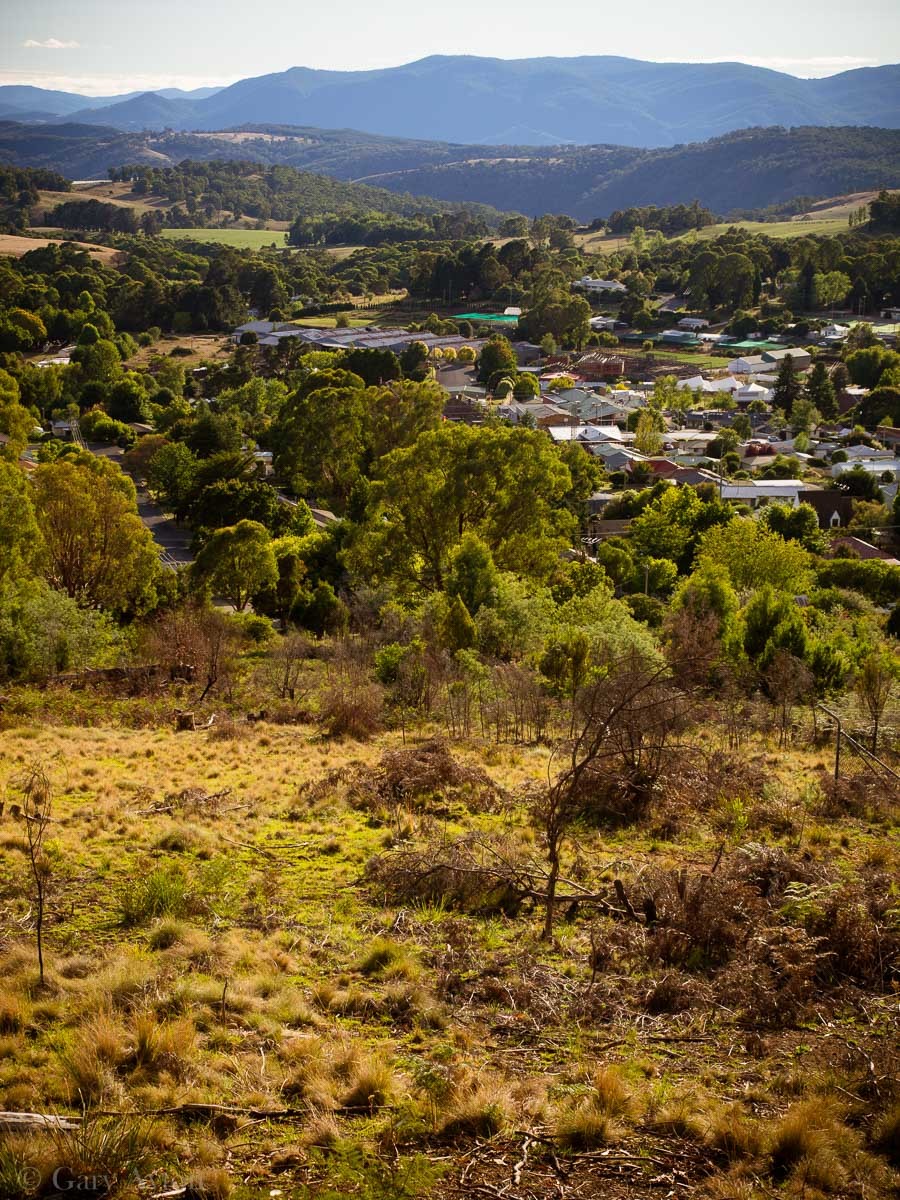
Batlow

View to north-east over Batlow from the lookout.

I then headed to Adelong along more lovely rolling hillsides and valleys as I wanted to check out the Adelong Falls Gold Mining Ruins which were well worth a look and explore.

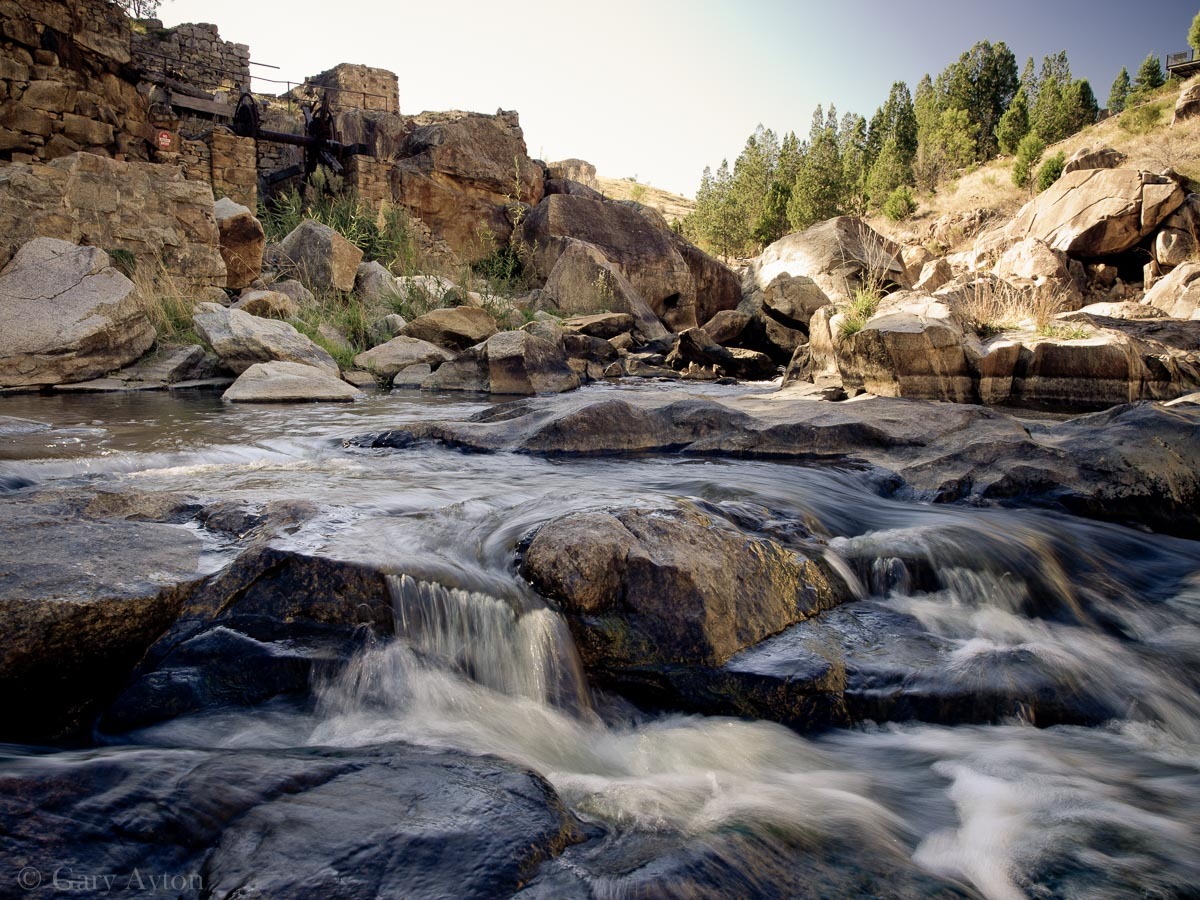
Adelong Falls

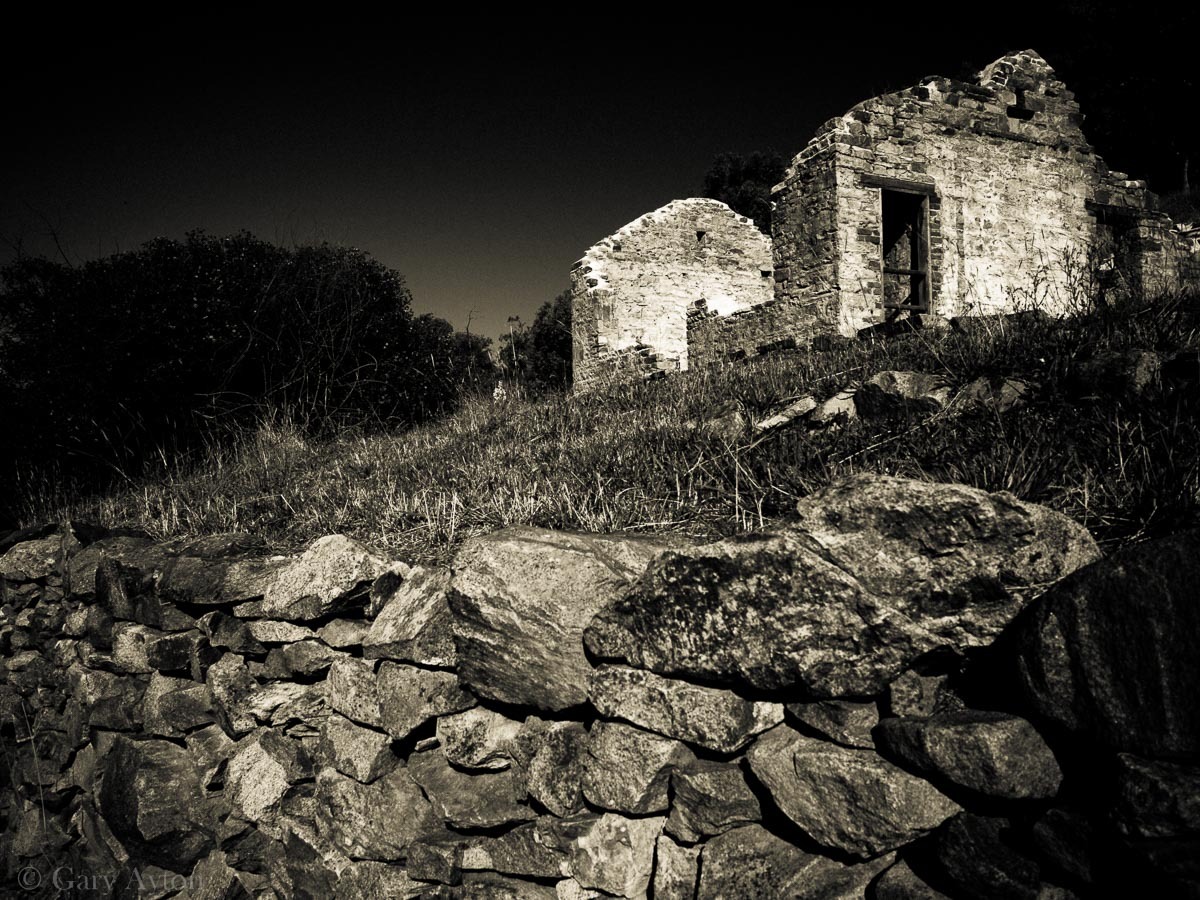
ruins of homestead

Adelong Falls Gold Mining Ruins

From there to Yarrangobilly caves via the Snowy Mountains Highway was rather a boring drive although Tumut is a pretty town reminiscent of Bright in many ways, and Talbingo is the last town before ascending the mountains and so is the last stop for fuel and groceries. There are many camping grounds prior to Talbingo along the Blowering Reservoir although this area seems rather featureless to me at first sight but would make a relatively safe and warmer place to camp and are well suited to caravans.

Just prior to the caves turnoff is the old Yarrangobilly Village camp ground alongside a trickling creek and the old homestead and marks the northern end of this section of limestone geology (although there is another large limestone cave region which has not been commercialised in the north-east of Long Plain near Blue Waterholes).

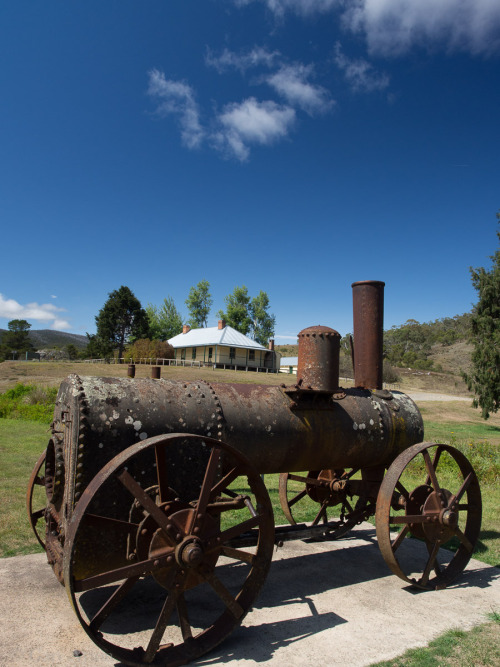
Yarrangobilly village

Yarrangobilly “village” camp ground.

The descent down to the Yarangobilly Caves is on a windy steep gravel road not suited to caravans.

Access to Yarangobilly Caves requires a car permit of $4 if you have not already paid a Snowy Mountain permit pass, and there is a self-guided tour of the South Glory Cave which is a little cheaper entry fee than the guided tours of the Jillabenan and Jersey Caves to which there are only tours at specified times each day.

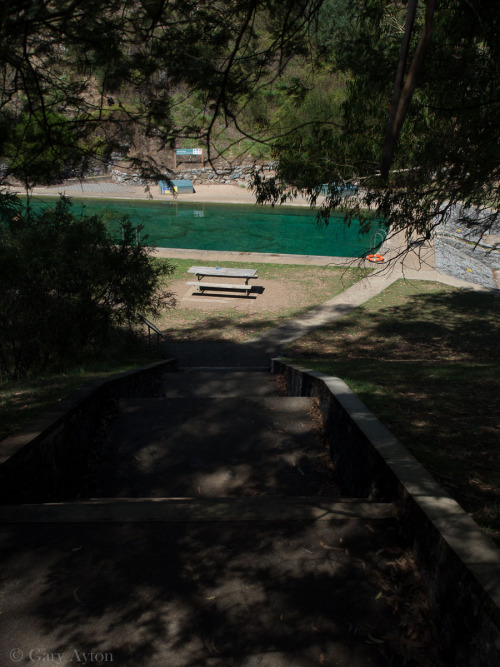
The South Glory Cave is what I went for given I was time challenged and it was indeed very impressive and following on from this one can walk or drive to the car park above the thermal pool which is a naturally heated water source at 27degC which has been constructed as a regular swimming pool with the overflow draining down into the nearby river where one can also swim. The walk back up to the car park is quite strenuous 700m climb on a hot day and you may be like me and decide to drive back to the caves shop and buy an ice cream or two to aid recovery. There is then a rather long exit drive up a one way gravel road back to the Snowy Mountains Highway, but the caves area is well worth a visit and it is the only place in the northern and central sections of the mountain range where you can find accommodation (appears to be nice rooms in lodges).

thermal pool

Thermal pool and steps down from the change rooms and toilets.

lodges

Yarangobilly Caves Lodges.

Next post – Long Plain brumbies and the Blue Waterholes limestone gorge.


Early autumn road trip and camping holiday to the Australian Snowy Mountains

Written by Gary on March 19th, 2016

It has been over 30 years since I last drove north across the Victorian border to the Tumbarumba region west of the Snowy Mountains, and the last time I went I drove the long trek on mostly gravel rural roads from Tumut to Canberra via Wee Jasper (according to Google, this part of the trip now takes around 3hrs not sure how much is bitumen).

This week of annual leave I decided to embark on a solo road trip to Tumbarumba region, but this time explore the Snowy Mountains where I had never previously visited.

Tumbarumba is some 450km or 4.5hrs drive from Melbourne along the quite boring Hume Freeway, so on my way up I decided at the last minute to divert from Wodonga on the border and head through the more interesting but much longer back roads.

This took me through lovely hilly rural country sides, initially along the Hume Reservoir which is currently suffering from a massive toxic blue-green algae bloom which stretches from there down stream some 700km down the Murray River thanks to low water flows and the hot summer, early autumn weather over over 30degC on most days.

This is quite a nice drive and takes one through Tallangatta township and past the old now submerged Tallangatta township then onwards to Corryong some 1.5hrs drive from Wodonga. Just before Corryong there is a nice looking caravan park at Colac Colac adjacent to the highway on an open farmland region.

Between Tallangatta and Corryong there are opportunities for the nature lovers to further explore either:

  • Omeo Highway south to:
    • Lake Dartmouth
    • Mitta Mitta River valley
    • Mount Benambra
    • gold and tin mining relics at Mt Wills (granite summit, snow gums, and great scenery), Mt Murphy, Cassilis Historic Areas such as the Green Creek historic battery,Pioneer Mine at Mitta Mitta,
    • Harrington’s track historic bridle trail along Murray River from Tom Groggin to Bunroy Station, 20km one way
  • Bethanga Historic area and Wallaces Smelting Works to the north
  • The Plateau to the north
  • Mount Granya State Park to the north – steep slopes rising above Lake Hume, 870m elevation, Granya Falls are seasonal.
  • Tallangatta Valley to the south
  • Mount Lawson State Park to the north – steep slopes, rocky bluffs, 1041m
  • Burrowa-Pine National Park to its north
    • Bluff Falls and walk to Ross Lookout (not suitable for caravans, nearby Blue Gums camp ground)
    • steep sided Mt Burrowa (1300m) which sits atop a sub-alpine plateau accessible by walking tracks
    • Pine Mountain (1062m) – a gigantic granite rock monolith 1.5x bigger than Uluru – walking track to summit
  • Thowgla Upper to the south
  • the Benambra-Corryong Rd valley which takes one southwards to:
    • Wabba Wilderness
    • Pinnibar Pendergast State Forest
    • Benambra and nearby Alpine National Park, Tambo State Forest and the Mitta Mitta River valley
    • further south to Omeo and then through the Alps down to Bairnsdale and Lakes Entrance on the southern Victorian coast

From Corryong I decided to head to the southern parts of the Snowy Mountains via the tiny town of Khancoban where I would have to pay my day access fees (these are only required for the southern areas – I accidentally paid for 3 days of fees but only used 1 day in the southern area).

Khancoban is also the last stop for fuel, food, public toilets that are not drop toilets, internet and mobile phone access, but as I was to find out, no car repair services.

After an early dinner, I proceeded up into the windy bitumen Alpine Highway past the Murray 1 and 2 hydro-electric power stations and to Scammel’s Lookout which looks southeast towards Mt Kosciuszko (Australia’s highest peak at 2228m) which is hidden behind the steep barren western fall of the Main Range and Mt Abbott.
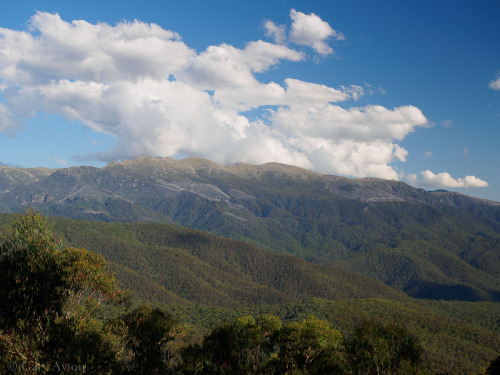
View from Scammel's lookout

View from Scammel’s lookout.

From there it was a short drive down to popular Geehi Flats camping ground along the banks of the lovely shallow but fast flowing Swampy Plains Creek. I had intended to continue on to Tom Groggin camp ground on the banks of the upper reaches of the Murray River for the night then next day tackle the steep drive up to Thredbo, but as I pulled into Geehi Flats, I noticed a very loud noise coming from my front brakes highly suggestive of a lost brake pad from the mountain driving although I try to use my gears to brake downhill as much as possible.

Geehi Flats camp ground

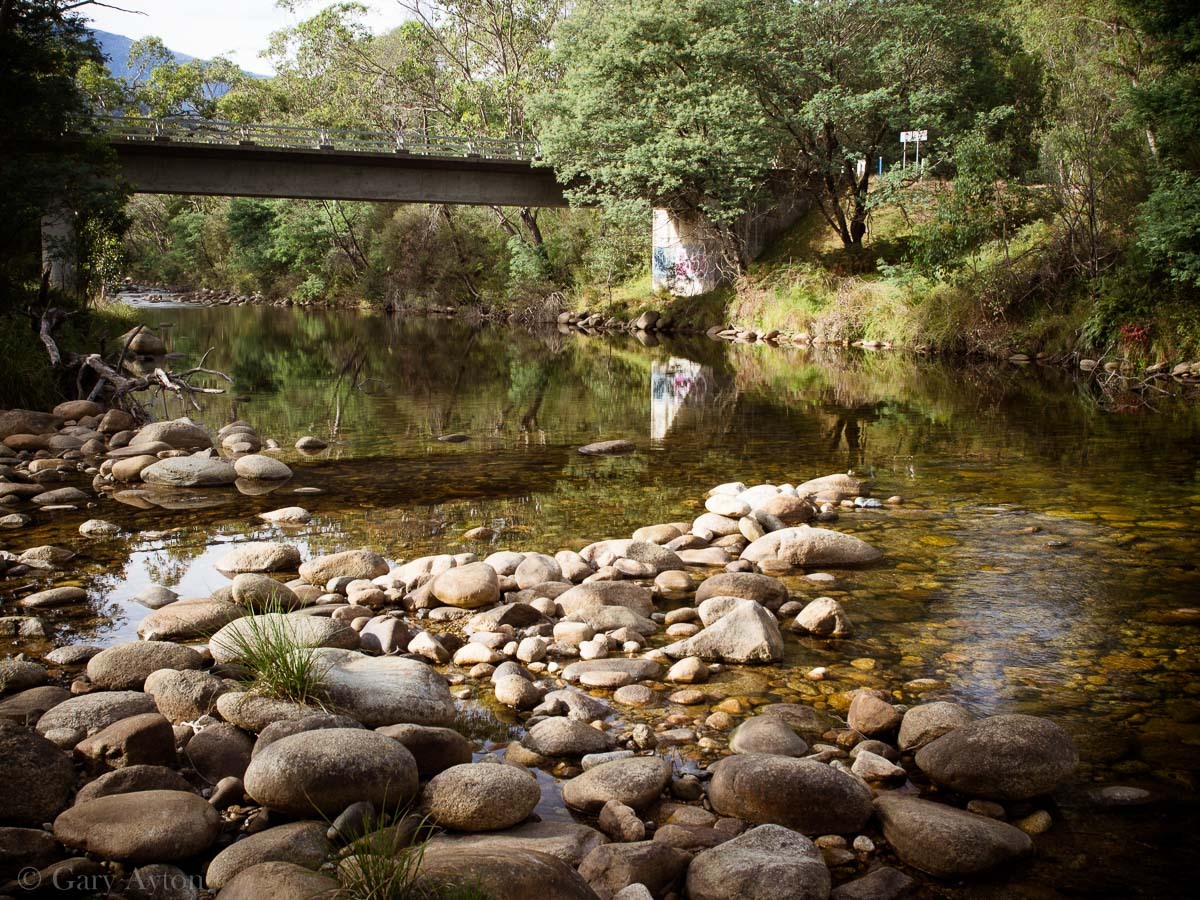
Bridge at Geehi Flats camp ground.

Nevertheless, this meant an uneasy night sleeping in my tent at Geehi Flats wondering if this was the end of my holiday plans.
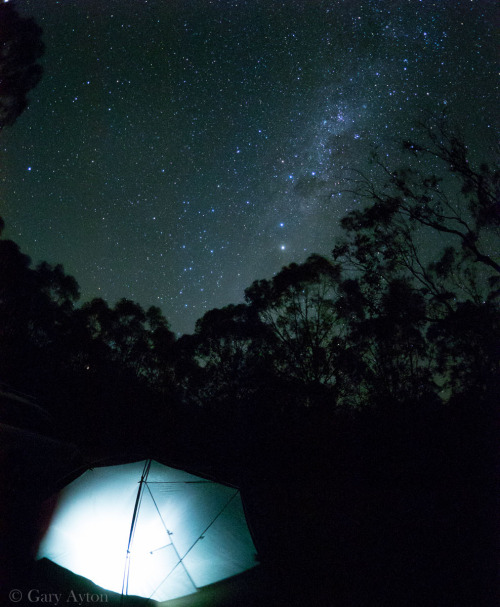
Milky Way from Geehi Flats

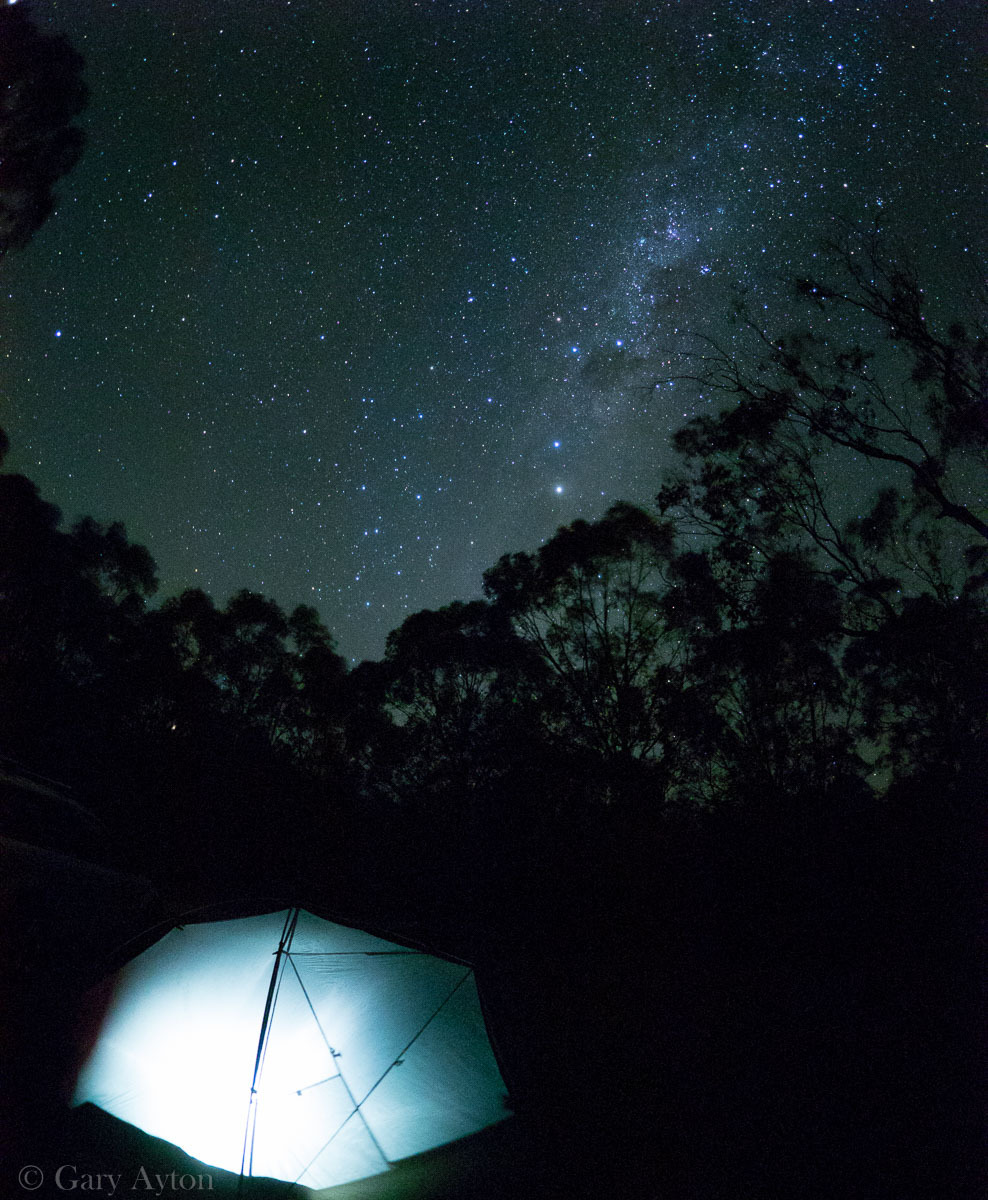
Milky Way and my tent at Geehi Flats taken with Olympus OM-D E-M1 Micro Four Thirds camera and Olympus mZD 8mm f/1.8 fisheye lens at ISO 3200.

Although Geehi Flats camp ground is a lovely spot it is a LONG way for Victorians (perhaps 7.5 hrs from Melbourne) and does not offer any more than any camp site along a river such as around the Bright region, but for those traveling through the southern parts of the Snowy Mtns it does offer a more protected and warmer camp ground to rest at given it is around only 400m elevation and is accessible by caravans (caravans cannot get from here to Thredbo though as the Alpine Highway is too steep).
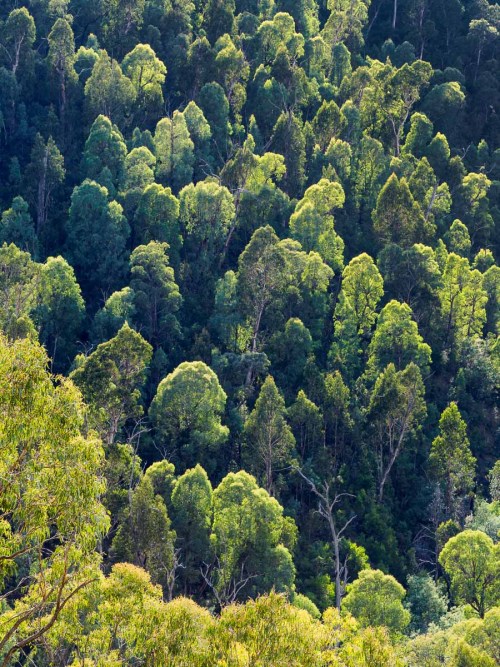
forest

Next day I drove back to Corryong (where they were getting ready for the Man From Snowy River festival over Easter) and after a wait of a few hours for the mechanics, had the welcome news that a stone and become stuck in the brake calipers and all is well.

So on early afternoon on day two, with storms, rain and strong winds forecast for the Snowy Mountains that night I decided to cut my losses, and head to Tumbarumba and get a better night’s sleep in a cabin out of harm’s way from the storms.

En route to Tumbarumba is a lovely drive through hilly rural countrysides reminiscent of Victoria’s Mansfield region, and past the Southern Cloud Memorial Lookout and on to lovely Paddys River Falls.

The Southern Cloud Memorial Lookout is a very exposed, but nice spot on a hill alongside the highway looking east at the western part of central Snowy Mountains and is a memorial for a historic Southern Cloud plane crash in the 1930’s, the wreckage of which was not found until 3 decades later – there is now a walking trail to the wreckage site. This plane crash was to change the safety of Australian aviation in profound ways.
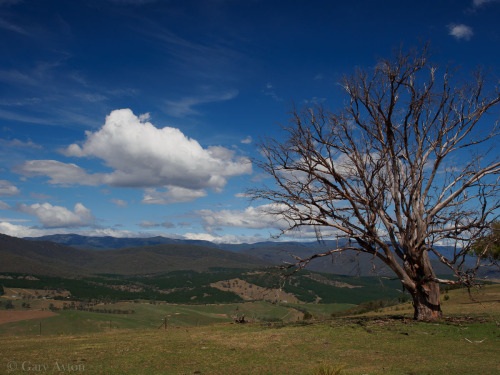
Southern Cloud Lookout view

View south-eastwards from Southern Cloud Lookout.

Paddys River Falls is easily accessible at the end of a 2km gravel road and can be seen from the car park or a short easy walk down to the falls – although walking down to the stream itself can be a touch slippery!

There is no camping at the falls but just before you get to the turn off to the falls, there is a free camp ground on the river near the main highway which is popular for caravans.
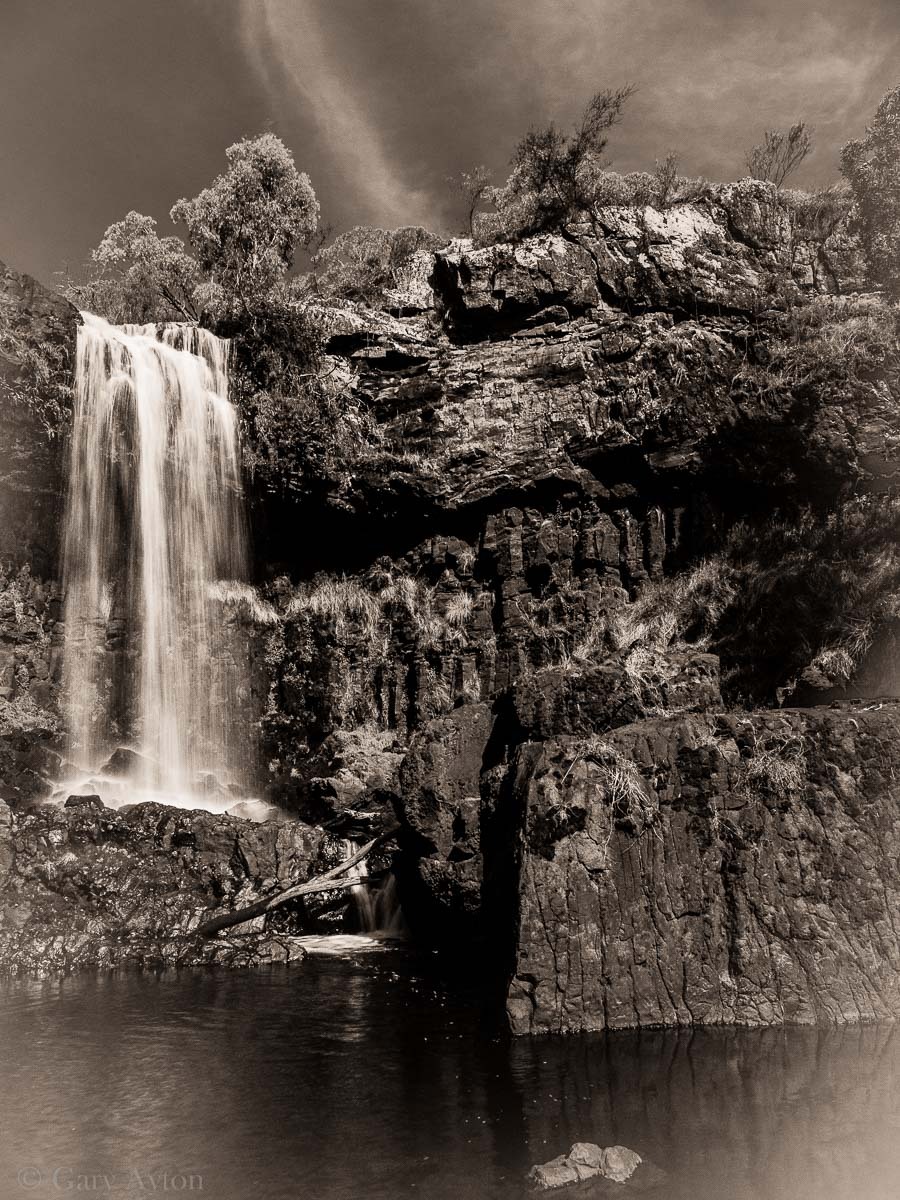
Paddys River Falls vintage style

Paddys River Falls vintage style hand held long exposure.

Tumbarumba itself is a small town with little to attract a photographer but is a nice central location from which to base activities in the region. It was great to have a shower in the cabin and then steak dinner at the Tumba Hotel and a good night’s sleep.

See Day 3 next….


the party is over, time for austerity measures for many of us and a return to budget holidays and food

Written by Gary on March 19th, 2016

Many of us in Australia who work for not-for-profit organisations have enjoyed a quirk in the taxation laws which allowed us to effectively purchase gourmet meals and better than usual accommodation and holiday packages on pre-tax income via salary packaging which has made these luxuries more affordable by giving an effective discount of 30-45% – but come 1st April 2016, this will essentially end.

This quirk in the tax laws was introduced by PM Howard around 2001 after he had introduced the much feared 10% Goods and Services Tax (GST), as a measure to not only help restrain pay rises for the public sector employees who had few opportunities to avoid the high income tax rates (unlike the self employed and many private businesses who not only had a substantial non-taxed “cash” economy but far more opportunities for tax deductions), and at the same time help to buffer the impact of the new GST on the already struggling hospitality and tourism industries.

Last year the Australian Liberal govt decided this was one area where they could increase tax income for the government and it was one of the few measures that the hostile senate where happy to pass, and thus comes to an end (although it still exists but at such a low capped benefit that it may as well be non-existent) a much loved “benefit” and an effective reduction in disposable income which has already been impacted by rising living costs, increasing super taxes, a dramatically lower Australian dollar exchange rate, and rather stagnant or even falling incomes, not helped by a rather sluggish stock market, and very real potential for negative gearing of investment property to be curtailed.

The result for many of us means access to some of the luxuries in life has been severely curtailed, and for me, it is partly the reason I have taken up the camping option and local travel within Australia with renewed vigor.

I do feel sorry for the hospitality industry, particularly local restaurants, B&Bs and hotels who will be impacted, and possibly the tourism industry as a whole although the low Australian dollar should encourage overseas tourists to come to Australia.

Meanwhile those of us who enjoyed eating the more expensive higher quality health foods will now tend to resort back to poor quality, high calorie fast foods – another reason to go camping and hiking to burn off this bariatric-inducing “cost-saving measure”.

Governments in their haste are well known for introducing new laws and processes without sufficient thought and measures to avoid unintended consequences whether they be excess use of otherwise good laws such as this one was (many employees were able to package exorbitant weddings), or unproductive wasteful spending such as those introduced by the labour govt in 2007 to fight of recession from the GFC such as the notorious Pink Bats saga,  the wasteful school hall capital building incentives,  and the bonus payouts without any measures to prevent them wasting the monies on poor quality imported commodities.


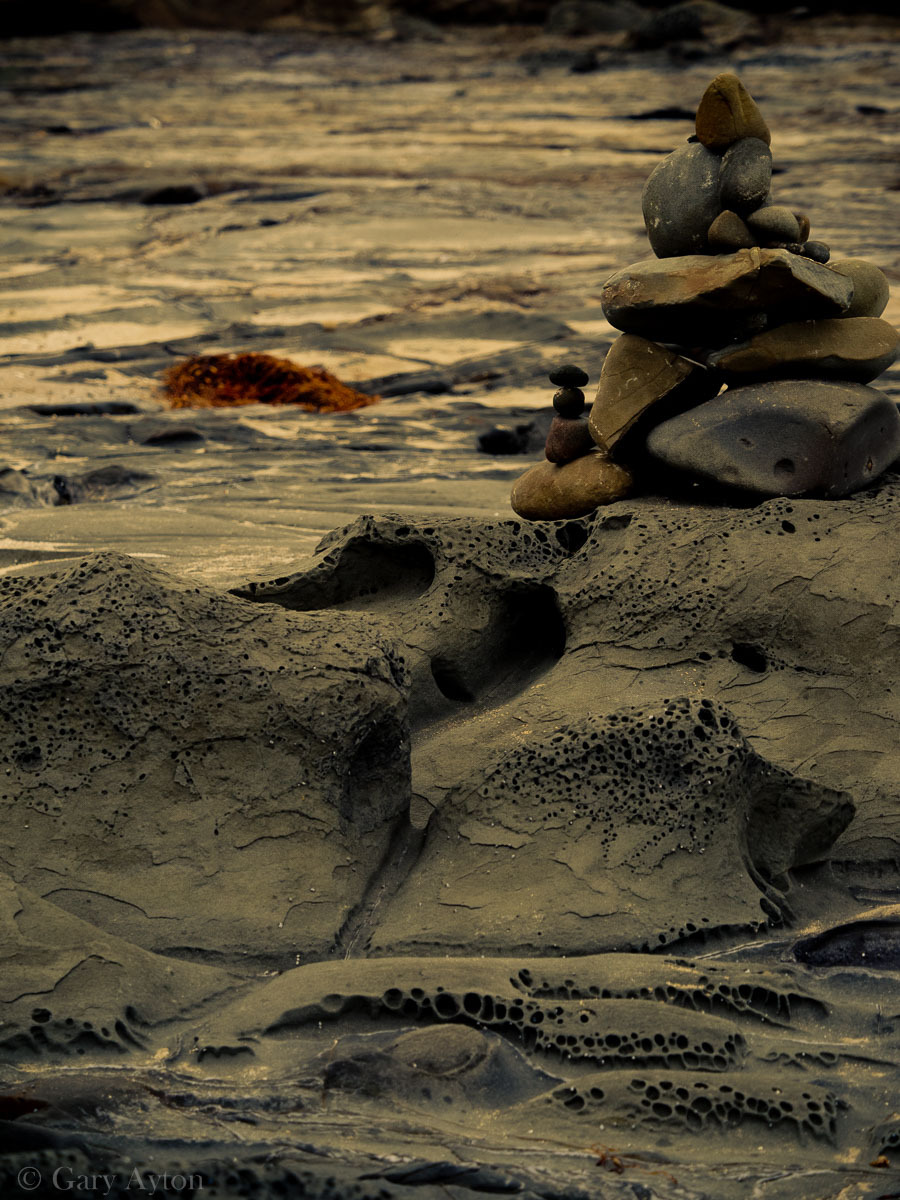
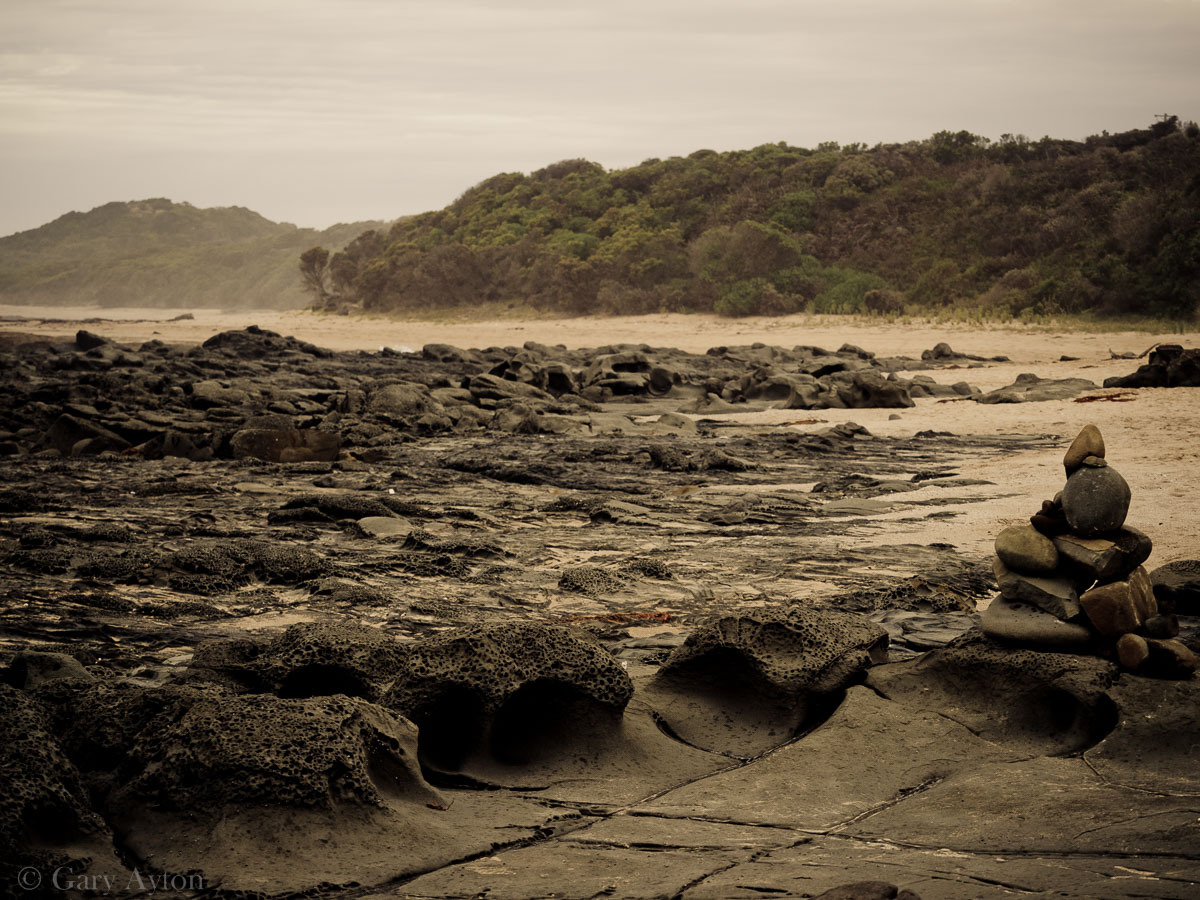
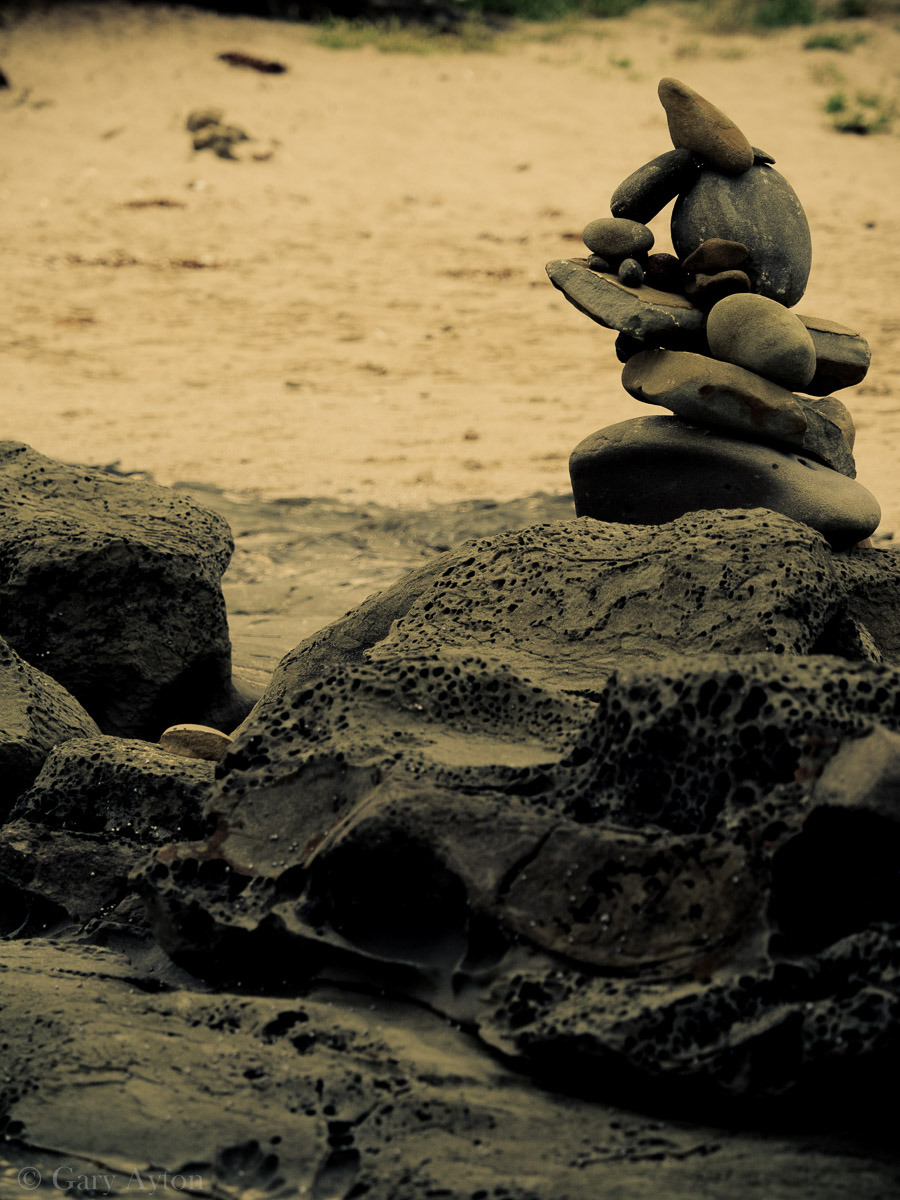
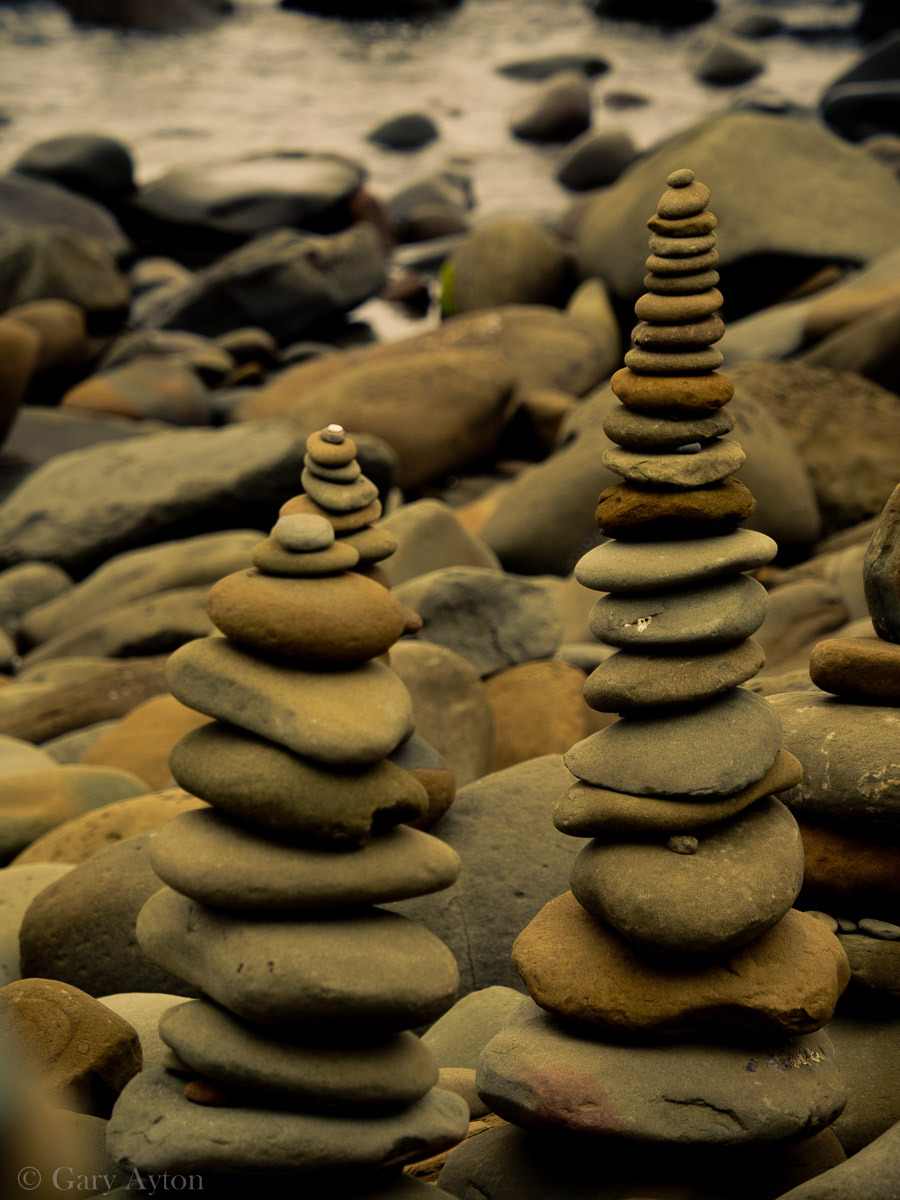
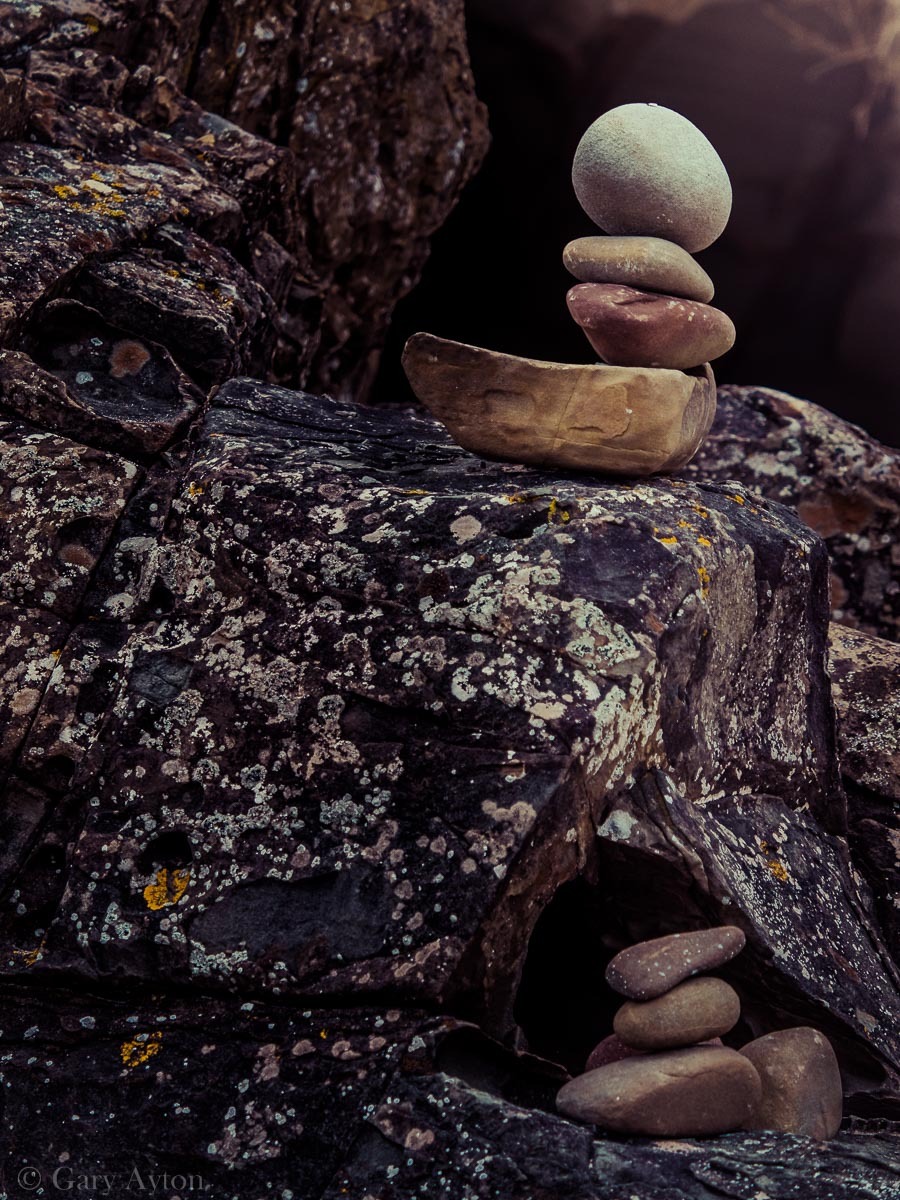
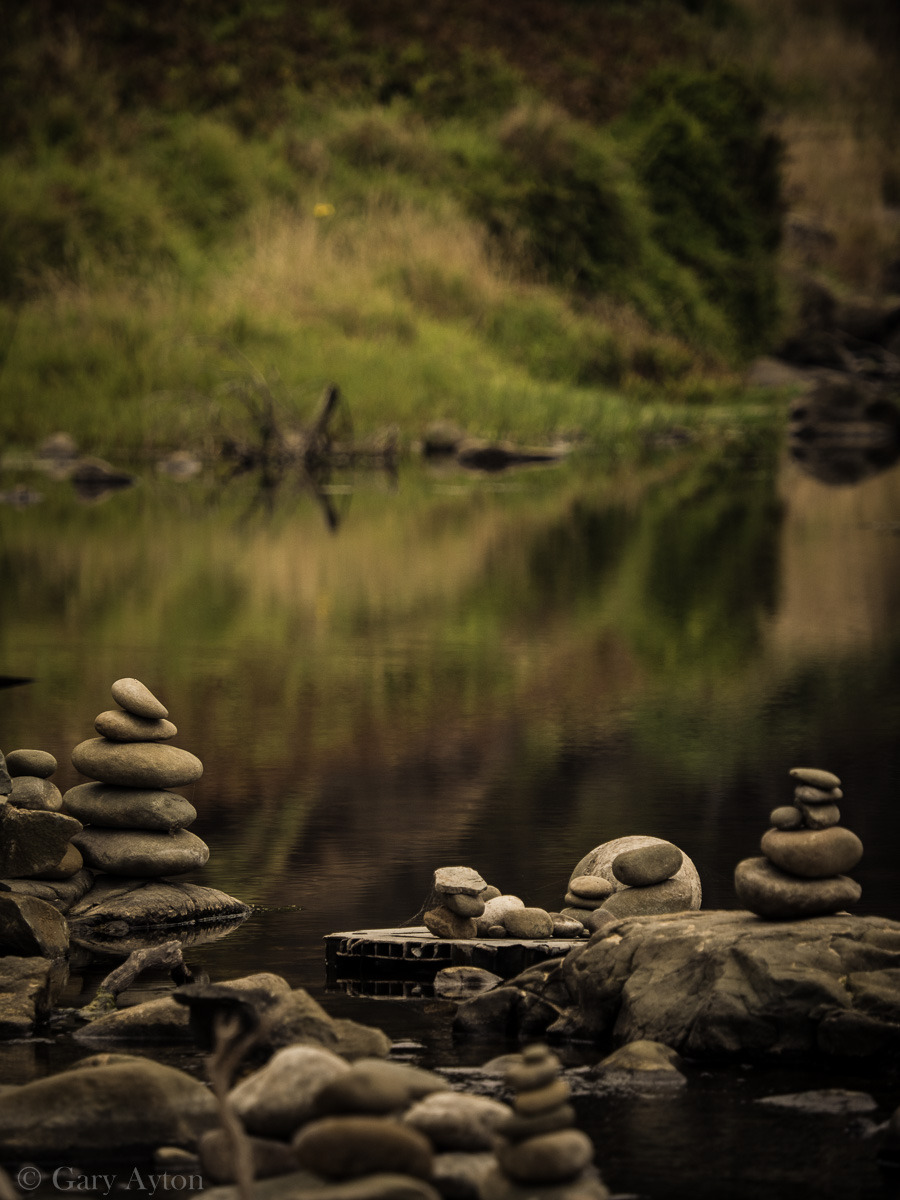
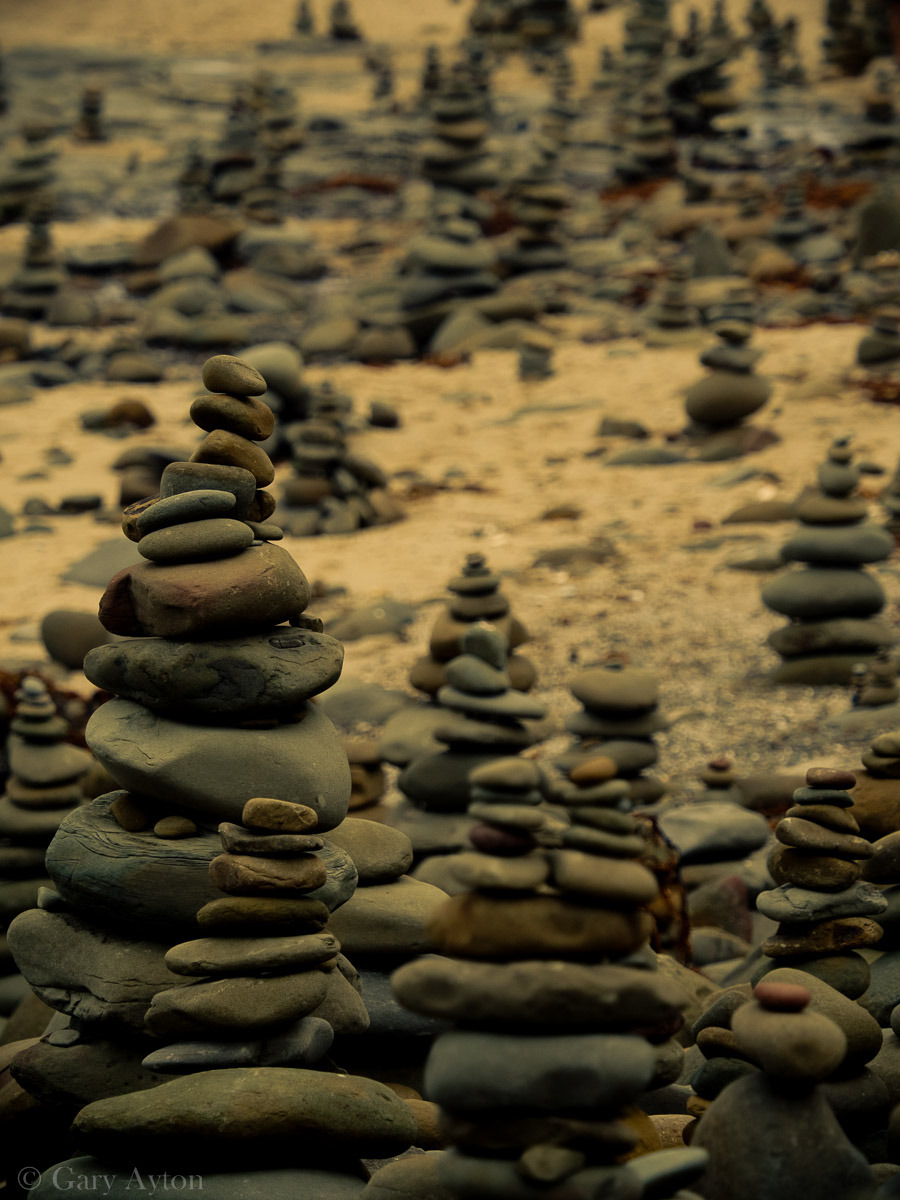
Great Ocean Road rock piling addiction – a little photo story

Written by Gary on February 22nd, 2016

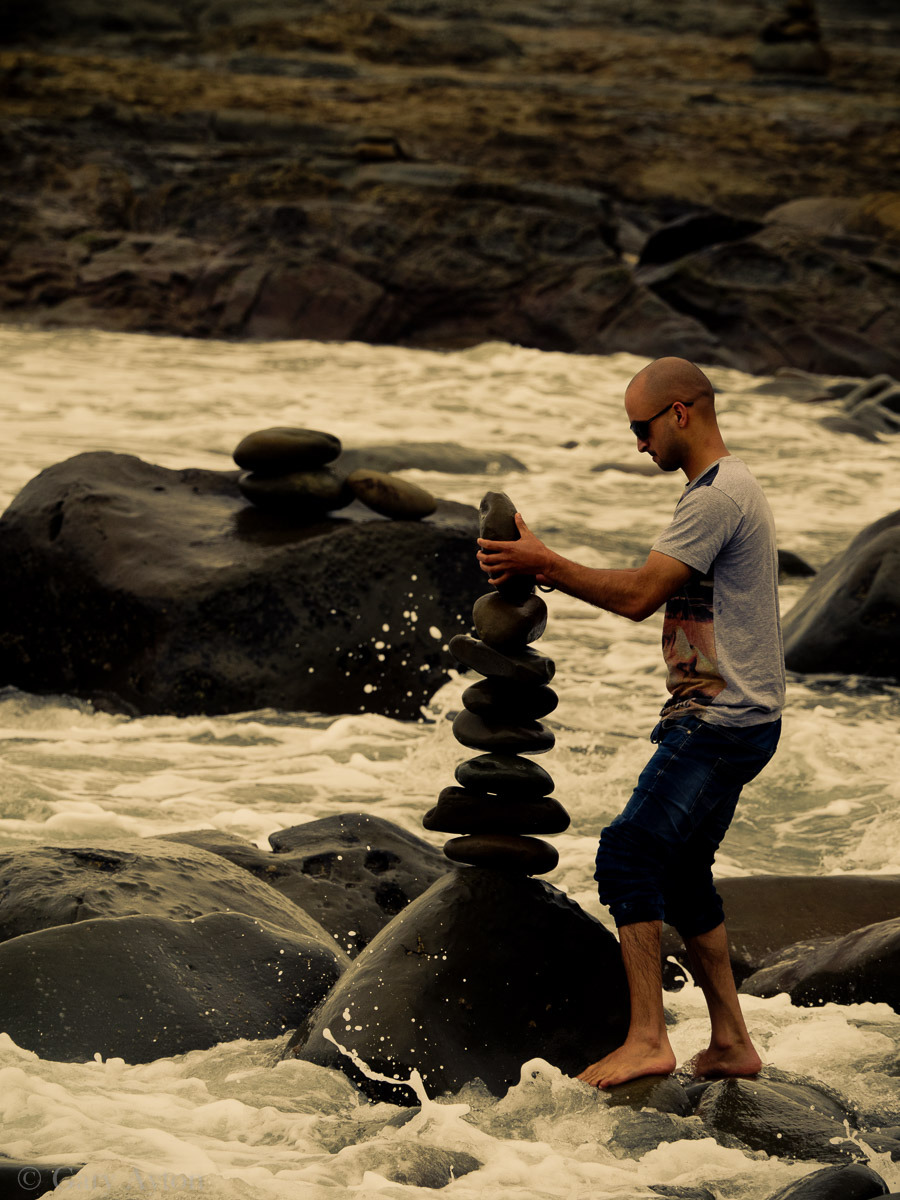
It starts off as an idle thought of what to do at the beach on a cool cloudy day without your wet suit ….
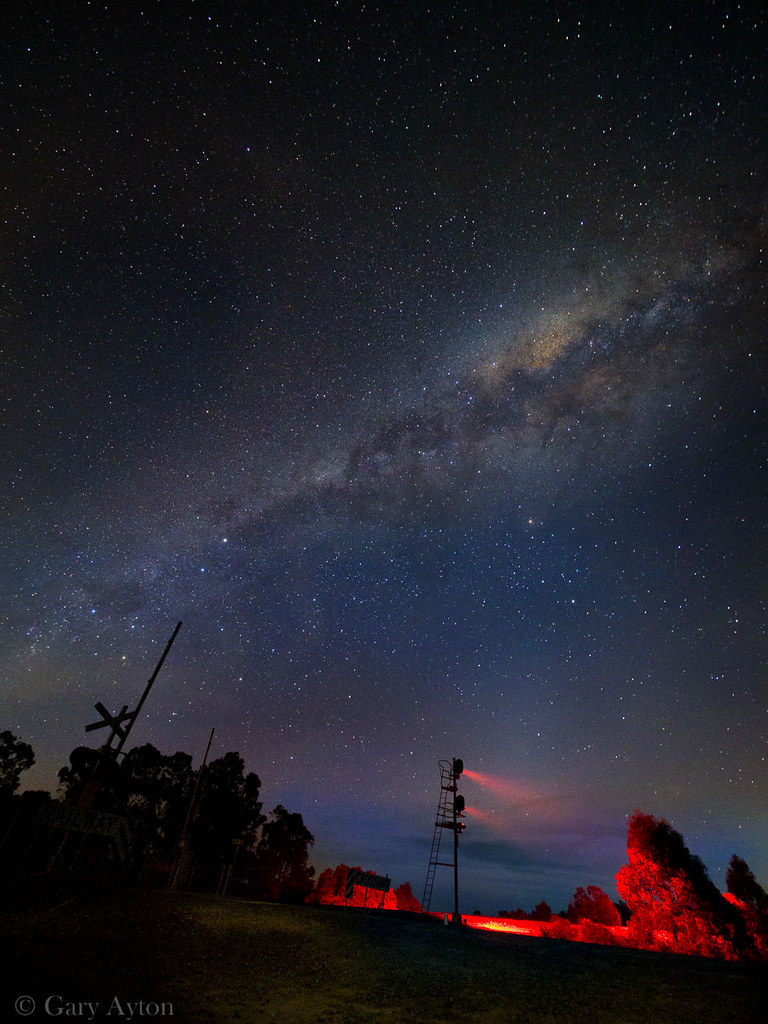
Your mind starts to wander … and then you see some nice rounded rocks …. and you think… why not pile them up …

rock piles

after all, a beautiful coastline could always do with a bit more interest, couldn’t it?

rock piles

and then you do another … this time with a bit more thought in construction …

rock piles

and then some more … even higher ….

rock piles

you find some nice big rocks to use as backdrops …..

rock piles

and then .. you are addicted…. you start doing them up the river too…

rock piles

and you start getting really good at it …

rock piles

and you just can’t stop ….

rock piles

then along comes someone to copy your craze, but rather pathetically, as everyone knows that this rock is not going to work like that!

rock piles

while other tourists appreciate all the hard work and stop to take pics …

rock piles

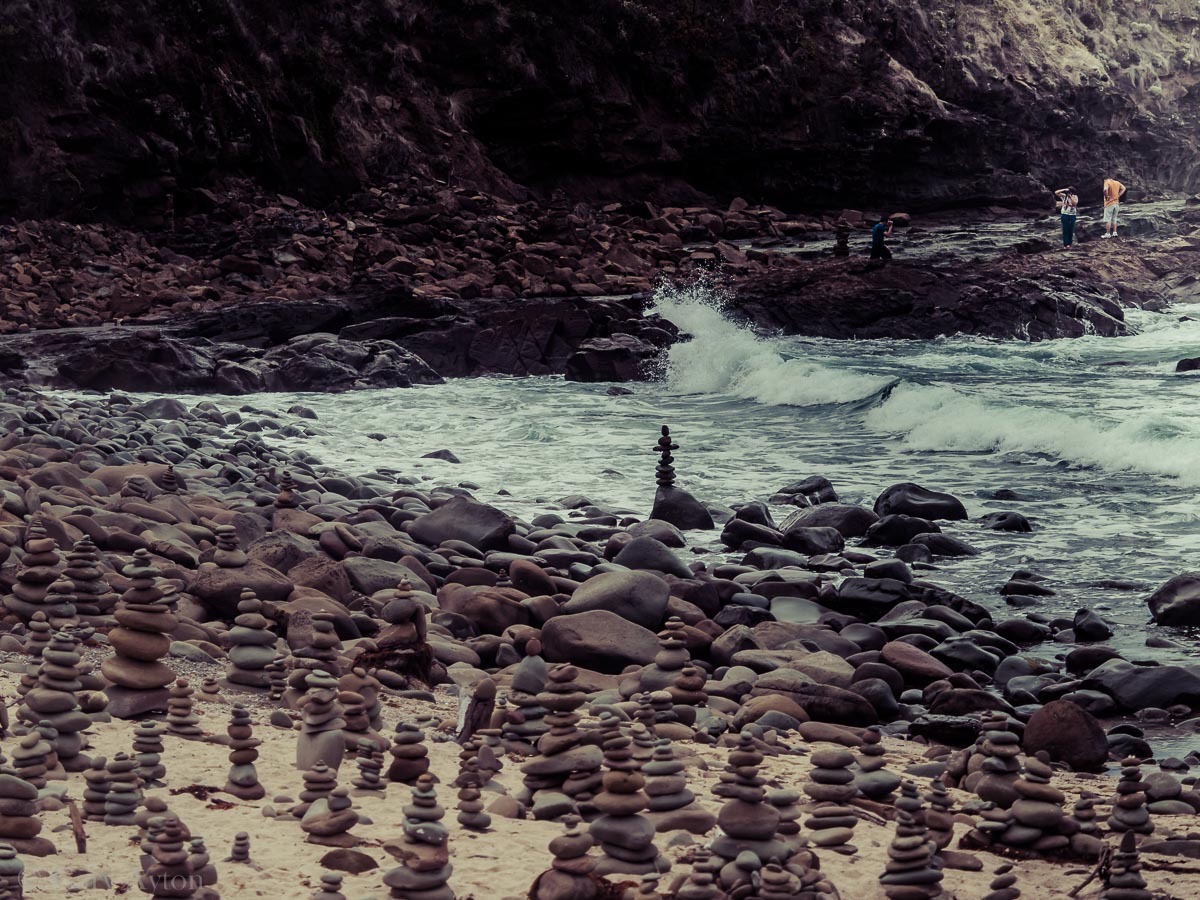
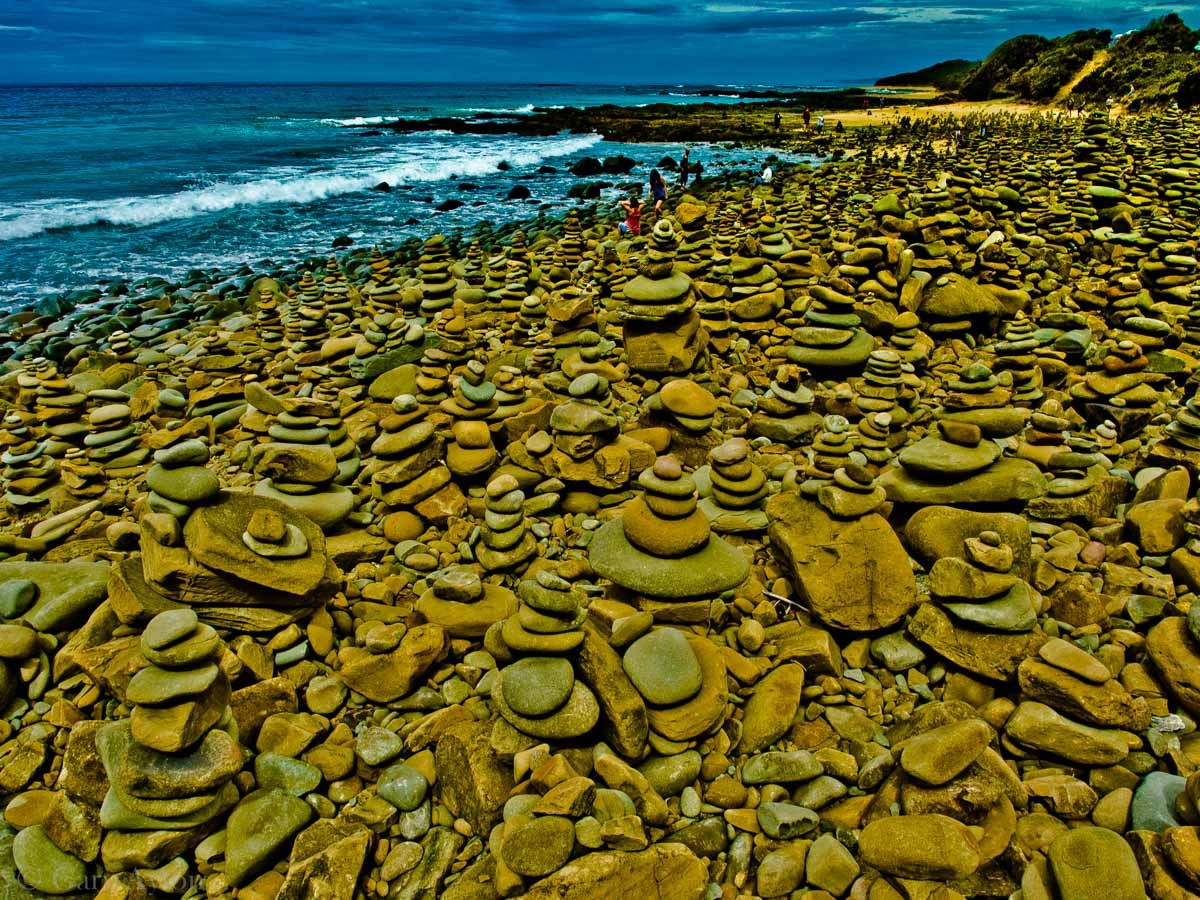
and eventually much of the beach is covered in rock cairns … and it looks kind of weird, rather than beautiful ….

rock piles

Great Ocean Road, Victoria, Australia.

All images shot with Olympus OM-D cameras and the pro lenses.

Of course I did not create these cairns I don’t have that much OCD – otherwise I would carry a big tripod and a Canikon dSLR with big lenses – although there is nothing wrong with that!


Why I love sensor based IS – hand held long exposure of waterfalls

Written by Gary on February 19th, 2016

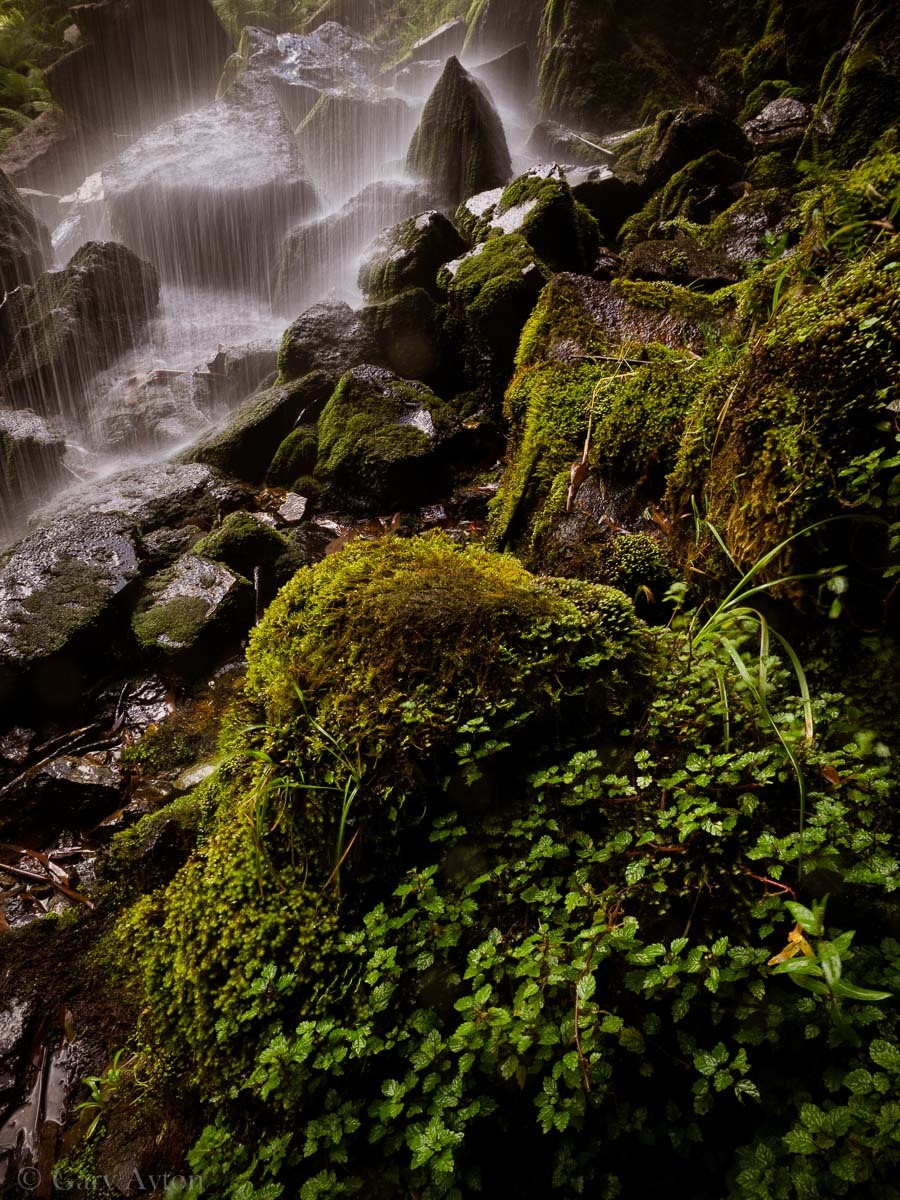
Sometimes (nearly always) you can’t be bothered carrying around a large tripod which is tall enough and stable enough to capture scenes but when you get there, you really want to show water motion of a longer then usual shutter speed.

The Olympus OM-D cameras offer perhaps the best image stabilisation effectiveness of all cameras and that is one of the reasons i love them – along with the light and compact high quality lenses.

A case in point was a recent walk in the mountains where I found this lovely little waterfall.

I needed a high camera angle and long exposure – and hand held OM-D E-M1 came through with the goods:


falls


Pentax evolves sensor based image stabilisation with some cool novel features

Written by Gary on February 18th, 2016

Pentax has just announced their 1st full frame dSLR – the Pentax K-1, a weathersealed 36mp camera with a unique cross-tilt rear LCD screen and illuminated controls to make it easier to operate and change lenses in the dark.

But what I like most is how they have made use of their sensor based image stabilisation system.

I have always been a big fan of sensor based image stabilisation and am unlikely to buy another camera without it – hence I may be waiting a long time before I buy another Canon dSLR to use my many pro lenses with!

Readers will know I love the sensor based IS on my Olympus OM-D Micro Four Thirds cameras as Olympus along with Pentax were trail blazers in this technology.

Olympus has made incredible improvements to the effectiveness of their 5 axis 5EV IS system and in the OM-D E-M5 mark II and Pen F, have added a Hi-Res mode where 8 shots are taken with slight sensor shift and then combined to create a Hi-Res 50mp image without moiré.

Pentax with their 2013 model cropped sensor dSLR, the Pentax K-3, added the capability of rotational compensation to correct for rotated horizons as well as sensor shift to act as a anti-aliasing filter to reduce moiré.

The Pentax K-1 takes the K-3 functionality further by adding:

  • 5 axis 5EV IS
  • Pixel Shift Resolution mode that increases color resolution by shooting four consecutive images with the sensor moved by one pixel – effectively canceling the Bayer color filter array and lowering noise by image averaging
  • Astrotracer system that uses the sensor’s movement to cancel-out the effect of the Earth’s rotation when taking images of stars (something it can calculate using its GPS)

Sure, these features may not be used very often but the astrotracer system could be very handy for marginally extending long exposures of comets, etc whilst minimising blurring of stars by star trailing. It won’t help astroscapes much as it will blur the landscape while keeping the stars clean – probably not that helpful there! It also won’t help with deep sky astrophotography requiring more accurate guiding of stars using an equatorial telescope mount.

Nevertheless, it is exciting to see what the camera manufacturers can come up with – perhaps we will get rear tilt-shift capabilities one day as well.

At present, there are few dedicated lenses available for the K-1 with fast AF optimised for a high resolution sensor, but in the meantime, it is optimised to make good use of legacy Pentax k-mount lenses and can shoot 15mp cropped sensor mode for using APS-C sized lenses.

The camera RRP is $US1799 which is a great price for the features but the system is very limited and early days in development.

Hopefully, Olympus and Sony are inspired to add similar functions to their cameras.

And just maybe, Canon might decide to finally jump on the sensor IS bandwagon before they become a forgotten brand other than for the sports professionals.


Planetary alignment and Milky Way over Australia’s iconic Craig’s Hut in Victoria’s Alps – Olympus f/1.8 fisheye comes to the fore

Written by Gary on February 8th, 2016

January 2016 was a month in which the planets aligned themselves nicely, and last night I took advantage of a few days off with lovely warm sunny days and clear night skies to head up to the rather remote Craig’s Hut at the rooftop of Victoria’s Alps and well away from major light pollution.

The original Craig’s Hut was built for the set of the Australian movie, The Man From Snowy River, but it fell into disrepair and was destroyed by a major bush fire in Dec 2006 (after reading the last blog post, you may be learning a theme – we cannot take things for granted in Australia, bushfires are a constant and increasing threat). It was re-built although not to the original specs, and despite this has continued to be an iconic image of Australia’s High Country which is dotted with huts although most have burnt down in fires and some re-built to provide shelter for hikers and skiers.

Road access to Craig’s Hut is 286km and just over 4hrs drive from Melbourne via Mansfield and Mt Stirling’s Circuit Road – a further 20km drive along a gravel road from the Telephone box Junction (TBJ), and if you have a 4WD with sufficient ground clearance, you can drive right up to the hut where there is a remote camp ground and drop toilet.

If, like me, your car is likely to bottom out on the access road to the hut, your main option is to leave the car in the parking area on the Circuit Road, and back pack up a grade 4 quite steep but well formed 1.7km walking trail which requires some 170m ascent but is readily doable even with a heavy pack and large tripod.

You can’t camp or stay in the hut grounds itself, and the water at the toilets is not potable. Hikers generally camp near these toilets amongst the snow gums, while 4WD campers use the dedicated camp ground some 100m lower down.

For some reason there do not appear to be the annoying aggressive alpine ants which gave me trouble at nearby Mt Stirling (see my blog post on this solo camp trip), and there were no mosquitoes of note, but lots of flies as soon as the sun rose.

Let’s get into some pics (all taken with the Olympus mZD 8mm f/1.8 fisheye lens):

sunset

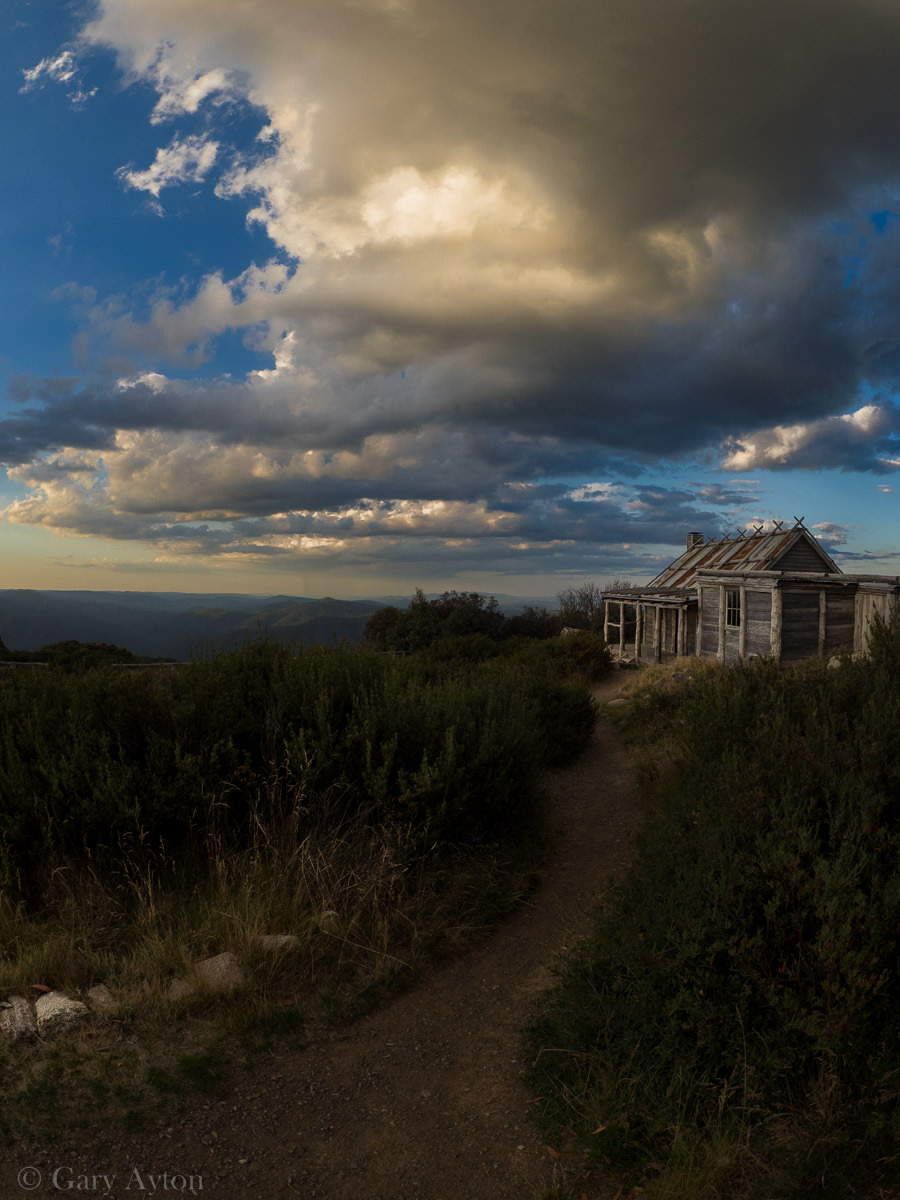
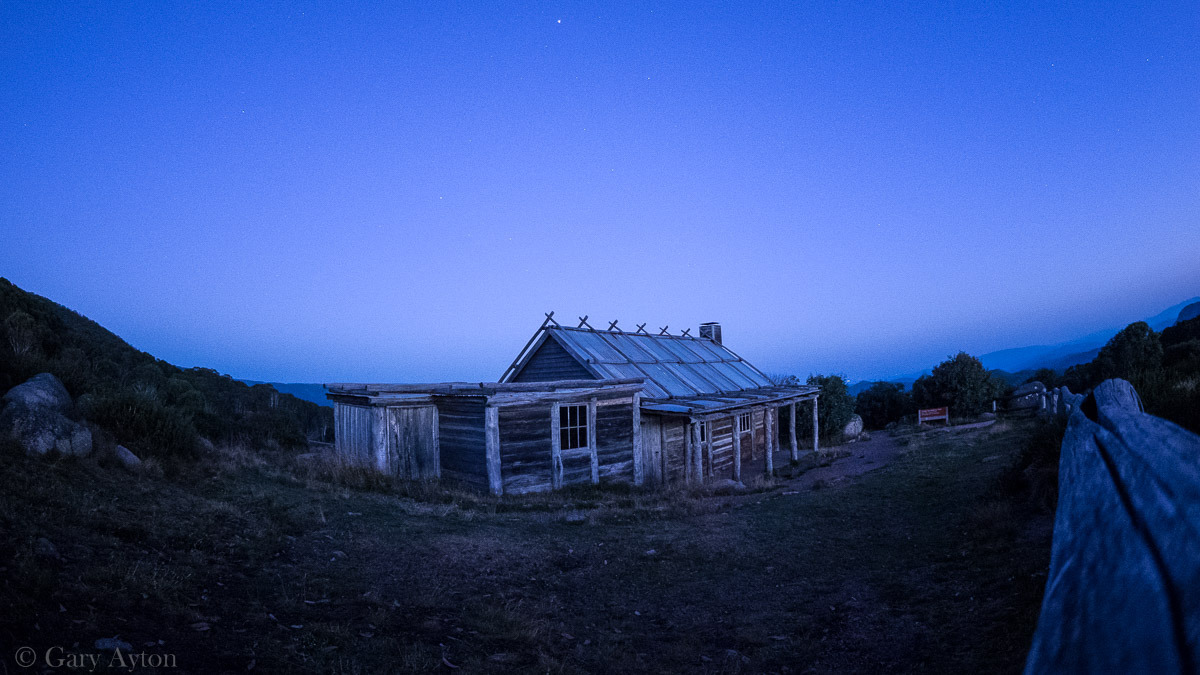
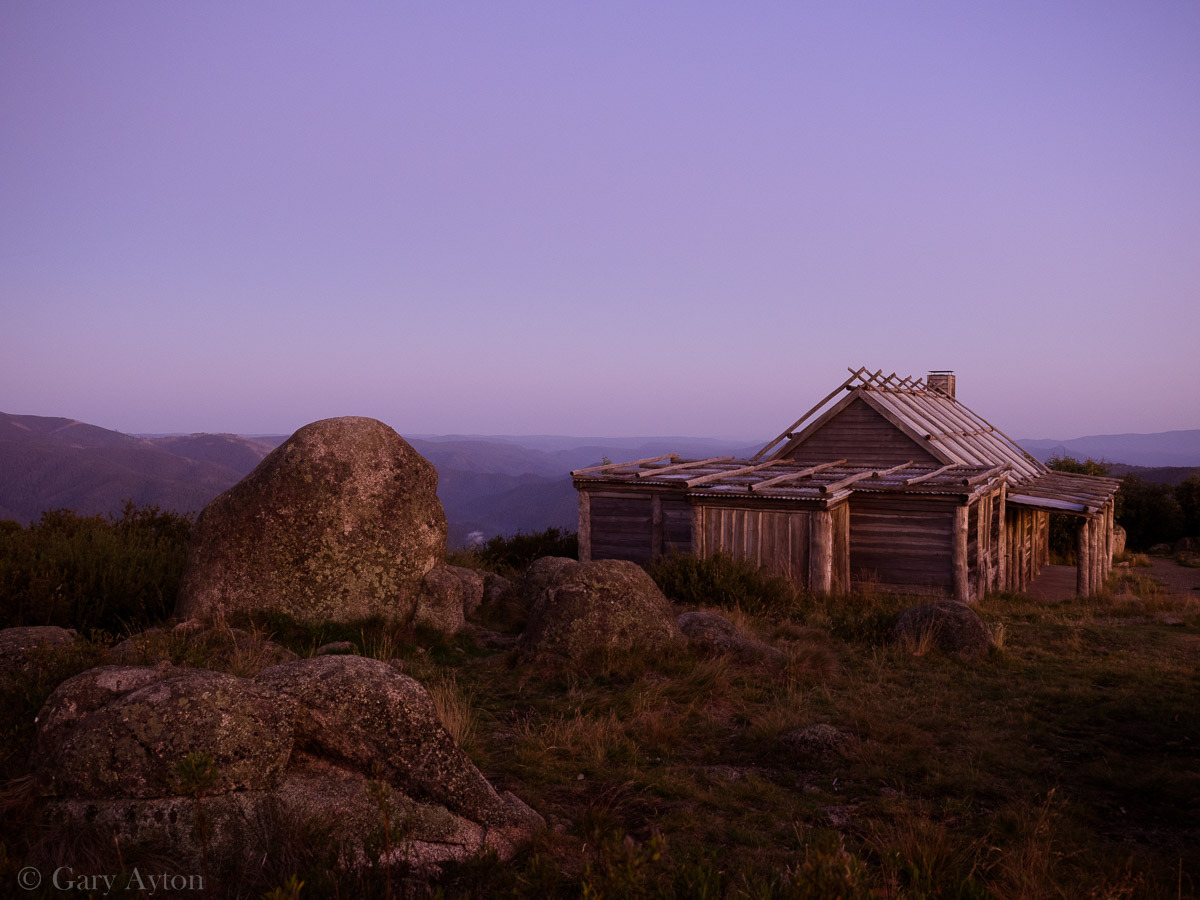
Sunset on Craig’s Hut – note that you get 270deg views from the hut – all except the SW quadrant, this view is looking north towards Little Cobbler.

Magellanic Clouds

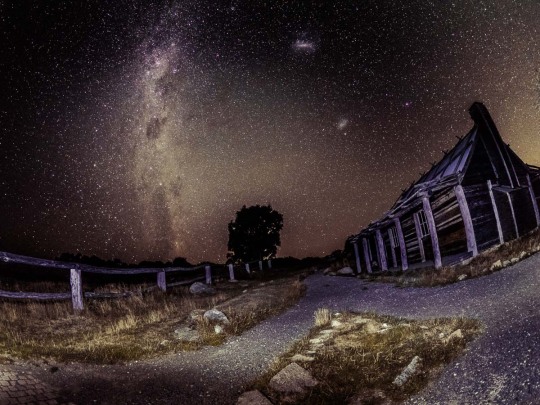
Evening shot of the Milky Way around Centaurus and Southern Cross with the two Magellanic Clouds rendered in sepia toning.

planets

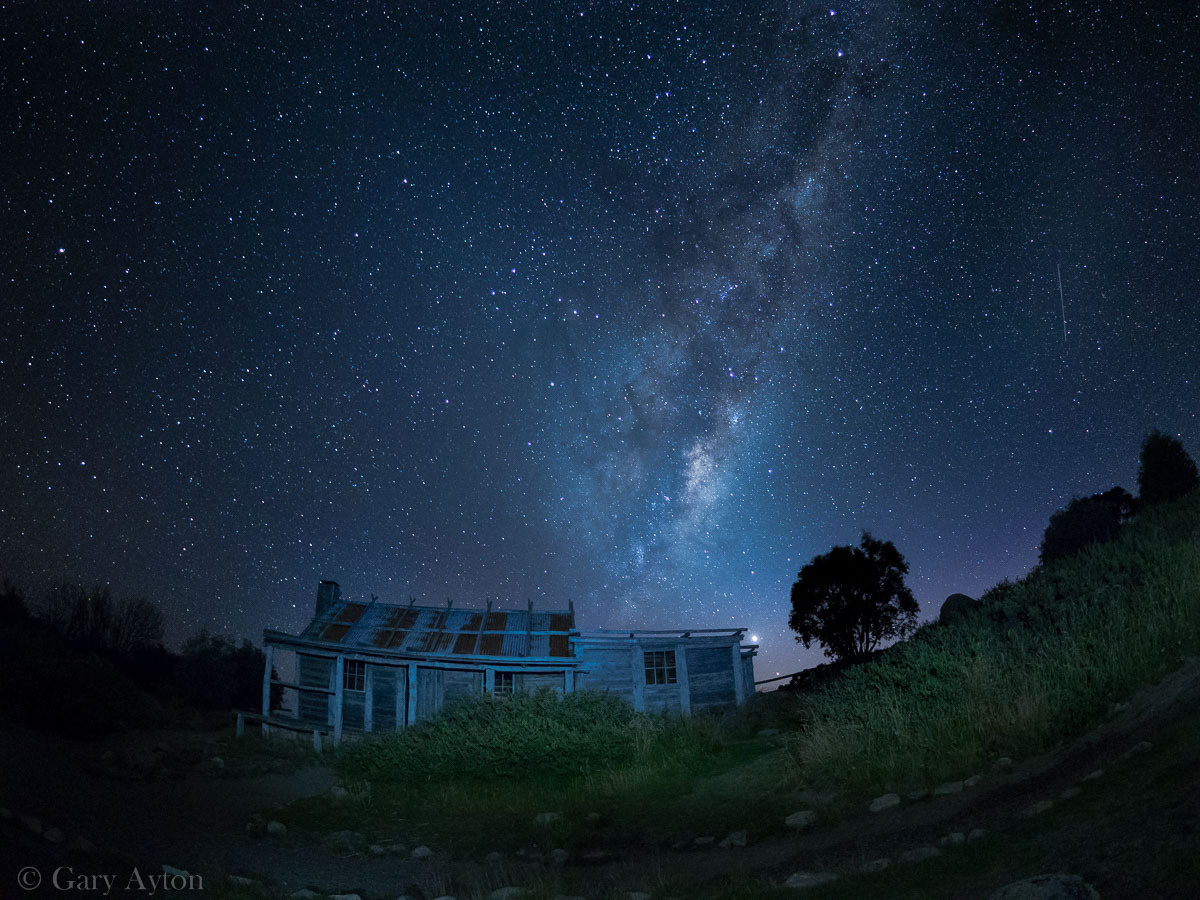
This is the shot I was waiting for and why I only managed 3 hours sleep, although I did extend my iPhone alarm to give me just that bit more!
This is just before sunrise and shows the centre of our Milky Way galaxy rising above the hut with the constellation of Scorpio directly above the hut and a meteor and the 4 planets visible:
Mercury near the fence, Venus the bright one above the fence near the hut roof, Saturn below Scorpio, Mars high above the chimney (Jupiter is out of this frame).

Milky Way

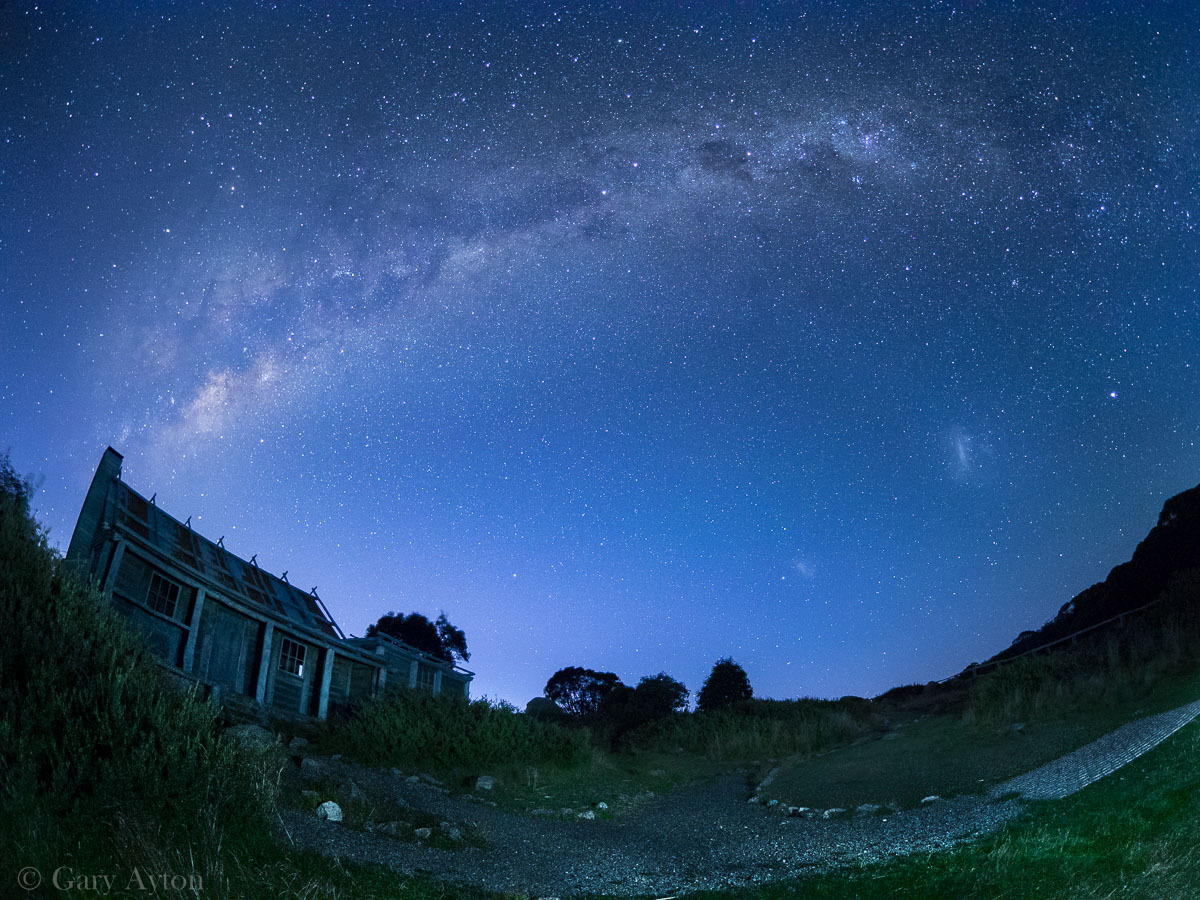
The Milky Way arching over with astronomic twilight well gone just before sunrise.

jupiter

Jupiter high above the hut at dawn – hand held with camera resting on the fence for a 1 second exposure!

dawn

Just before the sun’s rays peaked over the alps but this image was shot with the Olympus mZD 12-40mm f/2.8 Pro lens.

I had a great time up there, even though this place has been photographed in almost every way possible, I am guessing this is the first time it has been imaged with a f/1.8 fisheye lens!

The Micro Four Thirds system’s weight makes uphill hiking such as this so much more enjoyable than a full dSLR kit, while the fisheye lens means I don’t have to waste my life doing panoramic stitches!


Wye River Xmas bushfire 6wks on…

Written by Gary on February 8th, 2016

As is becoming a far too commonplace event, yet another lovely region of Victoria was severely affected by bushfire – this time a difficult to control fire in the Otways starting around Xmas Day 2015 which closed the Great Ocean Road for some time and severely impacted tourism from Lorne to Apollo Bay.

The fire destroyed over 100 houses in the region, but fortunately most of the Wye River township was saved. The fire seemed to have more impact close to the GOR at nearby Separation Creek and at Boggaley Creek.

The locals are wanting the tourists back to help them get through this difficult time financially as much of their tourism income over the important Xmas holidays was lost. The locals are also angry as many believe that back burning operations in the days prior were the cause of the bushfire.

Last week I drove down there and although I did not go up the valley where most of the fire impacted, and restricted myself to the Great Ocean Road, it would appear as though it is business as usual for the Wye River businesses such as the hotel, cafe, and holiday park – all of which were doing good business last week, while the coastal beautry can still be enjoyed by the tourists as my photos show:

forest

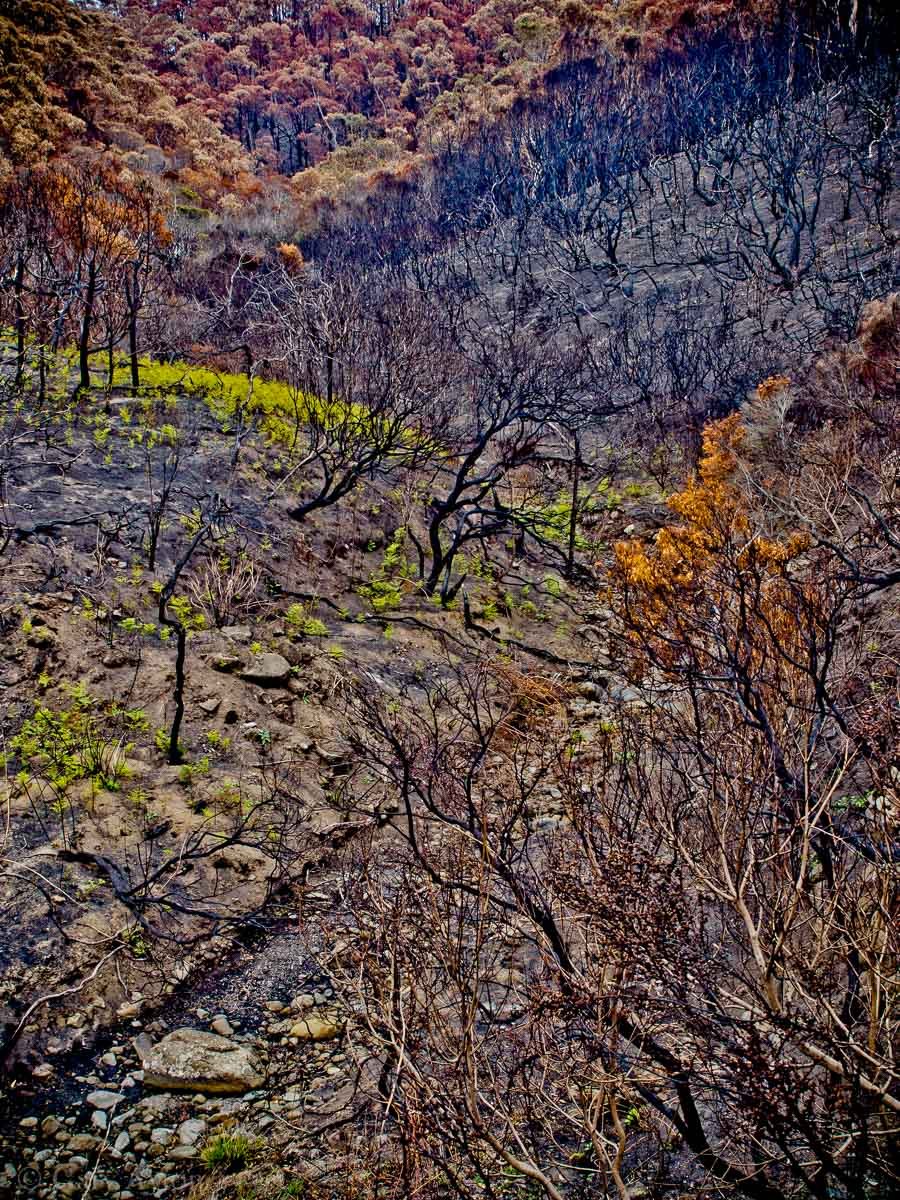
Fire damage at Boggaley Creek with re-growth of ferns (and blackberry weed).


Wye River house

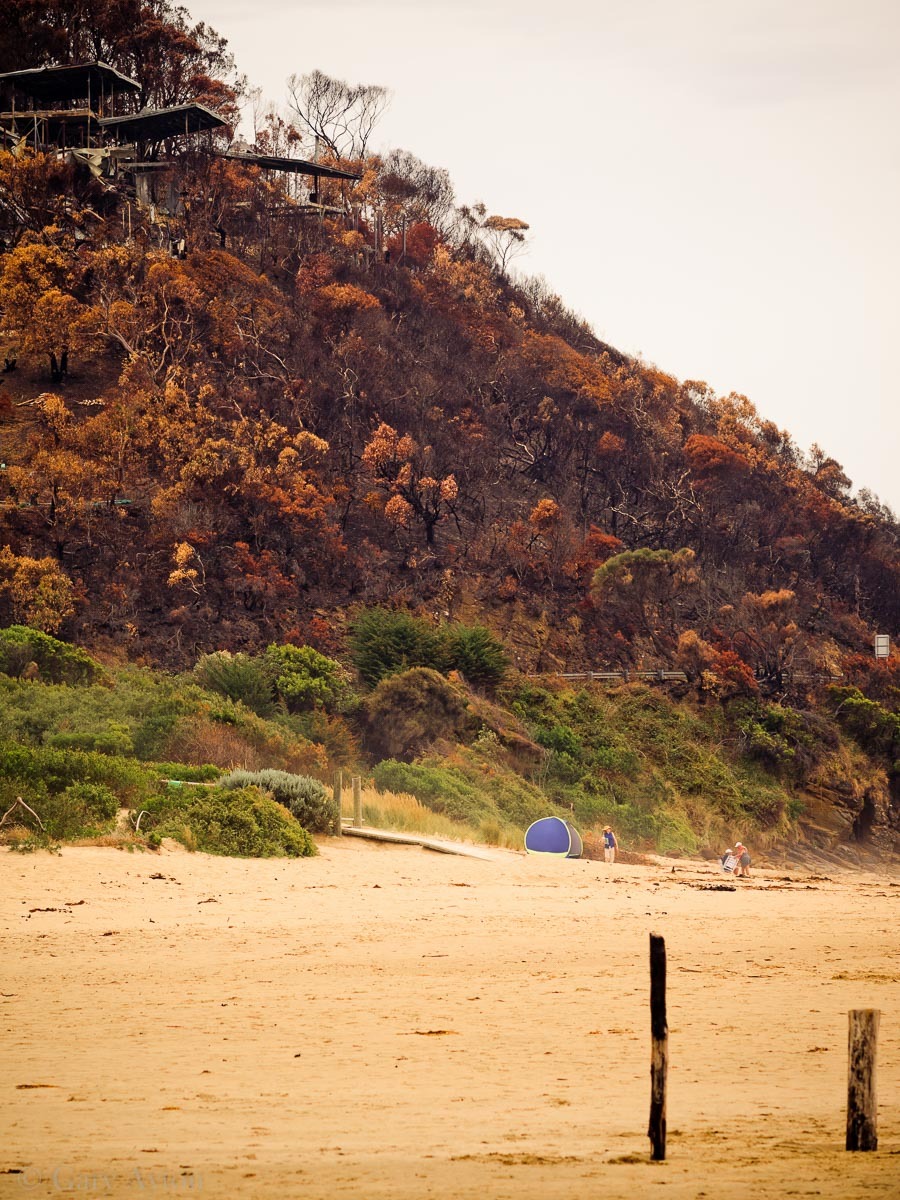
Remnants of a house at Wye River overlooking the beach, but at least some tourists are back on the beach.

Wye River coast

The long exposure of the beautiful coastline of Wye River.

All photos taken hand held with Olympus OM-D cameras.


Keeping up with Nikon, Canon announces the Canon 1DX Mark II pro DSLR sports camera

Written by Gary on February 3rd, 2016

Last week I blogged a short post on Nikon’s new flagship pro sports dSLR, the Nikon D5.

Pro sports/wildlife shooting is now one of the few reasons to buy a dSLR over a mirrorless camera, the other main reason is high resolution, image quality with more shallow DOF capabilities but Sony have addressed this with their Sony A7R II, and pros wanting to segregate themselves from the dSLR crowd in terms of image quality bragging rights will buy medium format cameras for this work.

Today Canon has announced its update to their flagship dSLR, the Canon 1DX Mark II which will cost around $US5999 and then if you want to use its 4K or 120fps HD video or burst rate for 170 RAW images (12secs),  you will need to shell out for some of the new CFast CF 2.0 memory cards at around $1000 each for 256Gb.

Although I own the Canon 1D Mark III pro sports dSLR and a number of pro Canon lenses, I will not be shelling out this amount of money as I am not a pro sports or wildlife photographer who can justify this – personally I am waiting for Canon to bring out a full frame mirrorless with sensor based IS and fast CDAF plus PDAF similar to the Sony A7R models, but at a reasonable price and full compatibility with the Canon system such as their flashes.

Canon 1DX Mark II specs:

  • overall design has changed little from previous 1D models which allows pros to migrate without handling issues
  • rugged, heavy (1.5kg). fully weather-sealed camera with large battery (but if use older LP-E4N battery, the burst rate drops to 12fps) with improved grip
  • shutter rated at 400,000 cycles
  • 20.2mp dual-pixel (for Live View AF) full frame sensor
  • two Dual DIGIC 6+ processors to capture 4K video and shoot continuously at up to 16 fps
  • burst rate: 14 fps with AF, and 16fps with mirror lock up  and locked focus and exposure (not sure why you would do this to get minimal extra burst rate though!)
  • native ISO of 100-51200, expandable to 409600
  • new 61-point AF system has 41 cross-type sensors and 24% larger frame coverage than the 1DX and f/8 capability on all points
  • AF sensitivity in low light has been doubled from EV -2 to EV -3 at the center AF point when the camera is set to One-Shot AF
  • improved AI Servo III+ predictive AF algorithm for better accuracy
  • optical viewfinder now has continuous red illumination of all AF points within the camera’s Intelligent Viewfinder II
  • updated metering system to 360k-pixel RGB+IR sensor which improves face detection (for metering and AF point selection) and subtract tracking
  • it seems iTR face detection in OVF mode now better detects the eye or cheek as prior models tended to focus on noses which was useless, and it better detects partly obscured faces – it is still erratic in AI-Servo mode for tracking a face but that is to be expected as it is early days in this technology
  • improved fixed LCD to 3.2″ Clear View II LCD with 1.62 million dots and now touch enabled but only for AF point selection in Live View
  • video:
    • 4K video at 60p, 30p, 25p, 24p, or 23.98p  using the M-JPEG codec (requires CF2.0 card for more than a few seconds footage)
    • 1080HD at 120p, 60p, 50p, 25p, 24p, or 23.98p
    • dual pixel sensor allows C-AF in video while touch LCD allows focus point changes
    • no native focus peaking or zebra patterns
    • no Log Gamma option
    • ‘clean’ signal out via HDMI port for 1080 only (not 4K)
    • mono mic
    • headphone jack
    • mic jack
  • new built-in GPS (with an e-compass)
  • new Digital Lens Optimizer to help correct aberrations in-camera
  • improved post-shot in-camera Raw processing
  • radio TTL remote flash as with 1DXx
  • USB 3.0 or Ethernet ports (increased from 100Mbps to 330Mbps)
  • CFast card slot (NOT compatible with CF cards!)
  • CF card slot
  • new LP-E19 lithium-ion battery CIPA rating 1210 shots
  • 1530 g (3.37 lb / 53.97 oz)
  • 158 x 168 x 83 mm (6.22 x 6.61 x 3.27″)
  • optional WiFi via Canon’s $600 WFT-E8 wireless file transmitter

A few issues:

  • longest timed shutter speed still only 30secs (like Nikon) unlike Olympus which allows 60secs which is more useful for astro work
  • flash sync only 1/250th sec (like Nikon) while Olympus has 1/320th sec
  • no electronic shutter 20fps mode like Olympus and others
  • exposure compensation dial does not work in Manual exposure mode with autoISO – need to go to menu systems!
  • Auto ISO and exposure compensation in manual mode is NOT possible in movie mode
  • still no sensor based image stabilisation
  • still no closest eye detect AF (although metering system can detect eyes and put AF point on them, but perhaps one day the Live View mode may get it)
  • Dual Pixel AF isn’t available for continuous AF in stills shooting in Live View mode but is for movies!
  • high risk of putting a memory card into the wrong slot causing damage to card or the camera
  • 4K mode is 4096 x 2160 pixels wider than 16:9 DCI 4K aspect ratio and only captures in less efficient Motion JPEG format, but perhaps this is used to allow 8.8mp frame grabs
  • continuous silent drive mode is not all that silent

 Compared to the Nikon D5:

  • faster burst rate of 14fps not 12fps
  • dual pixel sensor for improved Live View AF
  • better video
  • much less AF points – 61pts with 41 cross compared with Nikon’s 153pts including 99 cross type
  • subject tracking may not be as good as Nikon’s 3D tracking – have to wait for more tests
  • only 6 WB presets vs 12 on the Nikon (probably not important for most)
  • LCD screen not as good – 1.6m dots vs 2.4m dots and limited touch utility
  • battery life much worse – 1210 shots vs Nikon’s 3780 shots
  • heavier at 1530g vs Nikon D5’s 1415g
  • built-in GPS instead of optional add on with Nikon’s GP-1A GPS unit
 

Olympus goes back to the 60’s with its new Olympus Pen F Micro Four Thirds camera

Written by Gary on January 28th, 2016

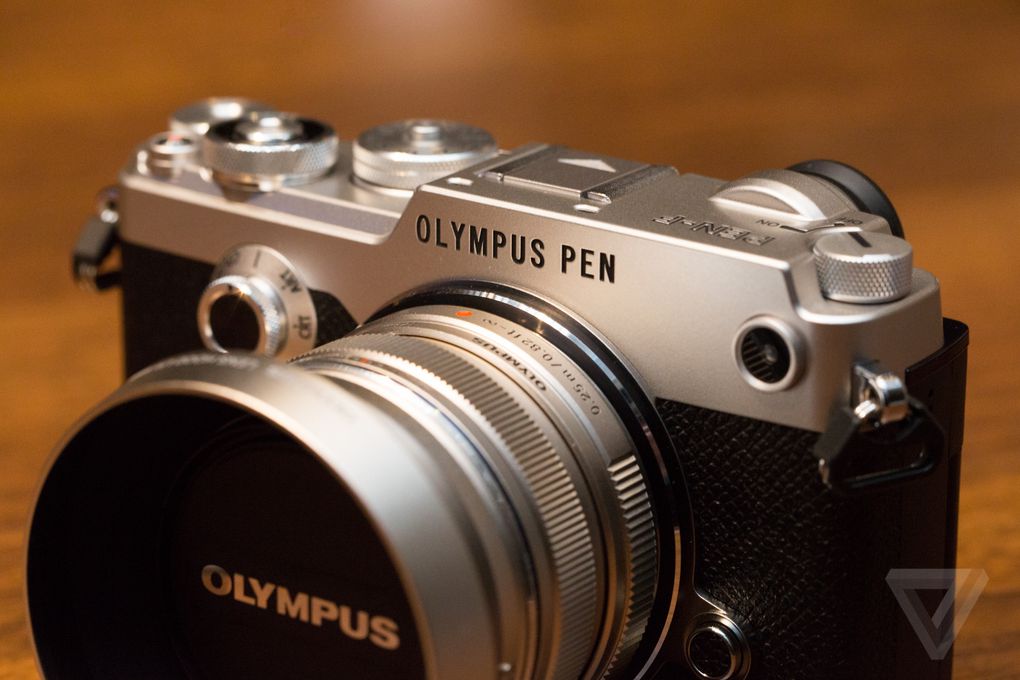
Olympus has just announced a new style of Micro Four Thirds camera which harks back to the days of their very popular interchangeable lens half frame Pen F film camera of the 1960’s.

PenF

Pen F rear

images courtesy of theverge.com

You do have to admit it does look quite nice and for the most part it is an extremely capable camera adopting most of the features of the 2015 ILC camera of the year, the Olympus OM-D E-M5 II, and then adds a few plus a new sensor.

The new top left position of the EVF will attract many who have been longing for this as it allows better use of the left eye to watch the scene and avoids your nose hitting the rear LCD.

Olympus now have 3 separate camera styles in its Micro Four Thirds line up:

  • the OM-D line with its central SLR-like EVF hump on top
  • the Pen F line with a left positioned EVF
  • the Pen line with no EVF built-in but optional EVF

As an aside, sales of these Olympus mirrorless ILC cameras have surged in Japan taking Olympus to 34% of all ILC sales in Japan, well in front of Sony, Canon and Panasonic.

The new 20mp Live MOS sensor is presumably the same one as in the Panasonic GX-8 and gives marginally more pixels of dubious benefit but does seem to have better noise at high ISO than the aging but excellent 16mp in the other Olympus cameras.

The 20mp also means that the 8-shot HiRes mode of the Olympus OM-D E-M5 II is now 50mp instead of 40mp.

Apart from weathersealing, a few function buttons, 2×2 switch, mic plug, and the higher magnification EVF, there appears to be little else left out from the Olympus OM-D E-M5 II.
Pen FT

ABOVE: The Olympus Pen FT film camera of the 1960’s (image courtesy of klassic-cameras) – left positioned viewfinder (and lens) but no top dials and at least you could see the shutter speed and aperture when looking down on it.

Personally, I think it looks more aesthetic than the old film camera, but for some reason, Olympus have gone overboard with top dials – the On-Off switch is now a dial on top left, they have added an exposure compensation dial which not only is unnecessary but users have reported it is hard to change requiring two digits.

If they are going down this track like Fuji, they should start supporting Panasonic’s aperture rings which they have on some of their lenses (and which are totally ignored by Olympus camera bodies to date) so that users can just look down on their camera and see the selected aperture and exposure compensation

Furthermore, their front picture mode dial, whilst looking nice appears to cause pressure on your fingers exacerbated by its rough edges – perhaps this is not so much an issue if you use the almost mandatory optional ECG-4 grip.

The camera is clearly targeting those who want to get everything processed in camera rather than shoot RAW and process on a computer which is my preference.

To this end, Olympus have added new monochrome and colour controls as well as adding a mid-tone controller to their highlight-shadow tone curve controller, so users can tweak their images and even pre-visualise these effects in the EVF, which I must admit can inspire creativity by viewing the world differently and seeing new creative options.

Olympus have also added a few other new useful features, such as:

  • spot metering can now be at the AF spot
  • can save manually inputted EXIF data for legacy lenses – very handy indeed!
  • 4 custom setting modes on the top PASM dial

And of course it has most of the great features of the E-M5 Mark II such as:

  • 5 axis image stabilisation – the best in the world
  • 77Mbps 1080/60p full HD video with awesome IS to allow steady hand held videos and focus peaking
  • fast CDAF
  • Hi Res mode
  • auto HDR mode
  • mechanical shutter to 1/8000th sec and up to 10fps
  • silent electronic shutter to 1/16,000th sec and up to 20fps
  • all those wonderful long exposure modes such as Live Composite, Live Timed, etc.
  • Live Boost and optical viewfinder simulation
  • swivel, articulating, touch  LCD screen which can be used as a AF point controller while using the EVF
  • ART filters
  • TruePic VII Image processing engine
  • WiFi with smartphone remote control
  • intervalometer – can create 4K movies
  • bundled compact tilt/swivel/bounce FL-LM3 flash (GN 9m at ISO 100)

Despite my nit-picking, it is yet another awesome Micro Four Thirds camera which will be attractive to many and take great images, although the price point of $US1199 seems a touch high for a camera such as this without weathersealing and it really does not have substantive advantages over the E-M5 Mark II other than the EVF position and being a fraction smaller.

More details and links to reviews, etc on my wiki page.

Compared to the Panasonic GX-8:

Presumably has the same sensor, and both are priced the same.

The Pen F has the following advantages:

  • better image stabilisation
  • fully articulating LCD not just tilting
  • Olympus long exposure modes, ART filters, monotone and colour creator controls
  • EVF less bulky
  • HiRes mode
  • closest eye AF
  • 81AF points not just 49
  • 1080HD video offers more modes incl. 60p, 50p, 30p, 25p, and 24p plus better image stabilisation
  • lighter at 427g instead of 487g
  • smaller

The GX-8 has the following advantages:

  • higher magnification EVF which tilts up but is more bulky
  • AF burst capability better at 8fps instead of 5fps
  • perhaps better C-AF
  • 100Mbps 4K video at 30p/24p as well as 1080 60p/30p plus mic port
  • post-focus mode allows users to select different focus points after shot is taken via 4K 30fps shots
  • splashproof